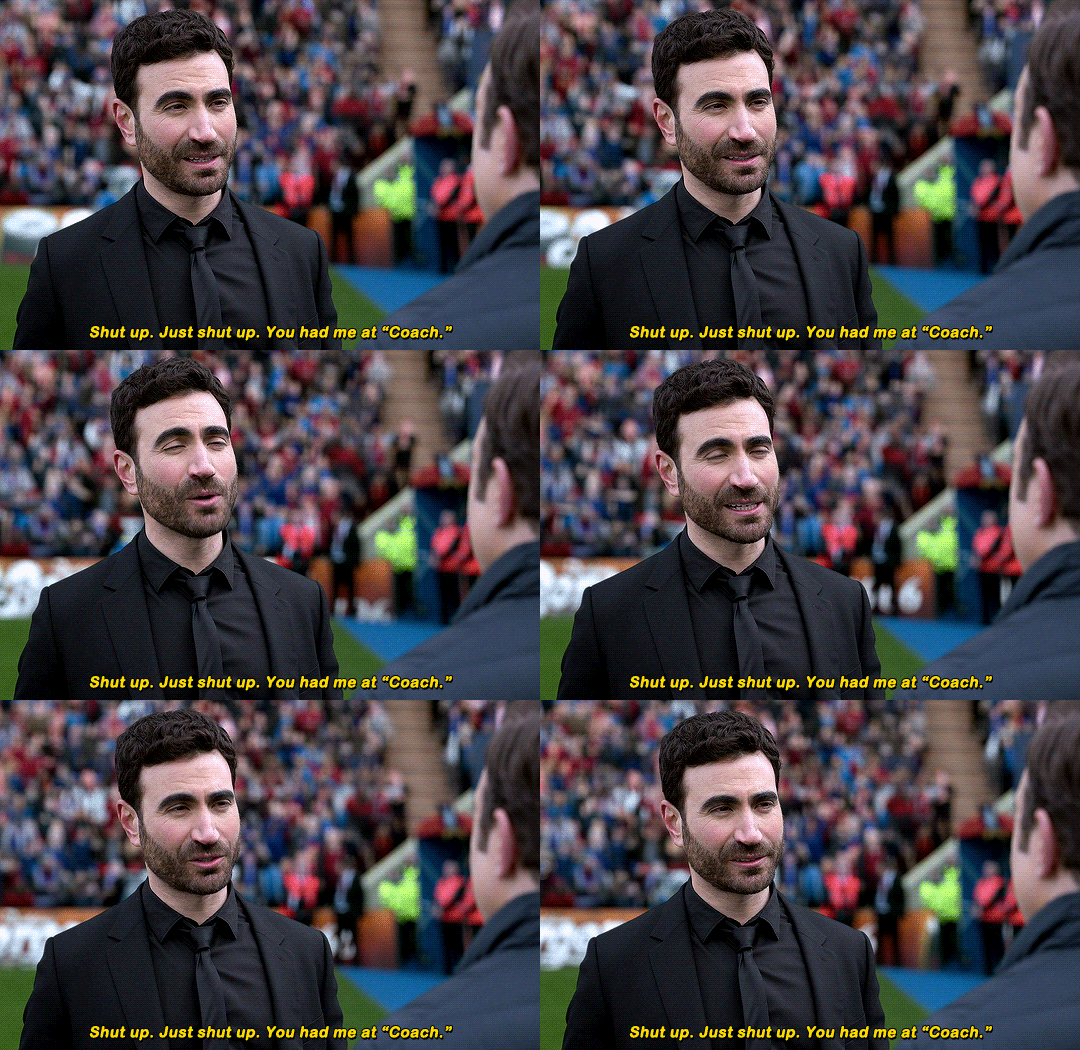
Ted Lasso, Rom-Coms, and Emotional Vulnerability

Why is it important that a show about men who play soccer did a rom-com homage?

Dickinson Behind-the-Scenes: An Interview With the Artisans

Meet the artists who brought the Apple TV+ series to life!

If You Like This, Watch That

Looking for a new TV series to watch? We recommend them based on your preference for musicals, ensemble shows, mysteries, and more!

Showing posts with label guest poster: jennifer iacopelli. Show all posts

Monday, January 2, 2017

Shadowhunters 2x01 Review: "This Guilty Blood" (New, But Stale) [Guest Poster: Jennifer Iacopelli]


"This Guilty Blood"
Original Airdate: January 2, 2017

The first season of Shadowhunters was received as a mixed bag, and rightly so. Many fans of the book series (and if the rumors are true, Cassandra Clare, the author of The Mortal Instruments series as well) seemed to be outraged on a weekly basis at the happenings on their screen, while others who had never read the books (and perhaps will never read the books) enjoyed the show for what it presented itself as: a self-indulgent frolic through a fantasy plot, following traditionally archetypal characters played by very pretty actors, but an entertaining one at that.

Over the course of the hiatus, Freeform axed the show’s original showrunner Ed Decker and hired a new creative team. I’ll admit I was a little bummed because I’d enjoyed the mindless entertainment that Shadowhunters brought to my screen. It was irreverent. That being said, I’m not sure that the original source material deserved any sort of reverence, especially considering that the film version, The Mortal Instruments, which apparently stayed closer to the novels in terms of plot and character was a spectacular flop at the box office, despite the intense hype and stellar casting. Regardless, Freeform decided to go in a different direction in season two, despite generally decent ratings on a network that has seen a steady viewership decline in the last few years.

The narrative picks up almost immediately from where it left off: Jace Wayland off with his father Valentine and the rest of the Shadowhunters at the New York Institute, especially his friends, scrambling to rescue him. The creative shift is apparent almost immediately in the first episode of the season. Perhaps it’s simply a mark of a higher budget or those budgetary resources being allocated toward special effects rather than other areas, but the quality of the CGI is far superior than the entirety of the last season, which — despite my enjoyment of the show — was one of my pet peeves.

The opening battle sequence makes excellent use of Dominic Sherwood’s ability to play fierce very well and reestablishes his character as an awesome fighter and exactly where his loyalties lie — with his friends and family. However, if that was to remain true throughout the episode, let alone the season, the show would not have established it as thus. It was a stroke of creative brilliance on the part of the new creative team to use the rebelliousness we saw in Jace in season one and apply it to his relationship with Valentine. Jace wants to see for himself rather than allow a higher authority to judge and having Jace acknowledge Valentine’s manipulation of the situation was very important and crucial to making Jace’s choices feel real and earned.

Similarly, the step back and, later, the much needed conversation about their relationship we saw from Alec and Magnus under the stress of Jace’s kidnapping was an excellent bit of character development that will be interesting to see play out over the season (interesting is actually an understatement — they are easily the most compelling relationship on the show and the chemistry between Matt Daddario and Harry Shum Jr. continues to sparkle on camera). Clary, as usual, is one-dimensional and dull, but Kat McNamara hasn’t lost the spark she bring to the role and thus the character will hopefully grow this season. I wish we had seen more from Emeraude Toubia’s Isabelle, but with a main cast as large as this, it’s tough to balance everyone equally in one episode.

All that being said, however, there was a cognitive dissonance between the decent character work and the actual plot of the episode. It was cliche and predictable — much like season one — but lacked the irreverence or at least the newness and thus felt stagnant. The Clave sent another “overseer” to the New York Institute, the Lightwoods have been stripped of their power, everyone’s being watched, the team can’t function and must be secretive in their plan, etc. etc. etc. The overseer sees things the way they distinctly aren’t and then our Shadowhunters manage to play into that narrative before the episode ends. The show has been there and done that and it wasn’t overly thrilling the last time. It actually undermines the capabilities of Alec, Isabelle, and Clary. The ineffectiveness of Clary is believable as she’s been a Shadowhunter for what, five minutes? Add to that, she was an art student prior to discovering their world with no training in any sort of fighting. In fact, her abilities are probably greater than they should be considering the amount of time that has passed. But Alec and Isabelle are supposed to be two of the best and so far, the show has only told us that and not shown it with any regularity. It’s very important that they do so in season two, consistently, or the characters will soon lose any and all credibility established in the narrative.

All that being said however, the first episode was clearly intent on simply establishing the characters again, but perhaps setting them on different paths than season one had clearly pointed them toward, and thus sacrificed plot and some logic along the way. This is totally forgivable in a season premiere, but going forward Shadowhunters needs to find a plot that isn’t simply “rescue Jace.”

Hopefully in the next few episodes a story arc is established that will hold viewers’ attention over the course of a season; if not, all that attention to the characters will have gone to waste.

Tuesday, October 11, 2016

Pitch 1x03 Review: "Beanball" (Just One of the Guys) [Guest Poster: Jennifer Iacopelli]


“Beanball”
Original Airdate: October 6, 2016

In its first two episodes, Pitch highlighted — and rightly so — what made Ginny Baker different from her male teammates: her gender, her pitching style, her work ethic, her journey to the majors, and her celebrity. In “Beanball,” the show makes us see what makes Ginny so much like her teammates, while still honoring those differences. She’s a young, confident, attractive, professional athlete and has the temperament implied by that description. In Pitch’s third episode, Ginny takes the mound against the St. Louis Cardinals. The last time the Padres played the Cardinals, their pitcher beaned Tommy Miller — the pitcher whose injury facilitated Ginny’s call up from the minors. For those of you unfamiliar with the litany of unwritten rules in baseball, one of the stupider rules is when a pitcher hits a batter on purpose — trust me, watch enough baseball and you can tell — it requires an answer. For reasons that go unexplained on the show, the Padres never retaliated against the Cardinals during the game Tommy was injured and thus, it’s expected of them to do so in their upcoming match up. Coincidentally enough, during Ginny’s start.

... Except everyone seems to think that’s not going to happen. Mike insists that even if she hit someone, it wouldn’t hurt them. Al just shrugs and says, “Not with Ginny pitching,” and Tommy, the clubhouse jerk, thinks she’s all talk and no action. “Don’t even think about it,” Mike warns just before the game starts.

There’s another unwritten rule explored in this episode as well, but this one belongs to Ginny and not the game. This week’s flashbacks bring us to Ginny’s stint in Double A San Antonio, where she meets Trevor Davis, an opposing catcher. Their chemistry is instantaneous, but Ginny refuses to break her own unwritten rule: she doesn’t date ballplayers. You can’t really blame her, can you? She is literally the only woman in her line of work. There are many women who have their own self-imposed “don’t date the guys at work” rule that don’t have to deal with half the crap Ginny goes though, so it’s easy enough to understand. Trevor, however, is different. He’s quitting the game and headed to college instead. So Ginny falls for smart, handsome and charming Trevor Davis, soon to be ex-ballplayer, breaking her self-imposed rule; however, that’s not something she’s willing to do on the field.

When the Cardinals pitcher steps into the box, Ginny plunks him, the umpire pops out from behind the plate to warn both teams, and thus a beanball war has begun.

What happens next is classic Pitch storytelling (at least thus far): taking what’s expected and turning it on its head. When Ginny comes up to bat, the Cardinals pitcher refuses to hit her and Ginny, being the ultra-competitive woman that she is, combined with her need to be treated just like one of the guys, loses her temper. She backs out of the box, barking at the pitcher that he’s afraid to throw at her, afraid to hurt her, and then up jumps the Cardinals catcher from behind the plate and SURPRISE! It’s Trevor Davis, the man she broke the rules for in the minor leagues and turns out, didn’t quit the game after all. Instead he was traded to the Cardinals and eventually made his way to the Major Leagues in what looks like a backup catcher role.

What started off as a truth, that he was quitting the game, turned into a lie when he found out he was being scouted by the Cardinals and the trade is a sign that he might make it to the Major Leagues. Ginny, betrayed and disappointed — mostly in herself — is left heartbroken, but now has to deal with another level of hostility from her former minor league teammates, the knowledge that she slept with a ballplayer and now feel free to throw in her face at any opportunity.

So when Ginny loses her temper, it’s not just because the Cardinals’ pitcher won’t throw at her, fulfilling one of the game’s unwritten rules, it’s because she knows that just by virtue of being herself, the usual rules don’t apply to her, again. It’s no wonder that she snaps and charges the mound, despite the fact that the Cardinals’ pitcher, aptly nicknamed the Mountain, is 6’6” and throws 98 miles per hour. Intercepted halfway there by Blip, as both dugouts empty, a standard baseball brawl ensues. Tommy, happy to get revenge on the team that broke his hand and sent him to the DL, tackles Trevor Davis and the show somehow accomplishes the impossible — making you root for that jerk to totally pummel the guy who broke Ginny’s heart. Mike heads to the mound to provide a shield for the Cardinals’ pitcher who was in a no-win situation of his own (if he hits Ginny, he hit a woman; if he doesn’t, he didn’t do his job as a ballplayer) and the rest of the players tussle a little, before order is restored, at least on the field. Tommy and Ginny are both tossed from the game and share a quick fist-bump coming off the field.

Despite the idiocy of it all, you can’t help but feel good for Ginny. She’s finally gotten what she wants the most, even if it’s just for a moment, even if she has to go back to playing by her own set of unwritten rules: she’s one of the guys.

Notes:
  • I can’t get enough of Evelyn Sanders. She’s Ginny’s number one fan, her husband’s fiercest cheerleader, she knows her baseball, and Meagan Holder plays her to perfection. 
  • It was a little weird that Padres general manager Oscar Arguella didn’t know that the man who “gave him his start” in baseball, Al Luongo, spoke fluent Korean and thus spent the entire episode racing around trying to find a Korean interpreter. 
  • SPEAKING OF AL, or as I call him, “Not-Joe-Torre,” his preemptive ejection from the game, followed by the table-for-two tête-à-tête with one of the team’s co-owners in order to save his own job was sheer brilliance.
  • I’m so here for the Mike/Amelia subplot romance. I don’t think it’ll last very long. I mean really, how many secondary romances established in the second episode of a show’s run make it past the first season finale? Not many, but regardless, they’re kind of adorable. They’re both vulnerable people with hardened exteriors and right now, they’re good for each other.
  • I’m really hoping that the whole “Trevor’s phone was hacked and naked pictures of Ginny are probably headed for the internet” storyline plays out... differently? I’m not sure how they can do it, but so far Pitch has come through on putting twists on the usual tropes, so I’m hoping they can pull it off here.
  • The music continues to be AWESOME on this show, led by Black Violin providing what amounts to the show’s baseball “score.” Seriously, whoever is choosing the music deserves an Emmy.

Monday, October 3, 2016

Conviction 1x01 Review: "Pilot" (Do You Have It In You?) [Guest Poster: Jennifer Iacopelli]


"Pilot"
Original Airdate: October 3, 2016

On the surface, Conviction is much like any other procedural crime show. A group of well-intentioned, but complicated people come together to do good — in this case to prove the innocence of the wrongly convicted. However, it only takes one glance at the credits to know that this isn’t your ordinary show. Led by the indelible Hayley Atwell of Agent Carter fame, and supported by the likes of Eddie Cahill, Shawn Ashmore, Emily Kinney, Merrin Dungey, and Manny Montoya, Conviction has a chance to be truly remarkable television.

When we first meet Hayes Morrison (Atwell), she is in a prison cell, dancing. We’re shown in the first minute of the episode of that she’s brilliant, irreverent, and not a fan of the man who shows up to offer her a plea deal for the drug charge she’s about to be charged with, District Attorney Connor Wallace (Cahill). Throughout the episode the chemistry practically oozes from their pores whenever they’re on camera together, beautifully setting up a classic, will they-won’t they-wait did they already dynamic; however, one hopes the show will be able to put a new spin on the often successful trope.

In order to avoid charges — and embarrassing her mother’s Senate campaign — Hayes takes the job heading up the newly formed Conviction Integrity Unit, a team put together to check on possibly shady convictions and ensure justice has been done. This is where we meet the rest of the squad: ADA Sam Spencer (Ashmore), whose job Hayes had been blackmailed into taking; Tess Larson (Kinney), a paralegal who’s already made a career of overturning convictions at the Innocence Project; Maxine Bohen (Dungey), a NYPD detective who isn’t sold on the unit’s purpose; and a forensics expert, Frankie Cruz (Montoya).

Despite the aforementioned irreverence, Hayes Morrison is not someone who suffers fools gladly. As the CIU begins discussing which case they should take first, she allows ADA Spencer to take the lead and pitch cases to her, though quickly dismisses his attempts. Spencer protests that she told him to take the lead and think of her as a figurehead and Hayes responds with, “That’s before I realized you might be a moron.” She pulls no punches a moment later when she outs Frankie Cruz, revealing to the entire team that he’d been in prison.

However, later in the episode when confronted with the reason she is even at the CIU to begin with, she reveals the cocaine charges, a fun quirk in her character that tells a lot. She holds people to a high standard of no-BS, but does not hold herself to that same standard. A third of the way into the episode, the take-no-prisoners, no filter, totally secure character feels like a caricature. And then Hayes goes to talk to the murder victim’s mother. It seems Hayes Morrison does have one weakness: feelings. Rage and love — emotions that cannot be faked or glossed over or answered with a quip — those are her Achilles heel, whether they belong to her or to someone else. That vulnerability is reinforced when she attends a fundraiser for her mother’s Senate campaign belligerently wearing a dress that she — and the audience — knows her mother will loathe. It turns out that it wasn’t only Wallace who came to her rescue; her mother called in the favor. As perhaps the only person who Hayes really listens to, her mom tells her like it is: “Screw up this job and Wallace will charge you with possession with intent to distribute. This is your last chance. You are so smart and brave and amazing and have every opportunity in the world. Imagine what you could do if you actually tried if you worked at anything as hard as you do at making us all believe how little you care. The question is, do you have it in you?”

I’m willing to bet that she and Conviction do.

The case the team takes on, the conviction of a young football player for the murder of his girlfriend, often feels a little convenient: evidence found and roadblocks hurdled through helpful coincidences, but in a pilot episode that can be forgiven. And the strength in police procedurals isn’t in the crimes that they take on, but in the dynamic between the characters and so far, Conviction is off to a good start.

The tension between Hayes and Wallace is palpable; Tess Larson’s sketchy past that Hayes discovers about two-thirds of the way through the episode is sure to be explored. There will always be a natural conflict between Maxine’s police career and the work the CIU is doing; Sam Spencer is disgruntled at being passed over for Hayes’s job and will likely continue to be; and Frankie’s history — along with the insinuation in the last few moments of the episode that he is gay and that his boyfriend is still in prison — is the most intriguing.

If the cases just get slightly less easy and the cast gels like it should, ABC could have a hit on its hands.

Pilot Grade: A-

Sunday, October 2, 2016

Pitch 1x02 Review: "The Interim" (#Ginnsanity is Growing) [Guest Poster: Jennifer Iacopelli]


"The Interim"
Original Airdate: September 29, 2016

Crisis averted. Bullet dodged. Fears assuaged. Nothing to see here. I was so worried, everyone. I’m not sure how to express the the gnawing terror in my stomach at the idea that Pitch, the best pilot I’ve seen in over a decade, wouldn’t be able to live up to the standard it set in its first episode. I knew going into this show that it would be everything I’ve ever wanted on my TV screen. It’s equal parts A League of Their Own (the movie that inspired a generation of women and told them that it was okay to love sports) and The West Wing (the TV show that told the whole world that understanding the world was also okay). So when the second episode of Pitch started up, to the notes of Black Violin’s "A-Flat," which has so far provided a stellar soundtrack, I was beyond nervous.

Clearly, I had nothing to worry about. Pitch picks up where we left off — or close to it — with the Padres headed north to Los Angeles to face off against the Dodgers with reports swirling of dissension in the clubhouse and rumors that their manager is about to be fired for losing control of his team. The media attention hasn’t lessened, in fact after notching her first win; #Ginnsanity has only grown in intensity with no signs of slowing down.

But that’s periphery. Pitch’s true strength is in its characters and once again Kylie Bunbury delivers in making Ginny Baker unabashedly real. She’s a young woman in an impossible situation whose grit and determination makes it possible. After a slew of flashbacks in the pilot episode that took us through Ginny’s life from an actual toddler to the day she was recruited by the San Diego Padres (which was also the day her father died), in this episode we travel to 2014 and we’re introduced to Ginny as a minor league ballplayer. Her brother, Will — the same poor kid who took a slap in the face from their dad in the last episode to prove to Ginny she could throw a strike — is now her agent and looking after her best interests while she rises in the ranks towards the majors. We’re immediately won over by Will when Ginny’s present-day agent makes her first appearance in their lives as he introduces himself as, “Will Baker and I’m with ‘Stay the Hell Away from My Little Sister’.” Of course we know immediately that Amelia Slater wins over Ginny and her brother, but despite knowing how the story ends, the flashbacks continue to be enlightening for the viewer.

After spending the first episode trying his hardest to make us all hate him right up until the very end, we also start to learn a ton about Mike Lawson, Ginny’s All-Star catcher. I’ll give him this: he’s trying. If you know anything about baseball — and I know a lot — 36 is pretty old to be catching, even if you are an All-Star. Most guys move out from behind the plate — usually to first base or designated hitter — in their early 30s to save their knees and keep their still-productive bats in the line-up for as long as they can. Mike Lawson, however, is still fighting the good fight, crouching in a squat for a few hours every day and then sitting in ice-baths to relieve his aching joints post-game. It’s apparently one of his major character traits.

Lawson doesn’t give up on people. Not on Ginny, not on his teammates, and not even on his ex-wife/sports reporter, played by Joanna Garcia Swisher (who we want to love immediately because she’s Joanna Garcia Swisher, but the jury’s still out since it seems she’s stomped all over his heart over the last few years). She’s also the catalyst that pushes Ginny into realizing despite the #Ginnsanity and all the pressure, that she’s the one in charge of herself and can take control if she wants to. And by the end of the episode, sitting on a chair opposite Jimmy Kimmel — a chair she only occupies because she’s a woman — Ginny lets the world know who she is and it’s brilliant.

All that being said, Pitch knows its weaknesses and one of those weaknesses is its premise. The show knows and understands that there is a population of people, potential viewers, baseball fans, the vast majority of them men, who will not watch the show because it’s about a woman making it into the major leagues. To the show’s credit, it pulls no punches when dealing with them behind the fourth wall. It even comes close to crossing that sacred line a couple of times. One of her teammates, while they’re out for a celebratory beer asks, tipsily, “Ginny, what’s your deal with men?” What he means of course is, “Is there any chance at all for us to hook up?” but what the audience hears is quite different. Everything in Ginny’s life is about men — how men react to her on the field, how men react to her off the field; if she loses, she should lose because she’s competing against men, if she wins men got beaten by a girl.

And judging by the show’s ratings so far (though arguably because it’s up against Thursday Night Football with a terrible lead-in), men are not watching Pitch. So ladies, gentlemen, if you’re watching — if you love what you’re seeing — GET THEE TO A TV ON THURSDAY NIGHTS AND TUNE IN. Because Ginny Baker is here and she’s everything we’ve ever wanted, but let’s make sure she’s here to stay!

Notes:
  • I cannot get over how adorable the relationship is between Blip Sanders and his wife Evelyn. They are smart, sexy and real. And while I really enjoyed their subplot of “find Blip’s horrible old lucky T-shirt” this episode, I’m going to need the show to dig down deep into these two and their dynamic. It’s fantastic. Line of the episode goes to Evelyn with, “What? Your Grand Master Flash t-shirt will lose its magic powers and you won’t make the All-Star team? Say it out loud. Go on.” 
  • Dan Lauria as team manager Al Luongo continues to be perfectly cast. His scene in the locker room with Ginny where he apologizes for a bonehead comment of his actually brought me to tears, despite me being angry at him for the aforementioned bonehead comment.
  • I ship Mike and Ginny. I don’t think the show is going there — in fact I have a ton of evidence that the show is NOT going to go there, at least not yet — but if you flash to Ginny when Mike’s kissing a Random Super Model and then you flash to him when she’s talking about how she doesn’t date ball players and then you give me a scene where they’re working out together and breathing heavily and sweating I’M GOING TO GET SHIPPY FEELS SHOW, SO DEAL WITH IT.
Sound off in the comments below with your thoughts on Pitch's second episode!

Thursday, September 22, 2016

Pitch 1x01 Review: "Pilot" (Quality Storytelling) [Guest Poster: Jennifer Iacopelli]


"Pilot"
Original Airdate: September 22, 2016

Perhaps Fox’s most highly-anticipated (and promoted) show of the year, Pitch is a show where things could go so very wrong almost immediately. It’s the story of Ginny Baker, the first woman to be called up by a Major League Baseball team, breaking yet one of society's thickest glass ceilings: a girl playing with the boys. The show seems to be very much aware of this unprecedented story, drawing an allusion to what they are attempting to accomplish — creating a sports show on a major network ostensibly and realistically focused upon a woman. During a heated scene about three quarters of the way through the pilot, a character says what we’re all thinking, “It’s one thing to be the team that called up the first woman. It’s another thing to be the team that picked the wrong woman and turned this whole thing into a disaster.” If it were nothing else, Pitch is a timely microcosm of the world we live in today. The question is, can it be anything more?

The answer? So far, so good. The first episode of Pitch — ahem — delivers on every level: layered characters, engaging story, perfect pacing, and setting. Hardcore baseball fans will be pleased at the entirely realistic portrayal of the insanity that would follow the first female Major League baseball player and the reality of what it’s like to be a “call-up” in the majors. The show doesn’t shy away from the idea that many view Ginny as nothing more than a publicity stunt, including several of her teammates and even deep down, herself. Kylie Bunbury is compelling, owning the the character of Ginny Baker. She infuses Ginny with the dichotomy of overflowing bravado so familiar in elite athletes and the often crushing insecurity that plagues women, both in the public eye and out of it. Her catcher, veteran all star Mike Lawson, is played flawlessly by Mark-Paul Gosselaar. In fact, he is almost unrecognizable, encased in the well-worn catcher’s equipment and full beard. Lawson has very little patience for the “circus” as he calls it that surrounds Ginny. And despite his character playing into several cliches associated with successful, confident professional athlete, there were also hints at a hidden depth — a discontent with himself and the man he’s become as he nears the end of his career. The chemistry between Bunbury and Gosselaar is palpable as pseudo-antagonistic allies and their relationship, both with each other and with the game itself, is where the show will either find its footing going forward or flop spectacularly.

For those baseball fans out there looking for an accurate portrayal of the game you love, fear not. Fox and Major League Baseball have partnered together to project a sense of both on the field accuracy and off the field drama that felt neither too overplayed nor unrealistic. Ginny’s strengths are in her hard work and talent, but also in the command of a pitch most men haven’t bothered with in decades. Accompanying that realism is the underlying drama that makes for excellent television. Ginny has several people in her corner: an agent played to perfection by Ali Larter who fights for her with the tenacity of a barracuda; Moe McRae and Meagan Holder are cast perfectly as her former minor league teammate and her current centerfielder and his wife; and Dan Lauria, as her manager, who at the very least wants her to succeed simply because she’s one of his players and that’s his job. The pilot didn’t waste time developing any true antagonists beyond Ginny’s own personal demons and another pitcher whose job she currently occupies while he rehabs an injury — a good decision as there will be plenty of time for that as the season goes along.

All in all, Pitch’s truth strength is in the quality of its storytelling. The episode is unburdened by unnecessary dialogue, the editing between its own internal fourth wall and the “real” lives of its characters is seamless and the plot never hovers awkwardly on exposition so often found in pilots, not even for those unfamiliar with baseball. However, nothing is lost in the lack of explanation for those new to the game, and these moments will entrance and hook the hardcore baseball fan and the regular TV viewer, both male and female alike.

Overall, the first 45 minutes of Pitch may be the best pilot to grace the network airwaves in many years — at the very least, the best since Lost. The biggest challenge Pitch will face will be the ability to live up to the quality of the pilot during its first season. While not entirely clear what month the show is set in, the Padres are clearly in the thick of the six-month-long marathon that is the baseball season. The writers did themselves a favor with that, rather than March or April, giving them only a few months of story to cover — depending upon the team’s success — leading up to the season’s logical conclusion at the end of the baseball season. It creates an immediate sense of urgency that cannot simply be glossed over with a montage of success so often found in sports movies, but simultaneously adds the pressure of time constraints on a newly-constructed writers’ room.

Here’s hoping after a strong start, Pitch isn’t just a September call-up that catches lightning in a bottle every so briefly, but rather is more akin to a Hall of Fame career begun with a homerun in its first at-bat.

Grade: A+

Sunday, August 14, 2016

Series: Summer Lovin' -- Our Olympic MVPs


I was at the beach a few weeks ago and the Olympics were on at the restaurant's bar. Jokingly, I turned to one of the people I was with and said, "Every four years, everyone in America suddenly becomes more patriotic than they've ever been." And though I can't speak for other countries, I would assume that they're probably similar. We watch the Olympics to cheer on our athletes, to root for the underdogs, and to display pride in our country. In light of the fact that the Olympics are still in full swing and important to so many of us for so many reasons, this week we are going to be celebrating the incredible athletes whose stories and wins (and/or losses) have inspired us.

Joining me are:

Let's begin!

Sunday, July 3, 2016

Series: Summer Lovin' -- Week 15


As we head into the fourth of July weekend (for all of our American friends), it's hard to believe that it's already July. In a few weeks, the biggest convention in the United States — and probably the world — will be happening in San Diego. And after all the dust and cosplay costumes settle, it'll be close to August. But before we get ahead of ourselves too much, let's continue to celebrate the summertime the only way our staff really knows how: by talking about what we love!

This week, I'm joined by:

Let's get started!

Sunday, June 19, 2016

Series: Summer Lovin' - Week 13


It's been a pretty crazy week in the world. It seems like everywhere you turn, there is some sort of darkness or sadness that makes you want to curl up in a ball and never leave your bed. But just like spring at the end of a long winter, there are good stories and things to look forward to each day. Even though it's not majorly significant to many, Summer Lovin' is a series that means exactly that to me and our staff. We love taking a small break each week from whatever hardships have occurred in the "real world" in order to spend some time celebrating the things that we love.

Joining me this week are the following delightful people:

Let's get started!

Thursday, June 9, 2016

Writing for the Binge-Watch [Guest Poster: Jennifer Iacopelli]


Binge-watching has, without a doubt, changed the television industry. Shows that would normally get the axe are breathed into new life on a streaming service. Shows that normally wouldn’t get a green light from a major network are allowed a chance to flourish. Miss the first two seasons of a show that suddenly everyone seems to be talking about? Mainline the series in a week and join the horde desperately waiting for the premiere before anyone even notices you were out of the loop.

Personally, I love a good binge-watch and I know I’m not alone. I’m all about grabbing my favorite spot on the couch, firing up my Apple TV and burning through hours of my weekends and days off fully immersed in my favorite TV universe. For a viewer, binge-watching is the ultimate in instant gratification: no commercials and no cliffhangers.

But as we enter a world where a show’s success has begun to be linked to DVR and streaming numbers, this effect has begun to trickle into the writers’ room. More and more, as a viewer, I’m seeing seasons of TV constructed solely for the payoff at the very end of the season — plots creeping along at a snail's pace, pieces on a chessboard moving only after episode-long deliberations by each and every character.

Now, I’m not saying that every show needs to be procedural. Personally, I’m more of a fan serialized TV. I’m willing to stick around for the long haul and delay gratification. Shows like LOST, Game of Thrones, The 100, and The Walking Dead have always been my favorites. I go into the season knowing the plot threads will twist and knot before detangling into an, ideally, satisfying season finale. However, the success of serialized TV has always hinged upon creating an engaging hour every week — a narrative to follow for forty minutes, tossing breadcrumbs to the audience from within that week’s story arc.

More and more it seems, the serialized shows gracing our airwaves revolve solely around the conclusion rather than the story itself. Character development takes second place to shock value plot points — often a violent act, particularly involving POC, LGBTQIA characters, and women — and fans spend full seasons simply speculating which character will get the proverbial, or literal, axe in the finale.

I’d argue this shift is the fault of the binge-watch mentality. A binge viewer watching a show like what I described above wouldn’t feel the slog of the plot or the drag of stagnant characters from week to week. For a show like The Walking Dead, an eight hour binge-watch — something easily done in a weekend — would bring a viewer to the midseason finale, frequently “celebrated” with a death. Another eight hours more would take them to the finale, usually an over-the-top episode — again typically marked with a death of a major character. Writers MUST deliver a payoff, sometimes at the expense of character or risk alienating viewers who will find something else to binge.

Similarly, on the hit HBO series Game of Thrones, live viewers have almost painfully watched the plot inch along for six seasons, the narrative arcs separating into independent threads which have seemingly very little to do with each other. A show like Game of Thrones, which has been airing for six years, would be incomprehensible if a viewer hadn’t already watched over fifty hours of show prior to the season six premiere. If you missed it, you must binge-watch in order to understand and so... we do.

Studios have begun to understand the power of the binge, more so now than ever. The CW’s The 100 was arguably renewed because of its excellent Netflix numbers and the live-ratings bump it received after viewers “caught up” during hiatus.

In a recent Variety article, Netflix reported that serialized shows are some of their biggest binge hits, being devoured in less than a week. With streaming deals financially replacing the ever sought after syndication deal, there is no way this isn’t creeping its way into the writers’ room, where they know some of their viewers will watch week-to-week, but millions of others will experience the show differently — an emphasis on the building plot and mystery necessary to keep the viewer clicking immediately for the next episode.

It’s even begun to creep in between seasons. Major season-ending cliffhangers have become a rarity in serialized TV, but if showrunners and writers continue this trend of writing for the binge-watch, we may be in for many, many more. Season six of The Walking Dead ended in an incredibly frustrating cliffhanger for many viewers after the entire season had teased that moment. As showrunner Scott Gimple told Variety, “I ask people to give us the benefit of the doubt that it’s all part of a plan, all part of a story. I truly hope that people see [the season seven premiere] and they feel it justifies the way we’ve decided to tell the story. That is the way it is in our minds. I know what [the season seven premiere] is and I feel that it delivers on what [the season six finale] sets up.” If my suspicions are true, Gimple isn’t worried about alienating his week-to-week viewers (a luxury afforded the head of a the most successful show on TV), but is playing to the binge-watcher, someone who might catch up over the hiatus and only have a few weeks to ruminate over the cliffhanger before the payoff during the season seven premiere.

Going forward, as viewers, we have a choice to make. If writers are writing to the binge, should we simply wait for full seasons to be added to Netflix and Hulu and Amazon Prime instead of tuning in week to week? Do we refuse to commit to a show until season one has ended and has been renewed for season two, knowing we might be left hanging if we don’t? As lovers of television, it may be the only way to protect ourselves from months of dragging plots only to be left hanging at the end. That is, until the industry realizes that all shows should be released at once to allow the viewer to enjoy at their own pace. But that’s another conversation for another time. Until then, watch at your own risk!