Ted Lasso, Rom-Coms, and Emotional Vulnerability

Why is it important that a show about men who play soccer did a rom-com homage?

Dickinson Behind-the-Scenes: An Interview With the Artisans

Meet the artists who brought the Apple TV+ series to life!

If You Like This, Watch That

Looking for a new TV series to watch? We recommend them based on your preference for musicals, ensemble shows, mysteries, and more!

Showing posts with label movies. Show all posts

Thursday, May 3, 2018

Picking Through the Infinity War Graveyard [Contributor: Melanie]

WARNING: THIS POST CONTAINS DIRECT SPOILERS FOR AVENGERS: INIFITY WAR. READ AT YOUR OWN RISK.

So... how we doing after Avengers: Infinity War, kids? Emotionally traumatized? Totally ready to see it again and put yourself through that grueling final half hour of the film?

The box office record-breaking Avengers: Infinity War was a storm of a film that certainly gave Game of Thrones a run for its money as far as the death toll is concerned. In fact, I’d argue Infinity War did Game of Thrones one better because, unlike recent seasons of the HBO series, absolutely no one had plot armor (except, perhaps, Tony who seems to be rather important to both Dr. Strange and Thanos...). And people dropped like flies pretty quickly by the end, to the point where I was almost a little numb to all the "dying."

But there were three deaths that really stuck with me because, honestly, at a certain point there’s just a ton of oversaturation with all the people turning to ash. So where the people whose deaths might actually stick are concerned, which packed the most punch and had the most lasting impact on the film? Well, I’ve boiled it down to three (pretty obvious) choice farewells.


“You could never hurt me.” 

First up is a guy who got the crap kicked out of him in virtually every scene he was in. Seriously, he got stabbed like, four times and then had to go through the trauma of being killed — not once, but twice. Now while this death is on my list, I don’t see it sticking simply because such a big deal was made out of Vision being made up of far more than the Mind Stone. So I imagine in the future they’ll find a way to get him back in action, sans Mind Stone. But as of right now, he’s super dead and it sucked pretty bad.

Vision was kind of a Chekhov's Gun from the moment he was created. By that point, we knew Thanos would one day go after Infinity Stones. So we knew that, eventually, that thing was going to have to come out of his head one way or another. Unfortunately, he went and developed a healthy budding romance with Scarlet Witch and it makes that knowledge that much harder. Vision’s analytical mind is at war with his growing human heart. Tragic.

It’s messy and you don’t know the right answer. And the movie does an excellent job of dangling possibilities in front of you before snatching them away. The Stone removal plan might have worked but they all simply ran out of time. In yet another gotcha moment in the film, Wanda has gone through the severe emotional trauma of murdering her loved one for the sake of the galaxy (Thanos tried to bond with her on that point and it was awkward) only to watch as the Mad Titan simply reversed her gut-wrenching work and then killed Vision anyway.

The climax of that particular story was an entire film in the making and was pieced together well within the plot, turning an intimate emotional rollercoaster for one couple into a world-altering narrative arc. I think it speaks to the film’s overall ability to take interpersonal relationships and superimpose them in the grand scheme of things rather seamlessly. The choices made by a few, for the sake of a few, have large and pervasive consequences. Vision’s entire plot in the film is one such example.

Now, will this death stick? I don’t think so. Like I said, there was too much mention of Vision’s ability to survive without the Stone and too much establishment of Shuri’s ability to do it for that not to come back up. I think Vision will return and be free of the burden of his Stone. But that doesn’t make his drawn-out, looming death any less horrible than it was.


“The sun will shine on us again, brother.”

Loki was the first to drop in the film, and who would have thought that little cretin would have managed to become someone worth mourning? I’ll say right off the bat that I found Loki’s demise to be the most gruesome to watch. Strangulation is a pretty personal act and, more often than not, it’s not rendered in a biologically correct fashion. Not that I necessarily need to see people going purple-faced and bleeding from the eyes but watching it here was pretty disturbing and it was a shockingly human death for a man who spent much of his adult life playing up his status as a god.

Loki entered the MCU as a charismatic villain full of self-imposed tragic backstory after he learned he was adopted. He then uses his existential crisis as justification for usurping his brother’s place as king and the overall betrayal of his family and homeworld. After his temper tantrum in Thor and the first Avengers film, he gets some emotional rehabilitation back on Asgard where he comes to understand that his love for his mother and brother can’t be undone by the knowledge of his adoption, and that his father’s mistakes don’t reflect a lack of love in his household. He remains a fairly dangerous wildcard but, ultimately, proves his loyalty to his brother and their home.

It’s fitting then, that after this multi-film character arc he gets to go out very much on those terms, and they’re his own. Loki faces Thanos — the man who first set him loose and provided him with his army years ago. He declares himself Loki Odinson and a prince of Asgard (rather than his brief bout of trying out the mantle of Loki Laufeyson). And when his ill-thought plot to end Thanos before he begins goes up in flames, he accepts his death calmly and tells Thanos, simply: “You will never be a god.” The parting wisdom echoes what Loki himself once was told by a man who refused to bow to him.

It’s a muted but earned end for one of the longest lasting villains in the franchise. He's not granted a fairy tale happy ending now that he suddenly cares, and even if he survived I’m fairly certain his survival instincts would have kicked in here and there to the chargin of the Avengers. But he went out as one of the good guys, trying to get a sneaky stab in there. What more could you ask of the God of Mischief?

But... will it stick? I’m 98% sure Loki’s gone for good. Loki has been “dead” before but the film makes a point of saying that this time it might be true. After all, he was pretty brutally strangled to death and then left to die on an exploding ship in space. Plus, with the changing out of founding members of the franchise, Loki’s death would mark the first exit of the old to welcome the new.


“This isn’t love.”

Look, cards on the table, not only was the Soul Stone sequence the best scene in the film, it was easily one of the best sequences in the MCU. Period. It was also the death that played most into the last act of the film, affecting the decisions of Thanos, Quill, and Nebula.

In the first Guardians of the Galaxy, Gamora is introduced as the estranged daughter of Thanos who appears to have little love for her adoptive father. In the second film, we get more backstory on her childhood: giving us a look at the ruthless warrior Gamora once was under her Thanos’s tutelage and the the compassionless sister she’d been to Nebula. In Infinity War, we finally get Thanos’s perspective on his children. Gamora is saved during a massacre when Thanos becomes instantly attached to her. The seeds of vulnerability are implanted quickly — we see Gamora’s instant regret when she believed she killed her father and it becomes apparent the two share a complicated, terminal familial bond.

Jump ahead to Thanos dragging his favorite child up a mountain for a sacrificial death that echoes the Akedah (Binding of Isaac) better than any piece of modern media attempting to invoke that same theme. The scene is a cocktail of confusing emotions for both audience and characters. Turns out, Thanos did love Gamora. And in any other story, that might be the beginning of a redemptive arc; but instead his love is fatal for her. The whole thing is both a literal look at an emotionally abusive relationship and a view of the metaphorical implications.

So will her death stick? Very doubtful. Gamora has a pretty similar fate in the comics when her body was destroyed by the Dad of the Year, but her soul survived inside the Stone before she was eventually freed by Adam Warlock (who will appear in the third installment of Guardians of the Galaxy). We seem to get confirmation of this in that end scene where Thanos visits Gamora’s soul inside of the Soul Stone (her soul taking the form of her childhood self). Perhaps between now and the third Guardians film we’ll get to see more Gamora if the illusive Death ever rears her head taking Gamora’s image to guilt Thanos (think the First in Buffy), or if Thanos takes more trips to Soul realm to talk with his daughter.

So... where do we go from here? Well, most immediately to Ant Man and the Wasp where fans speculate we may learn more about the nature of Thanos’s snap-induced genocide (some have speculated those who vanished were simply transported to the Quantum Realm). What everyone is most excited for, however, is the MCU’s Hail Mary against Thanos: Carol Danvers a.k.a. Captain Marvel, a.k.a. the most powerful character Marvel has to offer, a.k.a. she who is about to hand Thanos’s butt right back to him, a.k.a Mel is just really excited for Captain Marvel. In short, Carol was an Air Force captain who gained immeasurable abilities in strength, durability, stamina, flight, and even energy control after exposure to the Kree biology.

So between now and some vague time in Spring 2019, keep it together kids. As Doctor Strange said, we’re in the endgame now.

(P.S.: I will make #FreeGamora a thing.)

Monday, February 26, 2018

The Beauty of Call Me By Your Name [Guest Poster: Chloe]


While I tend to be more passionate about television as a medium for storytelling, occasionally I find a film that I am so excited and inspired by, that it is all I can think about for weeks. Call Me By Your Name is one of those films. It is a beautiful and nuanced bildungsroman that is just as endearingly romantic as it is heartbreaking. It is the type of film that demands repeat viewings, in-depth discussions, and will leave one feeling surprisingly hopeful and changed.

Before one even examines the film on a narrative level, the location, music and cinematography are enough to qualify it as great. The small Italian city of Crema is the ideal location for the film, with its cobblestone streets and beautifully landscaped country sides. Having the right location is imperative, because it is as much a vehicle for telling Elio and Oliver’s story as the dialogue. While I have not seen any of Luca Guadagnino’s previous films, I understand his unique style, based on the cinematography of CMBYN alone. He utilizes wide, expansive shots and uses the camera as a window into Elio’s world without it ever becoming part of that world. While some filmmakers use the camera to establish first person point of view or treat the camera like a narrator, Guadagnino doesn’t do either. We are invited into Elio and Oliver’s worlds, but only from a distance. We feel immersed in their story on a narrative level, but never a cinematic one. It is through his use of the camera that Guadagnino is able to establish a consistent tone.

Another way that the film establishes itself tonally is through language. It is an Italian film with French influences, and utilizes Italian and French throughout as a vital storytelling component. Even the musical interludes in the film are of both French and Italian origins. Music then becomes an integral part of the storytelling process as well. Sufjan Stevens’ original songs “Mystery of Love” and “Visions of Gideon” are lyrically and narratively compelling on their own, but become especially important during the scenes in which they are played. When the lyrics “I have loved you for the last time” play while Elio cries in front of the fire, it serves as both a heartbreaking reminder of Elio’s state of mind after his phone call with Oliver, but also as a moment of emotional catharsis for him and the audience. While we can already see the pain, resignation, and eventual acceptance written on Elio’s face, the song emotionally elevates the moment even further. It is easily one of the best moments of a film filled with beautiful and significant moments.

Perhaps the most compelling aspect of Call Me By Your Name is the way that the it establishes its narrative. In most stories, narrative exists through conflict and has rising action that leads to some type of emotional climax and resolution. While CMBYN has some of that, for the most part the film is made up of moments that are either equally significant or equally inconsequential. The film is fundamentally about a moment in Elio’s life where he is growing up, figuring his life out, and falling in love. It is merely a snapshot of his entire existence. So while his relationship with Oliver is beautiful, loving, passionate and significant, it is just one of many importance aspects of Elio’s young life. We, as an audience, are only seeing a glimpse of his life and all its complexities. It is for that reason that the film places no additional importance on any one scene. Watching Oliver dance to “Love My Way” is treated with as much emotional significance as Oliver and Elio’s first kiss, or the first time they sleep together. Even the final scenes of the movie feel like they are of equal importance. While Mr. Perlman’s speech to Elio in the film’s final minutes seems to resonate more with an audience because of what he is saying, the film maintains a consistent tone. If anything, it is what makes the scene feel even more powerful. It is evident that this isn’t an average conversation between father and son, but within the context of the film, it might as well be. It is a conversation about love and acceptance, but it is also like any other conversation Mr. Perlman has with Elio throughout the film. He is consistently supportive and open, and the scene at the end only makes it more apparent.

The film treats Oliver and Elio’s relationship as profound without commenting on its long-term significance for both characters. It is evident that both men will be eternally changed by the love that they have shared. But ultimately, even Mr. Perlman stresses that Oliver and Elio’s relationship was “everything and nothing.” Their relationship was meaningful and passionate for the brief moments that it existed, but would not have worked in any other moment in time (even if we all wish that it could have). It is important that we as an audience understand that, and the final scenes serve to help us understand. The ultimate impact that Mr. Perlman’s speech and Elio’s scene in front of the fire have on us is one of catharsis. They help us grapple with the significance of Elio and Oliver’s relationship at the same time the characters do. It ultimately sends the somewhat clichéd but effective message that “it’s better to have loved and lost than to never have loved at all.” The film effectively captures that rare and fleeting feeling of being in love, and everything that happens when it falls apart. It leaves us feeling sad but ultimately fulfilled with how everything turns out.

While the story itself is very compelling, what really sells CMBYN as a great movie is Timothee Chalamet’s performance as Elio. It is rare to see in someone so young, but Chalamet has instincts that you would expect from a person with a lifetime of acting experience. Chalamet manages to convince us that he has that experience through his hard work and raw talent. He captures every nuance of Elio’s internal struggle, primarily with his eyes and other facial expressions. Even if you have not read the book the film is based on, you understand exactly how Elio is feeling (be it frustration, disgust, lust, or pain) by even the slightest changes in his eyes. It is evident that going into the filming process, Chalamet not only had a firm grasp of who Elio was as a character but also used his own interpretation and discretion to make the performance more layered. Chalamet commits himself so fully to the role that you almost forget that Elio isn’t a real person. It is refreshing to see a performer who is so dedicated to their work that it ultimately enhances the entire viewing experience. Chalamet turns what would have been a decent movie into a great one by bringing his best work to every scene.

Ultimately, Call Me By Your Name is a beautiful exploration of love, longing, and adventure during a single Italian summer. The film never tries to be anything more than that, which is why it works so well. It does not always feel particularly profound (especially with some of its dialogue) but it also does not have to be in order to still be enjoyable. When the film slightly struggles from a slower pace in the first hour, it makes up for it with astounding visuals and timely music. It is a remarkable film that is bound to emotionally resonate with me for a long time to come.

Thursday, January 25, 2018

Instagram Culture Through the Lens of Ingrid Goes West [Contributor: Megan Mann]

Related image

Millennials, for all of their various monikers, live their lives in only one way: extremes. There’s very little middle ground, on the whole, for this generation. We’re up, we’re down, we’re busy, we’re broke, we’re thriving, we’re sleeping too much or not enough. The same can be said for our addiction to social media. We’re either obsessed with it — whether we want to realize it or not — or we’re some sort of weird social pariah because we’re “off the grid.”

For a generation signified by its self-indulgence and narcissism, you’d think there would be far more films focusing on the culture of people in their early twenties to mid-thirties. But there’s a surprising lack of films centered on characters in this age group, let alone ones that seriously explore the positives and negatives of this experience.

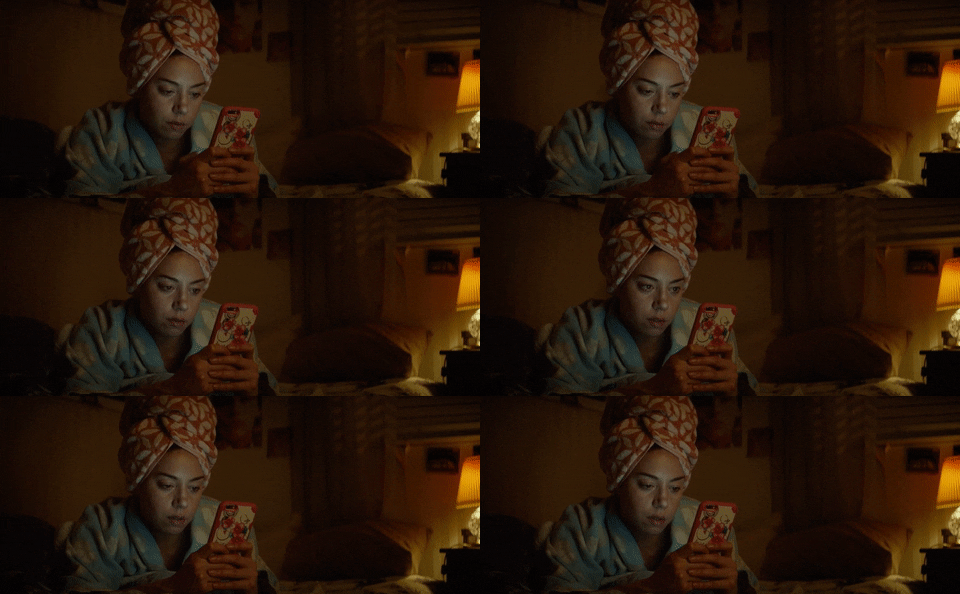
Enter Ingrid Goes West. This 2017 film stars Aubrey Plaza as Ingrid, a girl who has just lost her mother. She is introduced to the audience by causing a huge scene at the wedding of someone she considered a close friend. Reeling from this, Ingrid finds Taylor (Elizabeth Olson) on Instagram. Ingrid becomes obsessed with her and decides, on a whim, to move to Los Angeles, emulate Taylor’s life, and hope against hope that she can become her new best friend. This, of course, goes horribly wrong. One of the most interesting aspects of the film is that it is a fascinating look at Instagram culture and how we all fit into it.

First, let’s take a look at Ingrid. We first see her scrolling through an Instagram feed depicting a wedding to which, we assume, Ingrid had unfairly not been invited. But once we see that Ingrid actually wasn’t invited because the bride barely knew her, we realize that Ingrid has fallen prey to one of the most pervasive issues with social media: tricking ourselves into believing that we’re part of people’s lives because we get to see so many glimpses of them. She gets angry, pepper sprays the bride and is then put under a psychiatric hold.

When she comes home, Ingrid’s flipping through a magazine and sees Taylor. She is immediately taken by Taylor, finds her on Instagram, and spends a great deal of time scrolling through her feed before finally following her. It takes a dozen tries (with a comment that sounds cool on a post about a restaurant), then Ingrid waits and practically jumps through the wall when Taylor responds saying she should try the restaurant the next time she’s in L.A. Ingrid picks the magazine back up and sees that Taylor lives in Venice. After that, it’s off to the races.

While most people would not go as far as Ingrid does, it’s not unheard of for someone to want to emulate the life of their favorite social media star — or even someone just outside of their social circle. They see the food they eat, the music they listen to, the type of events they attend, and take their recommendations.

In an effort to have Taylor like her and become her friend, Ingrid studies her and does what she does, eats what she eats, and fabricates her existence to fit into Taylor’s. It’s cultivating a fraudulent life on a digital level.

However, on the flip side, Taylor’s Instagram life is equally as fraudulent — but in a different way. Instead of accepting her life for what it is, she too cultivates a life for herself full of glossy images of Joshua Tree, margaritas, avocado toast, and a boho California dream that she doesn’t live exactly. Sure, those are aspects of her life, but they’re not the humdrum day-to-day world she inhabits. It is a fact that her husband points out in a vulnerable moment to Ingrid toward the end of the film.

Ingrid’s feed is a complete fabrication of what her life really is. She’s giving us a version of her life rather than the reality of it. It’s an Instagram smokescreen. There’s nothing bad that is posted, there are no struggles shared. Her feed is cultivated to insight jealousy and sell an idea rather than a fully-realized existence. This is evident in the scene where Ingrid drives Taylor to Joshua Tree and they end up needing to get the car fixed. She asks the mechanic to take a picture of them and when she gets her phone back, asks him to take another one, then another, and maybe just a few more. And could he also get down on the ground to get the sign in at a better angle? Instead of posting just the first snapshot, Ingrid insists on finding the right shot that has the proper pose, background, and angle. It’s all about aesthetic rather than the rawness of reality.

When Taylor’s brother comes to visit and says how he had met a famous model on the plane ride there, Taylor just about falls over with excitement. Being seen with this model could almost guarantee that she’d see an increase in followers. Isn’t that what Taylor is after? She seeks Instagram fame and adoration from countless clicks on a keyboard around the world. She wants to be goals in the worst way. It would somehow validate her and what she’s doing.

Ingrid is willing to change her life to become friends with one person, and Taylor is willing to throw away anyone seen as a stepping stone in order to find the right friends to make her Instagram famous. In essence, they both want to be liked, but they go about it differently.

This is essentially what’s wrong with Instagram culture. We create these lives that are highlight reels instead of whole truths. We create our own version of the truth — one that looks good to others. We post the best photos with the right lighting, the right filters, and a zippy caption. We create new versions of ourselves that aren’t who we are as a whole, though that’s what we brand it as. We also assume that we’re privy to the other aspects of a person’s life: the aspects seen and unseen in this perfectly cultivated world. We insert ourselves where we shouldn’t be and mold ourselves to fit into someone else’s version of their life. As a result, we create false bonds.

Ingrid falsifies her life to gain friends, and Taylor fakes her way through friendships in order to gain fame. It’s the dichotomy of social media: we’re always trying to lie our way to something else.
Ingrid Goes West is a rare look into the Millennial psyche, but an important one. It’s a generation labeled often inaccurately and this film shows that we are constantly having to fake it until we make it. Sometimes that absolutely backfires. And sometimes something new comes from that — something we didn’t expect.

We need more films like Ingrid Goes West that help show the complexities of a generation constantly at odds. We need more films like this to remind us that we’re not alone and that everyone else is just as lost as we are.

Ingrid Goest West is available now for streaming on Hulu.

Wednesday, December 20, 2017

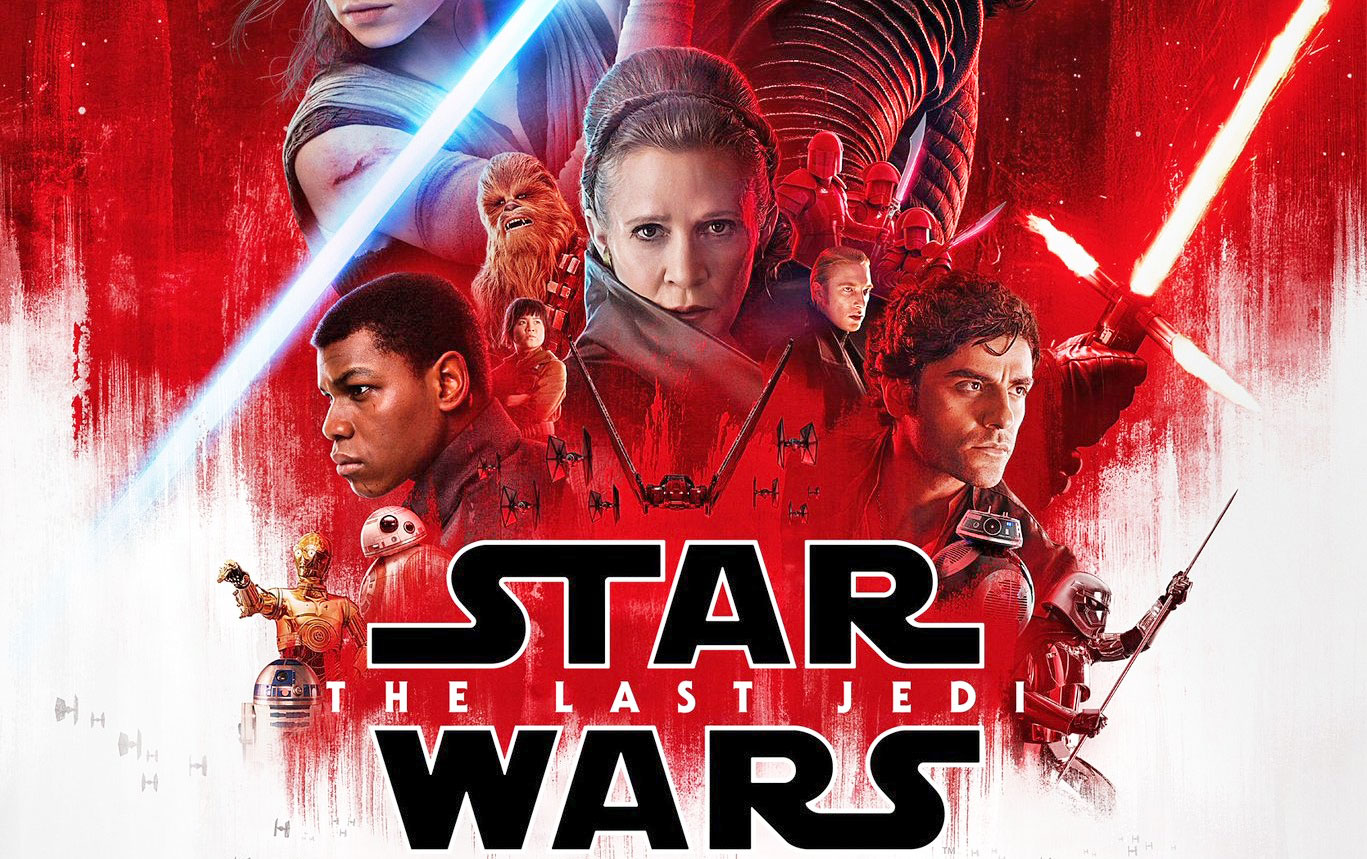
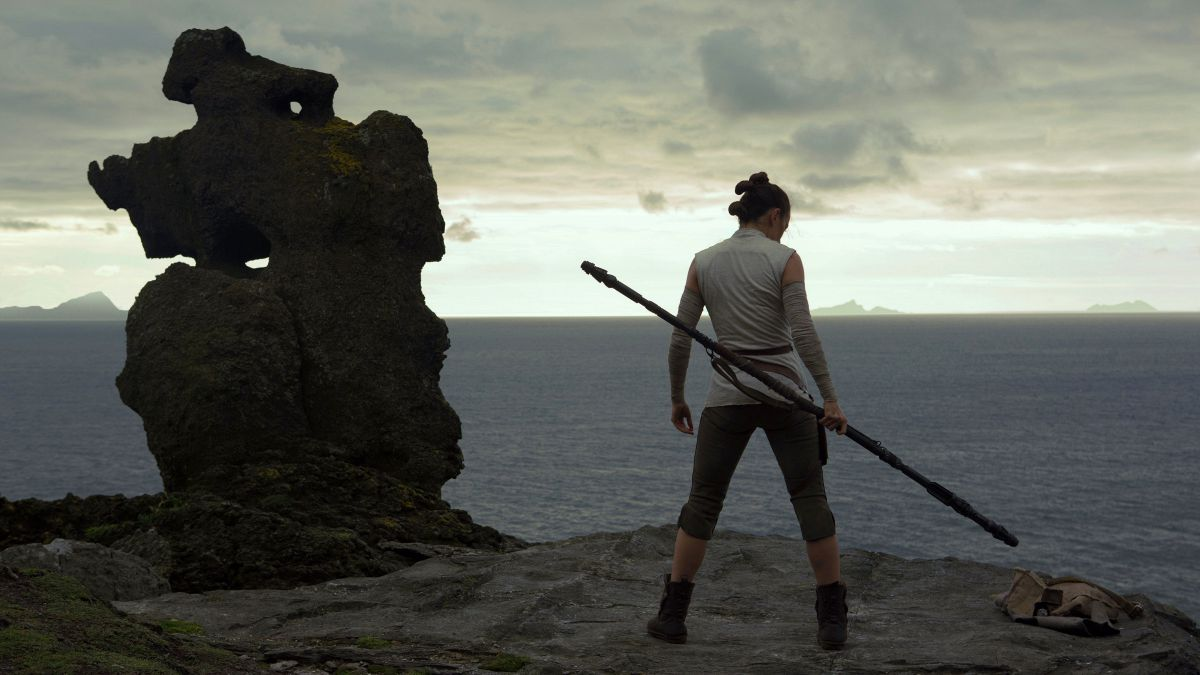
We Are What They Grow Beyond: The Coming of Age for a New Star Wars [Contributor: Melanie]

Image result for star wars the last jedi

Warning: Spoilers for Star Wars: The Last Jedi lie ahead.

The thing about this series is that it spans 40 years. That’s a long time to keep something going, to hand it down from one generation to the next. But Star Wars endures and with Rian Johnson’s addition to the series it does more than that. It thrives. It’s a tale that has always ever been a story told in the traditions of epics and legends of our world. It was a story of spaceships and laser swords rooted in the human tradition of a call to adventure, a meeting with a mentor, and face down with that which holds the most power in life of our hero. The Last Jedi does not break this tradition, no story ever could. It’s encoded in the DNA of our storytelling that we walk through the steps of a Hero’s Journey but Johnson’s film does everything it can to make you second guess the clean and quick nature of this story telling method and ask yourself… well, where do you want the story to go?

“Why are you here, Rey from nowhere?” 

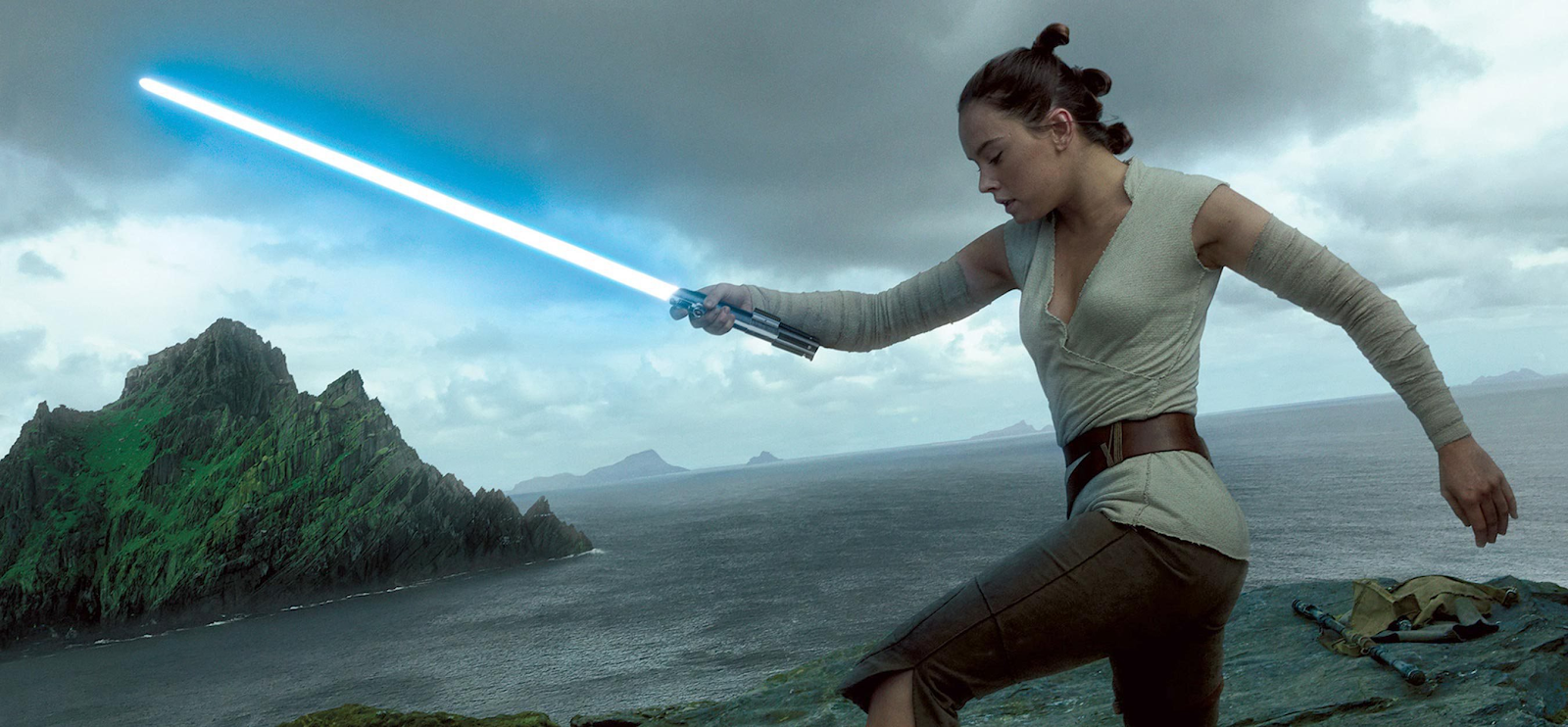
The fact of the matter is, I’m not entirely convinced that they didn’t change Rey’s backstory during the mysterious rewrite period in early 2016 when filming was delayed so Rian Johnson could rework the script. I saw this because a lot of supplementary material pointed to Rey having an actual plot connection to Kylo Ren and what happened at the temple. But, if she ever was a Skywalker or Kenobi, it’s evidently been tossed in favor of the story of Rey from Nowhere. She is a King Arthur, complete with her own proverbial sword she pulled from a proverbial stone, but no Uther Pendragon to gift her a birthright, no connection or obvious place to the story she’s inhabiting. (That is, assuming, we take Kylo Ren at his word. After all, we didn’t find out about the twins until Episode VII and that was after an uncomfortable twincest scene in Empire so fake outs happen...).


Is it such a bad thing? We all, myself loudly included, wanted a heritage story with a fight for the Skywalker legacy (or even the Kenobi one). And we still might get it. Perhaps the story of Rey’s shrouded heritage isn’t over. But let’s assume it is, what does it mean for Rey? We know she has major abandonment issues. That apparently lead to some identity issues as well. Maybe she herself was hoping to find herself a member of the Skywalker family. What she learns is that her parents were anonymous drunks who traded away their child for money and died in some anonymous graves in the desert (again, according to Kylo Ren).

There’s more weight to her choices now. Being a Skywalker is about reacting, making a choice under a predetermined context of good and evil. They all faced the same forked path: darkness or light. Rey is a blank slate. She comes from nothing, her heritage does not matter, so all that matters is what she chooses to do. And it’s clear her choices are not about Sith or Jedi, darkness or light, but simply about what is the right thing to do. She’s setting up her own Skywalker legacy and the black and white of the original films and prequel trilogy faded away with Luke Skywalker under the twin suns. Rey’s not picking sides or worrying about making one wrong move and letting it “forever dominate (her) destiny.” She’s just trying to protect her friends.

So why is Rey from Nowhere here? Well she’s got a job to do, people who are counting on her, and friends to protect. And I’m kind of super on board with that. The Jedi did not own the Force, though they behaved as though they did. If the failures of the Jedi and the failures of Anakin Skywalker are to be purged from the new narrative, it will have to center on someone untainted by a connection to either of those things. Or at least someone who believes she is unconnected to it all.

This film did not paint our hero in a gray light so much as it painted her in a human one. The Jedi asked for perfection and instilled it since birth in their disciples. The result was a group of warrior monks for hire who thought their moral high ground and perceived control of the Force put them above others. The Order is gone. But a single Jedi - the last Jed i- someone who utilizes their connection to the Force for protection and light, got away on Crait.

“It surrounds us, and binds us…”

We know from scientific over explanation in the prequels that the ability of certain individuals to feel and manipulate the Force happens at the cellular level, something present in the DNA. Which makes it sound infinitely less cool but let’s run with this for a second. Traits are handed down, eye color, allergies, cheekbones. But on the macro level we hand down generational attributes. All humans became bipedal, became hairless, became intelligent. And we all know we come from the same family tree. The Force, I imagine, will act in the same way. It’s a genetic trait, a rare mutation. But it’s also something connecting the entirety of life in the galaxy. The Force is in everyone, with a select few who can actually wield the abilities it offers. We see at the very end of the film there will be others, a future generation of Jedi under Rey’s tutelage.

But… if everyone’s super, then no one is.

Perhaps it’s the converse to the Rey Nobody argument. The Skywalkers were a unique bunch. The Jedi were already rare but the Skywalkers, a family line literally born out the Force itself were even more unique. And we all want our characters to be special, to be the chosen one. Rey is the person who happened upon Anakin’s lightsaber. It may have well happened to any one of those children we saw in the last seconds of the movie who show apparent Force sensitivity.

There’s a cultural need for our heroes to be divinely ordained. Odysseus was favored by the gods. King Arthur was chosen by the Lady of the Lake. Even Harry became the subject of prophecy because he was literally chosen to be the one it referred to by Voldemort. We want to believe there is a cosmic purpose to our heroes, the possibility of superhuman uniqueness. So was it the will of the Force that BB-8 came across Rey and the adventure began? Or was it just luck?


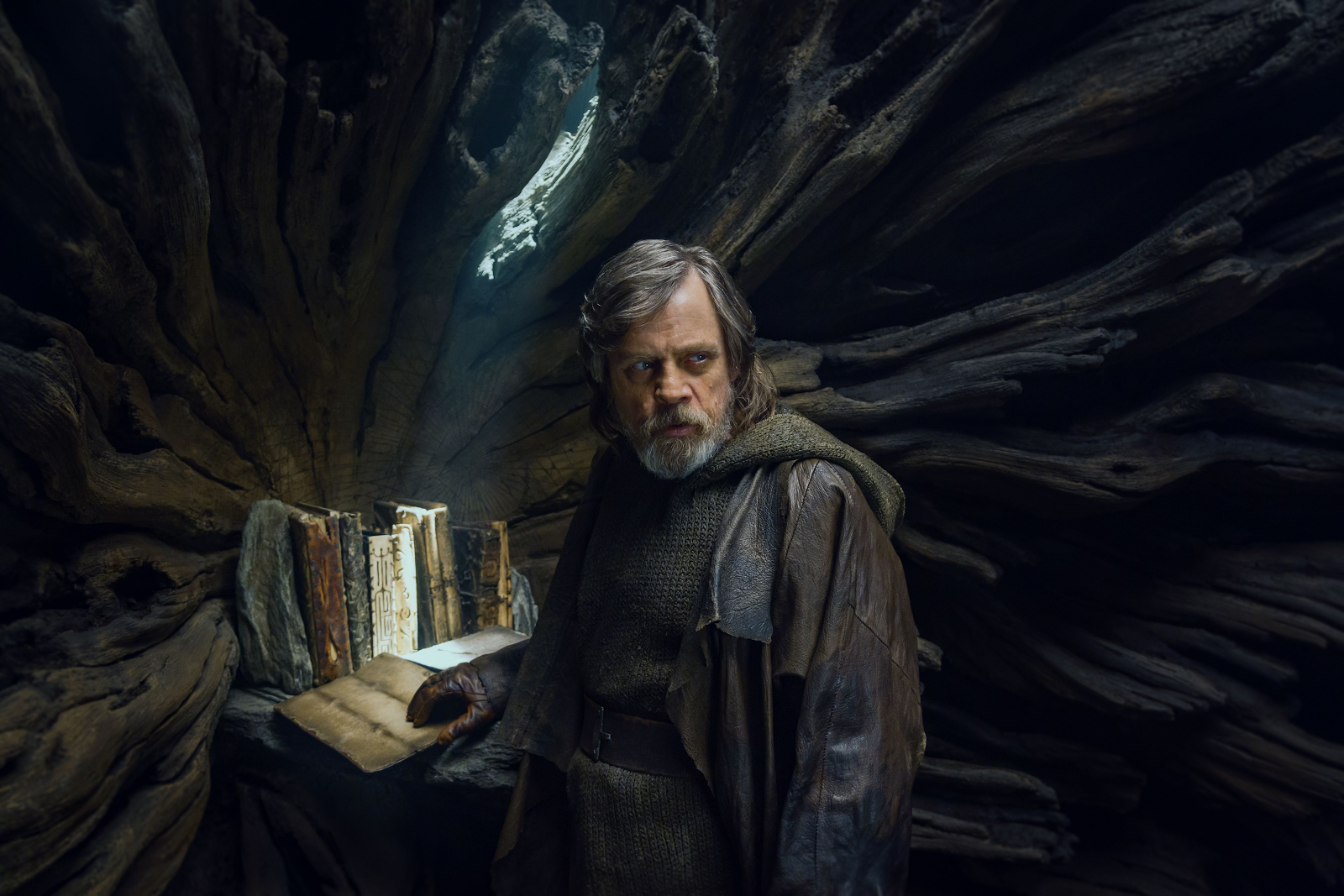
For all of Rey’s importance in The Force Awakens, this movie strikes down everything about herself she thought might be special. Ben is the only Skywalker. Snoke simply wants to use her to get to Luke. Luke himself does not consider even her unique and powerful abilities worth teaching. She wrestles with that lack of importance in the scene in the cave. When Luke entered his own cave to face down the demons in his head, it was Vader and the possibility of himself becoming him that he fought against. When Rey did it, it was the repetition of seemingly millions of exact copies of herself, painting her as one of thousands who could wear her face, do what she does. It was her fear of no identity that she looked down in the mirror.

But the film paints this as a good thing. Yes, anyone could be standing where she is. Anyone could have found the lightsaber. But she is the one standing there. She was the one the lightsaber obeyed when it was called by both her and the grandson of its original owner. And with our young friends at the end of the movie, showing us there are still allies in the galaxy for the Resistance and a future for the Jedi, show that, as Maz says, hope is not lost today - not in Rey’s underwhelming personal truth nor in Luke’s departure - it is found - in Rey’s natural inclination to care for her friends and the sense of fellowship that bonds the Resistance.

“Heir apparent to Darth Vader.”

*snort*

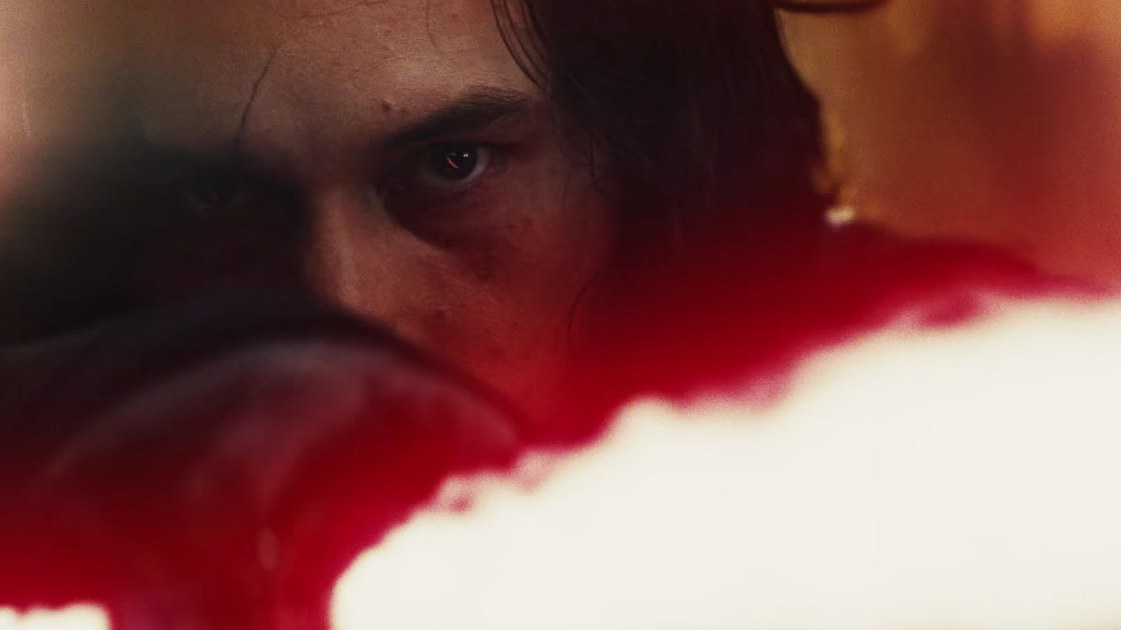
Anyway… Kylo Ren does have a lot in common with his grandfather including emotionally manipulative relationships with the women in their lives and a thirst for control of the galaxy. In Anakin’s story, at least he thought he was doing something good. It was misguided and stupid, but he believed politics and the Jedi both to be corrupt and wanted to establish peace and order. Kylo Ren basically just wants to prove that his dumb af choices weren’t made for nothing. He got himself up his own creek with SEVERAL paddles thrown at him but decided to ignore them all and see this thing through. Where Anakin asked Padme to join him because his entire effed up decision making process was based on protecting her, Kylo asks Rey to join him simply because he wants attention from someone who he thinks will understand him.

And Rey is having none of that.

A story that could have so easily slipped into a damaging tale of siphoning emotions for the sake “saving” our bad boy with a good heart, Rey literally slams the door on his face. This is especially good considering it was a HIGHKEY problematic move to have Kylo Ren tell Rey that he, essentially, was the only person who would ever find her important. Her terms were clear: she came to recruit him to the Resistance, not redeem him, not save his soul, or any other bs like that. When he refused to be an ally, she noped out of that situation and went back to help her friends. She pities him, she does want to help him, but only if he will help himself. If he’s not going to meet her halfway, she’s got more important things to do.


Ultimately, Kylo Ren’s story is about a bratty kid who took his temper tantrum a bit too far and now doesn’t know how to pump the breaks. He grew up in a busy household, we know that Han and Leia both had careers to attend to and sent him to Luke in the hopes that Luke could give him the attention and training he needed. But Leia checked in regularly at the Jedi temple, we know from Bloodlines. She received holos from her brother and son until, one day, they stopped coming. For his part, Luke made a very poor snap decision and Ben’s actions to defend himself turned into an act of violence that murdered dozens of innocent students. He then went on to murder an entire village on Jakku, play party to the creation of a devastating weapon of mass destruction that destroyed an entire system, and murdered his own father.

He’s a piece of crap. But he’s a complicated piece of crap.

Is he worth saving? Probably not. He seemed to have made his choice here when Rey offered to help him several times. He was pretty quick to flip the switch then, angrily ordering her ship to be blasted out of the sky when he spots her again. Are we done with this line of thinking though? Doubtful.

The Force Awakens was about a return to our familiar world. The Last Jedi was about crossing the threshold and leaving that world behind. This is a character-driven Star Wars trilogy that, as look warned us, doesn’t always go the way we think.

Monday, October 30, 2017

The Carmilla Movie Review: The Ghosts of Carmilla’s Past Won’t Define Its Future [Contributor: Melanie Moyer]

carmilla-the-movie-still.jpg


“Every love story is a ghost story.” — David Foster Wallace


Spoilers for The Carmilla Movie are included below. Read at your own risk.

If I tell you I’m thinking of a 19th century work of fiction penned by an Irish author about a European vampire who becomes obsessed with a upstanding young woman, you would guess Dracula right? But everyone’s favorite count was late to the party (alternative title: Dracula Shows Up to Vampire Media 15 Minutes Late With Starbucks But Gets to Be the Poster Boy). About 26 years earlier, Joseph Sheridan LeFanu penned a story about a century old countess who exercises her vampiric thrall over a terrified young woman.

Fast forward to 2015 when an independent web series out of Smokebomb Entertainment reimagines the story in a modern-day university, takes back the predatory lesbian trope, showcases a plethora of queer identities on screen, and wins a Canadian Screen Award, several AfterEllen Visibility Awards, and racks nominations at the Streamys and Shorty Awards across three seasons. Now it’s a full-length film set five years after the end of the series where Laura and Carmilla are snug in their domestic life in a Queen East apartment before Laura is beset with strange dreams of Carmilla’s past lover, and Carmilla herself is biologically regressing from certified homo sapien back into a vampire.

Many great horror films personify the past in its villain. Freddy Krueger serves as the demon of children’s dreams as vengeance for his (completely justified) murder at the hands of local parents, Mrs. Voorhees stalks counselors at Camp Crystal Lake in revenge for their neglect allowing her son to drown, the demon possessing Regan comes straight from Father Merrin’s past and attacks Father Karras’ lack of faith, and even home invasion films like Get Out portray a man trying to right the untimely death of his daughter. There’s more than one way to tell a ghost story.

So how does Carmilla look at the ghosts of the past?

On the one hand, with literal ones that just won’t let Carmilla be after 300 years of being kind of an jerk, as well as her own ghost of millennial confusion (same). And the film makes what will likely be a polarizing choice to answer the question of if Carmilla deserves her human life and if she even wants it. Ultimately in our Happy Ending Override, Carmilla gives up her life to free the ghosts she conjured up, trapped in a netherworld of nightmares, making the point that her humanity — her ability to age alongside Laura — wasn’t the point of their happy ending. There’s this great bit from Syd Field that makes the point that while descriptors and aspects make up characteristics, the character themselves is the choices they make. I think that’s potent here where Carmilla’s humanity isn’t defined by her pulse, but by her choice to act on empathy. A choice that, for once, had absolutely nothing to do with Laura and actively went against Laura’s wishes. Yay development!

This film effectively undoes that clean break at the end of the series, though there are hints (such as Laura’s report on the discovery of a fountain of youth and Mattie’s post-credit scene setting up for more stories) that there might be workarounds to the gut-wrenching possibility that Carmilla will have to watch all her friends die after all. This particular bit of self-sacrifice didn’t come with a reverse switch, but the movie tells us that’s okay.

And then, on the other hand, there are the ghosts of Carmilla’s own literary past.

By going back to the events of 1872 novella, this modern adaption literally stares down its problematic first life. In that context, it’s a powerful image to open with: The Laura of 2017 — a feminist and queer icon for the internet community — looking at her (literal) mirror reflection... the 19th century version who history will remember as a victim of predatory lesbianism. It’s yet another win for the queer community taking back its own history. It cleans up some parts, like presenting Elle (the “Laura” of the original) quite in love with Carmilla, rather than having an existential crisis over her attraction as she does in the novella. It also shows our present-day Laura kind of enjoying the bits of the novella where Carmilla slunk about at night like a seductress, “terrorizing” her. I mean, granted, the non-consensual blood drinking and the lying was still pretty Not Great™ but gone is the Laura who tried to chop off Carmilla’s head because God forbid she have a crush.

This film also made a great point that we are the makers of our own unhappiness. Elle was unwilling to accept her own role in her death, attempting to shove the memory away and blame the thing that she could actually get her hands on. The issues of Carmilla’s continued vampirism were nothing more than what-ifs Laura conjured up based on societal expectations and her own quarter-life crisis. Carmilla herself was the one who forced the ghosts to manifest when a therapist (who probably should get their license revoked) forced her into some exposure therapy before she was ready. Some problems are very real, but many of the ones our characters go through here required introspection and communication, not spells, five-year plans, or a magical broach.

Beyond all that? This movie was just a ton of fun to watch and I hope Smokebomb gets to make more content in this universe (rumors about a young adult series). You can find the original web series on the KindaTV YouTube channel and the film itself is streaming on Fullscreen and available for purchase here.

Wednesday, May 24, 2017

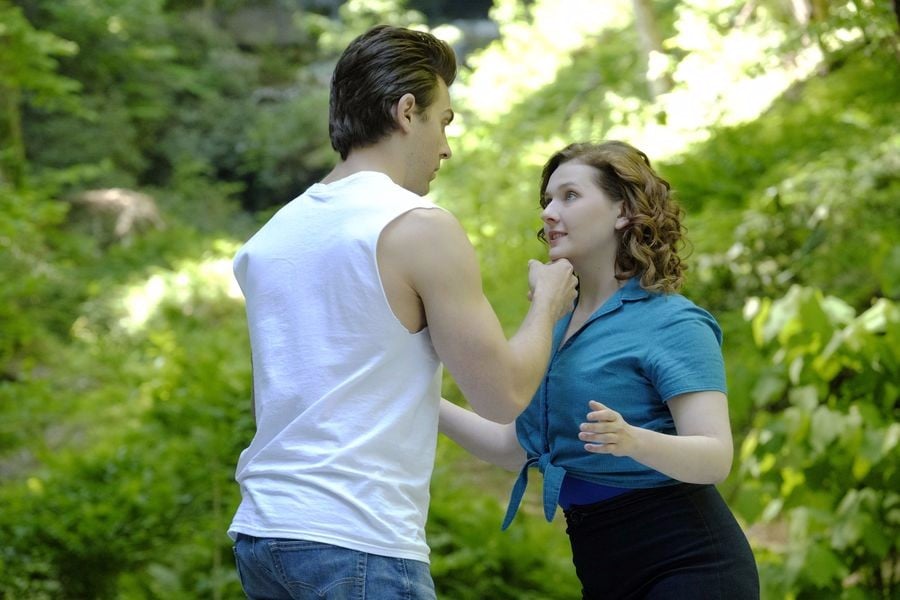
5 Reasons the Dirty Dancing Remake Isn’t Worth Your Time [Contributor: Jenn]

(Photo credit: Entertainment Weekly)

In 1987, people all around the world fell in love with a guy named Johnny and a girl named Baby as they danced our way into our hearts (while steaming up the screen a little bit). "(I've Had) The Time of My Life" is an incredibly iconic song and scene thanks to this film, after all. And if you say the two words "the lift," everyone will know exactly what you mean. It's had numerous recreations — I am partial to the one in Crazy Stupid Love — and the love story between Johnny and Baby remains as beloved and recognizable as the dancing in the film. So when I received an email that ABC released the screener for their made-for-television remake of Dirty Dancing, I had to check it out — even if just out of morbid curiosity.

I kinda wish I hadn't.

There are a lot of reasons that movies shouldn't be remade. People are usually pretty sentimental and attached to a film they once saw, especially if it's a classic or a cult hit. Therefore, any attempt at a remake should stem from a place of love and respect for the source material. It's a fine line to walk: not recreating a film shot-for-shot, but also not straying so far away that it's unrecognizable from its predecessor. There are some good remakes out there (the new Beauty and the Beast was a faithful adaptation), and some bad ones (here's looking at you, Sound of Music: Live!). ABC's Dirty Dancing resembles, pretty similarly, the classic film from the 1980s in structure and plot — even in spite of some divergences. But it's a flat, uninteresting version. Plus, ABC's version attempts to add a meta twist to the story which will (if you're anything like me) induce rage in the viewers.

Let's break down the five reasons why this remake isn't worth your time. Beware: Spoilers abound for the twist that the 2017 version contains. (Yes. Spoilers.)

Image result for 2017 dirty dancing
(Photo credit: Entertainment Weekly)

1. ABIGAIL BRESLIN IS NOT BABY.


When I heard that Abigail Breslin would be playing Baby, I was very confused. I think Breslin is an incredibly talented actress when she's in the right roles (Little Miss Sunshine, My Sister's Keeper, and even the campy Scream Queens). But Baby is not that role for her. And that's because Baby is an incredibly complex character to pull off. She's supposed to be naive and a little bit standoffish when she meets Johnny. She is also meant to be stubborn and insecure. We watch her become more of a woman throughout the film because of her relationship with Johnny. She's in that age where she's trying to balance how to go from being a girl to a woman (Britney Spears even wrote a whole song about that weird phase of life).

Jennifer Grey's version of Baby is, likely, the only one most of us know — or at least the one we connect most deeply with. Breslin had an incredible set of shoes to fill, and the problem is that the version she portrayed didn't really connect with me. Rather than just being a bit green, Breslin's Baby is more bookish than her 1980s counterpart and is trying too hard to fall into her father's footsteps (it's... weird and kind of implied that Baby has deep daddy issues).

That would be fine, but this version of Baby doesn't feel like she has much to her apart from "has very little life experience." She's supposed to be an earnest character and a nice one, but she mostly just comes across as soft-spoken and skittish. Breslin plays her pretty even-keeled which is a disappointment because in spite of her lack of life experience, Grey's Baby was actually pretty fiesty and fiery. This Baby is just bland — flitting in and out of scenes. And that makes her transformation by the movie's end: a) not dramatic enough and b) not earned.

Again, Breslin is incredibly talented but this was not the role for her at all. She seems to spend most of the film unsure of how to play Baby, and the dialogue is incredibly stilted and forced. Nothing about Baby feels easy or natural or believable, and that's a shame considering she's the protagonist of the film.

(Photo credit: Entertainment Weekly)

2. THE SUPPORTING CHARACTERS ARE MORE INTERESTING THAN THE MAIN ONES.


When the supporting characters get more story than the main characters, you know there's a problem. I actually found myself to be more invested in Penny (the incredibly talented Nicole Scherzinger, who is carrying this movie on her shoulders) and Marjorie (Debra Messing is quite good) and even Lisa (Sarah Hyland surprised me in this role) than the lives of Johnny and Baby. I talked above about Baby and my issues with her characterization, but Johnny also leaves a lot to be desired. For starters, try as he might, Colt Prattes' Johnny comes across more as a tortured Greaser than a sultry dance instructor. It's impossible to fill Swayze's shoes, but this version of Johnny feels a bit dull. His devotion to Penny is admirable and earnest, and his care for Baby is evident. But I don't quite buy into his story, or lack thereof, like I do in the original. Johnny's only real "story" is that he wants to eventually (maybe) be a choreographer.

But that's it.

Johnny and Baby's love story feels rather dull and dry, while the story that plays out between Marjorie and her husband is incredibly complex (and given a lot of screentime, actually). Even Lisa's story feels like it was more developed (with her initially dreaming of marriage, then having those dreams crushed when she saves herself from being assaulted by Robbie, then develops a sweet relationship with Marco) than the main characters'. I guess I just expected to be more impressed and engaged with the main love story than I actually was.

And speaking of story...

(Photo credit: Entertainment Weekly)

3. THE REMAKE ADDS NOTHING FRESH TO THE STORY.


The problem with remakes is that they're usually shouts into the void — they don't add anything new to the story (again, apart from the end of this movie that can be argued) and are made simply because it's been X amount of years since the original and it's due for an overhaul. Details within Dirty Dancing's story do actually shift around a little bit from the original. For example, the way that Johnny gets accused of theft is very different, and Robbie's character has a different story in the remake than the original. Details are altered but they're small enough that they don't really affect the overarching plot. Though honestly, Robbie's character in this remake seems less aggressive but no less irritating than the original.

Dirty Dancing's remake isn't really adding anything new to the canon with this one... apart from the fact that the characters break out into song. Sigh.

(Photo credit: Entertainment Weekly)

4. THE DANCING IS... OKAY?


The film is called Dirty Dancing for a reason, but I didn't really buy into the dancing (unless Nicole Scherzinger because she's fantastic), and wasn't blown away by it in the slightest. The group dance scenes were pretty decent — though nothing incredibly spectacular. And as I mentioned above, the infamous lift was incredibly anticlimactic. Unfortunately, I don't really know that Abigail Breslin is the right choice for the role of a dancer. If you choose to watch the film, I assume you will feel the same way.

That's it, kids. That's all I have to comment on.

(Photo credit: Entertainment Weekly)

5. THE STORY SHIFTS AT THE END.


Be warned now, I'm about to spoil the end of Dirty Dancing for you.

"But Jenn," you'll say, "this story has been around for over 20 years. There's no way you can SPOIL it." And you, dear reader, would be right. ... If this version hadn't taken some creative liberties with Johnny and Baby's story. For starters, the film begins with an older version of Baby attending the musical, Dirty Dancing. (Gee whiz, how meta of them.) The entire film is told in flashback, as Baby reminisces on that summer that led to the creation of the aforementioned musical.

After the now-famous "(I've Had) The Time of My Life" dance scene at the end, there is more to the story. Gasp, right? As if we forgot — and I actually did — the movie doesn't end there. Instead, we return to a present-day Baby sitting in an empty theatre. Everyone has left the musical, and she's sitting there still smiling at the screen. As she goes to leave, who should she run into but Johnny, now older and a successful choreographer. Of course, he's the one who choreographed the show. While she's talking to Johnny, a young girl runs up to Baby.

It's Baby's daughter.

Johnny and the audience are taken aback, but we have no time to react because there's more! A man walks up to the group and introduces himself to Johnny. It's Baby's husband. Baby confesses that she really doesn't keep up with dancing anymore apart from taking a salsa class at her local JCC (is Baby actually Jewish? Is her new husband?). Johnny and Baby part ways, but affirm that they'll always remember the one summer they had together.

AND THAT IS HOW THE STORY ENDS.

I wanted to throw something at my screener, because somehow this reboot couldn't stick to the original ending and broke up an incredibly iconic couple for the sake of... what? A plot twist? A "realistic" ending? I'm all for realism in fiction, but this remake took it too far. Instead of focusing on the love story between Johnny and Baby and ensuring that it was presented in the best way it could be, this movie decided to throw a wrench in all of that and end with the two separated. When I chastised the film above for not adding anything fresh to the story, this was not what I meant. "Fresh" should be developing characters further or adding new voices to the film. It shouldn't be to rewrite history.

That's like if a Grease remake would end with Sandy choosing to remain the "good girl." Or a Sound of Music remake ending with the entire family getting trapped in the convent. Or a Footloose remake that ended with no dancing.

I'm a romantic, but am okay with movies ending without a main couple getting together — as long as it makes sense for the story. But with Dirty Dancing, the only reason that this 2017 prologue and coda exist are because the creators CAN, not because they SHOULD.

Sorry (not sorry), Dirty Dancing, but you are not worth anyone's time.

Saturday, April 22, 2017

Secret Film Festival 2017: A Review [Contributor: Erin Allen]


My local theater puts on a Secret Film Festival every year. “The titles are secret, the awesomeness is not” is their tagline. Past titles include Hunt for the Wilderpeople, Slow West, It Follows, and What We Do in the Shadows. I made my third consecutive pilgrimage for the 12th annual event and saw some great films. You can read about my experience at the 10th annual fest here and the 11th here.

The premise? Twelve hours of movie viewing from midnight to noon of unknown independent film festival favorites. Sometimes you are given a choice between two movies, and the host gives you a short description of the film beforehand.

FILM #1

Described as a 70’s action/comedy.


Free Fire is a film from the independent distribution company, A24, which is on my radar after reading about Rae’s A24 challenge. It’s very Quentin Tarantino’s Reservoir Dogs with a lot of violence and comedy. Gory brutality mixed with witty dialogue and a John Denver soundtrack makes the one location setting fresh and exciting. The cast is really strong with Brie Larson as the sole female role. The sound editing and mixing are phenomenal. The plot is simple, but executed with vertiginous choreography and efficient editing which keeps the film engaging throughout. I think this was a perfect choice for the opening film.

There are many great quotes, but this is my favorite:

Stevo: Do you have any headache pills?

Bernie: I got crack.

Stevo: Talk about a f'ing sledgehammer to crack a nut.


FILM #2


First choice of the night. The options are a medieval convent comedy based on Boccaccio’s The Decameron, or a Polish comedy/drama/horror/musical with subtitles.

I went with the first option. We were informed that the second option would be available to choose later, so I thought this was a smart move. 


The Little Hours is a hilariously irreverent comedy with a stellar cast. It has so many of my faves! Aubrey Plaza, Molly Shannon, Nick Offerman, and Fred Armisen to name a few. It also stars John C. Reilly, Alison Brie, and Jemima Kirke. Dave Franco plays a servant boy on the run who takes cover in the convent. He soon realizes it might not be much safer since the nuns are overcome with wicked temptations of debauchery.

This quote:

Father: Such abusive language!

Sister Fernanda (Aubrey Plaza): That’s just the tone of my voice.

She is basically April Ludgate in a habit.

FILM #3


The choices are a horror/mystery with disturbing imagery directed by the director of Trollhunter, or a film described as if Napoleon Dynamite and Rushmore had a scrappy Australian baby.

Loving both of those quirky comedies, I went with the latter. 


Girl Asleep definitely has some Napoleon Dynamite-esque qualities, but the Rushmore description didn’t vibe. It’s a coming of age story with a nightmare fantasy/adventure element that reminded me of Where The Wild Things Are. Great visual representations of the horror that is adolescence. Bethany Whitmore in the lead role is fantastic. There is also a very cool mythical character called The Huldra, which is a Finalandian warrior-ess that added to the strong female themes. It is the directorial debut of Rosemary Myers who directed the stage play. I hope to see more from her in the future.

FILM #4


The fourth film gave me the opportunity to see the film I passed on earlier, but I still didn’t bite. I chose the horror/comedy/drama about the bond between a mother and her unborn child.


Prevenge is a super dark look at how pregnancy can make you go kind of crazy. I so related to the main character’s feelings of being pregnant, how it can feel like a “hostile takeover” and that you are a “human sacrifice to [the baby’s] will.” I love that this was portrayed in a dark comedy-style horror film. Oddly enough, to me, pregnancy kind of lends itself to this genre rather than fluffy rom-com flicks. Alice Lowe wrote, directed, and starred in the film while seven months pregnant. That fact is impressive by itself, so it’s even more inspiring that the film is so outstanding.

Overheard by another moviegoer: “That made me not want to have kids. Like ever.”

FILM #5


The first option is a Korean film about trains and zombies. The second is described as “a drama/mystery that will go good with your current state of sleep deprivation. It’s Donnie Darko meets The Machinist meets Mr. Robot.

I chose the second because I really love Donnie Darko.


Buster’s Mal Heart is a time-traveling mind-bender. Rami Malek is great in the titular role, which is good because you spend the whole movie with him. I love stories about wormholes and the space-time continuum, even if I don’t really understand it. This film is a deeply intimate look at how these theories can create a paranoia and a singular obsession in the most mild-mannered people.

Cool quote: “It was a cosmic mistake that we made it this far.”

FILM #6


No more decisions to make. The final two films are not options. This makes me nervous because the sixth film is described as a horror film about heavy metal and family and Satan. I’m not really good with horror or Satan. Going to Catholic school for most of my education kind of made anything having to do with demonic religious themes scare the crap out of me. If I had a choice at this point, I would’ve chosen the alternative. Not to mention that it is now the morning of Easter Sunday, so watching a movie about Satan seems a tad sacrilegious. I armed myself with popcorn and mustered the courage.


Well, this was absolutely terrifying, but in an absolutely entertaining kind of way. The Devil’s Candy has satanic forces, a haunted house, and a really adorable heavy metal-loving family. I like that the filmmakers chose not to go campy and presented a straightforward narrative without straying from the elements that make the horror genre so captivating. I thought it was so twisted to be watching this movie on Easter, but the ending actually made me think of this as a perfect film for the holiday. And I swear I’m not saying that under possession of the Devil.

After the credits rolled, the emcee said, “You just watched The Devil’s Candy. Happy Easter.”

FILM #7


The closing night (day) film is an animated film about high school, with a warning for people with photosensitive epilepsy.


If this was a graphic novel, I would’ve been all over it. It was initially created as a comic short story, actually. I don’t think it’s very successful in the animated feature format. My Entire High School Sinking Into The Sea has an impressive cast of voice actors starring Jason Schwartzman and including Susan Sarandon, Lena Dunham, and Maya Rudolph. The animation has a strobe-like effect (hence the warning) that is somewhat irritating to watch. That coupled with the frantic nature of the plot made viewing this film kind of exhausting. It could have something to do with the fact that it is at the end of a long marathon, but my past two experiences at the festival had humorous closing films where my punchy demeanor enhanced the viewing.

The title describes the plot of the film. It takes all those high school personalities that we are familiar with and puts them together in a confined space during an emergency. While it is amusing at times, I found myself quite bored, so it was a little bit of a disappointing ending. I think The Little Hours would have been the better choice to close the festival.

THE FILMS I DIDN'T SEE


Film #2 and #4 alternative: The Lure


Film #3 alternative: The Autopsy of Jane Doe


Film #5 alternative: Train to Busan


You know how it is weird when you go to a matinee and you come out of the theater and it is still light out? Well, it’s even weirder to go in at night and come out in the middle of the day. The Secret Film Festival is a unique experience, and one I look forward to every year. I enjoyed almost all of the seven movies I watched. It was promising to see some films directed by women and so many strong female characters. My favorites were Free Fire, Girl Asleep, and Prevenge.

Do you think you could survive The Secret Film Festival? Would you have made the same choices as me? Let me know in the comments!

Sunday, April 16, 2017

The End of The Force Dicotomy in The Last Jedi and Other Questions [Contributor: Melanie]


Hold on just one second, kids...

Image result for i'm so excited i may vomit gif

ANYWAY.

After months and months of patiently waiting, our prayers were answered in the form of The Last Jedi’s first teaser trailer ahead of its December 15th release. And it had a lot more to say on the topic of the film’s content than I expected. There’s a lot to pick apart in each frame (and I have) but the overarching theme the trailer is presenting is one of the most complicated arguments fans have made over the years: the possibility of a morally dubious view of the Jedi.

When we first hear the word Jedi, it’s through the mouth of Obi-Wan — the quintessential perfect Jedi who pushes the party line that the Jedi were the protectors of peace and prosperity. They used their abilities to serve the Republic as protectors, warriors, and spiritual guardians. Or they were bounty hunters often contracted by the senate for violent odd jobs. However you you want to put it. Potato, potahto. In that same thread they were a cult that brainwashed members from an early age, separating them completely and permanently from their families, banishing emotion, teaching ultimate selflessness and duty to the Jedi Order.

And, despite what they wanted you to think, they had the same flaw as their Sith counterparts: a polarizing view of the Force. Light or Dark. Passion or neutrality. Self or others. There was no in between. If you weren’t controlling your emotions completely, meditating on peace, and rejecting personal gain then you were probably off plotting the destruction of the galaxy and Using Your Powers For Evil™.

In the trailer Luke and Rey seem to focus on the inclusion of both sides of the Force: “The light... the dark... the balance.” This is quickly followed by Luke proclaiming the Jedi must end. It’s a shocking statement, but likely one. And like all great lines in trailers, probably taken out of context. The teachings of the Jedi Order resulted in their own destruction. The stoked the fires of Anakin’s frustrations by refusing to mend any of their beliefs to help reach him. And they were essentially so far up their own butts they couldn’t even see real threats in the form of Darth Sideous. Yoda puts it a bit more eloquently, noting they were prideful and blind to not see the entire Republic had fallen under the thrall of a Sith Lord. Again, the potato thing.

So, what Luke is likely saying (hopefully) is that the Jedi and their Spartan doctrine have lived out their relevance. The Jedi mindset belongs to an ancient order more interested in creating obedient warrior monks. The fact of the matter is, we’re talking about living, breathing people who have these natural gifts to sense the Force around them. Both people and the Force are inherently mixed in their morality, their goodness, their selfishness, their passion, and their ability to control all these things. If you try to create the perfect Jedi, you have a man (Obi-Wan) who was blind to how best help his best friend from turning into a monster. If you preach only Sith ideology of self and passion you get a guy who enslaves the entire galaxy and kills a lot of people.

Let’s get some Gilgamesh up in here and point out that all things ultimately go back to the id, the ego, and the superego (and they all go back to Gilgamesh too). The Sith is the id, the emotional identity that does nothing but crave. The Jedi are the ego, the consuming need for selflessness. Somewhere in the middle of this (and in the middle of all of us) is the superego, the part of the grand design that acknowledges the desires, knows the cost, and finds the balance in between.

Or something. I don’t know.

Apparent from the deep analytical goodies, the trailer also brought into the spotlight some questions we desperately want answered:

Image result for rey the last jedi gif

1) Who is Rey?


The most popular theory out there is, of course, that Rey is a Skywalker. It’s not that far-fetched, considering Luke had a wife and offspring in the original Star Wars Expanded Universe (re: Star Wars Legends). Contextually it also makes the most sense considering the main saga has always been about the Skywalker family. But, on the flipside, the new trilogy seems to be interested in reinventing itself, to some extent. Perhaps we will leave the Skywalkers behind and pass the torch...

Yeah, I didn’t think so either.

No matter what, her identity is pivotal to the story. This is made clear in the novelization of The Force Awakens where Kylo Ren makes it clear he knows who Rey is and has, apparently, been on the hunt for her.

2) What is the fate of Finn?


A small but pivotal line from The Force Awakens makes mention that the current breed of Stormtroopers are subjected to conditioning from childhood, Unsullied style, for complete obedience. The trailer seems to show Finn in a med pod, very much still comatose. A while back in another post, I flirted with the possibility that Finn may find his training and conditioning trigger and revamped from his injuries, perhaps waking up still trapped inside the mind of a sculpted soldier. It would be quite the test of friendship for Rey and Poe to find themselves challenged with bringing their friend back from the dark side...

Tragic? Painful? Excellent, let’s do it.

3) Will Luke die?


Since the title was revealed, fans have been panicking that it suggests Luke is going to bite it. The fact of the matter is, the German and French translations of the title prove Jedi is meant plural in this sense. So if he’s dying, it has nothing to do with the title. But, as all great monomyths go, a mentor needs to die. And though Rey found a father figure in Han Solo and dealt with the pain of losing him, she’ll likely find something much stronger and deeper in Luke (who might also be her ACTUAL space dad).

4) Who is Snoke, and do I really care?


Honestly, there is so much interpersonal drama that I forgot Snoke was a factor. In hindsight, he’s probably the weakest part of The Force Awakens. Unless he turns out somehow personally connect to the Kardashian-level drama that is the Skywalker family, he will likely remain the weakest part of the whole thing. As of right now, he’s an outside element, an environmental factor responsible for some roadblocks, but Kylo Ren’s personal connection to Rey and his own inner turmoil seem like the much bigger antagonists.

Maybe Snoke matters. Some people have theorized he’s some time-traveling version of Kylo Ren himself. Maybe he’s important. Maybe he has an uncontrollable twitter handle and won his seat of power by dubious means. I don’t know, I’m not psychic.

Get hype, kids. It may be April, but the countdown for Episode VIII starts now.

Friday, March 31, 2017

Gifted is a Sweet Film About Love and Sacrifice [Contributor: Jenn]

(Photo credit: Fox Searchlight Pictures)

When I first received the press information about Gifted, I was already hooked. It looked like my kind of film — funny, sweet, and featuring exceptionally talented actors. I was fortunate enough to see an early screening of the movie last night (#pressperks), and our theatre absolutely adored the film. I did, too. Gifted is the kind of film that’s reflective of life without being overtly cheesy or preachy. It reminds us that family isn’t just who you’re born into; it’s also who you choose. And with so many complex themes weaving effortlessly through the film, the end result is a sweet story about what it means to really love the people around you and make sacrifices for them.

Note: the following contains some major spoilers for Gifted. Read at your own risk!

Gifted tells the story of Frank Adler (Chris Evans), a man who is raising his niece, Mary, (Mckenna Grace) after his sister’s passing. Mary is a child prodigy in mathematics, but Frank wants her to have a normal life — to socialize, make friends, and go to a normal school. Frank’s estranged mother, Evelyn (Lindsay Duncan) doesn’t see things that way. She believes that Frank is squashing Mary’s potential and that the little girl will eventually get so bored and resentful for restricting her gifts. A custody battle ensues between the mother and son, pitting family against family.

I think the thing that strikes me most about Gifted is the way that the film doesn’t have a specific “villain.” Initially, we’re poised to believe that Evelyn is a villain — that all she wants to do is loan Mary out, in Frank’s words, to “think tanks, to talk nontrivial zeroes with old Russian guys.” We’re led to believe, because of Frank’s sarcasm and disdain for his mother, that she’s only doing this to benefit her. When we learn that Evelyn was also a mathematics genius, and her deceased daughter, Diane, was also one, it’s easier to understand why she wants what she does for Mary. It doesn’t excuse the way that she goes about it, but it was really thought-provoking. Evelyn sees Diane when she looks at Mary. And she sees all of the potential Diane could have had, if she had only stayed alive longer. (Diane, we learn, takes her own life.) But while Evelyn may not be heartless, she isn’t right in the way that she tries to affect Mary’s life.

During the court hearing, Evelyn goes on a long-winded, angry story about how when Diane was 17, she prevented her from running away with a young man she was in love with. Evelyn even went so far as to file kidnapping charges against the young man. The reason is pretty clear: Diane was subtly seeking a sense of normalcy among her prodigy-laced, isolated life. She craved human interaction, but Evelyn thought that doing so would diminish Diane’s promise. So she subtly trapped her daughter into throwing all of herself and her life into work.


It’s why what Frank says at the end of the movie hits like a punch to the gut, but we’ll get there in a bit.

Based on the trailers for the film, we’re expected to believe that all of Frank’s motives are honorable. And truly, Mary is happiest with him — she’s herself, and (as she says) Frank wanted her before she was a genius. Frank acquired Mary because his sister stopped by one night with the baby. After returning home from a date, Frank found his sister on the bathroom floor, and the baby on the couch. It’s heartbreaking, but Diane’s life was marked by her genius that when she solved her problem, she had no idea what else she would do with her life. We don’t ever see Diane in the film, apart from photographs, but it’s easy to feel empathy and pain for how trapped and isolated she must have felt.

Frank knew this. He partially blames himself for not really seeing it, but he understood the life his sister led and he doesn’t want that for Mary. He believes Diane wouldn’t want that for her either — that she would want her daughter to have fun and play and be a kid. Again, that doesn’t mean Frank always does what’s right.

It’s stated that the reason he gained custody of Mary was because he spitefully took her across state lines, away from Evelyn. He didn’t want to have to fight his mother, so he took the baby away and raised her on his own — with help from his faith-filled neighbor, Roberta (Octavia Spencer). Frank is such a complex character. He’s extremely intelligent and it’s revealed late in the movie that prior to having Mary, he was an assistant philosophy professor. He knows the value of intelligence but also the value of normalcy. While Evelyn accuses him of wanting to bury Mary’s gift, part of that is true. On her first day of school, Frank tells Mary not to show off. But show off she does, by proving to her teacher (Jenny Slate) that she can do complex math in her head.

While it’s easy to see the humanity in Evelyn (a presumed “villain” in this story), it’s also easy to see the flaws within Frank. He’s stubborn and sarcastic, and in some ways, he does tell Mary to pretend to not fully be who she is. But he’s loving. He’s the one person who is willing to make sacrifices for Mary in this movie. His life is forever impacted by that little girl, and watching Evans portray such a damaged, broken character who is bettered by the love of a child is satisfying.

(Photo credit: Den of Geek)

The twist in the movie comes when the custody arrangement is reached — a compromise has to be made, and neither Evelyn nor Frank get to keep Mary. She, instead, is sent to a foster family about 25 minutes away from where Frank lives. Evelyn tells him, coldly, that it’s better than what Mary had when she lived with him. But, spoiler alert, Frank learns within a few weeks that the foster family isn’t exactly an impartial third party in this arrangement — Evelyn is staying in their guest house, hiring tutors for Mary without Frank’s consent or knowledge.

I was actually genuinely surprised by the revelation, and our audience was too. It was another example of the ways in which Mary was being manipulated by her grandmother. But then something happens — Frank presents Evelyn with the paper that Diane finished on her millennium problem. Evelyn is in disbelief, because Diane didn’t finish. She couldn’t have. She would have published it and told the world. Then Frank reveals a harsh truth: Diane made him promise to not publish the paper until Evelyn died.

(At this point, our entire theatre made an audible gasp together, I swear.)

Frank tells Evelyn that she gets to now spend the rest of HER life defending Diane’s conclusion and cementing her legacy. Which means that Frank gets to raise Mary, because Evelyn won’t have time for that. As Frank leaves to let Evelyn decide what she wants to do — raise Mary and forfeit the paper, or call MIT and begin the process of defending it to the mathematical community — the woman breaks down. It’s an intensely intimate and touching scene, because she rummages through a box and finds all of Diane’s handwritten notes. Evelyn hasn’t really grieved the loss of her daughter, properly. Despite all of her flaws, Evelyn loved Diane the best way she knew how (even if it wasn’t the right way) and this paper is the last thing connects the two of them.

Gifted might be predictable in a lot of ways (there’s a happy ending, of course; the romance between Frank and Mary’s teacher, Bonnie, is pretty predictable but made more endearing because of the chemistry between Evans and Slate), but it’s elevated by the acting between Evans and Grace. Both are exceptionally talented, tapping into those emotional moments with relative ease. Our theatre was collectively sniffling at a few different places toward the end. Both also nail the deadpanned humor that the film has (the line that got the most laughs in our screening is a line delivered by Mary to Bonnie). Chris Evans might be the big draw to this film — and his performance is exceptional, so you should see it if you’re a fan of his — but make no mistake: Mckenna Grace is its star. This young actress carries every scene she’s in with the kind of grace (no pun intended) and poise of an actress three times her age. She’ll make you laugh and she’ll yank at your heartstrings. Her facial nuances and comedic timing are exceptional, and there’s one scene in particular where she’s screaming and crying that will have you dissolved into a puddle of tears. The chemistry between Evans and Grace was important to nail, because I needed to believe these two were pseudo-father/daughter. And that chemistry exceeded my expectations.

So while it might not be revelatory, Gifted is a heartfelt film about love and sacrifice and family. Bring tissues, but prepare to leave the theatre feeling a sense of hope. And that’s the most I can ask for after seeing a movie.

Friday, March 24, 2017

Tale as Old as Time: A Roundtable Review of Beauty and the Beast [Contributors: Jenn and Chelsea]


Beauty and the Beast is a beloved Disney classic that was recently remade into a live-action film starring Emma Watson, Dan Stevens, Emma Thompson, Kevin Kline and many more talented individuals. But with every remake, there is always a risk: will it live up to the original? Though the live-action film has some differences from the animated one, it still — in the opinions of Chelsea and Jenn — holds up. Below, we talk about what we loved about the original, and how the remake compares.

Okay, give it to me straight: what are your thoughts on the live-action remake overall?


Jenn: I absolutely loved it. The animated film is so beloved to me, and Belle is my favorite Disney princess (I mean, hello, she’s the Sacred Princess of Reading). And I thought that the remake did a really good job of modernizing the classic, in a way, while still remaining true to it. It was a re-imagination of sorts, but not a departure from the things that made the initial film so popular. Everything worked really well, I think, overall.

Chelsea: Okay so, Beauty and the Beast (1991) is one of my three favorite films of all-time. I have tattoos inspired by the film planned for the future. I knew going into this live-action iteration that it would in no way compare to the original and to just shift my expectations into it being a reenactment rather than an inspired by film. Having changed those expectations the day Emma Watson was cast really helped get me hyped for the film and lead to me thoroughly enjoying this version. I loved just about every moment of it including some of the new songs and little changes they made to Belle’s backstory to help fill in the gaps. There were only a few awkward inflection moments during the recreations of “Be Our Guest,” “Beauty and the Beast,” and “Something There” that really threw me off, but I am also very attached to the original soundtrack and those slight differences were bound to throw me.

What was your favorite change the live-action remake made to the original?


Chelsea: I really enjoyed how Belle was even more headstrong and spoke out against Gaston and for herself. Belle was already quite the little feminist and vocal in the original, but those little Hermione-esque moments really drove home that Belle wasn’t a Stockholm Syndrome princess and was in charge of her own agency. Also, making Le Fou a character with motivation and being torn was way more interesting than him being the fool that blindly support Gaston. Disney did right by him by making him a queer character and giving him that story arc of being the tentative sidekick. I was very impressed.

Jenn: I agree with Chels about Belle. I thought giving Belle the backstory of being an inventor and her father as just being the lonely man was creative. I never really liked how her father was just seen as the bumbling fool in the original film. I thought that change was subtle and small but it really helped to make Belle a more well-rounded character and her father more sympathetic. Both ended up being in charge of their own destinies, which I really appreciated. The inclusion of the Enchantress throughout the film as an outcast was also really small but poignant. I loved the fact that she played a significant role and was a widow — this seemingly insignificant person in a seemingly insignificant town had more power than anyone else in the entire film. It was great.

Totally agree with you, Chels, about Le Fou’s motivation. I think I was most pleased with his arc as a person. The original film made him, again, such a bumbling fool. But that Le Fou was able to identify Gaston as a monster in “The Mob Song” was such a powerful moment to me. It really allowed him to develop as more than just a foolish sidekick, blinded by loyalty.

Image result for beauty and the beast chip 2017

The 1991 film had some plot holes (okay, quite a few) that the live-action film addressed. Which one did you appreciate most?


Jenn: I think my favorite plot hole was addressing the fact that not every object in the castle was once a person. Belle talking to the hairbrush made me crack up. I also really enjoyed the plot hole about the location of the castle, too. I always thought, “It’s so weird that most people don’t know how to get there/it takes so long but Belle can get there in ten seconds.” When I went out to dinner after with my friends, I brought that up. And my friend’s husband was like, “No, actually, the horse is the only one who knows how to get there.” And I had a moment of being like, “WOAH THAT IS SO TRUE.”

I really liked that they addressed Gaston’s behavior as potential PTSD, and that the Beast was no longer an eleven-year old boy.

Chelsea: Gaston’s backstory of coming back from the war and possibly having some PTSD really worked for me. They gave him some extra moments to try to rise above the villainy and it lead to some great character moments and dynamic scenes from Luke Evans. Having the Enchantress there for the entirety of the story and filling in that Beast age gap and why nobody knew about the castle were also nice little touches that only added to the story. They weren’t overt in changing the original story but they also made it make more logical sense.

How was the casting of the film? Would you cast any roles differently?


Chelsea: Literally everyone was perfect, I will fight people about Emma Watson. I don’t need her to be Celine Dion because her personality fits the role and she can carry a perfectly fine tune. Luke Evans was the real treat I didn’t know was there. Who knew that the villain from Fast and Furious could ham it up and sing like that?

Jenn: I will also fight anyone who complains about Emma Watson. The woman has literally played two of my major female heroines (Hermione and Belle), so she’s perfect. I liked Dan Stevens as the prince. I’ll admit that I initially was worried about Luke Evans. Gaston, in the original, was so buff and that’s part of who he is (it’s even in the song — he’s “roughly the size of a barge”). But Evans was super surprising to me, because he really embraced Gaston’s personality and I think, to me, that made up for the fact that he is a bit smaller than I expected Gaston to be. He got the villain on a deep level and I really loved that. Josh Gad was the perfect Le Fou, and all of the castle characters were FLAWLESS.

The music of Beauty and the Beast is iconic, and with the inclusion of new songs, the remake had the chance to soar or fail. How would you grade the musical elements of the film?


Chelsea: I’d give the new songs a solid B. There was no way they could add new songs around these iconic ones but they did a perfectly fine job at adding new things to keep the pace of the film. Props to them for getting Celine Dion back to sing one of them. I do love that they managed to get Audra McDonald to sing more than I thought she would. Her rendition of “Beauty and the Beast” with Emma Thompson was delightful. Ewan McGregor cannot really sing though. There’s no good way around that one. They needed that to be a James Corden type of actor that can be fun but also belt it out when needed. Ewan was the clear weak link in the cast.

Jenn: I might skew it a little higher than you, Chels, just because of how much I love “Evermore” and have had it on repeat. The new songs might not be iconic, but I don’t think they were out of place, which is all you can ask for whenever you have original music in a film. I loved Emma Thompson singing “Beauty and the Beast.” And Dan Stevens was a surprise, because he did a great job. I love Emma Watson but I wish they hadn’t autotuned the crap out of her. She sang “How Does a Moment Last Forever (Reprise)” live apparently, and it didn’t sound bad. That’s my main complaint with the music. She’s not a bad singer and Belle doesn’t have to be a master-class performer, but the film didn’t even let Emma Watson try without over-tuning her voice.

Image result for beauty and the beast 2017 dance


Be honest: did you cry? At what parts?


Jenn: As soon as the opening chords of “Beauty and the Beast” played, I started crying and couldn’t stop crying throughout the entire ballroom waltz. It was just beautiful. I had chills. (Also, my friend’s husband said he got chills during that scene too so you know it was good.)

I also honestly got a little weepy when the servants changed into the household items (seemingly) permanently. Belle’s song at her childhood home also tugged at my heartstrings. All of the girls I went to see the film with sat together, with the boys on the end, and you could see us wiping back tears during several parts.

Chelsea: During almost every song but for good reasons. Just the great production value and seeing those iconic moments with Emma Watson as Belle really were a joy to watch. The end portion where the last petal falls and the Beast briefly dies also got me good.

Jenn: Chels, that last petal falling wrecked me too.

Is there anything else you’d like to add that you enjoyed about the film overall, and/or wish had been done differently?


Jenn: Mad props to the costume designers on this film. That yellow ballgown is iconic, and I love the way that the film modernized it and yet still stayed true to the original. I want Belle’s earcuff in that scene and her hairpiece, too. Like, now. Like, link me in the comments if you’ve found it on Etsy or something.

Overall, I really enjoyed all the little nuances in the film that I’ll have to appreciate more in a re-watch. The music is still as iconic and enjoyable as the 1991 classic, and I felt like a child watching the magic of the film unfurl in front of my eyes in new ways. The story is still just as beautiful and the message about loving yourself and loving others for who they are on the inside is just as necessary in this day and age as it was then. 10/10 would see (and will see) again.

Chelsea: I’m so happy this film is making all the money. I’m generally hit and miss about this remake culture but I really feel like the right care was put into this one and that it all came together pretty nicely. From a filmmaking standpoint, I thought everything was beautiful and that I was transported into that cartoon from my childhood. The cinematography, production design, and wardrobe were gorgeous. The cast really had fun in their roles and they knew they weren’t there to make anything more than the original.

I think a better director could have saved some of those musical numbers from being as awkward as they were but Bill Condon has proven he can deliver a hit, so who am I to argue with his hiring. I know I’ll be seeing this again in the future and it’s something I can take my nieces and nephews to see that is fun and not a dumb animated film like The Secret Life of Pets or Minions.