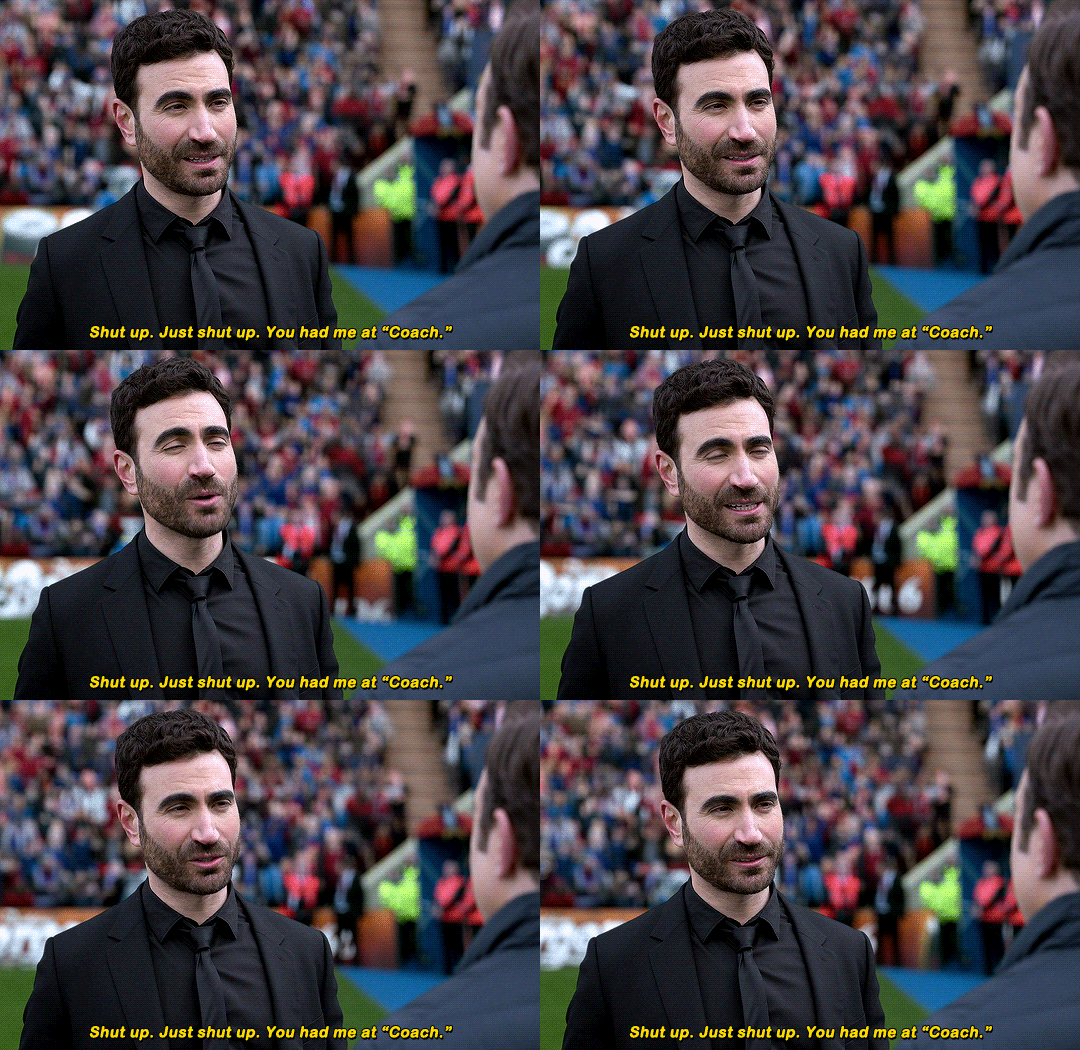
Ted Lasso, Rom-Coms, and Emotional Vulnerability

Why is it important that a show about men who play soccer did a rom-com homage?

Dickinson Behind-the-Scenes: An Interview With the Artisans

Meet the artists who brought the Apple TV+ series to life!

If You Like This, Watch That

Looking for a new TV series to watch? We recommend them based on your preference for musicals, ensemble shows, mysteries, and more!

Showing posts with label beauty and the beast. Show all posts

Friday, March 24, 2017

Tale as Old as Time: A Roundtable Review of Beauty and the Beast [Contributors: Jenn and Chelsea]


Beauty and the Beast is a beloved Disney classic that was recently remade into a live-action film starring Emma Watson, Dan Stevens, Emma Thompson, Kevin Kline and many more talented individuals. But with every remake, there is always a risk: will it live up to the original? Though the live-action film has some differences from the animated one, it still — in the opinions of Chelsea and Jenn — holds up. Below, we talk about what we loved about the original, and how the remake compares.

Okay, give it to me straight: what are your thoughts on the live-action remake overall?


Jenn: I absolutely loved it. The animated film is so beloved to me, and Belle is my favorite Disney princess (I mean, hello, she’s the Sacred Princess of Reading). And I thought that the remake did a really good job of modernizing the classic, in a way, while still remaining true to it. It was a re-imagination of sorts, but not a departure from the things that made the initial film so popular. Everything worked really well, I think, overall.

Chelsea: Okay so, Beauty and the Beast (1991) is one of my three favorite films of all-time. I have tattoos inspired by the film planned for the future. I knew going into this live-action iteration that it would in no way compare to the original and to just shift my expectations into it being a reenactment rather than an inspired by film. Having changed those expectations the day Emma Watson was cast really helped get me hyped for the film and lead to me thoroughly enjoying this version. I loved just about every moment of it including some of the new songs and little changes they made to Belle’s backstory to help fill in the gaps. There were only a few awkward inflection moments during the recreations of “Be Our Guest,” “Beauty and the Beast,” and “Something There” that really threw me off, but I am also very attached to the original soundtrack and those slight differences were bound to throw me.

What was your favorite change the live-action remake made to the original?


Chelsea: I really enjoyed how Belle was even more headstrong and spoke out against Gaston and for herself. Belle was already quite the little feminist and vocal in the original, but those little Hermione-esque moments really drove home that Belle wasn’t a Stockholm Syndrome princess and was in charge of her own agency. Also, making Le Fou a character with motivation and being torn was way more interesting than him being the fool that blindly support Gaston. Disney did right by him by making him a queer character and giving him that story arc of being the tentative sidekick. I was very impressed.

Jenn: I agree with Chels about Belle. I thought giving Belle the backstory of being an inventor and her father as just being the lonely man was creative. I never really liked how her father was just seen as the bumbling fool in the original film. I thought that change was subtle and small but it really helped to make Belle a more well-rounded character and her father more sympathetic. Both ended up being in charge of their own destinies, which I really appreciated. The inclusion of the Enchantress throughout the film as an outcast was also really small but poignant. I loved the fact that she played a significant role and was a widow — this seemingly insignificant person in a seemingly insignificant town had more power than anyone else in the entire film. It was great.

Totally agree with you, Chels, about Le Fou’s motivation. I think I was most pleased with his arc as a person. The original film made him, again, such a bumbling fool. But that Le Fou was able to identify Gaston as a monster in “The Mob Song” was such a powerful moment to me. It really allowed him to develop as more than just a foolish sidekick, blinded by loyalty.

Image result for beauty and the beast chip 2017

The 1991 film had some plot holes (okay, quite a few) that the live-action film addressed. Which one did you appreciate most?


Jenn: I think my favorite plot hole was addressing the fact that not every object in the castle was once a person. Belle talking to the hairbrush made me crack up. I also really enjoyed the plot hole about the location of the castle, too. I always thought, “It’s so weird that most people don’t know how to get there/it takes so long but Belle can get there in ten seconds.” When I went out to dinner after with my friends, I brought that up. And my friend’s husband was like, “No, actually, the horse is the only one who knows how to get there.” And I had a moment of being like, “WOAH THAT IS SO TRUE.”

I really liked that they addressed Gaston’s behavior as potential PTSD, and that the Beast was no longer an eleven-year old boy.

Chelsea: Gaston’s backstory of coming back from the war and possibly having some PTSD really worked for me. They gave him some extra moments to try to rise above the villainy and it lead to some great character moments and dynamic scenes from Luke Evans. Having the Enchantress there for the entirety of the story and filling in that Beast age gap and why nobody knew about the castle were also nice little touches that only added to the story. They weren’t overt in changing the original story but they also made it make more logical sense.

How was the casting of the film? Would you cast any roles differently?


Chelsea: Literally everyone was perfect, I will fight people about Emma Watson. I don’t need her to be Celine Dion because her personality fits the role and she can carry a perfectly fine tune. Luke Evans was the real treat I didn’t know was there. Who knew that the villain from Fast and Furious could ham it up and sing like that?

Jenn: I will also fight anyone who complains about Emma Watson. The woman has literally played two of my major female heroines (Hermione and Belle), so she’s perfect. I liked Dan Stevens as the prince. I’ll admit that I initially was worried about Luke Evans. Gaston, in the original, was so buff and that’s part of who he is (it’s even in the song — he’s “roughly the size of a barge”). But Evans was super surprising to me, because he really embraced Gaston’s personality and I think, to me, that made up for the fact that he is a bit smaller than I expected Gaston to be. He got the villain on a deep level and I really loved that. Josh Gad was the perfect Le Fou, and all of the castle characters were FLAWLESS.

The music of Beauty and the Beast is iconic, and with the inclusion of new songs, the remake had the chance to soar or fail. How would you grade the musical elements of the film?


Chelsea: I’d give the new songs a solid B. There was no way they could add new songs around these iconic ones but they did a perfectly fine job at adding new things to keep the pace of the film. Props to them for getting Celine Dion back to sing one of them. I do love that they managed to get Audra McDonald to sing more than I thought she would. Her rendition of “Beauty and the Beast” with Emma Thompson was delightful. Ewan McGregor cannot really sing though. There’s no good way around that one. They needed that to be a James Corden type of actor that can be fun but also belt it out when needed. Ewan was the clear weak link in the cast.

Jenn: I might skew it a little higher than you, Chels, just because of how much I love “Evermore” and have had it on repeat. The new songs might not be iconic, but I don’t think they were out of place, which is all you can ask for whenever you have original music in a film. I loved Emma Thompson singing “Beauty and the Beast.” And Dan Stevens was a surprise, because he did a great job. I love Emma Watson but I wish they hadn’t autotuned the crap out of her. She sang “How Does a Moment Last Forever (Reprise)” live apparently, and it didn’t sound bad. That’s my main complaint with the music. She’s not a bad singer and Belle doesn’t have to be a master-class performer, but the film didn’t even let Emma Watson try without over-tuning her voice.

Image result for beauty and the beast 2017 dance


Be honest: did you cry? At what parts?


Jenn: As soon as the opening chords of “Beauty and the Beast” played, I started crying and couldn’t stop crying throughout the entire ballroom waltz. It was just beautiful. I had chills. (Also, my friend’s husband said he got chills during that scene too so you know it was good.)

I also honestly got a little weepy when the servants changed into the household items (seemingly) permanently. Belle’s song at her childhood home also tugged at my heartstrings. All of the girls I went to see the film with sat together, with the boys on the end, and you could see us wiping back tears during several parts.

Chelsea: During almost every song but for good reasons. Just the great production value and seeing those iconic moments with Emma Watson as Belle really were a joy to watch. The end portion where the last petal falls and the Beast briefly dies also got me good.

Jenn: Chels, that last petal falling wrecked me too.

Is there anything else you’d like to add that you enjoyed about the film overall, and/or wish had been done differently?


Jenn: Mad props to the costume designers on this film. That yellow ballgown is iconic, and I love the way that the film modernized it and yet still stayed true to the original. I want Belle’s earcuff in that scene and her hairpiece, too. Like, now. Like, link me in the comments if you’ve found it on Etsy or something.

Overall, I really enjoyed all the little nuances in the film that I’ll have to appreciate more in a re-watch. The music is still as iconic and enjoyable as the 1991 classic, and I felt like a child watching the magic of the film unfurl in front of my eyes in new ways. The story is still just as beautiful and the message about loving yourself and loving others for who they are on the inside is just as necessary in this day and age as it was then. 10/10 would see (and will see) again.

Chelsea: I’m so happy this film is making all the money. I’m generally hit and miss about this remake culture but I really feel like the right care was put into this one and that it all came together pretty nicely. From a filmmaking standpoint, I thought everything was beautiful and that I was transported into that cartoon from my childhood. The cinematography, production design, and wardrobe were gorgeous. The cast really had fun in their roles and they knew they weren’t there to make anything more than the original.

I think a better director could have saved some of those musical numbers from being as awkward as they were but Bill Condon has proven he can deliver a hit, so who am I to argue with his hiring. I know I’ll be seeing this again in the future and it’s something I can take my nieces and nephews to see that is fun and not a dumb animated film like The Secret Life of Pets or Minions.

Saturday, March 18, 2017

Beauty and the Beast: Then and Now [Contributor: Melanie]


Did I decide before walking into Beauty and the Beast that I was going to enjoy the heck out of all two hours of it? Yes. Was I correct? Yes. I own several editions of the 1991 film and saw the Broadway show twice. I was first in line for this movie. Don’t get me wrong, it’s not an excellent film by any stretch of the imagination — which is unfortunate because the original held the distinction as the only animated feature nominated for Best Picture for almost 20 years before the Academy enlarged the nomination pool. But, this isn’t a movie meant to be looked at for its merits within the world of academic cinema. It’s more like the flesh on the bones of the original that so clearly plays to millennials who owned the original on VHS and grew up alongside Emma Watson.

It felt, in a lot of ways, like the screenplay was checking off boxes of all those lovely, glaring plot holes the original had floating around. Timeline contradictions? Handled. Is every single piece furniture in the castle a once-person? Nope, answered. Why exactly do the villagers — and LeFou — blindly praise Gaston? Turns out they don’t. Where is the Enchantress for the rest of the movie? A lot closer than you think. And on it goes.

But that’s not all this movie does. It offers backstory we didn’t have before on a number of characters. Belle’s father is less of a bumbling inventor and, in fact, a quiet and lonely artist whose daughter is all he has left of the woman he loved. Turns out Belle — as with her fairy-tale counterpart — was born in Paris. Her starving artist family was broken up when plague took her mother and her father was forced to flee to protect his daughter.

Gaston is a war hero (you know, from The War™ that always seems to have taken place just a few years before the start of all our fantasy movies) that feels a bit too big for the small town he’s retired in and — according to Luke Evans — might be suffering from some PTSD that informs a lot of his impulsive actions. LeFou probably gets the most depth of all as Gaston’s friend and sidekick (who often is found attempting to imitate Gaston’s charm and presence) who slowly turns on his buddy (and unrequited love interest?) when he realizes just how unhinged and downright evil the man has become (“There’s a beast running wild, there’s no question/But I fear they’re all monsters released” he sings during a new refrain in “The Mob Song” while glaring at the village’s fearless leader).

And then there’s the Beast himself (once again unnamed though some interviews list him by his original, if unused name, Prince Adam) gets a bit of backstory as well. Like Belle, his mother died when he was young; but he was left, instead, with a loveless father who raised him to be a pompous, narcissistic, and shallow young man. On that front, even his budding relationship with Belle gets a makeover. While the initial thaw in their ice was, as before, the wolf attack and subsequent Intimate Healing (thanks TV Tropes), they bond over shared pain and loneliness and a love of the escape that books and stories can bring (sometimes literally thanks to an enchanted spacetime bending atlas the Beast uses to allow Belle to see her childhood home in Paris once more).

So how does it stack up with all these additions? Well there is a certain amount of beauty (ha) in the simplicity of the original. Even if we have many Buzzfeed listicles telling us just how much that movie made absolutely no sense when you pick it apart for just 30 seconds, it, very weirdly, worked. The fact of the matter is, you’re redoing a classic, so no, it’s not going to be as good. But it sure was a ton of fun to watch. And the great thing about this version was that a lot of care found itself in the script of the film. Writers Stephen Chbosky and Evan Spiliotopoulos wanted to give the why to a lot of character choices made in the original that we were willing to take for granted. Belle’s decision to take her father’s place was the result of guilt (as in the original fairy tale, she asks for a rose that her father tries to pluck from the Beast’s garden), the small mindedness of the village and their dull everyday lives were also the result of the curse, Gaston’s attraction to Belle is far less cartoonish and rooted in some complicated psychological problems on his part.

This felt like a real movie, a real story. And with echoes of the 1946 Jean Cocteau version alive and well in the visual imagery of this edition, it makes for a very entertaining night at the movies.

The original was bit of an accidental masterpiece for Disney and responsible for a whole new age of animation. But, the funny thing is, for most of its production and even a bit of the final product, Beauty and the Beast was kind of a dumpster fire.

The story of this film begins all the way back in the 1930s when Walt was first considering adapting it after Snow White and the Seven Dwarfs took off well with the American public. Attempts to adapt it went well into the 1950s but animators and storyboard artists found it too much of a challenge to conceivably adapt (gee, I wonder why). It was only after the success of The Little Mermaid and Who Framed Roger Rabbit in the late 1980s that they decided it was time to give it another shot.

Halfway through production of this film, everything was scrapped. In 1989 the project, which had been in the works since 1987 was starting anew with directors Gary Trousdale and Kirk Wise. For a film with a 1991 release date, this might as well be no time at all to complete the project. Evidence of this time crunch is visible in the film’s many plot holes and recycled animation at the end from Sleeping Beauty. But, the film found new life in the form of Alan Menken and his handpicked lyricist, Howard Ashman, a genius of a man who would posthumously become a Disney legend. The inclusion of these two cemented the film into a musical rendition, steering away from the more classical, Jane Eyre-style approach for a lighter, Broadway-style musical.

But Ashman’s contributions were about more than just his incredibly clever lyrics. It was him who first suggested the servants of the castle actually be made into full characters and not just faceless appliances wandering around. It was also through this collaboration between Ashman, Menken, Wise, and Trousdale that the inclusion of the male suitor as the story’s main antagonist was introduced in the form of Gaston who represents another great departure for Disney: the traditional male protagonist as the villain, which had all sorts of undertones in the changing gender dynamics of 90s workforce. This new version was approved in 1990, giving them a little under two years to get the project done.

Production, compressed, took place across California, Florida, and New York (where Ashman was slowly dying of AIDS complications). As with much of the production of this film, the scene that would become the film’s most iconic moment, almost never came to fruition. Beauty and the Beast represents the first (well, technically the second) collaboration between Disney and Pixar. Did you ever notice that the ballroom scene utilizes crane shots and sweeping camera pans? That’s thanks to the CAPS technology developed by Pixar that allowed them render 2-D characters into a 3-D environment that would mimic the omniscient camera of live-action. The technology only worked enough for use in one scene, and that nearly didn’t come to fruition with the “ice capades” back-up plan that would have seen Belle and the Beast simply dancing under a spotlight.

As for that iconic music? Well Menken and Ashman wanted the movie to resemble a Broadway musical (it’s no wonder it eventually ended up there). The chose distinct styles for the songs (“Belle” is an operetta piece, “Be Our Guest” as a traditional chorus line number, and “Beauty and the Beast” as a solo ballad) and recorded the music with a live orchestra as opposed to dubbing the vocals in later. But there’s stories in the music as well. “Be Our Guest” was originally going to be sung to Maurice before they decided using a showstopper on a minor character was a waste. And Angela Lansbury originally didn’t think her voice and character were right for the title track and had to be convinced into recording a demo. That one take was the one that ended up in the film and went on to win an Oscar.

Disaster struck when Howard Ashman eventually succumbed to his complication with AIDS before the film was finished. But a moving dedication to his work was featured in the credits: “To a man who gave a mermaid her voice and a beast his soul.” The production continued and found itself selected to be shown at the New York Film Festival with only 70% of it complete, the 30% filled in with rough animation and storyboards.

The result was a 10-minute standing ovation.

The rest, as they say, is history. The film went on to be nominated for Best Picture and won two Academy Awards, three Golden Globes, and five Grammys. The American Film Institute has featured it on four of its best-of lists and been nominated for four others and the National Film Registry selected it for preservation in the Library of Congress in 2002. And it didn’t stop there, it went on to become Disney’s first stage musical after the success of the Disneyland stage show (which, fun fact, was originally staring future Wicked star Stephanie J. Block as Belle).

So, what’s the takeaway? Well, without Beauty and the Beast Disney would be in a very different place. A remake of it, while may be misguided or completely miss the mark (it does not, however) is not there to be seen on its own or even there to be completely compared to an original that changed Disney animation in the 90s and millennium. This version is simply there to remind us why we loved the original in the first place with an updated set of eyes (Belle’s all about dat education reform for both little girls and hulking Beasts) and to prove that there’s a reason this story is still a timeless work of art.

Saturday, April 2, 2016

3 Reasons You Should Watch the Final Season of Beauty & the Beast [Guest Poster: Bibi]


For those of you who have never seen the show Beauty & the Beast (abbreviated here and on social media as BATB) is a new-age version of the show that premiered in the late 80s. In this version, Vincent Keller was made a beast by a series of scientific experiments, greenlit by the government to virtually make their own version of super soldiers. Vincent — presumed dead — actually survived the experiments and uses his powers to become a vigilante in his own right. After her mother’s murder right before her eyes and a subsequent save from death by the Beast, Catherine Chandler decides to forgo law school and become a police officer.

This is a story has been told in various ways by a couple of different franchises, but there is a freshness and even grit that this version of BATB provides. Here are three reasons why you should binge seasons 1-3 on Netflix and definitely watch the final season when it returns on June 2nd.


3.  A lovely and supportive bromance.

Since day one, the character of J.T. Forbes has proven to be one of the most brilliant, loyal and funniest on television. He is an accomplished scientist, great friend, and a hero in his own right. J.T. and Vincent have been friends since childhood. So when Vincent returns from the dead, it is only natural that the first and only person he would trust is J.T. His friend is then charged with caring for Vincent and keeping him safe for a number of years, and in the first season, this is an integral part of the plot. While this is a tall order, and really a lot for Vincent to ask of one person, J.T. willingly does it all. Because for him, Vincent is family.

When Cat comes on the scene — first as a cop looking at Vincent as a murder suspect, and then eventually as a partner in solving special crimes — it is a challenge at first for J.T. to give up his role as protector and let someone else in. But once the three of them start working together, they begin to form a bond unlike any other.  Between being the brains behind most of the operations, and attempting to help the police, keep Vincent under the radar, AND get Cat one step closer to solving her mother’s murder, J.T. is an indisposable team member.

Also, let’s be honest, J.T., is Vincent’s original “person” and voice of reason. When Vincent turns into the guilt-stricken vigilante that all superheroes turn into, J.T. can help him return to being a reasonable and functioning member of the team and remind Vincent that his love for Cat is the only way to take down the “Big Bad” every season.


 2. Shipping it? Shipping it!

The “unlikely” pair and the center of the show, Vincent and Catherine (or VinCat) learn to share work and love. Years after her mother’s murder and their first encounter, we see Vincent watching Catherine after saving her life from the guys that killed her mother. When he becomes a quasi-vigilante, this is what begins to peak Cat’s attention and interest in him. At first she believes that Vincent is a criminal, but she quickly finds out that his intent is to save the innocent. They work together to figure out a string of police cases that lead to more information about Cat’s family and her mother’s murder. When Vincent and Cat meet, there are underlying hints of attraction, and well... we know they will eventually fall in love.

Cat and Vincent’s relationship initially causes tension in their other professional and personal relationships. We see them struggle with the complexities of coming to terms with his beast side, saving innocents, dating in the shadows, and what that means in the context of this world. As the seasons progress, Cat and Vincent eventually break up after Vincent is kidnapped and turned into an even stronger and more powerful beast. He loses his humanity and becomes someone Cat doesn’t even recognize. They move on, date other people, and Cat is adamant about not falling for this version of Vincent again.

Unlike what’s currently happening on another show I love, this break-up makes sense. Cat and Vincent need to be apart in order to realize their greater purpose together. Vincent needs time to gain his humanity back and realize that he can live with the beast within.


1. Strong female characters.

As a woman who loves to see strong women dominating screen, I appreciate the writers and showrunners of BATB because they do not disappoint; Cat and Tess are two of the most important heroines. The show is just as much about Cat and Vincent’s relationship as it is about Cat’s friendship and working relationship with Tess. It is refreshing to see two women on TV who are smart, strong, and go after what they want, but are also not afraid to disagree and discuss when life gets messy. They bring criminals to justice, all while balancing friends, family and love.

When Cat forms her partnership with Vincent, she begins lying to Tess and pushing her friends and family further and further away. This causes serious tension between her and Tess because they truly are best friends and Cat is keeping a “dead’ hostage a secret. Seeing their relationship fall apart was one of my favorite things the series has provided us with thus far. Tess was angry with Cat for not allowing her into her life fully, and as someone who only has brothers and really views Cat as her sister, Tess was justified in feeling that way. It really is heartbreaking when Tess finally sees Cat with Vincent, and is immediately filled with hurt when Cat seemingly chooses Vincent over her. What I appreciated about this conflict was the timing of it. The writers did this just right: they created a natural issue between the friends and allowed them time, mature conversations, and growth in order to rebuild that friendship.

Once they mend their broken friendship, and the seasons progress, we see Tess become more and more engrossed in the greater purpose and story of VinCat. She finds her greater purpose on the police force, and gets to save her friends a few times. Additionally, she escapes a bad relationship with the wrong guy, only to find an incredible one with the right guy. Cat is by her side every step of the way, and never lets her problems overshadow her loyalty to Tess.

So if you like supernatural tales, great friendships, women who are extraordinary, and the men who love them, check out Beauty & the Beast when it returns!