Ted Lasso, Rom-Coms, and Emotional Vulnerability

Why is it important that a show about men who play soccer did a rom-com homage?

Dickinson Behind-the-Scenes: An Interview With the Artisans

Meet the artists who brought the Apple TV+ series to life!

If You Like This, Watch That

Looking for a new TV series to watch? We recommend them based on your preference for musicals, ensemble shows, mysteries, and more!

Showing posts with label jane the virgin. Show all posts

Tuesday, April 12, 2016

Jenn's Pick: 5 Shows I've Stopped Watching This Season, and Why


A few years ago, it used to be rare that I would give up on television shows. I would stick them out, no matter how terrible, because I was determined to be a completionist and watch the show from start to finish. So I watched Glee with the kind of snark only a person who has watched a lot of Glee can develop. I watched Smash, long after it fell into the category of “abysmal” in terms of writing. I kept chugging through Community even when it began its slow decline into absurdity. 

But as I’ve grown, I’ve realized something: you shouldn’t watch bad television just for the sake of live-tweeting it, or because everyone else is watching. There are far too many good shows that can be watched in the space of time in which it takes you to watch the bad ones.

So this year, I shoved aside more television shows than usual (more than are even on this list!) in order to embrace new ones: gems like Daredevil and Master of None and The Magicians and Crazy Ex-Girlfriend. There are five shows in particular that I’ve stopped watching this season. Shows that I used to love, and whose stories and characters used to captivate me. I’ll discuss why, exactly, I’ve stopped watching each of these. And feel free to hit up the comments with shows you’ve stopped watching this year, too. (And we’ll even have a special roundtable soon with shows that, over the years, our staff has seen sharply decline.)

Let’s get started!
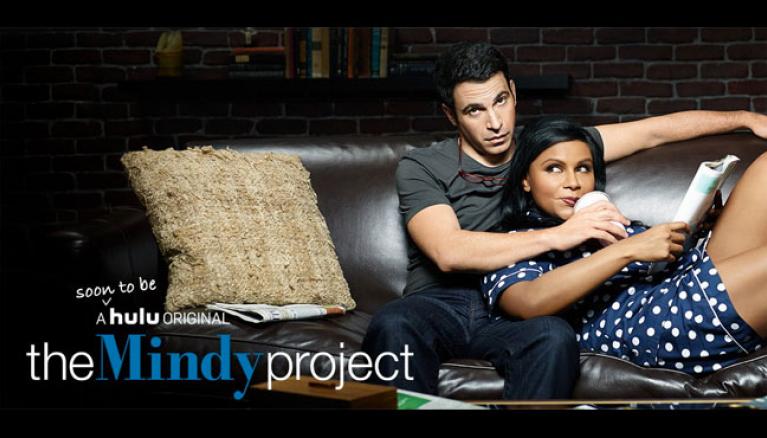

5. The Mindy Project (previously on FOX, now on Hulu)

I watched the first episode or two of The Mindy Project when it began its Hulu run. And then... I stopped. I had been an avid fan of the series during its second season, and had re-watched the show’s first year in order to garner more appreciation for it. But then, something began to subtly shift in season three, and it’s taken until the Hulu series for most people to pick up what I’ve noticed for years: Danny is a horrible person. Back when season three was airing, I noticed a pretty disturbing pattern on the show: Danny would insult Mindy, break her trust, or do something in order to hurt her; Mindy would walk away; Danny would make a ~grand romantic gesture~; Mindy and Danny would reconcile. If you watch most of the episodes through that lens, you’ll realize that the show began to subtly create this break in their relationship — a little fissure, if you will — in which Danny was constantly the one in the wrong, and never learned anything about his behavior.

The way that he talked to Mindy and about her was generally pretty horrible. He mistreated her and she (for the most part) always forgave him when he proved, at the episode’s end, how much he cared about her. Danny was never my favorite character, but for a while, he was redeemable. As The Mindy Project has progressed, everything about him that was endearing has been slowly chipped away. And what was left was a problematic male romantic lead who manipulated and used the woman he supposedly loved, and she forgave him. After the first episode on Hulu, I stopped watching the show. I couldn’t root for Danny and Mindy’s love story anymore, because it was toxic.

And, as I’ve been reading about the show from various friends and critics, it appears that I escaped at just the right time. Now, more and more people are realizing what a horrible human Danny is and the show isn’t shying away from that. Good job, at least, on the part of the writers to acknowledge that the character’s actions are problematic and — in some cases — totally inexcusable. I just wish the show would have realized that last season. Maybe I would have stuck around.


4. Supergirl (CBS)

I really tried to get into Supergirl. I did. I adore Melissa Benoist. I think Jeremy Jordan and Mehcad Brooks are endearing. Callista Flockhart is fun, and the supporting cast (including Chyler Leigh) is great. But there was just something about the show that didn’t click or hook me. I never was able to watch it live (my Monday night television allegiance always swayed toward The CW), and perhaps catching up two episodes at a time on my DVR wasn’t beneficial.

But I think what really clinched it for me was the fact that the show’s not exactly sure what it is yet. Is it light-hearted and fun? Does it care about plot holes? Does it care about characters discovering Kara’s secret? (Okay, the whole retconning Cat discovering Supergirl’s identity as Kara was absurd, and maddeningly frustrating.) In spite of its charismatic lead female character, did the show care enough about its women to keep me hooked? Was I invested in the love triangle (er, square)? I’m not sure the answers to any of those questions. Supergirl herself is great and I think that Melissa Benoist is the kind of actor that Grant Gustin is — where she can automatically endear herself to anyone because of how talented and bright she is.

And yet, was that enough to keep me watching each week? No. I’ve fallen so far behind on the show, only tuning in to see the crossover with The Flash’s Barry Allen. I don’t quite know why I stopped watching Supergirl, but I know that I don’t feel as if I’m missing anything revolutionary by not watching.

Maybe that’s the problem.


3. The Flash (The CW)

Guys, I loved the first season of The Flash. I absolutely loved the introduction to Barry Allen on Arrow (and I’m not going to lie, there’s a part of me that still ships Barry/Felicity because JUST THINK OF THEIR GENIUS, HAPPY BABIES). But this show’s slow decline in season two (beware, everyone, of the dreaded sophomore slump) has led me to stop watching it temporarily, perhaps permanently. And the worst part is that I can’t really pinpoint WHY I stopped watching the show. In fact, I’m pretty sure it was accidental. I just fell behind on episodes when New Girl returned in the same time slot, and I haven’t had the desire to catch up since then.

Deb’s weekly reviews of The Flash, in fact, pretty much tell me all I need to or want to know about the series and its characters. That’s kind of problematic, if you feel like you don’t need to watch an episode because you’re not missing anything. And maybe that’s it — this season I don’t feel like I’m missing anything spectacular if I skip the show. Last season, the series packed all the punches: emotional, comedic, villain-of-the-week, insane special effects. And this season, I just don’t feel like I’m as invested in Barry’s journey or the journey of any of the other characters. It feels like The Flash got tangled up in the stories it wanted to tell, and is trying to tell them all, to little success.

I’ll admit it: in comparison to Arrow, last season of The Flash was the thing I counted on to be my saving grace. I would watch Oliver act absolutely absurd and wildly out-of-character, but then take solace in the knowledge that Barry Allen could restore my faith in comic book superheroes the following Tuesday. Barry, however, has become less and less dependable this season for that (and I desperately needed him to be because we all know this season of Arrow is not my favorite thing in the world either).

I don’t know exactly what changed. I wish I could pinpoint the exact moment I decided to stop bothering catching up on The Flash, but I truly can’t. And perhaps that’s the problem: the show just became uninteresting to me, so I didn’t WANT to catch up. It somehow lost its spark.

It’s odd, but it’s what managed to happen. Sorry, The Flash. I really am.


2. Jane the Virgin (The CW)

The fact that I’ve actively stopped watching Jane the Virgin makes me really sad. Because I absolutely adored this show in its first season. It was brilliant, it was funny, and it was soap-y and melodramatic in a way that was completely and totally endearing and fit for the genre. The show always focused on Jane first and foremost, and her relationships with the women in her life. This show might have appeared to have been an ensemble, but it was always about Jane first. And this season, Jane the Virgin sacrificed a lot of that for the sake of a love triangle.

Don’t get me wrong: I love that the show managed to focus on a love triangle in the first season without making it overtly so. I genuinely didn’t feel like I was trudging through a Rafael/Jane, Michael/Jane soap opera every other week. Things felt more organic in season one — relationships included. The problem is that Jane the Virgin always worked best when there was this sort of tension between the things Jane wanted and the things Jane needed. It did an excellent job of that in season one, first with her unexpected pregnancy, and then with her relationships, and then with her family, and finally with her schooling. That was what made Jane a compelling lead character. She was relatable because she struggled and did so with grace.

Let me first preface this next part by saying that I am not Team Michael. At all. But the decision for the show to pursue Michael/Jane as (assumedly, since I’ve stopped watching) endgame is problematic to me because of Michael’s character. The whole “I’m just such a gosh darn nice guy” trope is irritating, at best, and unrealistic at worst. Michael has so few flaws that it’s unbelievable. And my problem was always that Michael was presented as the comfortable option – he was the one Jane knew the longest. Heck, he was pretty much a part of her family. Rafael, in contrast, seemed like the worst option in the world. Jane barely knew him. He had a past! He lied! GASP. The more Jane the Virgin delved into the love triangle, the more they purposefully skewed toward Michael because of the fact that the show basically gave us no reason to believe Michael had flaws.

Until his anger issues. Until his fight with Rafael ended with Mateo getting significantly hurt. That should have been the end of Michael/Jane forever. I don’t really care who you are or what you claim, but if your actions caused the injury of my child, I’m not letting you back into my life. Because anger issues aren’t things that magically disappear within a few months or can just be absolved without consequences. And yes, Michael did have consequences to his actions but also... did he really? Wasn’t Michael — in spite of all of that — still elevated for the sake of villainizing Rafael? So Michael’s fight wasn’t REALLY bad, because Rafael lied in the first place.

That’s where the show pretty much lost me.

I’m all for complex characters, and I don’t really care if the shows I watch set up different endgames than I would prefer in terms of romance. What I do mind, however, is when one character is presented as the perfect option for Jane without any explanation as to why. I don’t care about Michael. At all. He’s boring and bland and apparently even his flaws (anger issues) aren’t even HIS fault. Meanwhile, Rafael is — by contrast — presented to be a horrible option for Jane. The show set up the two as equals in the way they treated her in season one, and — very quickly afterward — made sure that it tore down any sort of equality between them. The playing field, essentially, was never level. The writers just made us think that it was.

Ship issues aside, the characters I cared about suffered as a result of the uneven writing in season two. I stopped watching the show months ago and haven’t — as with most of the shows on this list — felt like I’ve missed out on anything stellar since. This once-promising show has slipped into a decline and I’m left clutching the beautiful little series I once loved as a result.


1. The Blacklist (NBC)

If any show on this list fell fastest into a steep decline, it would be The Blacklist. In the first season, the show struggled a lot to set up its premise and establish itself as something other than “just another procedural on network television.” The presence of James Spader greatly added that much-needed difference. And the relationship between Red and Lizzie was always the crux of the show. Even when Elizabeth Keen wasn’t at her best (or, more accurately, the writing of her character), Red and Lizzie’s relationship was the thing that made sense. It separated The Blacklist from most other procedurals out there.

But, quite quickly, The Blacklist began to decline. It focused far too much on asking a billion questions and only ever providing one answer for every one hundred. That was maddeningly frustrating to watch, so I fell off here and there in keeping up with episodes. The overarching mystery of Red and Lizzie’s relationship kept me engaged, and when we finally discovered her identity, I felt satisfied. Moreover, the show’s decision to shake things up by having Lizzie on the run with Red was the kind of refreshing change of pace (and scenery) that the show desperately needed. For a while, the show began to climb again. But then, with the reappearance of Tom and focus on a new big conspiracy, the plot threads that the writers had left dangling resurfaced in wholly frustrating ways.

The fracturing of Liz’s agency as a character is pretty much the point in time where I stopped watching the show. I cared about Liz as a character when she was strong and taking charge of her own destiny. In the first season, that happened a lot. She was the one with the power. But over the years, The Blacklist has become less and less about Liz having any sort of power or control, and more about things just happening around her and to her. That’s not only difficult to watch as a female viewer, but deeply problematic in the construction of a heroine. You can’t create a character, strip her of her free will, and expect audiences to relate to or care about her.

That’s what happened on The Blacklist. And nothing — not even James Spader’s brilliant scenery chewing — has brought me back since.

What shows have you stopped watching this season, and why?

Monday, March 7, 2016

Dear Jane the Virgin, Please Don’t Make Me Hate Rafael Solano [Contributor: Connie]


One of the recent episodes of Jane the Virgin (“Chapter 35”) brought Jane and Michael back together, for what seems like for good. If you’ve read my writing on Just About Write before, you know that I am Team Rafael. While I don’t hate Michael — nor do I hate that he and Jane are together right now — I do hope that in the end, she and Rafael make it work. However, something I’ve noticed about Rafael’s characterization (especially in comparison to Michael), makes me concerned about his trajectory. It reminded me of another character on another show who I once shipped with the female lead, but began steering his ship onto a path I did not want to follow.

RAFAEL VS. MICHAEL


I think that Rafael’s biggest hurdle for both Jane and we as the viewer is that Michael is perfect. Maybe too perfect. He gets all of Jane’s jokes, he’s supportive, her family loves him, he’s perfectly working class with a job that serves and protects people, he’s passionate about his job and will do whatever it takes for justice to be served, he’s self-sacrificing, he’s funny, he’s attractive, he’s attentive, he’s willing to wait for Jane, and all the rest of it. I could go on. His one flaw is that he got angry and punched Rafael in the face — and that was honestly a long time coming between the two of them.

In comparison, it seems like Rafael has more flaws than virtues. He’s possessive, he’s prone to jealousy, he’s prone to anger, he drinks when things are out of his control, he and his family have a lot of drama and murder and mayhem. In order to root for Team Rafael, you have to hope he grows out of these traits, while Team Michael fans have a perfect person who Jane already loves and knows intimately (you know I don’t mean sex).

If Rafael were continuously on an upward trajectory character-wise, this wouldn’t be so bad. Yet, just when it seems like Rafael is making progress, he’s knocked back a few pegs, distancing himself from Jane even further. What Jane and Raf are missing, more than anything, is time to actually get to know one another and understand their differences and learn to work around them. We haven’t had many scenes like the one Jane and Michael shared in “Chapter 35” for #TeamRaf in a very long time (remember when Jane rapped?). They are, yes, very different people, and Jane’s maturity doesn’t match Rafael’s need to learn how to deal with not getting his way; but I do want them to figure it out. Instead, Rafael keeps getting further and further away from even putting up a fight.

I remember when I felt this way about a character/ship before.

A LITTLE BIT OF SCANDAL


In my early Scandal days, I was a strong proponent of Fitz/Olivia, despite the fact that the relationship itself was an affair. As the show went on, however, Fitz’s behavior became more and more unbearable. It became harder and harder to defend his actions, to the point of me actually hating his character now. He’s a child — a “baby” as was directly stated to him on the show — who whines and drinks when he doesn’t get what he wants. (Sound familiar?) He doesn’t want Mellie, but she can’t do what she wants. Liv rejects him, so he sleeps with an intern. Liv breaks up with him when he’s finally divorced, so he sleeps with a reporter (spoilers for the latest two episodes, I guess) because he’s bored and lonely. This, plus much more, make his declarations of love for Olivia meaningless. He’s treats others terribly, is emotionally manipulative, whines and yells and drinks when he doesn’t get his way, and he doesn’t even make up for his emotional shortcomings by being a decent president.

All of this to say that Rafael gave me Fitz vibes during this most recent episode. I love Rafael, and I love Rafael with Jane, but I don’t want to blindly defend him — or conflate Rafael with Justin Baldoni, who seems angelically wonderful. And Rafael’s behavior this week left it hard to do so. In fact, Rafael spent most of “Chapter 35” filling out a Fitzgerald Grant Bingo Card:

  • Declare love for someone who keeps saying no? Check.
  • When Woman A says no, move back to Woman B (who used to be Woman A)? Check.
  • When Woman B says no, drink because this depresses you? Check.
  • Find the nearest hot girl with legs, despite the fact that it’s severely unprofessional because you are in a position of power? Check. 

Rafael is certainly less two-faced than Fitz — Rafael has an honesty that comes at a cost: he can’t lie to Jane and he can’t fool Petra. I know Rafael is emotionally immature and not used to getting what he wants, but hasn’t he learned anything in two years? I just hope, that instead of five years of stagnant growth — if not complete regression — Rafael doesn’t become Fitz. And I know Raf has work to do on himself. Rafael’s desire to be a father certainly upped his emotional maturity, but it’s easy to forget that it wasn’t that long ago that he was a philandering playboy. He still has much to unlearn about how to treat people. Hopefully, three babies will keep him too busy to regress into pre-cancer Rafael.

It’s on the writers to give Rafael some character growth (that sticks) soon. I do like Michael; he and Jane are very cute together. But if there is to be any hope had for Team Rafael, they need to give Rafael a chance to learn, rather than revert to the status quo of the pilot. I think it would only even the playing field between Rafael and Michael, and that tension is what engages fans on both sides of the coin. We all know that this show’s continued success can only mean more seasons, which can only mean more back and forth between Rafael and Michael (and continued celibacy for Jane).

Leveling out the playing field gives us more hope for Rafael’s character growth. The work must be done to Rafael, because Michael’s near-perfectness is hard to detract from. In my opinion, Michael’s a little too perfect and giving him a flaw would only be seen as pandering to Team Rafael. Even I admit that Michael’s physical attack on Rafael seemed just out of character — because we hadn’t established that flaw yet. Now it seems like it’s too late to give him a real one.

Whatever the writers decide, whomever Jane is meant to be happy with, I just hope they don’t write themselves into a corner with Rafael and make his flaws irredeemable. That’s what happened on Scandal: Fitz’s behavior piled on until there was no turning back for many fans who previously shipped him with Olivia.

I don’t want to hate Rafael. Please, writers, give him a chance to heal, give him quality time with Jane that helps them to understand each other. And then allow him to become a character who fully is worthy of Jane’s love.

Tuesday, January 26, 2016

Team Snowflakes vs. Team Flower Petals: The Ships of 'Jane the Virgin' [Contributor: Connie]


Jane the Virgin is back from winter hiatus! In order to celebrate, I have decided to explore the two main ships on the show in terms of their usual motifs: Jane/Michael as Team Snowflakes and Jane/Rafael as Team Flower Petals. Of course, Team Jane wins above all, but Michael and Rafael both represent great (if flawed) men, who love Jane and want the best for her.

But their relationships look very different and have different attractions — both for Jane and for us audience members. The choice of motif is actually very indicative of each relationship — both for better and for worse — so let’s discuss!

TEAM SNOWFLAKES 


Jane and Michael have had many romantic moment under falling “snowflakes,” most notably the ceiling dust when they first meet and the fake snow at the Marbella when they reunite for their epic “let’s get back together” kiss. Snowflakes, of course, symbolize winter — which is the perfect season to represent Jane and Michael’s relationship. Winter represents steadiness, quiet, and purity.

Its use is often similar to the color white, which is often used to denote purity, light, and innocence. See Shakespeare’s use in Cymbeline, for instance, "I thought her as chaste as unsunned snow." 

Snow, especially the first snow, sometimes feels like magic; the world becomes quiet and beautiful. (I live in New York where we just had the second biggest snowstorm in the city’s history, and the quietness of the storm as it raged indeed felt like magic.)

Michael is just as steadfast, always quietly supporting Jane, and of course, respecting her desire for chastity. Michael is often a soft blanket of snow, calming Jane’s anxieties. Winter means staying at home, or being snowed in, and Michael is known for being very close with the other Villanueva women. He is very comfortable in their house. He is the person you cuddle with on the couch and watch the Netflix Yule Log with — the person who you could be with forever.

However, winter is cold and snow can go from peaceful and fun to a dangerous blizzard very quickly. Jane the Virgin is set in Miami, a city where snow is nearly impossible. Winter ends and snow eventually thaws. Jane’s love for Michael is overtaken by her attraction to Rafael, which burns just a little hotter...

TEAM FLOWER PETALS 


Jane and Rafael represent springtime. Their iconic first kiss featured falling cherry blossoms swirling around them. Springtime and flowers represent passion, rebirth, and warmth. Spring is outdoor adventure, sunshine, and growth. The intensity and liveliness of the cherry blossom gives the warrant for anyone to dream and hope for big things in the future and to be optimistic. 

Spring represents first love. Rafael solidified that position when 19-year-old Jane fell for him all those years ago. Jane and Rafael’s relationship is one of twirly, dancing, rapping dates — it is energetic. Just like flowers opening up in bloom, Jane encourages Rafael to open up to his emotions. Springtime is constantly changing, nature and creatures are growing very fast, just like Jane and Raf’s relationship. Spring also represents fertility, birth, and babies. No need to break that one down.

Jane and Rafael’s passion for one another often tests her vow of chastity; without Michael's cool blanket of snow to calm her, Jane lets her equally fiery temper match Rafael's and they erupt at one another. Just like snow can melt, flowers wilt and die, spring soon burns too hot and becomes a raging summer.

Both relationships have their magical qualities — people love winter and spring for different reasons. This is why it is so hard for Jane and many fans to choose which guy is the best for her. Yet both have their downfalls as well, the reasons why they do not last long. Placed against the other, Jane has something she needs from one relationship that the other does not provide. She both needs Michael’s peacefulness to calm her anxieties, but she needs Rafael’s passion to push her to experiences that enhance her story (as a woman and as a writer).

We do not yet know which direction the show will decide on, but with the season two mid-winter return, it seems we are expecting a decent amount of snow. Bundle up, Team Flower Petals!

Thursday, October 29, 2015

Style Tips From 'Jane The Virgin' [Contributor: Rae Nudson]


Jane Villanueva, the main character in hilarious and heartwarming Jane the Virgin, is a hyper-organized, careful young woman who landed in a situation she never could have planned for. After being accidentally artificially inseminated and becoming pregnant with the child of a man she barely knows, Jane is throwing out her planner and following her heart. (Hypothetically of course — Jane would never actually get rid of her planner.) Amid unexpected, life-altering news during just about every episode of this telenovela-inspired series, Jane continues to do her best handling each and every twist in her post-insemination life.

Last season opened with two hotties who wanted to marry her, then transitioned into Jane getting to know her superstar dad, and fighting for herself while remaining a kind and generous person. This season opened with the kidnapping of her newborn baby boy, balancing motherhood and the life she wants for herself, and still having two hotties who want to marry her. Somehow throughout all her ups and downs, Jane stayed true to her heart and true to her closet. In spite of every super-crazy situation she found herself in, Jane’s outfits remained super-stylish. And because Jane is practical, as well as fashionable, there is plenty to glean from Jane’s style that you can apply to your own wardrobe — even if you’re not a new mom, currently in the middle of a love triangle, or trying to protect your family from a terrifying crime organization.

Here are some of the best style tips you can take away from Jane the Virgin!


Cute pajama sets help everything.


It’s a fact that when you wear a matching pajama set, you are 10% less sad about getting over your ex. When Jane and Rafael (the father of her baby) break up, and when Jane and Michael (her ex-fiancé) start talking again, Jane hangs out at home in adorable pajamas. Feeling cute, even when no one will see you, helps you feel a little stronger to handle the drama in your life — boy drama or otherwise.

Develop your own style to celebrate being yourself.


Jane dresses less high fashion than Petra, the ex-wife of the father of her baby, and more reserved than her mother, Xiomara. After facing her unexpected pregnancy, Jane learned that she needed to take risks in order to be truly happy. Dressing in clothing that makes you feel more like who you are and who you were meant to be is a brave act in itself, and defending your own tastes can make you feel vulnerable. Jane is brave by wearing what she wants and saying no to wearing something that doesn’t feel right to her her. When her friend asks if Jane wants to dress “accidentally sexy bohemian” for their high school reunion, Jane confidently says that’s not her thing. Jane’s style is comfortable, colorful, and feminine, and she stays true to that throughout the show.


Wrap dresses are almost always flattering — even when your body is going through many, many changes.


Diane Von Furstenberg knew what she was doing when she made the wrap dress famous in the '70s. For the past 40 years, the wrap dress has looked flattering on almost every body type. It hugs women’s curves, cinches at the waist to help define your figure and creates a flattering look that is easy and comfortable to wear. Jane often dons a wrap dress throughout her pregnancy, and no matter what size she is, she looks put together and comfortable.

Keep a cardigan handy to turn any nighttime outfit into daytime appropriate.


After Jane has a romantic, all-night talk with Rafael, she goes straight to her student teaching job in the morning. The nuns at the Catholic school where she works are none too pleased to see her show up in last night’s party dress, but she quickly throws on a sweater that she keeps at her desk to become work appropriate. This is one of Jane’s most practical tips, and, honestly, an extra cardigan is helpful any time — whether it’s to combat extra-cold air conditioning or to cover up spilt coffee on your blouse.


Dress appropriately for the occasion.


Whether she’s going on a date with her ex-fiancé Michael or her baby daddy Rafael, Jane looks perfectly sweet in one of her many floral dresses. The ruffles and soft fabric are feminine and romantic, and a flowy skirt is perfect for twirling in happiness after you kiss under a starry summer sky. When she’s going to a professional meeting, Jane turns to a fitted sheath dress that is more structured and more business-like. And when she’s messing around at home, she’s comfortable in boyfriend jeans and a tank. Jane is always prepared, so she is always appropriately dressed for every event.

It wasn’t just pregnancy or the rush of new love that gave Jane a glow, it was also her romantic, yet practical, outfits. Whatever twists are in store, Jane will be dressed and ready to face what comes.

Tuesday, April 7, 2015

The Rise of Female-Led Sitcoms: A Dialogue Between Jenn and Jaime


Jaime Poland and I have been friends for a long time. Because we've been friends for a long time, we often have in-depth conversations about our favorite television shows. Jaime was a Creative Writing major in college with a minor in film so I think that her opinion is always valid whenever criticisms or discussions of pop culture are on the table. She's smart and she has a lot of great opinions. And she's also one of my favorite people in the entire world. So when I asked if she would sit down with me via Google Hangout (which took both of us -- grown, adult women with college degrees -- an absurd amount of time to figure out) and discuss the rise of female-led sitcoms and female-led television series in the past few years, she was more than happy to oblige. (As if she had a choice in the matter, let's be honest.)

So below, we discuss some of the most recent television developments in terms of feminism and comedy. We talk about why, exactly, the female-led sitcom is on the rise and what makes these series so appealing and intriguing to the masses. We also discuss what can be gleaned from a female-led series that is missing from a male-driven show. Enjoy!

Wednesday, January 28, 2015

Strong Women Series #6: The Women of 'Jane the Virgin' [Contributor: Ann]


STRONG WOMEN SERIES #6: The Women of Jane the Virgin
Ann Susteri is a weekly contributor for Just About Write, reviewing The Mindy Project. In addition to her intelligent discussions of the television comedy series, Ann also contributes to the site by discussing television series like Jane the Virgin, You're the Worst, and Selfie. When Ann is not writing for this site, she's also analyzing television at her Tumblr and occasionally does things like go to school and stuff. Jenn is extremely thankful to have a writer like Ann on staff, if you can't tell.
I am a strong woman.

This has nothing to do with my physical strength, as I am still unable to do a legitimate, real push-up. Nor does it have anything to do with my strength of character (I took two naps today). It more or less is a symptom of being a person, and as a person who lives in the world, I have a developed idea of my ambitions, my fears, my flaws, my strengths, my background, my relationships with others. I have agency. I am the protagonist of my story, and there’s no way in hell that story’s going to be flat because I have the power to make it not that way. Being a person is great, by the way.

However, when you are developing a story—not, you know, “your” story, but your fictional creation—you assume the responsibility of bestowing on your characters those traits which you have been blessed with, being a person. Unlike people, characters are not more than they appear, because the only thing that can be judged is their presentation on screen or in books. That’s all that exists to the viewer or reader. (That is why JK Rowling’s retroactive judgment of her characters is infuriating, but that’s another topic, I think.)

Jenn asked me to write this Strong Woman Series post on Jane the Virgin and I am more than happy to do so because the show has done a very good and deliberate job of shaping its characters. I am also so happy to do so because Jane the Virgin asserts more than most shows on TV that “strong woman” is soon becoming a thing of the past in favor of “strong character.” “Strong woman” is a title that makes me feel like it is an extraordinary circumstance for a woman to be strong, and it shouldn’t be.

I list pretty much all of the main female characters in the series in this post—the ones that stood out to me as being especially well-written. In a show whose central relationship is the one between three women of different generations, their success of strength as characters comes through their interaction with each other and with the world around them, in addition to their own innate characteristics.

Sound good?

JANE GLORIANA VILLANUEVA


I read a lot of articles about television. I read a lot about Jane the Virgin, about its triumphs and accomplishments and distinctions, in so many ways. Being a bit of a masochist, I also love reading the comments section of these adulatory articles.

The single most annoying criticism of Jane the Virgin is when people evaluate the entire show based on its title. Jane—the VIRGIN—must, through being a (gasp) virgin, be preachy or staunchly conservative or super-chaste, without question or evaluation whatsoever.

Never mind that the title’s main purpose is primarily to highlight Jane’s virginity given her abnormal-as-hell pregnancy. The problem in this assessment of the show (and of Jane herself) is accepting her virginity at face-value. The show and Jane both refuse to do this; so many episodes delve into both a) Jane’s reasons for maintaining her virginity and b) her struggle in doing so. Jane’s virginity isn’t a dirty little secret; like her pregnancy it’s given the appropriate scrutiny and is addressed by Jane and by those who deal with it. Sometimes it’s fulfilling to keep the promise; sometimes it’s annoying; sometimes it leads to coins of your pregnant self being distributed virally.

But the show shines a spotlight on Jane’s beliefs, which in turn gives her character complexity. How you develop characters 101: their innate characteristics, how they respond in situations, how they interact with others, how others think of them and visa versa. Jane’s virginity and her pregnancy are the reason all of these characters are interacting, so both are kind of a big deal. Fortunately, this show uses both not as a platform for a political agenda but as an opportunity to examine who Jane is.

So… who is Jane?

“Jane was a virgin, but not a saint” is one of my favorite lines of the entire show because it condenses all of what I’ve said into a catchy little phrase. ‘Jane is a virgin’ obviously is a comment about her sexual activity but is also tied to how perfect she seems: she loves her family members unconditionally, is employee of the month, has like a bazillion jobs, a rich telenovela dad, gorgeous dresses on her and gorgeous men… well… on her, if you don’t mind me saying.

(For the record, Jane’s character is pretty deserving of all the good things in her life at this moment. She is moral in a world filled with immorality. She’s good. She works extremely hard, tries again and again, and she knows how to choose her battles. I personally love her devotion to her religion and her vow because both of those things are tied to her love of her family, too. Oh, and she loves grilled cheese and I ate one today.)

But Jane is not a saint. She’s not a saint when you look at her character as a member of the audience. She is very judgmental, entitled, kind of callous to Michael, and was not very cautious in her decision to be with Rafael. She often doesn’t realize how much her mother does for her and can be kind of a brat as a result. Oh, and by the way: accept money from Rafael, Jane! You didn’t have a problem accepting Rogelio’s nepotism!

She’s also not a saint when viewed by other characters. Plenty of characters love Jane. But a lot of characters treat her with skepticism, or use her for their own benefit (the nuns, Rogelio’s other daughters, Dina, her friends’ coldness towards her given her new situation). By giving this quality to Jane, the writers give her actions repercussions, because Jane is not above censure. Even those who love her challenge and confront her in very real ways, and Jane is not always right and sometimes has to acknowledge that. This is such an important character trait to have. No character is interesting when everyone loves them!

My favorite thing about Jane, though, is that she is emotional. You know how sick I am of characters that don’t cry, that don’t doubt themselves, that don’t yell at people (sometimes irrationally, sometimes not)? Oh my God – you know how sick I am of characters who are not funny? I watch so many comedies but you know how few of them actually involve characters making jokes to each other?

This is the mandatory wheelbarrows of praise for Gina Rodriguez, who takes the writing of Jane Villanueva and absolutely crushes it in her portrayal of the character. Jane is hilarious and Jane gets hammered and Jane is sexual and Jane sometimes needs her mom when things get tough. Jane gets angry, Jane gets mischievous, Jane gets bored and indignant. Jane gets in over her head. Jane gets insecure and Jane gets disappointed. Jane is unafraid to confront anyone who she loves when she feels she’s right and she is able to apologize to them when she is wrong. Sometimes Jane wants to fight people (Petra) and sometimes Jane feels awkward (Rogelio) and honestly at this point I need to start talking about Dick based on how much this sounds like a book for schoolchildren.

What makes a character the strongest, to me, is when their emotional reactions make sense. And while the most popular of all tropes in this Mad Men world is the stony straight man who drinks his problems away, I am just as much a sucker of someone more resembling me; you know, someone who expresses what they are feeling.

I need to praise Gina Rodriguez more for this, I think. She conveys all of these emotions with the most subtle and realistic facial expressions. I love so much of Jane the Virgin but she is the heart of it and her portrayal as Jane really drives home how invaluable of a character this is. She feels human. How much stronger of a character could you get?

XIOMARA VILLANUEVA


I really wrote quite a mouthful on Jane. I think that this is fair because she is the main character of the series and in discussing her I think I made a clear outline of what I am looking for when I look at strength. I’ll look to be more succinct in discussing the supporting characters, though, but let me first introduce an idea that seems paradoxical but really isn’t when it comes to supporting characters: The perfect supporting character is a character who supports our main character’s story in some way, whether that’s as a foil or as a parallel or an opponent. The perfect supporting character enhances our main character’s story.

However, the supporting character in question should not act as if this is the case. Let me put it this way: I am the protagonist in my own story, but the people that I come across all in some way strengthen my “plot” or “character development.” They make me better (some of them make me worse) but everyone helps me grow. They are my supporting characters.

But to everyone else? I am their supporting character. I affect their lives in some way. To them, my story is far less important than theirs, which is fair because we are stuck with ourselves far longer than we are stuck with anyone else.

So, in short—what makes all of these supporting characters so A+ to me is that they enhance Jane’s story in some way, but also have stories that are treated with respect by the writers. They are distinct and they are their own and any one of them could front a TV show. But they are in Jane’s, so their lot in their fictitious lives is to enhance her story, a feat they all do.

Xiomara is easily Jane’s main comparison point. She doesn’t want to end up like Xiomara and a lot of her decisions are based off of how Jane evaluates Xiomara’s life.

The funny thing is that Xiomara is so great that Jane should hope she ends up like her. She is as flawed as Jane—she fights with her mother and is #TeamMichael, I mean, c’mon. But to me Xiomara is one of the most underappreciated characters on the show in that so much of what she does is based off of passion and love, even in making difficult decisions. Xiomara’s treatment of her own pregnancy (the lie), her reluctance to let Rogelio meet Jane, the “milkshake” dance, her submitting Jane’s rude story, her reluctance to date Rogelio (twice now—first because of Jane, now because of Alba). She doesn’t love Rafael because she is looking out for her daughter, and in other places where her actions are questionable, she always returns to love.

What is more motherly than to love, especially in the bumpy, maddening, and unconditional way family members love each other? Xiomara’s prime characteristic is love like this, and it makes her the most exemplary of mothers and the most relatable of daughters.

ALBA VILLANUEVA


I love Alba because Alba is a great demonstration on what tradition is and should mean to us in our lives (or in this case in Jane’s).

Alba is on a whole other plane from these people; she is the only one that speaks straight-up Spanish! She is so on another plane that while Magda and Petra are scheming and holding someone hostage, Alba just wants to give them a piece of her cute drunk mind.

Great storytelling has diverse characters. Diverse in that they have diverse backgrounds, belief systems, experiences—they have different things to teach me and tell me and entertain me with! This is how life is and this is how storytelling should be. Truthfully, storytelling has even more of an obligation to represent diversity, because the author can choose to incorporate it in their stories or not. Life isn’t always deliberate, but storytelling should take the initiative and show me something new.

Alba is either the most or the second most controversial character in this series because of her staunch Catholicism and sexual conservatism. And I adore this about her.

I am a devout Catholic. So, so often, all over the place, I am inundated with unfair stereotypes (think Amanda Bynes’s character in Easy A) about what being Catholic means. What makes these stereotypes especially unfair is that there’s no balance or real opposition; as the audience, we’re meant to laugh at the hyperbole without questioning why the character is the way they are. But no real discussion between the two dissenting groups can actually happen if one is hyperbolizing the other to the point of ridiculous caricature.

There needs to be a spectrum of beliefs because from that comes conflict and conversation. I’m not above watching TV that preaches to the choir, but I hate when shows (and people, actually) pretend they are open-minded when they are disguising their refusal to actually confront dissent.

Jane the Virgin does this in more than one way, whether it’s class differences, cultural differences, gender differences, or religious differences. I don’t 100% identify with Alba—she is the staunchest of the staunch—nor do I 100% identify with any of these characters. I just want to hear their stories, their perspectives. I know why I am the way I am, but I don’t always know why people are the way they are. I would like to understand it better.

I call out Alba especially because her views are the most drastic, and she is one end of the spectrum that is so often not represented or misrepresented. She’s good (morally) but she deserves, just as everyone deserves, to be a part of a discussion instead of part of the punchline.

BRIEF BREAK TO TALK ABOUT WHAT’S UP ON JANE THE VIRGIN

Is it, like, bad that I’m starting to warm up to Michael getting back with Jane? He’s super cute and also kind of a cop. The Latin Lover Narrator certainly made it sound like he’s gonna die soon, though.

Also, Sin Rostro. Could be Rose (Sin Rose-tro). Could be Luisa (?!?!). Could be Nadine (who knows what’s up with her and her hand placement was kind of suspicious). Could be Lachlan. Maybe Milos? That story has a lot in it that we just don’t know. Might be Rafael’s dad, but would more likely be his mom, in my opinion. Rafael’s dad kinda seems like the red herring.

I wish I had the name Roman Zazo. I’m a lady though so I guess it’d have to be Romana Zazo.

BACK TO THIS

PETRA/NATALIA SOLANO/SOMETHING RUSSIAN, PROBABLY


Petra is the last big character I’m going to dig into. She is the “evil” one, I guess, but I would think more that she is just misunderstood. Kind of like Alba, if you can believe—but where Alba is often misunderstood by us, the audience, Petra is often misunderstood by the characters she interacts with. This makes her a villain so endearing that TIME magazine wrote an article about it.

Think about it: does anyone know who Natalia is, really? I was stunned that Jane’s reaction to Petra’s slip-up was to blackmail her into silence, instead of showing compassion or at the very least curiosity. (I guess Petra had at that point faked assault and faked date rape, but still!) Rafael got cheated on, but the tag that Petra was a “man-eater” in the first episode is less true than Rafael being a playboy. Cheating is always gross but her reason is a fair one (I love, by the way, that Rafael and Petra fell apart the way they did instead of some icky contrived way, and the fact that both got burned from the trauma of Rafael’s cancer).

Lachlan doesn’t really know Petra, either. He doesn’t seem to care (he’s setting something really bad up soon, can you feel it? Do you think he might frame Petra?). Magda’s relationship with Petra is complicated—I’m not sure if it’s loving—but even still she doesn’t have the access to Petra’s wants and dreams and desires the same way that Xo knows Jane (or Rafael knows Jane). Petra might not even totally know because her life is so splintered, equal parts who she is and who she was forced to be.

The person with the best access to understanding Petra is us. Villains are normally the best characters to watch because we don’t have a horse in the race. Petra’s actions are diabolical and if anyone did to me what Petra does to Jane I wouldn’t love her, either. But we’re not characters here, we’re the audience, and we are able to oversee everything and draw conclusions that the characters can’t.
Petra is dynamic because of that difference between what the characters feel and what we know. What image does Petra present to these people in her life? There’s no clear answer. Their ideas of Petra are so scattered—from the man-eater of the pilot to the tulip-terrified person we saw in the most recent episode—that they can’t help but not make sense of the entire picture. We can, should, and must.

ROSE and MAGDA and NADINE and LUISA


Give it time. ¾ are diabolical liars, and one is in a madhouse. If I am gonna evaluate their strength of character, let me just say this: I have no idea what’s going to happen and all four of them make me nervous. Sin Rostro-wise.
Endless thanks to Ann for this absolutely astute and beautiful post about the female characters of Jane the Virgin and their agency! If you enjoyed it or want to continue the conversation, be sure to hit up the comments below and/or tweet her your thoughts! :)

Friday, January 16, 2015

The CW & Its Leading Women: What the Network Is Doing Right


In recent years, the term "strong female character" has become a buzz-y phrase to toss around during interviews and convention panels. The problem, of course, is that people use the phrase without understanding what it actually means. They justify every female character on a television screen or a movie or a book by labeling them as a "strong female." Let me excerpt a piece from my Strong Women Series opening post where I discussed this particular phrase and its definition:
In order to explain what a strong female is, let me first explain what she is NOT: a woman is not strong because she wields a weapon; a woman can be strong if she wields a weapon but that is not what classifies her as "strong." A strong woman is not someone who merely serves to overpower men or take their positions of authority. In example: Oliver Queen still has near-ultimate authority in Team Arrow, but Felicity Smoak is a strong female character without ever directly opposing him or overpowering his position as "leader." A strong female character is not just a person who yells or who sits on a throne or who knows how to put a man in a headlock. We tend to think of "strong" as a masculine term which is problematic when we attach it to the phrase "female character," because then the presumption is that a woman has to have the physical strength or stamina or attributes that a man does in order to be worthy of the term. (And this is understandable because when you look up the word "strong" in Merriam-Webster's Dictionary, the first definition references physical strength.)
But what if... what if the phrase "strong, female character" simply meant "a complex, multi-layered female character who does not serve as a prop for a story, but an anchor." Strong women can be vulnerable. Wow, that's shocking, right? Strong women can be romantic. Again: are you surprised? Strength is not inherently tied to invincibility, nor should it be. A woman should be considered strong if she triumphs in the face of adversity, no matter what that looks like. She should be considered strong if she is flawed -- if she falls and makes mistakes and sometimes says the exact wrong thing at the exact wrong moment. A woman should be considered strong if she changes the course of her own future and destiny. A woman should be considered strong if she allows herself to love and to be loved because when you fall in love, you are allowing yourself to be open and vulnerable and that kind of decision requires enormous strength.
Strength doesn't derive from muscles and it doesn't derive from a woman's stubbornness or her agility. And just because a woman is labeled as a heroine or a protagonist doesn't necessarily mean she's strong either (see: Bella Swan from Twilight or Karen Cartwright on Smash or Rachel Berry in the more recent seasons of Glee). No, strength means diversity. It means vulnerability. It means layers. Most importantly though, strength in a female character means that she is flawed. It means that she makes mistakes. Women can be strong and also compassionate. Women can be strong and in love. Feminist portrayals of women in television (as that's the medium I'll be focusing on throughout this post) are simply portrayals of women having feelings, actions, and thoughts that are considered to be of equal degree of importance and relevance as that of the male characters. In order for a woman to be considered a "strong female character," in my opinion, she has to be treated with respect both from the writers of the show -- her actions need to have consequences; her words need to occasionally be right and occasionally be wrong. And most important of all, she needs to be more than just a prop to elevate a male character.

Too often, female characters on television are relegated to the role of "companion." (This isn't a slam on Doctor Who, by any means, as I think for the most part it does a good job of portraying women as human, flawed, but believable and ultimately redeemable.) A woman on a television show shouldn't have to exist or -- conversely -- cease to exist so that a male character can have a story. (That's a criticism I know has floated around a lot in terms of the character of Beth Greene in The Walking Dead recently.) Female characters shouldn't exist as props, but they also shouldn't exist as just shells or shades, either.

The problem with writers is that they often write strong moments for women without then bothering to follow through and actually dare to write strong women.

Example: Annie Edison on Community and Clara Oswald on Doctor Who are both women who have moments of strength on their respective series. Annie "shoots" Jeff while telling him how much he hurt her in "Conspiracy Theories and Interior Design." Clara Oswald jumped into a time stream to save The Eleventh Doctor. And Clara's stood up to others a lot in the series but the problem with both women in their writing is that the writers don't bother to follow through with those moments of strength in characterization and, as a result, end up creating one-off moments of defiance/strength/bravery. Annie regresses in Community and progresses for the sake of "conflict" in a story arc. In "Anthropology 101," Annie Edison -- after displaying an entire year of growth and maturity in her final conversation with Jeff before their kiss in the season finale -- suddenly became a giggling schoolgirl, obsessed with twirling her hair and talking about boys. What had happened was that the writers needed a source of conflict for the episode and decided to regress Annie's character to serve their arc. What happened was that her character never really recovered the rest of the series as a result.

Similarly, the writers needed a source of conflict for Clara this season on Doctor Who. And instead of writing a thoughtful, interesting, layered character, they chose to reduce her to an obsessive, whining, indecisive character who treated The Twelfth Doctor horribly (lying to him repeatedly, stabbing him in the back emotionally and then deciding in the end that she really did "care about him") in order to provide "conflict." That's lazy writing because it undoes all of the progress and development that Clara made. Unfortunately in both instances, women who were once strong were leveled in favor of a rather lame source of conflict.

It's difficult to find well-written women on television because inevitably, writers find it easier to use them as props or pawns and treat them as such than value them as human beings and tell their stories, genuinely. But recently, I've discovered one network that has really impressed me in its portrayal of real, varied, strong women: The CW.

I'll be the first to admit that over the years, I've been rather judgemental of the network. After all, this was the place that was home to Gossip Girl, 90210, and re-runs of basically every syndicated sitcom. I thought it to be the place where soapy teen dramas hung out and honestly, for a few years, that WAS the network's calling card. But recently, The CW has piqued my interest because of how real, gritty, and diverse it has become especially in its portrayal of women and their stories. The network has provided some of the best and most honest (and compelling) storytelling on television these days.

Something else of interest (and primarily why I'm writing this post): the network has had an array of female-led series over the past few years, probably more than any other broadcast network at the moment (except maybe ABC and that upswing in women representation is thanks in large part to one Shonda Rimes):

  • Jane the Virgin*
  • Reign*
  • The 100*
  • iZombie**
  • Hart of Dixie*
  • The Carrie Diaries
  • Beauty and the Beast*
  • The Vampire Diaries*
  • The Messengers**
  • Emily Owens, M.D.
* currently airing
** airing in 2015

Interestingly enough, too, Gina Rodriguez won the Golden Globe this year for her portrayal of Jane Villanueva in Jane the Virgin -- the network was the ONLY broadcast network to win an award that evening and it was their first ever award. My prediction? More recognition for the network in the future because of this and because they're beginning to house some of the best shows on television.

So what, exactly, is the network doing right? Why the sudden upswing in quality and writing? Do you think it has anything to do with the fact that this network houses more shows with female protagonists leading their casts than virtually any other broadcast television network, as I noted above? Even if you eliminate the shows cancelled in 2013 from the list above (of which there are only two, you'll notice), The CW will house, this year alone, EIGHT series in which a female character is considered either the lead of the series or the main protagonist. The majority of the list above has a woman as the first-billed member of the cast, as well.

The CW is placing its faith in women and in varied women and in varied STORIES about varied women, which is -- quite frankly -- so utterly refreshing.


As I noted above, Gina Rodriguez won the Golden Globe this year for portraying a beautiful, strong, complex young woman named Jane Villanueva. Make no mistake about it -- Gina is absolutely stunning in this role. She's one of the most compelling and engaging women on television these days as Jane because Jane is GOOD. She's a genuinely kind and positive character. She's not a saint, though. She makes mistakes. She messes up. She often says and does the wrong thing. But she desperately cares about the people in her life and fights for her own happiness and the happiness of others. Strong characters are often just average women who live ordinary lives and who fight for what they want with grace, strength, and occasional stubbornness. The network placed so much faith in a series that stars a young woman who has no superpowers, who doesn't fight monsters, and who simply lives her life with all of its complexities and finds her way toward love and a better sense of self. That is so beautiful and encouraging, is it not? 

Additionally, Jane the Virgin doesn't just portray Jane well -- I love that they're portraying complexities in all of their women: in Xo, who struggles to find her own happiness while protecting Jane's; in Jane's abuela, who is a kind-hearted, faithful woman who's not made to be the butt of jokes but is respected and revered even though her beliefs don't coincide with the societal norms; and in Petra who is a seemingly manipulative, shrewd character but who is not written off simply as a villain -- her vulnerabilities and complexities are given weight in the series, too.


Even though they're not listed above because the protagonists of their series are men, The Flash and Arrow have done stellar work recently in regards to its portrayal of women as both strong and also complex. I talked extensively about Arrow's diverse portrayal of women in the article linked at the beginning of the post (of manipulative, complex ones like Moira Queen and unsuspecting, loving, strong ones like Felicity Smoak), but I realized when the series crossed over with The Flash exactly how refreshing it was to see both series treat women as heroes, as equals, and not adversaries. When Iris and Felicity meet, neither woman talks down to the other. They're not presented as rivals for Barry's affection (thank God) or adversaries. And when Felicity shows up to trivia night in a stunning dress, rather than make a snide comment, Iris tells her how pretty she looks and talks to Barry about how wonderful Felicity is as a person. You don't see that too often on television series, really: women genuinely complimenting each other without a hint of bitterness; women presented as friends rather than rivals for a romantic interest.

(And Iris herself, while still a bit underdeveloped for my liking, is such a great character because of her charisma, her charm, and her intelligence. She's not someone who passively exists -- she actively participates in her life.)


And when we witness women in the crossover event between The Flash and Arrow, we are able to see three uniquely strong women fight when the lair is invaded. Lyla, Caitlin, and Felicity are attacked and instead of presenting them as weak, passive characters and instead of causing them to need rescue by a man and instead of presenting all of their strengths as identical, the show manages to do what it does best when it presents women: exemplify their varied strengths. Lyla, a trained fighter and soldier, immediately combats their enemy while Caitlin and Felicity hide. Caitlin's medical training and expertise allows her to save Lyla's life when the women gets hit with a boomerang and begins to lose consciousness. And Felicity? That blonde IT girl who wears heels and pretty jewelry? She has more strength within her than just the ability to know how to ping someone's phone -- even through her fear and panic, she thinks on her feet and manages to grab one of Oliver's exploding arrows to throw at the intruder before he vanishes. What Arrow did in that moment was take three very different women and present them as equals -- as people who needed each other and who were strong not because they each possessed the same strengths but because they were DIFFERENT.

I love that The Flash has a doctor on it and she's a young woman -- a woman who is logical and extremely intelligent, but who is also extremely emotional and nuanced; who believes in things that defy logic and falls in love and hurts. I love that Arrow and The Flash crossed over because I think that collectively, the shows have some of the best and most interesting women on television -- women who are heroes. Women who are flawed. Women who are needed by men, not because they're beautiful or valued for their skills but because they're genuinely respected and valued as human beings. And I love (absolutely cannot state this enough) how both shows portray female friendships. Caitlin and Felicity are friends, even though both women are extremely different. They value each other and admire each other. Iris doesn't see people as threats but as potential friends and sources of happiness. Felicity sees other people as human beings, not lists of strengths and weaknesses. How The CW is doing things right: it's hiring male and female writers who treat women as individuals, who believe that their stories deserve to be told, and who strive to tell them honestly and well.


You also have shows on this network like The 100 (which I've literally just started watching and admittedly have only seen the pilot episode of) -- a series in which the protagonist is a young woman, but one who is compassionate, logical, and selfless. She's a natural-born leader and someone who is also a natural-born caretaker. What I already find interesting about this series is that I've made the mistake of comparing it to The Hunger Games or Lord of the Flies in my head when I can tell that it's not and that Clarke is no Katniss Everdeen.

That's actually a good thing, really, that Clarke isn't Katniss. I love Katniss. I think she's a hero and a rebel and she enters the games in order to protect Prim. But given the choice between saving herself and saving someone else, a majority of the time Katniss would choose herself. She's not a nurturer by nature. She's a loner. She closes herself off to the people around her because of the destruction she's witnessed people do to one another. Before Clarke is sent to Earth, her mother warns her, saying that Clarke will need to fight her natural instinct to protect people and instead concentrate on protecting herself. And here's where Clarke is already such an interesting and compelling character to me -- she can't. She can't do that. She can't shut the part of her brain off that impulsively protects people. She's smart. She's resourceful. She wants to save people who don't even deserve to be saved. And she's fighting precisely for them, not just for herself. I love that Clarke isn't this stoic, unfeeling, relentlessly defiant heroine. I love that she's compassionate and kind. I love that she's already displayed grace and anger and detachment and concern. I love that she's, within the one episode I've watched, become so compelling that I'm genuinely interested in her journey as a woman and a heroine.

Isn't it refreshing that The CW gives a home to stories about women? Reign is another example of a series on the network that focuses on telling stories about women -- varied women -- and their relationships with each other and men; with their struggles and their successes. It gives weight to their journeys, not dismissing them. And it gives purpose to women, too. This network has flourished recently because it provides a home for female characters to grow -- for those who are zombies, who are vampires, who are post-apocalyptic teenagers, for those who are Latina, for those who are doctors and IT geniuses and reporters and lawyers, for those who are single mothers, for those who are gay, for those who love fashion, and for those who are still trying to figure out who they are and what they want out of life.

No other network these days takes complex female characters and says "you matter" quite like The CW. Oh, yes, I don't mean to dismiss network and cable television -- you will find beautifully nuanced, intensely complex and deeply layered women on other networks, too. You'll find Leslie Knope on NBC and Jessica Day on FOX and Dr. Joan Watson on CBS and Emma Swan on ABC. But The CW is giving other networks on broadcast and cable competition -- they've welcomed flawed women in with open arms, told them that they are home, and asked them to sit and stay for a while and to share their stories.

Women aren't always glamorous. Stories about women don't have to be. They can involve love. They can choose to not. They can involve women wielding weapons and training to fight bad guys. They can involve women going about their normal jobs as waitresses or students or teachers. The important thing to remember about women is this: we're all different. We're not easily relegated to boxes -- "the mother" or "the pretty one" or "the nerd" or "the love interest" -- nor should we be. The moment a writer chooses to shove a character into a box or use her to prop up a male-dominated story or a character (either male or female, really), that is the moment a potentially strong woman becomes shackled and muzzled.

The CW is leading the way in providing audiences with gritty, real women who are taking over televisions and audiences' affections. As a woman and a writer, I honestly couldn't be more thrilled and I eagerly anticipate more of these stories in the future.

Wednesday, November 26, 2014

In Defense of Rafael Solano [Contributor: Ann]


It is 1:30 in the morning as I’m writing this, and I kind of feel like an enamored teenager writing about an unrequited love. Like in my diary or something. “Dear Diary, Rafael is sooooo great. I don’t understand why Mommy and Daddy don’t like him!”

But here’s the thing—I am a frickin’ goofball when it comes to TV, but I am also someone who watches TV very critically (critical in the sense of “attentive analysis” but probably also in my nebbiness). Surprisingly I have a hard time doing that with Jane the Virgin, because SO MUCH HAPPENS that I am literally just trying to stay afloat in the plot.

However, I wanted to write this because I wanted to express how frickin’ much I love Rafael. There, I said it. In a show where most of the characters are scheming, conniving, or selfish, Rafael is one of the few moral centers—so it kind of surprises me, really, that so many people distrust him.

I am in a weird minority when it comes to Rafael; supporters tend to think he is MEANT TO BE with Jane and dissenters think that the MEANT TO BE ideology is dangerous. For me, somehow, both of those are true, but Rafael ends up on top anyway.

Let me dissect what I mean one point at a time. First off: “Why Rafael is Better Candidate for Jane than Michael.”
  1. Rafael is honest with Jane — think of the Latin Lover Narrator. Where he is describing Michael as “the man [Jane] thought she knew so well,” he is describing Rafael’s wrongdoings as having occurred in the past, rather than the present. We are given no reason to distrust Rafael because, like Jane, he puts his cards forward (the state of his marriage, his feelings for her) when it’s not the easiest thing to do.
  2. Rafael puts Jane’s best interests at stake — Michael was going to send the baby over to Rafael and Petra just because he didn’t want to deal with it, and when she asked him (repeatedly) to be honest with her he didn’t reveal much about himself. (Also, I feel like there is so much we do not know about Michael…) Rafael, on the other hand, omits information about his company’s financial entanglement with Luisa because he thinks Jane, for her best interests, should sue. Which is selfless!
  3. Rafael and Jane have more than a spark —I think what bothers me about Team Michael is the idea that Rafael and Jane’s relationship is built entirely on the Meant to Be idea. Which isn’t true—their first night together (in episode seven) was them talking, which is my favorite trope of all time, ever. I mean, in so many romantic comedies (Twilight Twilight Twilight—is this a romantic comedy? Whatever. Jenn's Note: It's most definitely a comedy. There's no reason you can include the line "Hold on tight, spidermonkey" and not actually be a comedy), the two leads hardly talk and when they do talk it’s about the love they have for each other. I’m not saying Michael lacks this quality, but Jane and Rafael’s conversation is comprehensive and demonstrates that Rafael really wants to get to know her, not just get in her pants.
  4. Rafael has changed! — Really, he has! That is why he and Petra are not compatible anymore. They began seeing each other when he was at his worst. Again, there is sympathy for Petra here, and I do buy her speech that she never stopped loving Rafael, but there has come a time —I don't know, sometime before she faked assault — where it is just obvious that it is not in Petra or Rafael’s best interests to continue seeing each other. While she is continuing to do reprehensible things (sleep with his best friend, for instance, or SECRETLY BE NAMED NATALIA), he is trying to reform—he wants the kid as more than a power play. He wants the kid, he wants to settle down, and in order for him to pursue that change to its fullest potential, he has to ditch the dead weight. 
  5. Jane has changed too! — Think of the youth-friendly pastor—commitment is a long road, and there are bumps in the road. What makes a relationship lasting is the willingness on both sides to commit to how hard marriage can be. And while the pregnancy certainly isn’t Michael’s fault, how he has handled it, in between his apologies to Jane, is pretty awful, or at least not compatible with how she handled it. He tells Jane in the most recent episode that she is not who he thinks she is. He is right! Neither of them are who the other thinks they are, which is why I am AMPED for Jane to find out about Michael and Nadine.
  6. But the thing is, Jane and Rafael have changed in a way that suits each other! — It’s been five years, and Jane and Rafael are still having the deep conversations they had the first time they really connected. Even when Rafael was a playboy, he was drawn into conversation, real conversation, with Jane. That his first meeting with her mirrors the first night they spend together in episode seven proves that while circumstances can change, an enduring love can get through pretty much anything.
  7. Rafael is the only person who calls Jane a writer (!!!) — Which is a huge deal, because writing is such a part of her identity. Writing is her dream, and Rafael’s acceptance of her dreams is incredibly important.
With all that in mind, how can the IT’S MEANT TO BE idea be dangerous…in a good way?
  1. Rafael and Jane need to grow!
This is the only reason. I mean, these two hooked up in episode six—I love that there is something inherently wrong with their understanding of what a true, deep relationship is. It’s what I’ve always wanted to see a TV show do. I think so many TV shows focus on the “getting together” part of a relationship that they don’t devote enough time to how different one month in a relationship is than five months in it. In other shows, that difference would be “the sex isn’t good anymore!” or something like that.

With this show, it’s about growing up. It’s about confronting your fears that the ideal fairy tale doesn’t exist, and that’s not the foundation love is actually built on. That’s why — for how cinematic the kiss between Rafael and Jane was — it was not my favorite scene. (Though I did love it, obviously.) My favorite scene of them is when they are talking—about pretty much anything, you know? They have a chemistry that isn’t purely sexual, though to be honest Gina Rodriguez has chemistry with everyone else on the show. The dialogue just feels so natural. They have fun talking to each other, and when (inevitably) their vision of romance and the “perfect family” crumbles, they will grow from it and find each other again.

In so many romantic comedies, what divides the man and the woman is a dumb understanding—think How to Lose a Guy in 10 Days or 27 Dresses. If Jane the Virgin does what I think it’s going to do, it will actually indicate that these characters DEVELOP from each other. That they fight for real reasons instead of contrived ones (which the series has done really, really well).

Look. I love every character on Jane the Virgin, and I admit—I love so much the scene in the dress shop with Michael and Jane. And I will admit I think that Rafael and Jane are rushing into things. But at the end of the day, I have to defend him. He is a character who is looking to change and looking to grow, he’s not perfect, but he’s irresistible in his acknowledgement of that fact and in how he manifests that mission in acts of kindness towards others, especially Jane. And I love Jane and Rafael together. Maybe not now, because it doesn’t make the most sense, and it is so dangerous to hang so much on the “meant to be” idea—but just because they are not meant to be doesn’t mean they shouldn’t be. It just means that they will have to work at it first. And given what I know of Rafael and of Jane, that shouldn’t be a problem.


(Also — like, Nadine and Michael was super hot, right?)