Ted Lasso, Rom-Coms, and Emotional Vulnerability

Why is it important that a show about men who play soccer did a rom-com homage?

Dickinson Behind-the-Scenes: An Interview With the Artisans

Meet the artists who brought the Apple TV+ series to life!

If You Like This, Watch That

Looking for a new TV series to watch? We recommend them based on your preference for musicals, ensemble shows, mysteries, and more!

Showing posts with label feminism. Show all posts

Friday, December 30, 2016

2016 in Review: Erin’s Top 11 Feminist Moments in Television [Guest Poster: Erin]

Image result for leslie knope feminist gif

This year the small screen was filled with larger-than-life women. Audiences are demanding a better representation of the female population and the entertainment industry is starting to deliver. From BAMFs to Queens and everything in between, women’s voices could be heard and with that feminist issues were addressed. I love seeing sexism confronted, gender norms subverted, and the patriarchy challenged. My television viewing was not lacking in these enlightening and inspiring situations.

I wish I could watch all the shows. There are so many for which I, regrettably, just did not have the time. I know there is a surplus of strong, but flawed characters out there I have yet to meet. I did keep the company of some pretty cool chicks that faced an array of barriers and smashed through them this year. Of the fantastic shows I was able to keep up with here are some of my favorite standout feminist moments of 2016, in no particular order.
giphy (2).gif

1. “First Feminist City” (Portlandia)


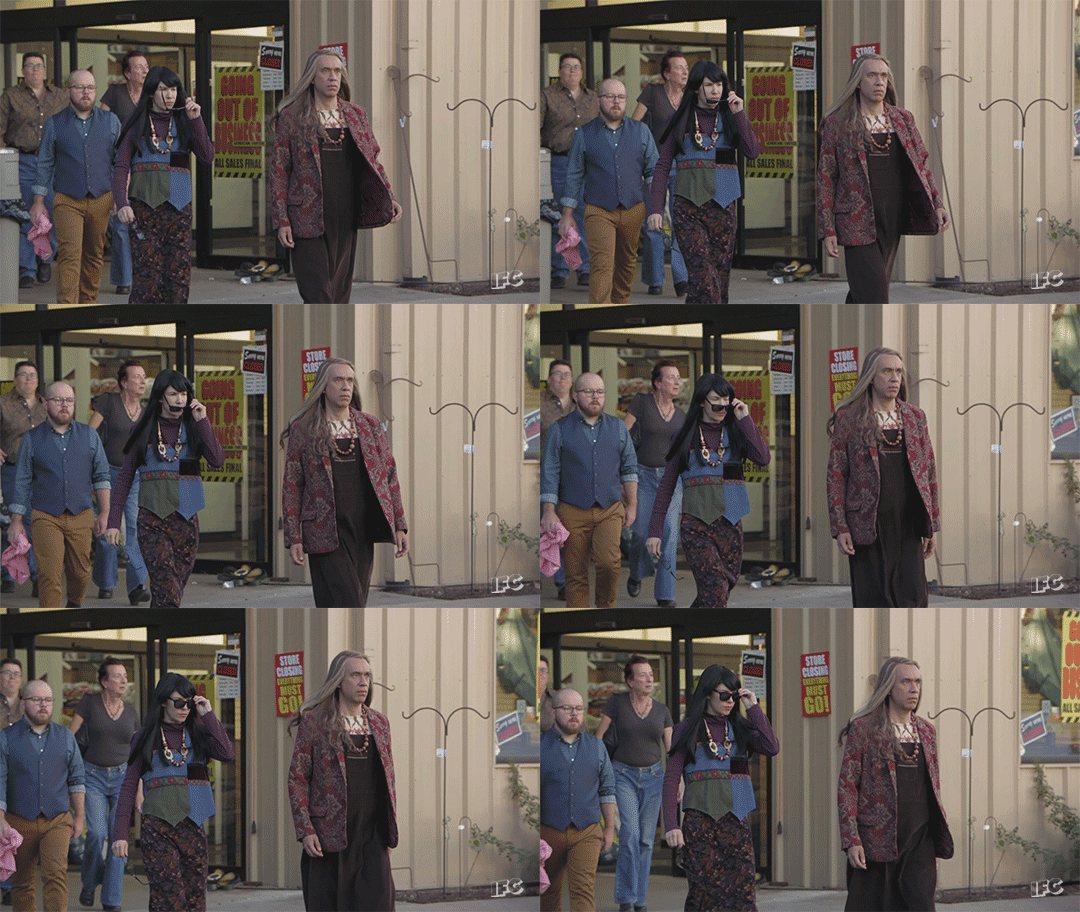
Candace and Toni are two of my favorite characters on the sketch comedy Portlandia. This episode is entirely devoted to the Women and Women First bookstore owners. Portland is named the first feminist city and their quiet, non-for-profit shop becomes overrun with people who want to give them (gasp!) money for their products. Toni shouts, “We don’t want your money!” The attention, however, is tantalizing to Candace and she goes to the dark side of commodified feminism and becomes a “feminist celebrity.” She consults for Femimart, a new feminist superstore that “womanizes” all products from “blenders to blankets.” The employees wear pink shirts and and there are cute girls dancing in the commercial. This shows two extreme sides of feminism and neither of them are very helpful in fighting against the oppression of women. Portlandia glaringly and hilariously points out the problems of how feminism is perceived. It also shows the unfortunate divisiveness that exists surrounding the word when really it is completely and totally inclusive.

Toni storms in on one of Candace’s interviews and makes an impassioned plea for Candace to come to her senses. “You want to try feminism on? There’s nothing to try on. ‘Cause it’s in our blood! It’s our skin and bones! We are not for sale!” It works and Candace joins Toni and other feminists in infiltrating and dismantling Femimart. “The only thing that can destroy feminism is feminism itself.” They create confusion and chaos within the superstore. The logo becomes a pregnant vegan holding a cat. They succeed in destroying it and retreat back to their comfort zone where they sell nothing, work a 15-minute to an hour workday, and drink month-long steeped tea.

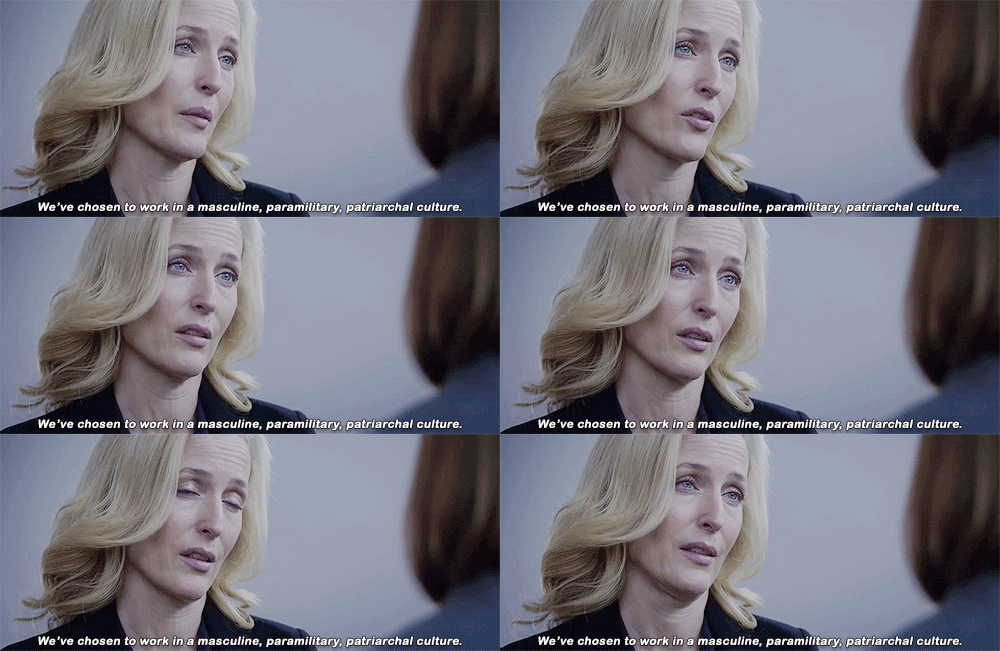
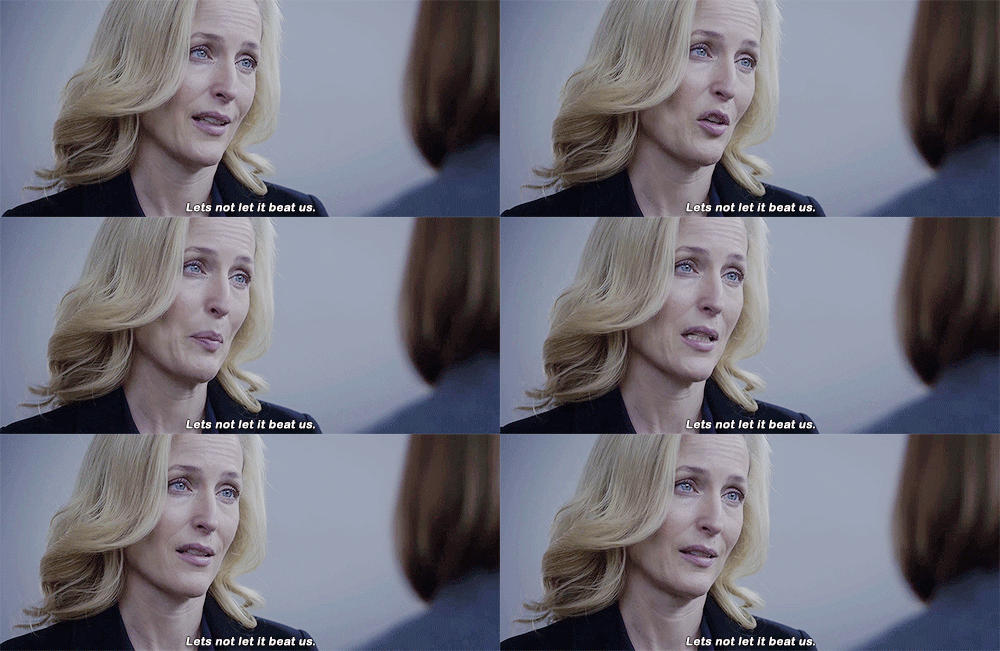
2. Scully’s takedown in heels (The X-Files)


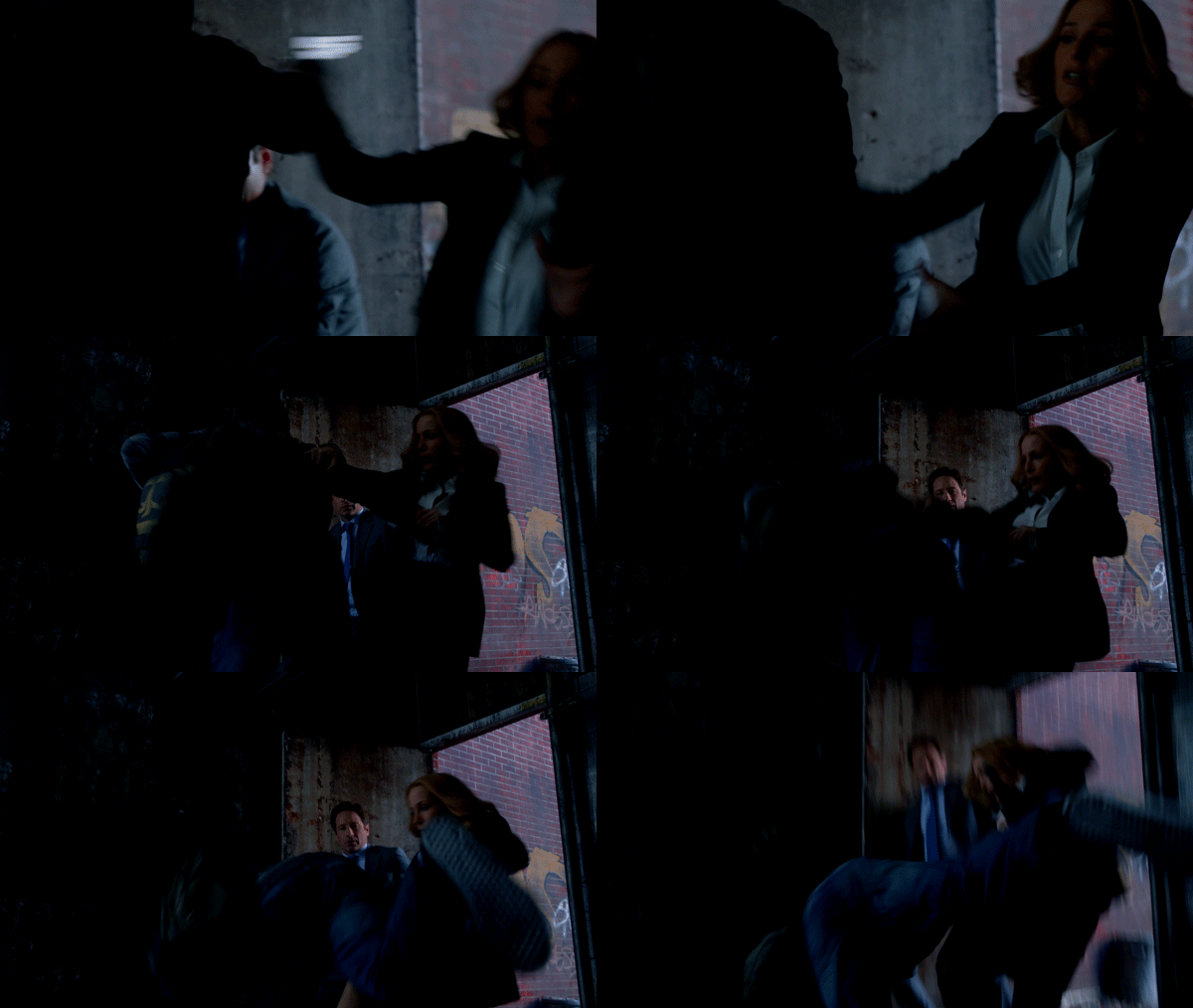
Let me first say that the disappointment I felt in season ten of The X-Files was profound. At this year’s Festivus celebration, my Airing of Grievances were aimed heavily at Chris Carter. However, Dana Scully, one of my first fictional feminist heroes, had one of my favorite feminist moments. Mulder tells Scully that he doesn’t do stairs anymore and she reminds him that “back in the day” she used to do the stairs and in three inch heels (and got paid less, too). She had also just taken down a perp in said heels and a pencil skirt, all while grieving her recently deceased mother, by the way. Talk about a strong female character. You could argue that the major feminist moment is in the finale when it's revealed that Scully’s alien DNA is going to save all humankind, but I like this simple nod pointing out workplace inequality. You don't want to get me started on the mess that is “My Struggle, Pt. 2,” believe me.

It’s also worth noting that Gillian Anderson fought the unfair pay gap back in the 90s and had to fight it again when negotiating for her return to the iconic role. She was offered half (let that sink in — half) of what her male co-star was offered. Bringing attention to the disparity of wages in Hollywood is a step toward fighting it. Anderson told The Daily Beast that she was “surprised that more [interviewers] haven’t brought that up because it’s the truth. Especially in this climate of women talking about the reality of [unequal pay] in this business, I think it’s important that it gets heard and voiced. It was shocking to me, given all the hard work that I had done in the past to get us to be paid fairly. I worked really hard toward that and finally got somewhere with it.”

It goes to show that there is still so much work to be done in this area and we are so fortunate to have someone like Gillian leading the fight.
giphy (1).gif

3. Blanca’s stand (Orange is the New Black)


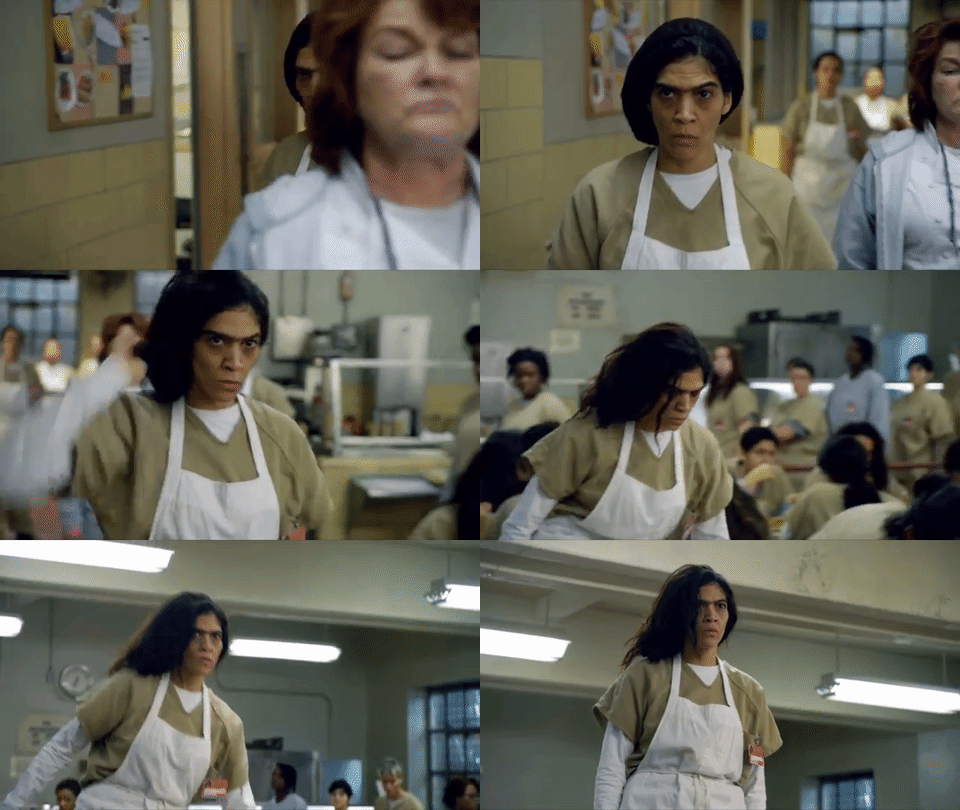
Orange is the New Black is known for tackling topical, hot button issues regarding race, LGBTQ concerns, addiction, mental disorders, etc. Misogyny and sexism are confronted in practically every episode, but Blanca’s stand was especially powerful. As a result of some prison politics, the guards are targeting the Dominicans to search for contraband. The male officers are taking advantage of the situation to grope and assault the inmates. Blanca has had enough and she finds that if she smells bad they give her a pass. She becomes “the Che Guevara of hallway frisking.” They get on her to bathe and she refuses as an act of civil disobedience. One guard — not really knowing how to handle it — makes her stand on a table in the cafeteria until she stops.

Blanca endures two days standing on the table. Chapman sneaks her a granola bar, gets caught, and is given the same treatment. They get a reprieve when the prison goes on lockdown, but the act of standing against the abuse doesn’t go unnoticed by the women. It mobilizes the inmates, and the idea of a peaceful protest starts to get around. Alas, the groups are too polarizing to get along long enough to organize. An incident in the cafeteria incites Blanca to stand again. She defiantly steps up to the table and the rest of the room joins her. They make it clear that it is a peaceful protest, but the officers use force and it ends with one of the saddest (and dare I say, unnecessary) character deaths on television this year.

This season of Orange is the New Black was very dark, but so is our reality. It’s just more visible now and society is more vocal about injustices. It’s difficult to stomach, but we can’t shy away or change the channel. When women are treated inhumanely — whether they are criminals or not — we need to stand up to the patriarchy, just like Blanca.
giphy.gif

4. God save the Queen (The Crown)


The Crown is a rich tapestry chronicling a young woman’s struggle to maintain an identity under the heavy burden of other people’s expectations. While most women can’t relate to the difficulties of being the Queen of England, they can relate to that particular struggle. When her father King George VI dies, Elizabeth's grandmother sends her a letter telling her she will have to grieve for herself along with him. “And while you mourn your father, you must also mourn someone else. Elizabeth Mountbatten. For she is now replaced by another person — Elizabeth Regina. The two Elizabeths will be frequently in conflict with one another. The fact is the crown must win.” A lot of women struggle with these different selves. Being under the scrutiny of her family, the Cabinet, the country, and the world makes it even more difficult. How devastating to suffer the loss of a parent and then face the inevitable loss of one’s self.

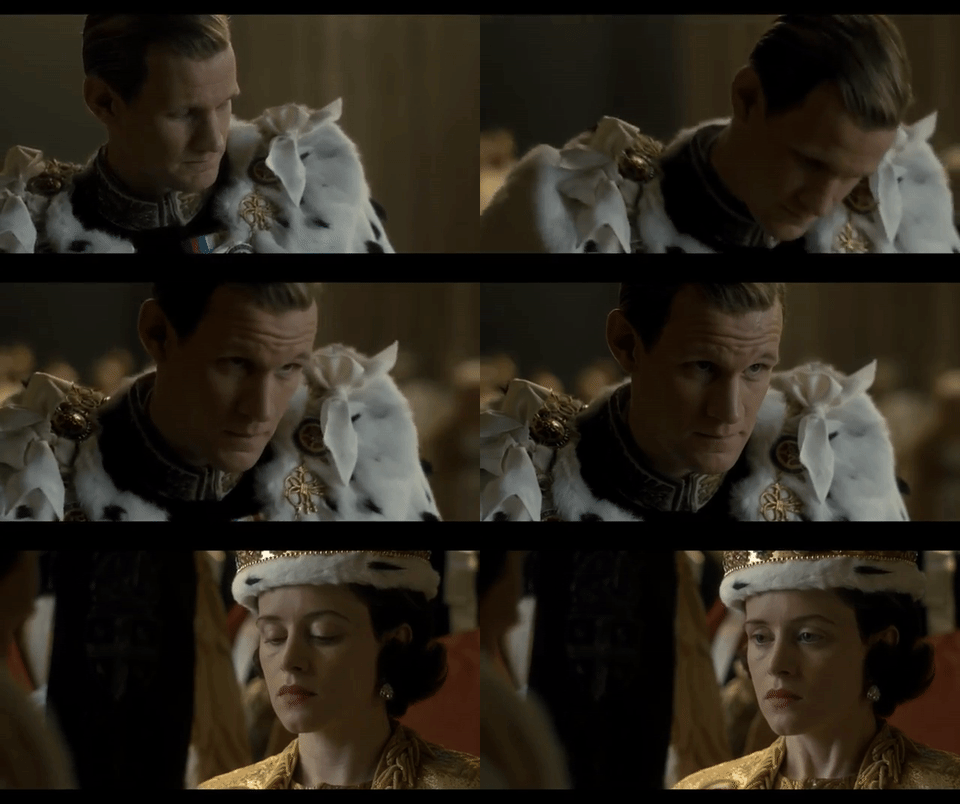
Elizabeth rises to the occasion with strength and grace even as she feels her own identity is dying inside. She makes her husband, Prince Philip, the head of her coronation preparations. He gives a fervent speech to the planning committee saying that the coronation needs to reflect the changes and advances of the world, “the wind of change that [a young woman] represents.” He pushes for it to be “modern and forward thinking.” But, he’s mostly speaking in regard to using technology to televise the event. There is nothing “forward thinking” in his view of man and wife when he tells the Prime Minister that he doesn’t intend to kneel before Elizabeth. He’s afraid of how a husband kneeling down to his wife will look. Philip asks why Elizabeth doesn’t kneel to honor the monarchy. “Because I’m already flattened by the weight of this thing,” she responds.

Rather than empathize with her on how challenging this transition is, he only sees how it affects himself. He petulantly argues, hoping she’ll acquiesce. Claire Foy superbly portrays the inner conflict during this exchange. He’s guilting her into bending to his will, but she stands firm. When he asks if she is his queen or his wife, she brilliantly answers, “I am both. And a strong man would be able to kneel to both.” YAS QUEEN! (Literally.)

Suffice it to say, the dude kneels.
giphy (4).gif

5. Awkward black girl (Insecure)


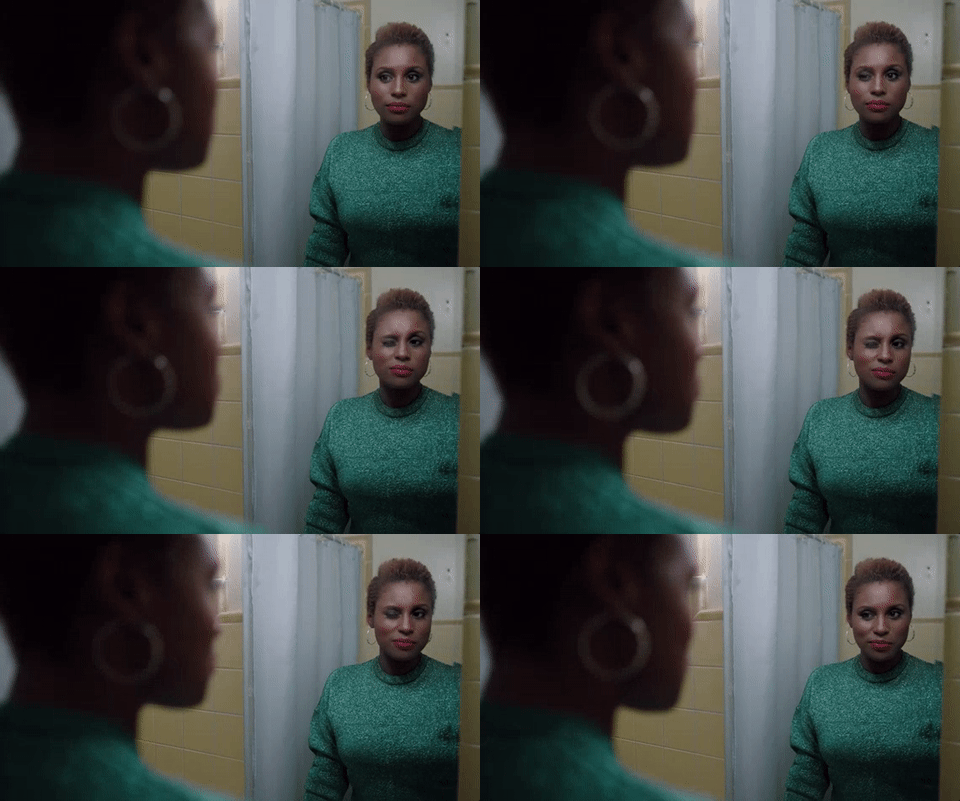
Women are underrepresented on screen as it is, and women of color even more so. There has been some progress made, but not nearly enough. Women do not experience sexism the same way and for feminism to be intersectional — as it should — we need to hear all voices. Issa Rae’s voice can be heard in the new HBO show, Insecure. Awkward as she is, her voice is strong. I find this especially appealing being aggressively awkward myself. In the first episode, she gets up at an open mic and raps. She may be insecure and have to give herself pep talks in the mirror, but she’s going to get her voice out there.

Insecure is breaking ground in many ways. Rae is the first black female lead to star in an HBO series. The production focuses on hiring a diverse behind-the-scenes crew, not just including people of color, but women. There are females in all of the above-the-line positions: producer, writer, director. There are women in the technical departments like camera, sound, and editorial. Today’s television landscape is grossly lacking representation of black female friendships and Insecure puts that at its core. Girlfriends and Living Single focused on black female girl squads, but those have been off the air for almost 10 and 20 years, respectively. There have been countless series that center on white groups of female friends on our TVs since. Being insecure and awkward is rough — it’s nice to have friends to get you through. And it’s nice to see it on the screen.
giphy (3).gif

6. Madam President (Veep)


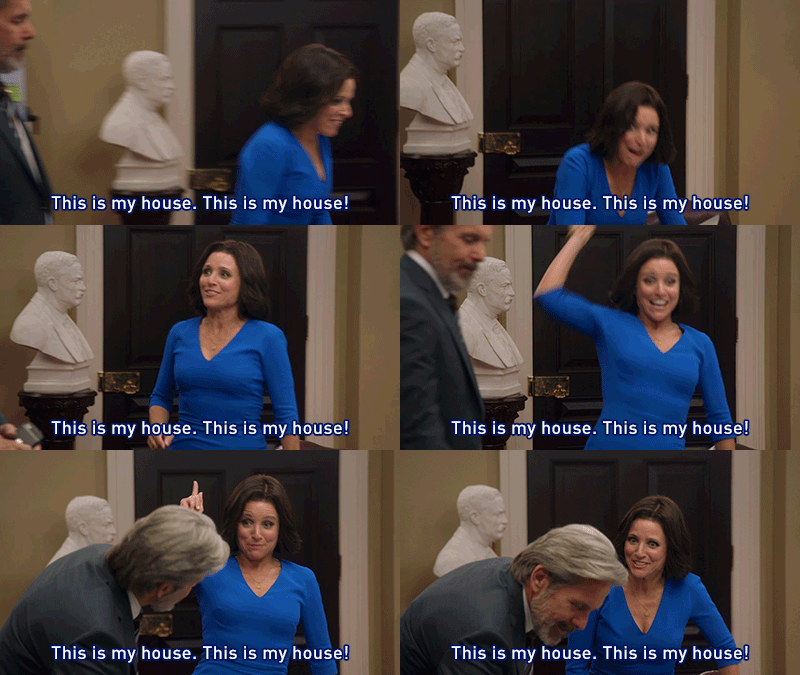
Women make up half of the world's population, so why would Hollywood portray anything less? But Hollywood has been doing just that since the advent of motion pictures. Although advances are made, we are still so far from a suitable representation when it comes to depicting equality in the workplace. And even more disparaging is the under-representation of females holding positions of political power. This year, real life showed us how difficult it is for a woman to break that highest glass ceiling. Veep was doubly progressive than reality in season five with not one, but two women serving as POTUS. Selina Meyer assumed the presidency and then fought tooth and nail to keep the position, as well as any scrap of respect. A recount and then a Senate vote resulted in Laura Montez swearing in as Commander in Chief in the season finale. The fact that neither of them were elected by the people is another example of what needs to change, but the fact that they were sworn in at all was a step in the right direction.
giphy (5).gif

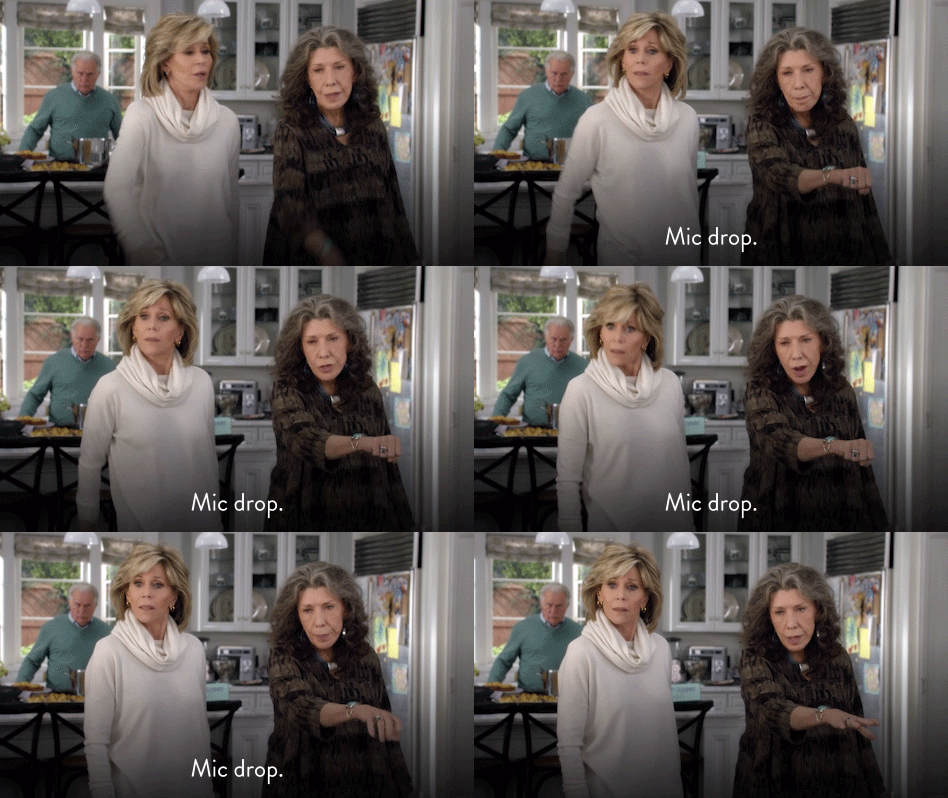
7. Mic drop (Grace and Frankie)


Jane Fonda and Lily Tomlin show us through Grace and Frankie that feminist fierceness does not diminish with age. These two women combat both sexism and ageism thrown at them by their own family. Throughout the final episode, they are both being “managed” by their families. They treat Frankie like she’s a little old lady who’s losing her mind and Grace is being looked past and dismissed. “I am being treated the way I was for forty years and I’m not going to settle for it anymore,” she says. Nor should she.

The reaction by their ex-husbands and children when they find out Grace and Frankie are going into business together for some more... adult items, is dismissive and disgusted. The pair, however, respond to the family's mocking skepticism with unabashed truthfulness. They don’t want to be looked at as asexual automatons with one foot in the grave. They want to be known for the passionate, full of life women that they are. And Grace tells them that they are sick and tired of being dismissed by them. Frankie mimics a mic drop and they bounce. The camera turns to slow-mo speed as they walk out on the party leaving their shocked family behind in the wake of their truth bomb. It was a thing of beauty.
giphy (6).gif

8. Rogue nun (The Exorcist)


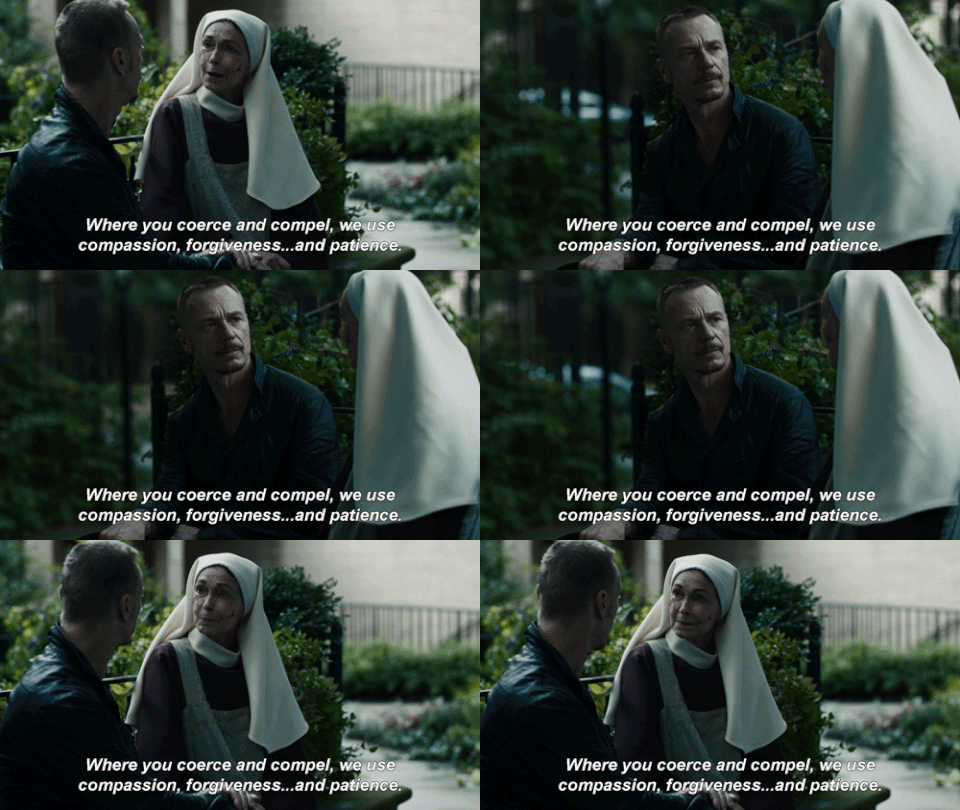
As the demon in Casey Rance gets more powerful, Father Marcus starts to lose faith in himself and his abilities as an exorcist. He is guided in the direction of Sister Bernadette. She leads a group of nuns that perform exorcisms. Exorcism is a man’s game. Only specially appointed bishops and priests can perform the sacramental ritual, and it requires express permission from the diocese. These nuns are operating against the law of the church, but they feel they are doing the Lord’s work nonetheless. Marcus’ visit with Sister Bernadette gives him a fresh perspective. She invites him to participate in the exorcism of a possessed man. The nuns approach the ritual in a gentler way than is traditional. He is successful using their tactics and gains the confidence he needs to continue with Casey.

A female point of view can be of great value. In this story of two men fighting against evil, on the verge of giving up, it is a woman’s strength and compassion that motivates the plot. The scene of the exorcism with the group of nuns is powerful. All we know of exorcisms is male priests attempting to exorcise the demons. The Exorcist shows us a group of women facing evil head on with benevolent kindness.
tumblr_oeby7pQMiC1uj9x4to1_500.gif
tumblr_oeby7pQMiC1uj9x4to2_r2_500.gif

9. Stellaaaaaaaa! (The Fall)


Let me think, a feminist moment on season three of The Fall? Hmm. How about every time Stella Gibson was on screen and every time she opened her mouth? All the moments. ALL. THE. MOMENTS. Seriously, this fictional character should be used in women’s studies classes to teach flawless executions of feminist rhetoric. Whether she’s reminding someone to not blame the victim or trying to help a young woman learn to find worth in herself, she is teaching the audience to fight misogyny and to support our fellow woman. I will gladly take feminist lessons from Stella Gibson and the woman that plays her any day.

Actually, next year, Gillian Anderson has a book that she co-authored with Jennifer Nadel coming out that is just that. We: A Manifesto for Women Everywhere aims to mentor women of all ages to overcome feelings of low self-esteem and to find empowerment within. In a very dark and intense show about a serial killer, The Fall was able to instill this message with everything that is the brilliant Stella Gibson.
giphy.gif

10. A cold and broken hallelujah (Saturday Night Live)


The days following the election filled me with hopelessness and despair. I cried a lot. It was like grieving the loss of a loved one, but it was worse than that. With death comes an understanding — you know what happened, because someone has died. How do you begin to comprehend the death of something like your faith in humanity? The majority (yeah, that’s right, I said majority) of the country was in mourning. The threats against women’s rights increased drastically. The biggest display of sexism was on the world’s stage for all to see. It was disheartening and tragic.

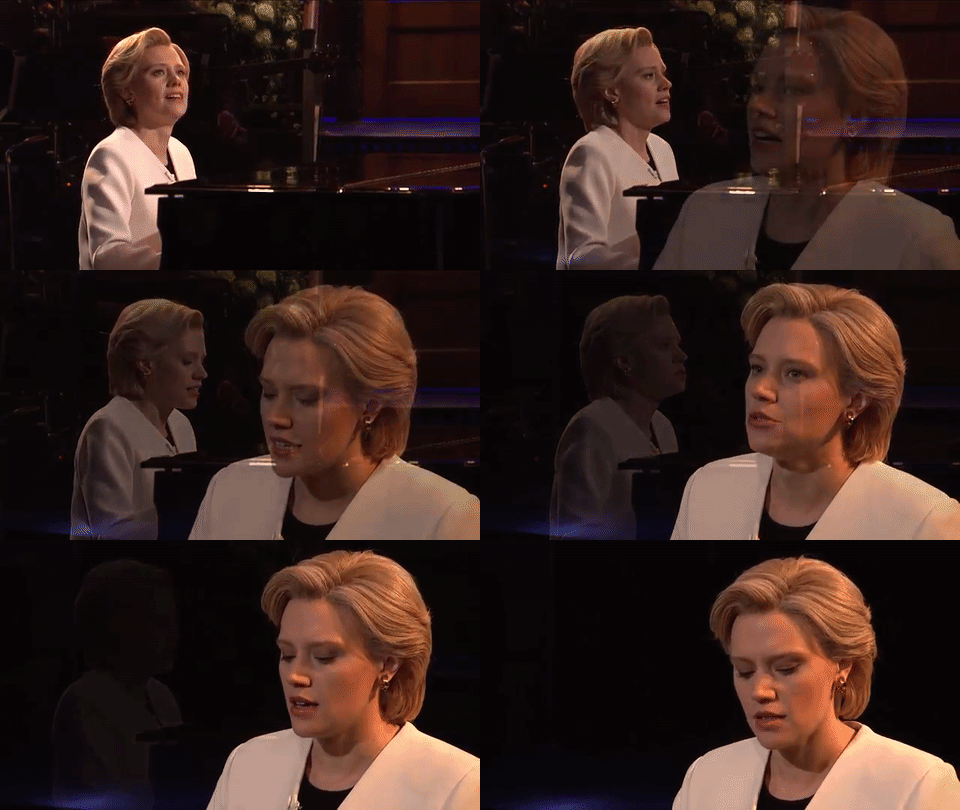
Saturday Night Live, like so many other late night shows, was a balm to my anxious soul leading up to election night. Kate McKinnon as Hillary Clinton and Alec Baldwin as Donald Trump made me laugh at the absurdity of it all. And when that absurdity turned into a horrific reality, McKinnon was there again to comfort and console. The cold open of the episode that aired four days after the election was McKinnon as Hillary donning a white pantsuit and playing the piano. She sang Leonard Cohen’s “Hallelujah.” This choice of song was perfect with its lyrics and emotional, soulful melody. With Cohen’s passing just a day before the election, the selection of it made it even more powerful. My steady flow of tears turned into a deluge.

Some of the words that are from Cohen’s original and alternate lyrics struck a deep chord particularly in relation to the exhibition of misogyny by the Trump campaign. “Baby, I’ve been here before. I know this room. I’ve walked this floor.” Women have been here before. We have fought these battles. We’ve seen rampant sexism try to hold us back. It is nothing new. “And even though it all went wrong. I’ll stand before the lord of song with nothing on my tongue but hallelujah.” Even though we get knocked down, we get back up and keep fighting. McKinnon ends with that exact sentiment: “I’m not giving up and neither should you.”

Knowing that McKinnon must've felt the same sorrow that so many were feeling she mustered the strength to give us hope. It was moving in much the same way Hillary’s concession speech was. This loss was painful and difficult, but “love is not a victory march. It's a cold and it's a broken hallelujah.”
tumblr_obmpxuc4DE1ufj51so3_r1_250.gif

11. Eleven's existence (Stranger Things)


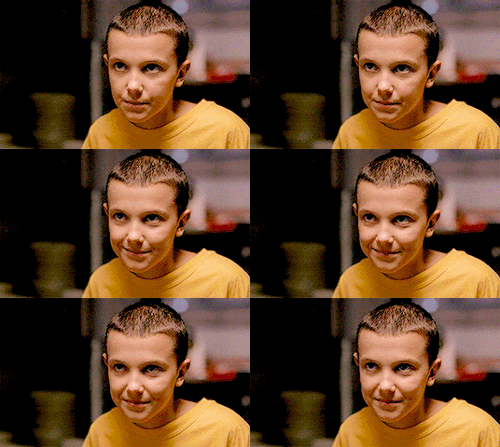
One of the year’s fiercest characters came in the package of a young girl named Eleven. Imprisoned and abused, she breaks free and befriends a group of boys and aids them in the search for their missing friend. Eleven learns the meaning of friendship from them and then asks it of them in return, holding them to the high standards they had taught her — “Friends don’t lie.” She escapes the oppression of her father figure and flees the only life she’s known. She finds out that she’s being used for something sinister and she fights to bring it down. It takes bravery, courage, and conviction.

Eleven is a complex being that doesn’t know much of human interaction, but she innately feels human compassion and expresses moral fortitude. Millie Bobby Brown is the breakout star of Stranger Things that plays this incredible character with amazing depth. She is a true superhero, but unlike what we are used to. And that is refreshing.
giphy (4).gif

Bonus: The reality show Alone


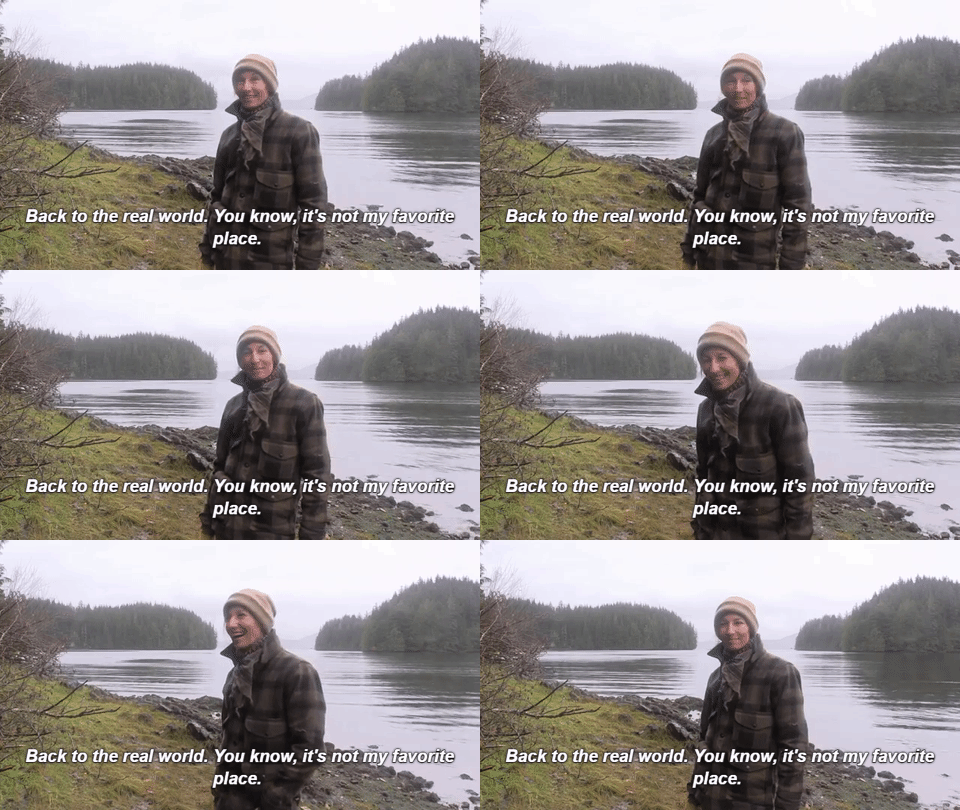
This is a show my husband and I watch with my son. I was so annoyed that the first season didn’t have any women competing in the survival competition. Thankfully, the second season had three female contestants. It’s important to me that my son sees that women can do anything a man can do. Women still weren’t equally represented with only three out of the ten, but it is an improvement. Nicole Apelian made it 57 days in the wilderness and came in fourth place. The winner was crowned just nine days later. She physically could have made it a lot longer, but she wanted to get home to see her kids. That outweighed the desire to win. In one episode, David (the man who went on to win), is having trouble catching fish. They intercut that with Nicole catching an abundance of fish. So much, in fact, that she released some back into the water. She had such an upbeat and positive attitude the whole time, while a few of the men in the same position experienced bouts of depression and despair. She was always smiling and thanking Mother Earth for its bounty. She was the opposite of the rugged mountain man you expect to see on a survival show, and that made her even more of an inspiration.

What were some of the best feminist moments on television for you in 2016? Sound off in the comments below!

Monday, November 14, 2016

Why Pitch is One of the Most Female-Positive Shows on Television


If someone asked me when I first became a feminist, I wouldn't be able to tell them. I think over the years, my perspective on feminism has shifted — in the best way possible — as I've learned more and heard stories from women all over the world. It's a buzzword, but "empowerment" is always the first thing that comes to mind whenever I discuss feminism. Empowering women is more than just handing them knowledge and power; it's about learning who you are — as a woman — at your very core. Because women are fundamentally different from men, and we experience life differently, it's important for us to recognize who we are and what we're capable of. Furthermore, understanding feminism means understanding your own societal expectations and limitations. I'm an unmarried, white Christian woman in her late twenties who lives in the United States. So understanding what feminism looks like for me means something different than it does for other women in my country and across the world.

But what I truly admire is the fact that over the years, media has expanded to include more and more types of women who represent their own pockets of culture and countries, and who demonstrate how to push and break barriers. Television, in particular, has done a great service in writing diverse, inclusive, and incredible female characters recently. Characters like Parks and Recreation's Leslie Knope, shows like Orange is the New Black, and even a character like Stranger Things' Eleven have all proven that women are worthy of carrying incredible storylines that are not always dependent on men or romance.

And you can bet that you should also add Pitch to that running list of female-positive shows.

I'll argue something bold here: Pitch is one of the most female-positive, if not the most female-positive, shows on television currently. In a field (pun intended) dominated by men, Pitch is a show about Ginny Baker (Kylie Bunbury) breaking through barriers to become the first female pitcher in major league baseball. If it sounds boring to you, let me assure you from a non-baseball fan standpoint: it's not. At all. In fact, it's one of the most engaging shows on television right now because it doesn't heavily rely on knowledge of source material in order to gain audience attention. Instead, it focuses on our protagonist, Ginny, as she not only navigates a new team and a new dynamic but also as she learns how to cope with the pressures of being the one female role model in baseball that seemingly everyone looks up to.


Over the past few weeks, Pitch has done a tremendous job in depicting the burden of pressure that Ginny feels, every time someone looks at her to be the role model simply because she's a woman. While the honor of playing in the major leagues is just that — an honor — it's also an incredibly heavy weight to bear for a young woman in her twenties. And the show reminds us that women are expected by societal standards, more so than men, to have our crap together.

We're expected to be thin, but not too thin. We have to look presentable, all the time. We have to smile constantly and act gracious. We cannot be brash or angry, lest our anger be blamed on our "that time of the month." We have to be able to cook and to clean, but also be able to do all of the things that men are able to do as well, lest we be labeled something like a "damsel in distress." We have to have knowledge, but never use it to overshadow men. We have to contribute to conversations, but cannot dominate them. We have to do it all, but we also can't do it all — we are told to fit into boxes but by the time you are an adult, you realize that you're expected to clone yourself and fit into all kinds of different boxes. There is, plain and simple, a different standard placed on women than men.

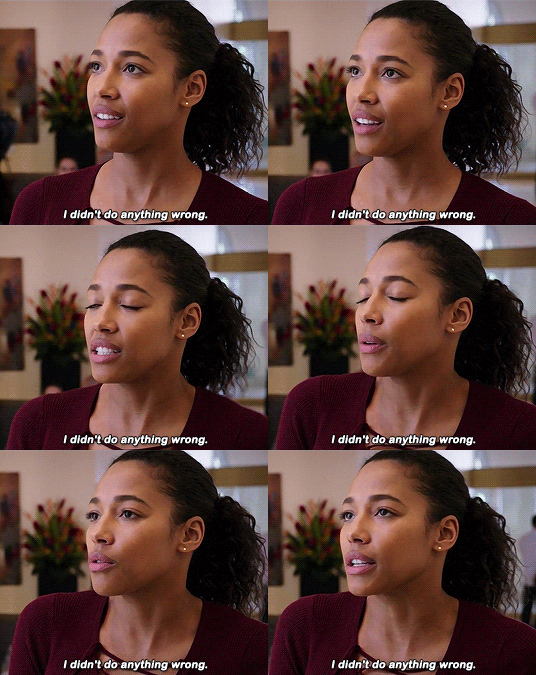
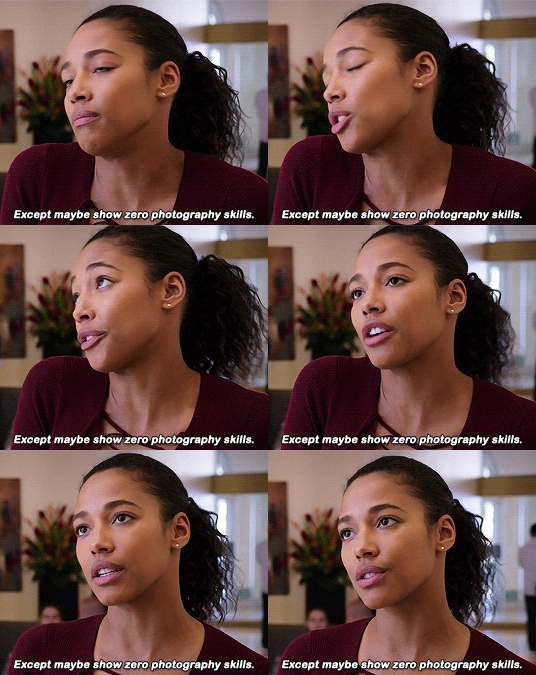
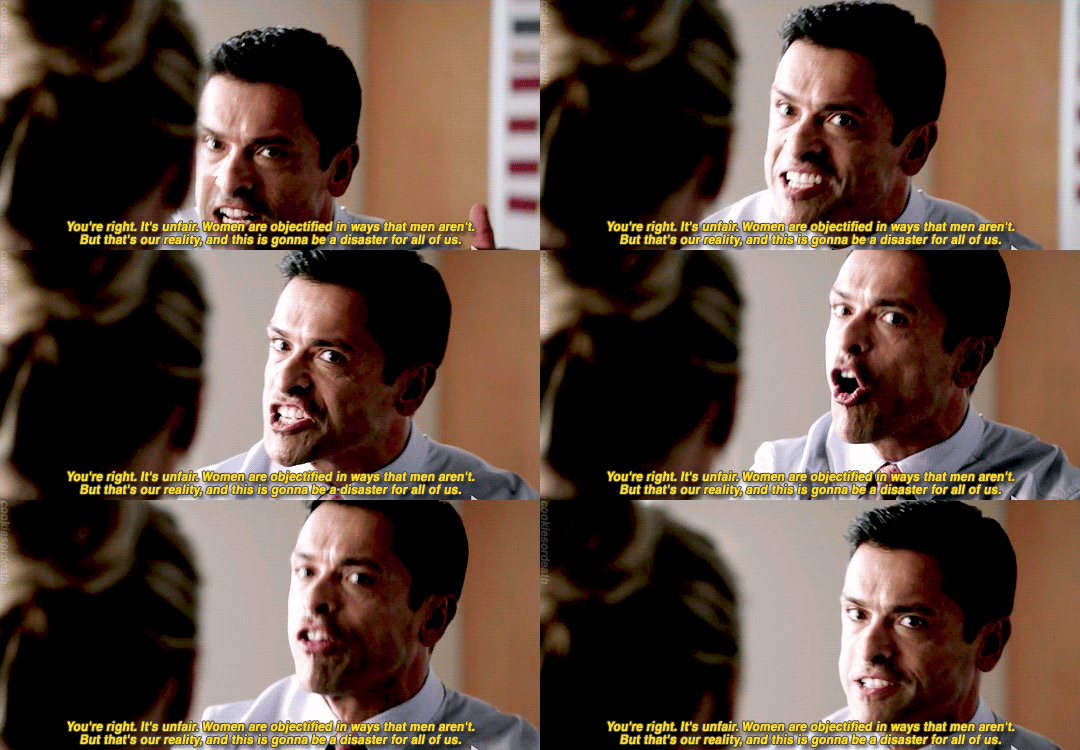
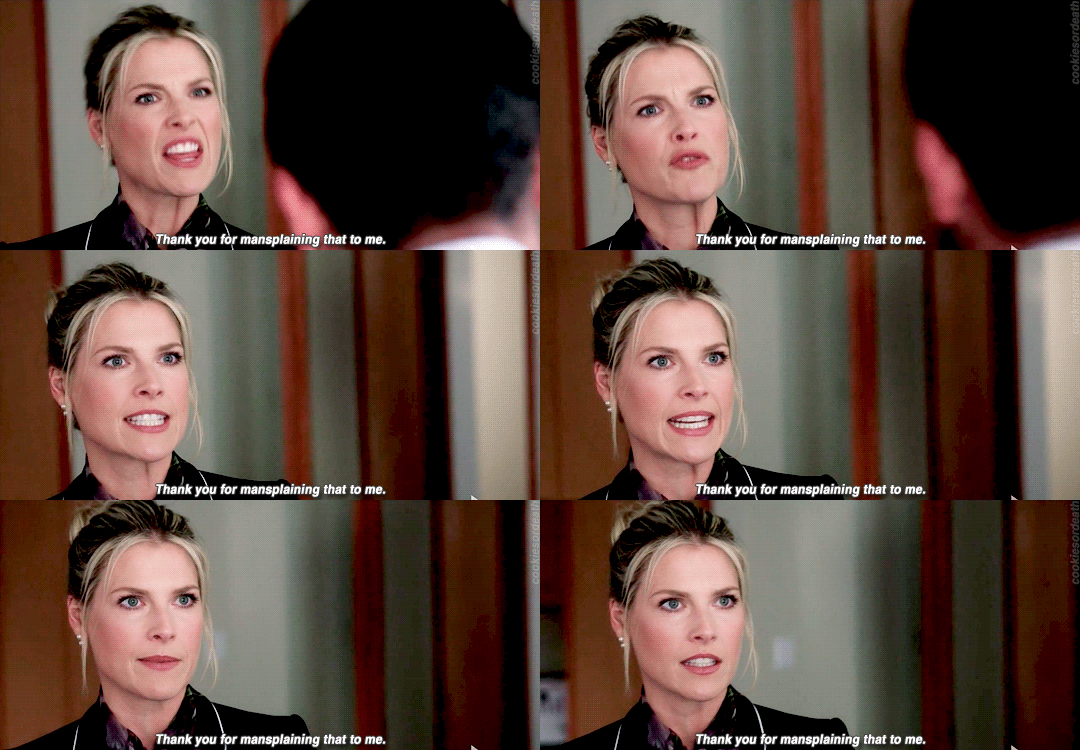
Men are also handed expectations by society, sure; but Pitch makes an incredible point in this week's episode titled "San Francisco," when nude photos of Ginny leak on the Internet: men on the baseball team have far worse on their phones but if that came out, the public would barely bat an eye. The moment that Ginny reveals to Blip (Mo McRae) — who is, by all accounts, an incredibly kind and well-meaning male character — that she and her boyfriend took the photos years ago, Blip is aghast. He tells her that she needed to be smarter and that if she didn't want photos like that online, she shouldn't have taken them in the first place.


Ginny Baker, however, holds her ground and essentially tells Blip that his response is part of the problem: the only person who did anything wrong was the person who hacked her ex-boyfriend's account and stole those photos to post them on a sketchy website. Women are expected to be all sorts of things, and Pitch never fails to remind us of that. And when they don't live up to being those things, they're shamed — either publically, or subtly. It also doesn't fail to remind us of that.

Moreover, though, Pitch never fails to flip tropes (whether related to gender or not) on their heads. A few weeks ago, an episode aired where Ginny essentially hits her breaking point. She's tired of the spotlight and tired of having to be everything for everyone — a role model and a perfect ballplayer, because the second she messes up, it's all her fault, etc. — and breaks down. When the managers confront her with the video recording of her breakdown, Ginny puts on a brave face. Because that's what we, as women, are taught to do. Nothing can ever rattle us — not our circumstances or our kids or our significant others — because society tells us that strong women have it all together, all the time. It's only when Ginny recognizes her own brokenness that she's able to be the kind of person she is supposed to be: a healthier individual who can heal from the things that bother her, rather than run away and pretend they're okay.

And in regards to flipping a trope on its head, "San Francisco" found Ginny coming up with a brilliant solution to reduce any backlash from her nude photos: she put her body on display herself. She took back the narrative and removed the stigma of nude photos, coming up with the idea for the team to do a nude photoshoot for a magazine. Rather than allow people to publically shame her and — by extension — her body, Ginny made sure that the media focus was not on those hacked photos, but on the ones that she chose to take and have published. It was such an amazing way for Pitch to tell women all over the world that we have the power to control our own narratives, and that we can take things that people may design for harm and use them for something good.

(In fact, the show also dedicated part of an episode to a discussion about sexual assault and it was amazing and I could talk forever about it, but another +1,000 points to Pitch for being so pro-women.)


Numerous times in the show, Ginny mentions how she doesn't want to cause any trouble or garner media attention more than her male ballplayers. This was an issue of tension between the team early on in the series, because Ginny was constantly in the spotlight. She's conditioned herself to believe that if she pretends that she's just one of the guys, then they will like her and she won't be the source of dissension. It's sad, of course, that Ginny wants to balk and run away from the things that make her so special, but it's also understandable that she wants to do this because of her gender — because she would often rather be meek and ensure that she doesn't stand out than to accept that she is different. 

I'm grateful that Pitch exists because it's provided us with a layered, dynamic female character and heroine who is flawed and strong in the sense that she's often uncertain and doesn't always do the right thing. I think that too many people confuse "strong, female character" with "a woman who can wield a weapon, never cries, and doesn't need anyone else." Pitch has proven, in spades, that strong women are those who use their talents and abilities to tell the world that they are extraordinary; strong women are those who decide to fight — sometimes with tears and sometimes with rage and sometimes with silence — against those who might silence them. 

And the show never seems to do this at the expense of the men. It doesn't say: "feminism means women rule everything and men are just to be silent and do nothing." Feminism (in my opinion) is the movement that seeks not to dehumanize women, the end result being that that men and women work side-by-side as equals. Pitch continues to portray depth in male-female relationships, with Ginny occasionally having to apologize for being wrong, and the men occasionally having to apologize for being wrong too. (Most notable is in Ginny's relationship with her catcher, Mike Lawson — played excellently by Mark-Paul Gosselaar.)


But while I love the dynamics between the men and women on this show, I think one of my favorite elements is the dynamic between the women on the show. They — Ginny, Evelyn (Meagan Holder), and Amelia (Ali Larter) — are all so different. Amelia is cutthroat and business-like because that's who she has to be, but she's also very attentive to the needs of the people around her. Ginny is often guarded but has this amazing sense of humor that is dry and sarcastic. And Evelyn is the kind of woman who walks into rooms with purpose — she sticks by her convictions and her man. She is the epitome of loyalty in her relationships, while also being the listening ear for the people who need her most.

None of these women are tropes. And none of these women are torn down by the show in order to pave way for a man (or vice versa). Amelia is very pragmatic in a lot of ways (sometimes to conceal the kind of heart that is damaging to have in her line of work), and that can occasionally be her stumbling block. But she's not really cold. She's funny and sensitive and is vulnerable with the people closest to her. And Evelyn isn't just loyal, either. She's fiercely protective of the people closest to her and also her opinions. She fights to be heard and respected by the people around her and does not stop until she is.

What this show does right is prove that female characters can write their own stories — that if a character is interesting enough, writers don't need to rely on tired plots or tropes in order to make them more appealing to an audience. Instead, Pitch bargains that the heart and soul of the characters they wrote will shine through. And it does.

If you aren't yet watching this show, please do. This post focused specifically on the female-positive message that the show broadcasts — which is so important and integral to the plot of the series — but it is also a show that has a lot of humor, wit, heart, incredible music, and one that does flashbacks incredibly well (#sorrynotsorry, Arrow). 

When you really boil it down, Pitch is the story of what it means to learn who you are in a world that tries to tell you who you are. And whether you're a man or a woman, I think we all can learn something from that message.

Tuesday, March 8, 2016

International Women's Day: The Fictional Women Who've Inspired Us


It's International Women's Day, which means that it is the perfect chance to celebrate both the women on staff here at Just About Write and the fictional female characters who have inspired us in some way, shape, or form throughout the years. Here, our inspirations are as diverse as we are, ranging from women in television, movies, and novels alike.

With #LadiesSupportingLadies as our mantra and this website as our platform, let's take time today to celebrate these amazing women and the impact that they all have had on our lives!

Wednesday, November 4, 2015

Why 'Crazy Ex-Girlfriend' is the Best Show About Relationships, Characterization, and Feminism You're Probably Not Watching


About a year or so ago, I wrote a piece about how I was impressed with one particular television network’s strides in their portrayal of women –– The CW. For a long time, this network was one typified by soapy dramas and “guilty pleasure” television (the home of shows like One Tree Hill, Gossip Girl, and 90210). And while there is nothing inherently wrong with any of the shows listed above, there was something missing in the network’s female leads. They were all relatively interchangeable.

They were all size zero tall, beautiful women who –– in their late twenties –– were still playing high school students. These female leads were always dressed as if they were walking onto the set of a Vogue shoot and had men falling at their feet constantly. And while all of that makes for fun television to become sucked into, the problem is that this depiction of women isn’t really representative of women in society as a whole. Enter: the new CW network.

Nowadays, The CW is –– either unconsciously or consciously –– expanding the variety of women that the shows on their network feature. And it’s absolutely glorious. We exist in an age of television where a Latina woman who is driven and type-A and has an amazing relationship with her mother and grandmother is the lead of a Golden Globe-winning series (Jane the Virgin). And then there are the countless diverse characters featured on The 100, alongside the variety of strong female characters we see on The Flash and Arrow. And that’s not even including the host of series on the network whose leads are women –– shows like iZombie, Reign, and the new comedy Crazy Ex-Girlfriend.

That last series is one that I want to spend the majority of this article talking about, because I think it’s a really important show that hasn’t gotten the buzz it deserves yet. People (admittedly, people like me) dismissed this series when its title was revealed. I really should learn to stop doing that (Jane the Virgin, Trophy Wife, and black-ish should have helped me learn that lesson), but what I think is so important about Crazy Ex-Girlfriend is the fact that its title is polarizing.

Because they’re taking back the term and flipping the insult on its head in this series, by revealing to us that characters labeled as “crazy” may actually have things mentally wrong with them. And people labeled as “crazy” may not –– they may just be people who are highly intelligent and lack basic social skills. The series features Rebecca Bunch (Rachel Bloom), a woman whose life is pretty much going nowhere fast up the corporate chain. She has a mother who incessantly calls her and lectures her, and a life that is decent but not ideal. That is, until she randomly runs into her first love/camp boyfriend Josh Chan (Vincent Rodriguez III) and decides, on a whim, to move to West Covina, California in order to be closer to him. In the process, she has attracted the attention of Greg Serrano (Santino Fontana) who has a love/hate relationship with Rebecca, and has become near-instant BFFs with Paula Proctor (Donna Lynn Champlin).

If that sounds like exactly what you assumed a show titled Crazy Ex-Girlfriend would be about, you would be correct. And that’s just what I feared –– that this would be a musical comedy poking fun of love.

But I have never been happier to be in the wrong than I was about this show.

Crazy Ex-Girlfriend is much more than a show about relationships and love and the messiness that accompanies those things. And it’s hard to pinpoint exactly what about it is so magical and so special. But I have decided to list a few of the most impressive things about this comedy.


#FEMINISM


This show is a brilliant commentary on the sexism present in our society. In the show’s theme song, Rebecca notes as much, saying that the term “crazy ex-girlfriend” is sexist. And she’s right. Do we ever use that phrase to refer to MEN? No. We just casually refer to them as our exes and we move on. But for some reason, emotional women who are exes are often branded as “crazy,” which is demeaning and completely missing the point. Rebecca continues in the theme song to say that her situation is much more nuanced than people are willing to accept. And she’s exactly right, too (I’ll get to that momentarily, no worries).

Feminism isn’t just a topic that this show throws in so that they can claim cultural or historical relevance. It’s easy for shows to do that, and a lot of them do. A lot of series shove two women into a scene together without any sort of larger narrative or purpose, label it “feminism,” and move on. But that’s not what feminism is. Feminism is the idea that relationships between men and women are important, but the relationships between women and other women are just as important. It’s the notion that women should be treated as equals in society and that if men are held to a certain standard, so should women. And if men are talked about in a certain way, then women shouldn’t be degraded in conversation.

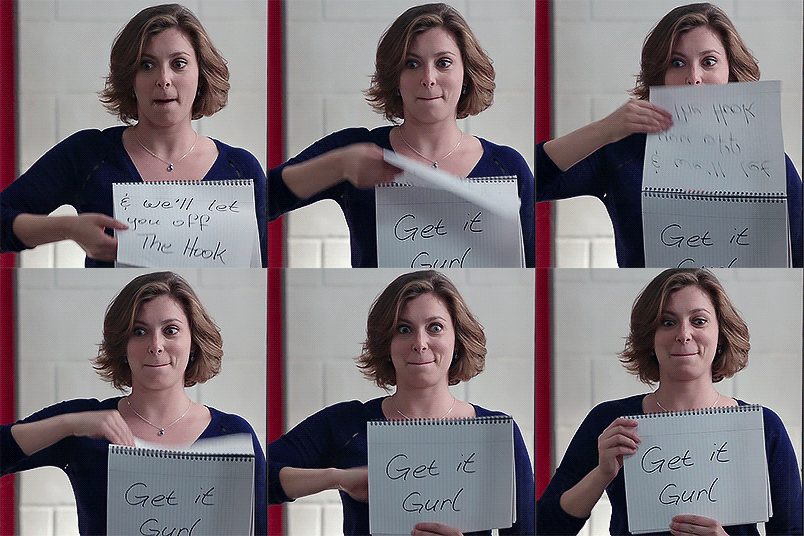
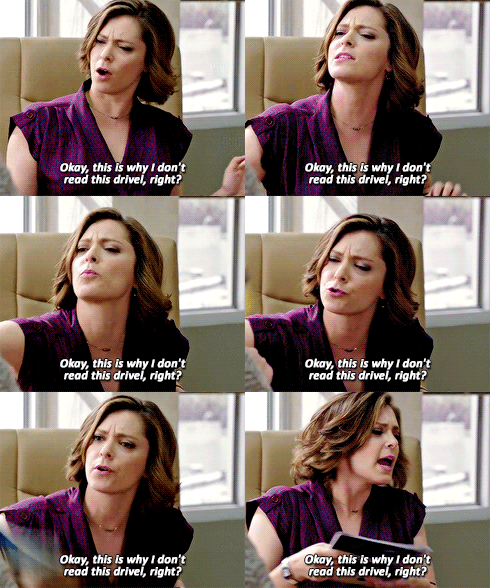
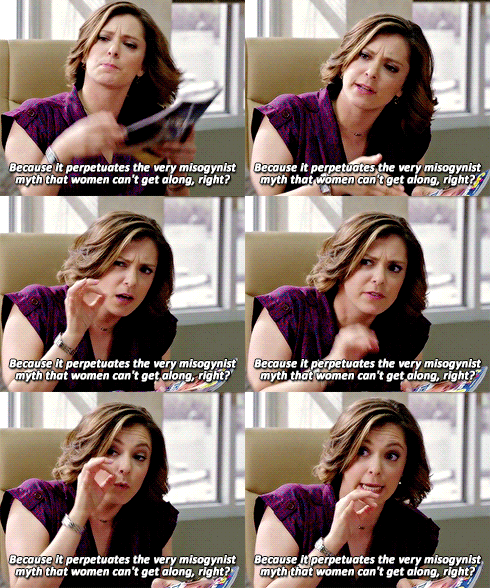
There’s a moment in an episode that I think is really poignant:


Isn’t Rebecca right, though? Isn’t it horrible that our society conditions us to pit women against other women? Don’t we have enough problems gaining respect from men as it is? Why would we add girl-on-girl hate into the mix, too? So Crazy Ex-Girlfriend stimulates conversations like these. And they’re not conversations that are just haphazardly mentioned in a line of dialogue or a scene and then never touched upon again. These are real, lasting, foundational questions of behavior. Rebecca is a feminist and she’s imperfect; Paula is a feminist and imperfect; Heather is a feminist and imperfect. And I think that this show highlights how integral is it to have female relationships.

Even in meeting Josh’s girlfriend –– a gorgeous, fit yoga instructor named Valencia –– the show didn’t pit the two women against one another. In fact, it uses the episode in order to build a relationship between them. And while, on Rebecca’s part, some of that might have been an agenda to get close to Josh, the larger part of her really was just fascinated by Valencia as a woman and as a person. And truly, there are always Valencias in our lives: we can all think of the beautiful woman we hang out with and secretly fawn over because we think she’s the coolest and most put-together person in the world.

(Also that episode was so important because it revealed to us that Valencia did not really have her life together and that while she could be a bit standoffish, it is essentially because she doesn’t have female friends in her life. And that genuinely affects her.)

Crazy Ex-Girlfriend is a show that exemplifies #LadiesSupportingLadies at every turn. It’s one that places high value in women and the relationship between them. But it also doesn’t say that every woman has to be friends with every other woman they encounter and if they don’t like each other, they’re setting women back. No, Crazy Ex-Girlfriend reminds us that it’s okay to not like every woman you come across. It’s okay to have fights and to disagree. And at the end of those disagreements, you don’t have to pretend to have a relationship with another women just because you’re a feminist.

The point of feminism –– the point that Rachel Bloom, the EPs, and the writing team really and truly get –– is that women should strive to support one another against the injustices that women, in general, face. We shouldn’t slam or shame other women just so that we can prop ourselves up. We shouldn’t let men slam or shame us. We should be the ones banding together to fight that inequality. (The “Sexy Getting Ready Song” is evidence of that fact.)

And at the end of the day, we don’t have to be best friends with every woman we encounter, so long as we recognize that every woman has value and deserves a voice.


MORE NUANCED THAN IT APPEARS


Crazy Ex-Girlfriend is a lot more nuanced than one might assume based on the title. Again: one of the major points is that the show is trying to erase the shame and devaluing language that is used when talking about and to women.

(And the men on the show, when they are being gross or sexist, are acutely aware that what they say or do is not right. AND THEY SAY THAT. Honestly, this is so refreshing to me and something I didn’t talk about above but really deserves mention.)

It would be simplistic to say that this is a show about love and about a woman’s journey to finding it. It would be simplistic to say that it is about relationships. Because it’s not really JUST about those things, even though they’re important. In this week’s episode, the show addressed Rebecca’s problems head-on and it was intensely fascinating. Because she’s a mess. She’s immensely smart and went to Harvard and Yale and can do so much with her life. And yet there is one part of her life where she just can’t seem to function properly and it’s in learning how to be an adult and how to have relationships with other people.

Rebecca doesn’t understand what’s wrong with her, but she’s self-aware enough to know that something is wrong. It’s not healthy for her to be drawn to Josh or one-night stands the way that she is. And in order to stop those bad habits, she decides to be “healthy” for a bit, until the temptation is too much to bear and she backslides after the fear of the progress she made with Greg propels her into unhealthy choices again.

When she hurts Greg because of this, she emotionally crumbles and tells him that he shouldn’t want to be with her because she’s a wreck. “Can’t you see that?” she asks through her tears. And what I really love is that Crazy Ex-Girlfriend doesn’t seek to answer and solve the large, big picture questions within the show.

Greg isn’t a put-together foil to Rebecca’s mess. Neither is Josh. No character on the show is the character branded as “the one who has life in order.” Even Paula isn’t faultless, though she is often the one to give advice. I love that Crazy Ex-Girlfriend doesn’t try to provide easy answers to life’s complexities. People aren’t “fixed” overnight and learning how to become a better person while working through your flaws and issues takes time –– sometimes a lifetime.

There is much more to Rebecca than meets the eye. She’s not just an ex-girlfriend who is desperately in love with (and denying it) Josh. She’s the kind of woman who is smart, but also impulsive. She is sensitive and working through her issues one at a time. And sometimes, she fails. Sometimes she fails spectacularly. But to try to label her as “crazy” is insensitive. Heather, while studying Rebecca, notes that the woman has issues. That much is clear. But she doesn’t want to force labels onto her new friend. She doesn’t want to study her like a specimen under a microscope. What she wants to do is be her friend. That’s it –– without judgement or diagnosis or reservation. She knows that Rebecca needs a friend, not a friend who diagnoses her.

(For the record, I don’t think that’s a commentary on not being diagnosed by a mental health professional for a disorder. I think that it’s a commentary on people who are NOT doctors trying to attach labels and the stigmas they carry to people.)


THE BOTTOM LINE


Crazy Ex-Girlfriend isn’t a flawless show, because there are none of those. But what it is, however, is a beautiful example of how a comedy can be both hilarious and poignant, musical and layered, and filled with character development and growth in every episode. People aren’t problems to solve. They’re not things to callously label. Human beings are real and they’re nuanced. And by looking past a label or a surface-level behavior and leaning into their messiness, we might learn more about them. And we might learn more about ourselves, too.

And, if we’re really lucky, we might experience that all through a musical number.
Watch Crazy Ex-Girlfriend on The CW, Mondays at 8 PM, right before Jane the Virgin. Or catch up On Demand/online!

Wednesday, September 9, 2015

Feminism vs. The Slow Burn Romance [Guest Poster: Lindsay MacDonald]


You might know Lindsay MacDonald from her work at Tell-Tale TV, her pieces on TV Fanatic, or just that girl who we enjoy live-tweeting re-watches of The 100 with. Lindsay is an exceptional human being, super sweet, and passionate about television (and we got to have tacos with her at San Diego Comic-Con, so we win). 
Here, she's penned a guest post for us about what happens when television couples are written as "slow burns" and become... well, problematic in the way that romance is portrayed. Enjoy her piece and be sure to tweet her and/or comment below to keep the conversation going!

It's the staple of a good television show to tease out a ship, pairing, and/or couple as long as physically possible before finally letting them (finally) come together. The music crescendos, the boy gets the girl, and the fade-to-black slowly takes over your screen. But only, obviously, after a good four seasons of consistent suspense and anxiety. The main purpose behind this practice is, of course, to keep the audience interested and invested in the drama of the will-they-won't-they dynamic that governs all romances.

Some of televisions greatest couples have committed to the slow burn, in fact. Meredith and Derek on Grey's Anatomy. Damon and Elena on The Vampire Diaries. Luke and Lorelai on Gilmore Girls. Plus many, many more!

(No, seriously I could go on forever).

The beauty of the slow burn is that it draws us into the story being told and makes us root for the couple. The drama of a slow burn keeps us hovering on the edge of our seats to see when the couple might finally overcome all of their obstacles to be together. We're all suckers for a happy ending.

But there is a specific brand of slow burn that tends to grate on this feminist's nerves and it goes a little something like this:

Person A, suddenly and instantly infatuated with Person B, makes their feelings known via confession, acts of love, devotion, and whatever usual tomfoolery characters in love tend to participate in. All of which, Person B rebuffs, kindly or not through phrases that resemble: "he's a bad boy," or "she's just a friend," or even "I'm not looking for a relationship right now." These are all quite typical excuses used by Person B.  
Here's the kicker though: Person A still continues to pine and chase and pursue Person B, even after they've been not-so-subtly told to buzz off.

Usually, audiences go gaga over this kind of stuff in slow burn couples and in romance in general. There's something disturbingly alluring, apparently, about a woman who says no when she's really just fighting her deepest desires, or a boy who slowly and steadily becomes convinced that the girl of his dreams has been in front of him the whole time.

But that's typically right when warning bells start going off in my mind.

Because as saucy and spicy as it sounds to watch a man who won't take no for an answer and continues to pursue the woman he cares about, it's also reflective of a mentality that should send most girls -- who are not characters on television shows -- running for the hills. This idea that a woman who says no really just means "try harder" is so very troubling to see portrayed as a sexy, romantic subplot. Any girl who has ever been harassed by a stranger, an ex, or even a trusted friend will tell you that the most terrifying thing in the world is a guy who hears the word "no" and thinks you actually mean "yes" and continues to pursue you. Similarly, someone who pines after you or makes you feel like an awful human being for not giving them a chance romantically is a total buzzkill. If the feelings aren't there or mutual, do you really want to have to convince someone to like you? To see your beloved finally throw their hands up in the air and shout "Ugh fine, you've worn me down. You win!" when you ask them to love you back? That doesn't exactly sound like a solid foundation for long-term relationship if you ask me.

Both of these slow burn examples of characters forcibly turning a "no" in to a "yes" bring into question the topic of consent. And consent is a feminist issue that comes into play for both genders, and across the board. Men and women who say "no" to someone else's advancements deserve the right to be heard and respected by the pursuant individual, and romanticizing their refusal as simply just playing hard-to-get is, at best, irresponsible and at worst, extremely dangerous.

Dangerous because as a society, we are completely and totally inundated with media and its many messages. The books we read, and the movies and television we watch work together to shape our perception of the world -- in both right and wrong ways. And, whether we like it or not, media also shapes acceptable social behavior from the time we are children, up until the time we're old and grey. How many times have you heard a story about a little kid jumping off the roof or another tall structure because he just wanted to emulate Superman and believed that he could?

Obviously the politics of unrequited love and how best to react to it are a little more subtle than jumping off a roof or a building, but the core principle remains the same; we take the stories we see and read about to heart whether it's conscious or not. Therefore, depicting a firm "NO" in a slow burn romance as really a "not yet" is something that is akin to setting a lit match beside a pile of kindling -- extremely dangerous with potentially life-altering consequences as a result.

Now, I'm not talking about wooing, courtship, or even seduction as portrayed in media. Those things are all well and good and normal parts of a healthy romance and they are typically depicted as such. The slow burn of Luke and Lorelai in Gilmore Girls for instance, was a constant dance of two people trying to get the timing right in order to explore their deeper feelings for one another. There was never a moment when Luke sabotaged one of Lorelai's relationships in the hopes that she would one day give him a chance. He never guilt-tripped her for treating him like a friend instead of a viable romantic partner for so many years. Instead, the writers crafted a natural progression of romance and romantic feelings from each side that made their eventual coupling feel organic. Once those feelings were reciprocated on both sides, then the fun and games really got started.

Stealing from the same show, for a moment, we can see the example of a slow burn gone awry if we examine the relationship between Rory and Jess. I know, I know. But set down your pitch forks for one second while I explain a little bit more: Jess arrived in town and developed an instant attraction to Rory based on their shared interests, chemistry, and compatibility. And those are all exceptionally good things to have in a slow burn and in a romantic coupling. But how many times did Rory tell Jess to leave her alone? How many times did she make it clear to him how uncomfortable his interest made her and the many problems it caused between her and her current boyfriend, Dean? And how many times did Jess ignore her pleas to stop because he "knew" that she wanted him, deep down.

Are you seeing any red flags yet?

I'm not condemning the entire relationship between Rory and Jess. I do think it had many wonderful aspects, and well… she did want Jess, deep down. I'm merely pointing out that thousands of fans fell head over heels for the love story between these two, when -- at its core -- it sent the very troubling messages to men and women. Messages that girls will tell a bad boy they don't want him, when really they're secretly longing for him to ignore their refusal. Messages that if a woman shows no interest in you and rejects you, the natural response for men is to try and try and try again because eventually she will relent.

With one or two minor tweaks, and the addition of a creepy cabin in a woods, that story quickly turns into an episode of Criminal Minds.

With all of this said, does this mean that characters on TV can never play hard to get or fight against their burgeoning feelings for someone they know they probably shouldn't (or cannot) be with? Absolutely not! That's just good television, guys: the struggle, the angst, the longing. The key in crafting a slow burn that is pro-consent is in the way that the story is told. In telling the story of a slow burn relationship that evolves naturally, and in avoiding the kind of "relationship" that romanticizes and lauds the unsolicited wearing down of another person. That kind of romance -- the natural, good, pro-consent kind -- shouldn't be as difficult as it is to find sometimes on television, but you might be surprised at how often the second option is chosen by writers because, to them, it's just more alluring and sexy.

Now, here comes the difficult part. It's often hard for fans to see the flaws in their beloved characters and couples. We get so entrenched in the romance and passion of it all that we often forget to look for these delicate details that might cause us to reevaluate what exactly we find so appealing about a ship or a storyline and why. And, more importantly, we don't often think about what we're being told regarding relationships on television and what we -- personally -- have been taught to believe is acceptable in our own lives because of television.

So I've decided to end this little analysis of mine with a challenge. Are you ready? Here it is: Name some of your favorite "TV Slow Burn Romances" of all time in your head. And then take a good, hard look at them while asking yourselves these questions:  Did Person A keep pursuing after they were told to stop? Was person B cajoled or coerced into giving their not-so-romantic love interest a chance? Was your OTP's slow burn depicted in a way that makes you giddy or slightly uncomfortable?

Feel free to sound off in comments below with examples of each kind of slow burn romance: the good and the bad.