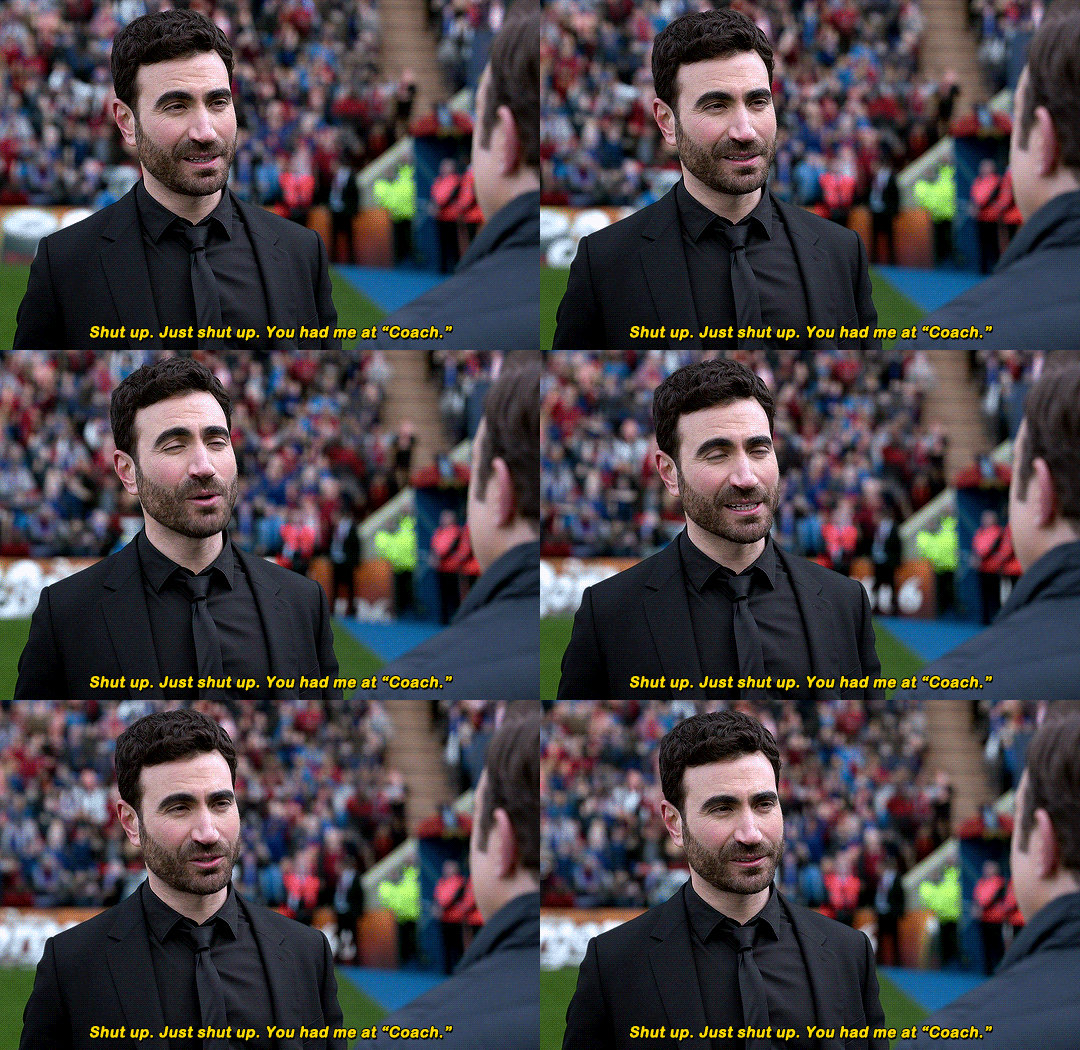

Ted Lasso, Rom-Coms, and Emotional Vulnerability

Why is it important that a show about men who play soccer did a rom-com homage?

Dickinson Behind-the-Scenes: An Interview With the Artisans

Meet the artists who brought the Apple TV+ series to life!

If You Like This, Watch That

Looking for a new TV series to watch? We recommend them based on your preference for musicals, ensemble shows, mysteries, and more!

Friday, June 16, 2017

Twin Peaks: The Return 3x05 Recap: "Part 5: Case Files" (A Mellow Affair) [Contributor: Erin Allen]

tumblr_or3iiqBCuH1ql7xb0o1_500.gif

"Part 5: Case Files"
Original Airdate: June 4, 2017

Parts 1-4 were jam-packed with mysteries that posed many questions and set up this modern Twin Peaks world. Part 5 is a more mellow affair, but it still isn’t giving us too many answers. In fact, there’s even more to ponder.

The episode begins in Vegas. The two goons who were sent to kill Dougie are telling their boss that they weren’t successful. She starts to panic, and sends a message on a beeper, “Argent 2.” Elsewhere, a device lights up and beeps. So we’re going to start off cryptically. All right then.

Constance, the Buckhead CSI and part-time comic, has found some evidence in her autopsy of the John Doe body — a ring engraved with the inscription, “To Dougie With Love, Janey-E.” What? How? More questions!

BOB/Cooper gets his meal in prison. He doesn’t bother with it because it’s not garmonbozia, so he looks in the mirror, and BOB morphs onto half of his face. This CGI effect is incredible and super scary. It’s so subtle, but so unsettling, and an interesting callback to when Leland would look into a mirror and BOB would appear. BOB/Cooper is satisfied with this. “You’re still with me. That’s good.”

Mike Nelson seems to have gotten his act together. He’s some sort of businessman who’s looking to hire an employee. That employee is not going to be Steven Burnett, though, because he had a horrible resume and a bad attitude. Mike tells his as much and then shoos him out of his office. It’s fun to see Mike having to deal with a cocky kid who is similar to how he was in high school.

At the Twin Peaks sheriff's station, Frank is talking to Harry on the phone. Oh, how my heart aches. I want Harry back so badly. Doris, Frank’s wife, comes in to give him an earful about a leaky pipe and a bucket. Candy Clark gives a great performance as Doris. It’s a bit reminiscent of Nadine in the beginning of the series, the way she would get frustrated with Ed. I like this character, but also, just chill out, Doris. Geez.

Checking back in with Cooper we see the coffee didn’t exactly revive him, but he seems to be feeling more emotion. As Janey-E fixes his tie, he looks at Sonny Jim who is staring off into space. He is overcome with emotion, and a single tear rolls down his cheek. Dang, Kyle MacLachlan. I haven’t talked too much about his performance on the show yet, but I think he is doing a phenomenal job. He is playing several characters, and they are all so different. Sometimes you forget that the same actor is playing them all. This look to Sonny Jim is brimming with feeling. You can read it many ways. He’s grieving the life he missed out on or he’s overwhelmed by the child’s innocence. Any way you take it, you are experiencing an intense emotion with him.

Janey-E asks Cooper, “Where’s your car anyway?” We cut to said car which is of interest to more than just the goons who rigged it with an explosive. They drive by to check on it, and then another car drives by.

Poor Cooper has to go to work. After everything he’s been through? Janey-E pushes him out of the car. He looks at a statue of a man pointing a gun, and raises his hand to mimic the statue. A peppy guy with an armload of coffees approaches him, “Off in dreamland again, huh, Dougie?” Cooper follows the coffee like a little puppy, and I cannot love him more.

Wait, yes, I can. In the elevator, his persistent insistence on getting one of those coffees leads the guy to give him Frank’s coffee. He gulps it down. The guy says, “Damn good joe, huh?” and Cooper repeats, “Damn good joe.” And there’s jazzy music during this scene, too. This is Twin Peaks, folks.

The peppy guy leads him into the insurance office where Dougie works, Lucky 7 Insurance. He’s still downing his coffee as he walks into a meeting. Frank is upset that his coffee was given away, but he begrudgingly takes the extra green tea latte instead. As it goes on Twin Peaks, his reaction is quirky and unexpected. Frank’s got a new favorite drink, I think.

Everyone finds Cooper/Dougie’s behavior odd, but they don’t question it until he interrupts the meeting by claiming that Tony (Tom Sizemore) is lying. Before he blurts out this revelation, a weird light flashes on Tony’s face. Is it Cooper’s innate investigative powers kicking in or an otherworldly Black Lodge side effect at play? The boss isn’t too pleased with Cooper/Dougie, and asks to speak with him afterwards.

Dougie’s boss gets Cooper’s agent senses tingling again with keywords like “agent” and “case files.” Recognition flashes in his eyes for a moment. It’s like the coffee jumpstarted him. C’mon, Coop! You can do it!

Cooper may have gotten off scot-free after winning a small fortune at the Silver Mustang, but the casino supervisor is not so lucky. The mobsters that run the joint — which includes Jim Belushi in a chilling role as a mob boss — rough him up before firing him. They tell the pit boss, who gets promoted to the job, to tell them if he ever sees Cooper again. Also, there are three showgirls in pink who are brought in for this whole thing, and it serves absolutely nothing besides being an uncomfortable use of pretty girls during a violent scene. They are given names though: Mandie, Candie, and Sandie.

Back in Rancho Rosa, the kid who lives across the street from the house where Dougie’s car is parked, goes to check it out. As he inspects the device under the car, the second car that was surveilling it earlier pulls up, and the punks scare the kid away. They break into the car and it explodes. Two of the punks that are still alive drive away. The kid runs back to his house and watches the car burn. His druggie mom wakes up, and there is this strange, loud music cue that filled me with dread. It made me think something big was going to happen, but then we cut away.

Jade is getting her car washed. The attendant gives her a motel key that he found on the floor of her jeep. She smiles at it and says, “Oh, Dougie.” The key instructs the finder of it to put it in the mail, so she drops it in the mailbox nearby. Jade is going to help save Cooper! Can you believe?! I’m really happy to see her again, and this is a great way to send a clue to Twin Peaks as well as have her back. I still hope we see more of her, though.

We finally get to visit the Double R! Norma is doing her bookkeeping and watches Shelly’s daughter come in and ask Shelly for money. Shelly gives it to her as Norma looks on, disapprovingly. Shelly’s daughter is Becky, played by Amanda Seyfried (Veronica Mars’ Twin Peaks homage is on the real thing now!). Another piece of casting I didn’t see coming. She is credited as Becky Burnett, and the guy who plays her boyfriend is Steven Burnett (the guy that Mike kicked out of his office). What is going on here? I hope we get some explanation. And I hope that Becky is the daughter of Shelly and Bobby although I don’t understand where this Burnett surname is coming from.

Norma commiserates with Shelly as they watch the two kids in the car in the parking lot. I love that Norma and Shelly are still as close as they were during the original run. Peggy Lipton and Madchen Amick fall back into these roles effortlessly. It’s like they never left them.

In the car, we learn that Steven is a dumb jerk cokehead. It feels like this is supposed to be a modern-day Bobby, but I’m not okay with that. I don’t like this guy, and I liked Bobby almost instantly even though you weren’t really supposed to like him. I can get behind Seyfried’s Becky being similar to Laura Palmer, though. She, too, seems like she’s filled with secrets. There is an overhead shot of her as they drive away, and the high from the drugs kicks in, that is really beautiful. “I Love How You Love Me” by 60s pop girl group, The Paris Sisters, plays over it, giving it a dreamy quality. It reminds me of Mulholland Drive, as well.

Best scene of the night goes to this next one with Dr. Jacoby. “Iiiiiit’s 7 o’clock. Do you know where your freedom is?” Dr. Jacoby has a vlog (complete with props and sound effects) where he becomes Dr. Amp and rants about corporate conspiracies. He’s not just raging; he has a solution for it. And you can, too, for just $29.99 plus shipping . That’s right, those gold shovels were not for some mystical ritual to dig his way to the Black Lodge or whatever. They are to “shovel your way out of the shit and into the truth.” This insanity lasted a glorious five minutes, and I loved every second of it. His show is a hit with at least two Twin Peaks residents. Jerry is watching while he smokes his weed in the woods, and Nadine looks on with visible fondness. I bet she can appreciate Dr. Jacoby’s enterprising ideas, having had her own ingenious but useless invention. She also looks like she’s drinking a protein shake. Is she still ridiculously strong?

Cut from that to the Pentagon because why the heck not? Ernie Hudson (!) as Colonel Davis is told that there’s been another hit on Major Garland Briggs. That make 16 hits over the past 25 years. He assigns Lieutenant Cindy Knox to check it out even though it is probably “another wild goose chase.”

There’s a band playing on stage at The Roadhouse and I check the clock because I don’t want it to be over yet. It’s a psych out because we still have 12 minutes. Just when you think you’re noticing a pattern, Lynch is like nah, fool.

A guy sits at one of the booths smoking under a large No Smoking sign. He is asked to put his cigarette out, and responds, “Make me.” Deputy Chad in civilian clothes says he will handle it. Unsurprisingly, he doesn’t, but instead asks for a cigarette. The guy gives him the pack and tells him to keep it. Chad looks inside and there is a wad of cash. He conspicuously winks at him before leaving. Ugh, Chad.

There is a cut to the band and a strobe light effect flashes for a moment. Flashing lights usually mean something. A girl in the booth next to the smoking guy asks for a light. He grabs her and basically tells her he’s going to rape her. It’s really very awful, and I felt uncomfortable watching it, not to mention disappointed that Lynch included this unnecessary scene of violence. Not until I heard a fan theory did my disappointment abate.

The smoking guy is credited as Richard Horne. First name is Richard which was mentioned by the Giant (or ???????) in Part 1, when he said, “Richard and Linda.” Last name is Horne which is the same as Audrey’s. The theory is that Audrey, who was so enamoured with Agent Cooper, was deceived by his evil doppelganger when he escaped the Black Lodge, leading them to have a child together. BOB represents pure evil and assaulting women is a purely evil act. It is also how BOB manifested in the original series and in Fire Walk With Me. If Richard is the spawn of BOB then this scene shows that and is, therefore, part of the story. If not, then it is a useless glorification of violence against women. I’m hoping it’s the former. This theory further speculates that Linda is the product of a union between Annie and Cooper, thus the antithesis of Richard.

This theory is pretty solid, and I think I am going with it. However, that means that poor Audrey was fooled into thinking she was with her beloved Cooper, and then had a demon child. That is not what I want for Audrey. Maybe she can be a vital part of fighting the evil. If this all checks out, I’m going to need some justice for Audrey.

Back in the prison, BOB/Cooper is given his private phone call. He teases the warden who he knows is watching and recording his call. “Should I call Mr. Strawberry? No, I don’t think he’s taking calls.” I would not be surprised if Mr. Strawberry turns out to be an actual character. He pushes a bunch of buttons on the phone — too many buttons for it be a real phone number — and everything goes haywire. Alarms ring, lights flash, BOB/Cooper calmly says into the phone, “The cow jumped over the moon.” He hangs up and all the commotion stops.

In Buenos Aires, Argentina, we see that black box from the beginning. The lights flash, it beeps, and then crumples into a pebble-sized hunk of metal.

Cooper is waiting outside by the statue outside his office building. He’s been standing there for some time. The credits roll.

This episode sort of fooled you into thinking you could take a little breather from all the mystery, but as you look closer you see there is plenty to unpack. While it’s labor intensive, it is also really fun; and like with the original series, these images, and frames, and plot points will stick with you for years and years.

Stray Observations:
  • I love this character, Constance, played by Jane Adams. It’s great that she keeps showing up, and even better knowing now that she’s an amateur comedian. 
  • There are red balloons in the courtyard outside of where Dougie works. There was a red balloon in the house of the druggie mom and her kid and at Dougie’s house for Sonny Jim’s birthday.
  • “This is Dr. Amp doing the vamp for liberty. Climbing the ramp to justice. Lighting the lamp of freedom.” Dr. Amp is such a gift. Also, he would make a really rad Halloween costume. 
  • The band that is playing at The Roadhouse is Trouble. David Lynch’s son, Riley Lynch, plays guitar and Lynch’s sound supervisor, Dean Hurley, plays the drums.
  • Morley’s cigarette sighting!
  • Agent Tammy is looking at a photograph of Agent Cooper that looks like a movie still of him in The Black Lodge. How would the FBI have a photo of him in there?


Thursday, June 15, 2017

Yo, TV Execs: These Chains On Me Won’t Let Me Be [Guest Poster: Ashvini]

giphy.gif

During late March last year, I had some downtime so I took to catching up on a show that I had previously abandoned: Sleepy Hollow.

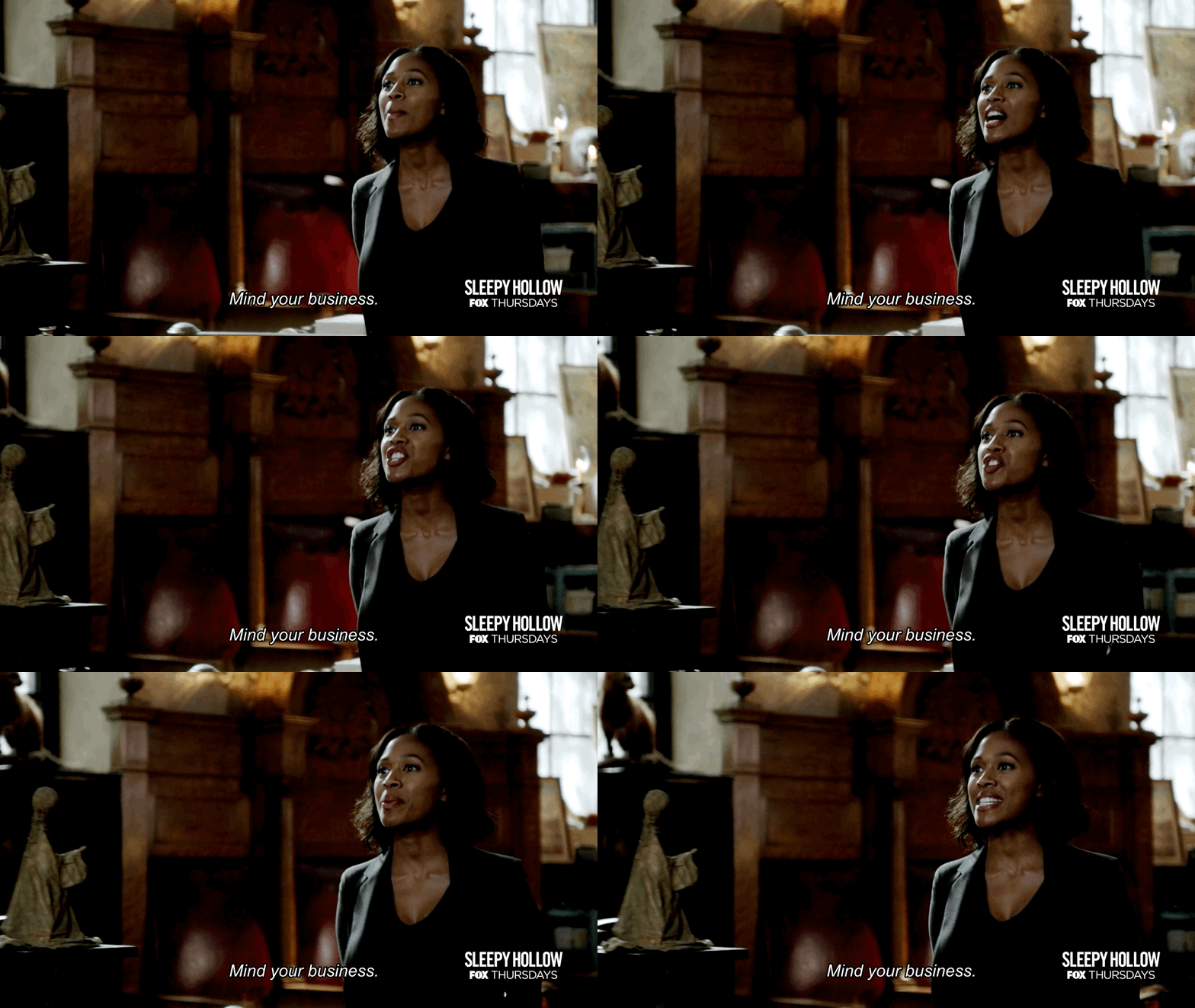
It’s a show that I really enjoyed, but couldn’t quite keep up with. The premise, admittedly, is ludicrous, but the show did survive for four seasons. And no matter how silly the show seemed to me, one thing that moved me enough to keep watching was the acting of Nicole Beharie, whom I respect a lot as a person and an actress. There was this pragmatism to her interpretation of Abbie Mills that was enrapturing.

giphy.gif

Within a few weeks of catching up on the show I found out from a Vulture article that Beharie’s character was killed off of the show. I was so angry. Beharie is a darn treasure and I couldn’t understand how the writers and/or producers thought killing her character off of the show was a good idea at all.

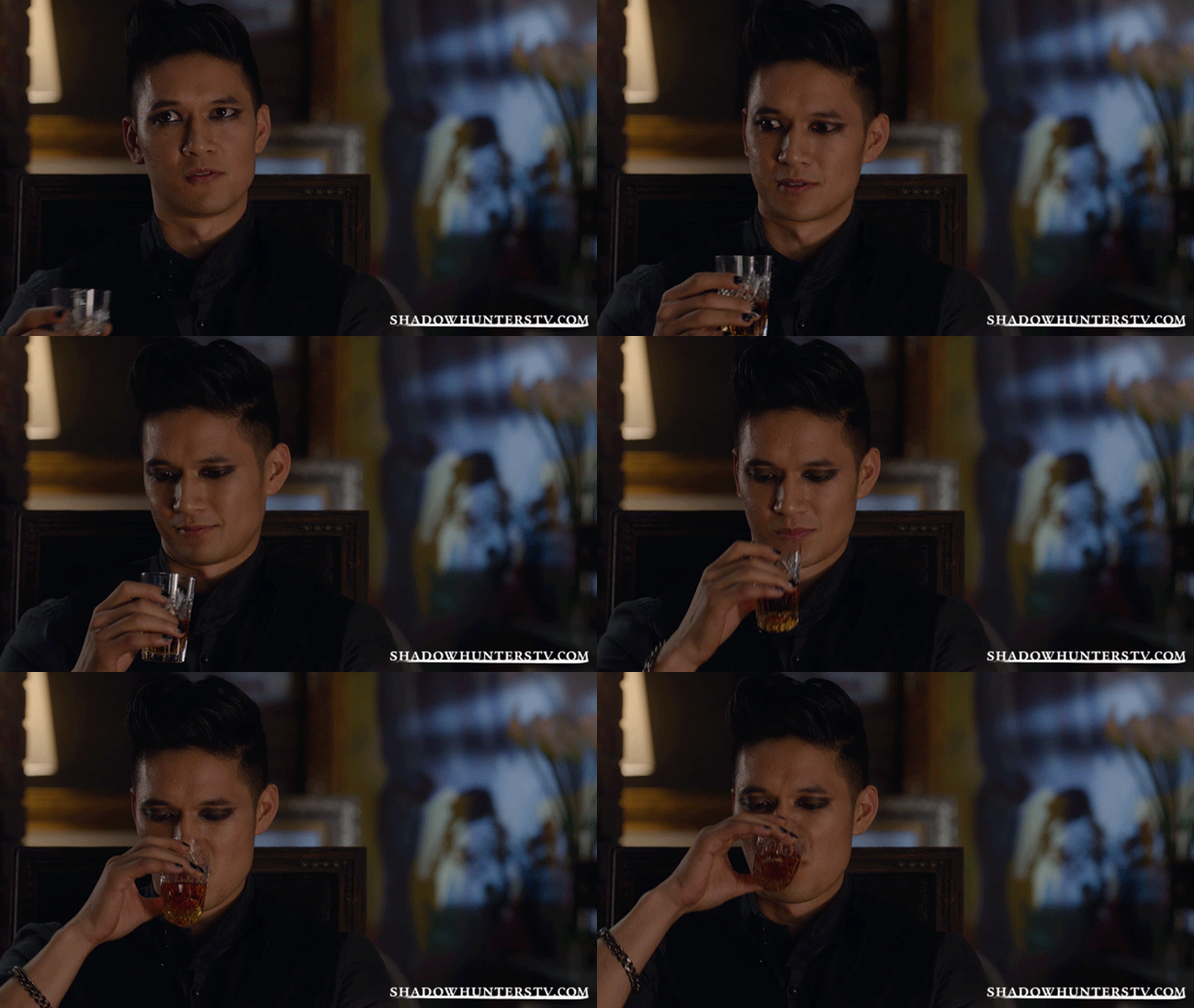
This news kind of propelled a gradual string of bad TV-related news for me. The next disappointment hit later on the next year in February. I’m also a fan of Shadowhunters, but only for one reason: Magnus Bane (played by actor Harry Shum Jr., who is best known for his long-standing role on Glee). The character, a bisexual warlock, has this immense sincerity that resonates with me on an almost transcendent level. Also it doesn’t hurt that he is just as glitter, make-up, and cat-obsessed as I am.

source.gif

I was thrilled, up until February, with the way the showrunners were choosing to depict the character, because it’s not often that an male, Asian (or anyone of Asian heritage for that matter) character gets any real agency on a cable TV show.

As the second season premiered in January, I was still happy with the genuine nature of the character’s growth and development. But one can’t be content about a TV show for too long, I suppose. In the seventh episode of the second season, Magnus’s agency was sidelined to prop up his love interest: a white, male Shadowhunter (a half-angel, half-human soldier) named Alec Lightwood.

Basically the premise was this: Alec is a virgin and in a relationship with someone he cares for deeply (Magnus). He wants to lose “it” with him. Yet, instead of talking to his boyfriend about what he wants, Alec seeks help from his sister who essentially tells him to “get it, girl” (I paraphrase). Despite Magnus voicing his hesitation with exploring the more physical side of their relationship, Alec ignores him, essentially shushing him with a passionate kiss which implies more.

The showrunners tried to explain the reasoning behind this story decision. But lacking any sort of well-reasoned gravitas, the explanations fell flat.

Many fans were completely outraged. I was heartbroken. Magnus Bane is a character I have a deep attachment to, and seeing him sidelined in such a blatant manner really upset me. I’m not kidding when I say I got physically nauseous. My trust in the people behind the show, since then, has diminished.

giphy.gif

Then came this month’s decision from Netflix that not one, but two, of its shows would be getting the ax. Which shows, you ask? Oh, just two of my favorite productions ever: The Get Down and Sense8.

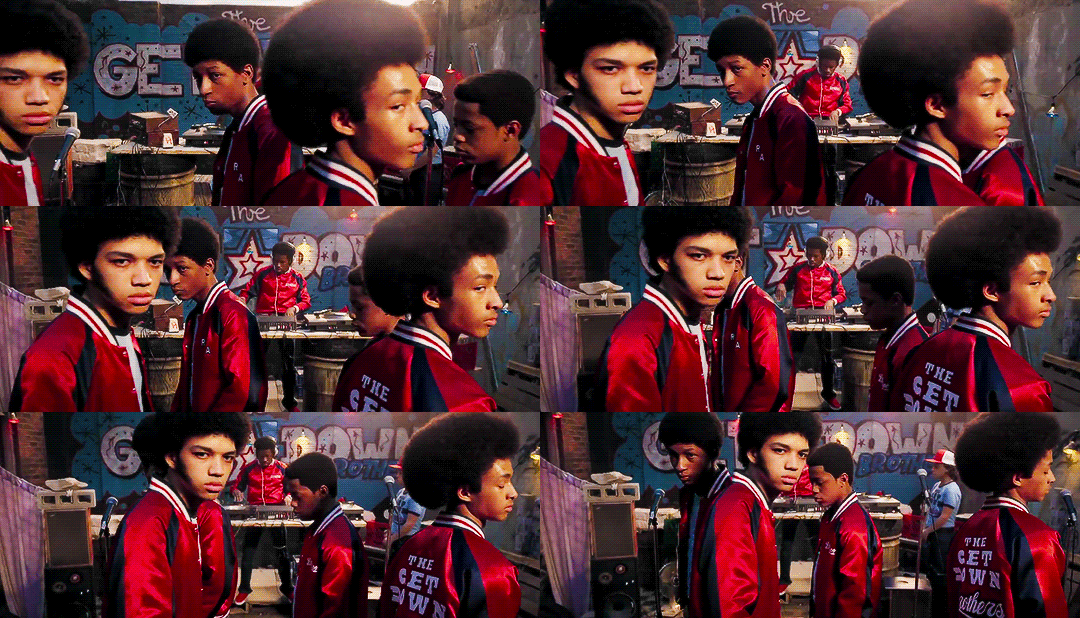
When I first watched The Get Down, it was akin to discovering gravity. The whole time I was watching the first episode, I was like, “How has this not revolutionized the entire world yet?” The show is excellent. Taking the history of hip-hop from its origins with Grandmaster Flash in the 70s and setting it in the colorful, electric world of Baz Luhrman’s South Bronx is genius. The music is dope. The outfits are poppin’. The writing is fantastic and perfectly maintains the colloquisms of the era. And the characters? Unforgettable. I can still hear the main character, Ezekiel Figuero’s, narration in my head: Mylene, Mylene, my butterscotch queen, this summer could you be my girl and I could be your king?

Watching Sense8 also changed my entire world. The idea that eight people worldwide could be telepathically connected is a bit ludicrous, but the Wachowskis knew exactly what they were doing. In fact, they had planned out the entire series. There was this dynamic realism to the show that I hadn’t witnessed in any other show and what’s more is, every single one of the characters represented not only a certain ethnicity but an inner struggle. Sympathizing with the characters and their plights came easy. Watching them fight for their lives, with each other, was a fascinating sensory-overload and I’m glad I got to witness two seasons of it.

So reading that these two shows were getting canceled was yet another weird stomach twist of anger and heartbreak. Of the reasons behind their cancellations, ratings being the main one, I couldn’t help but think there was some overarching reason.

Both shows featured diverse casts. The Get Down was unique in the sense that it had an all POC main cast. Sense8 featured actors from all over the world, talented and capable in their own right.

Were the shows less popular and thus canceled because they were diverse? It’s disappointing to think that was a factor. Netflix CEO Reed Hastings said that despite the shows being critical darlings, both were canceled because they didn’t quite have the reach that other successes like Stranger Things or 13 Reasons Why did.

giphy.gif

Baz Luhrmann, despite happily watching his vision come to life, didn’t want to solely steer The Get Down ship. The project was a lot to juggle, and because he couldn’t find someone to take over, he figured it was best to just end it altogether. For Sense8, it was the same configuration: a mix of high production costs, low ratings, and contract problems led to the cancellation decision.

Whatever was Netflix’s exact reason, for me, seeing POC represented on both shows was vital. They were voices I could fathom, voices I’ve heard and seen. They were projections of people, despite age and era, I could relate to. It was empowering to see Mylene Cruz sing “Set Me Free” with such a gratifying fervor; I thought, this young brown girl in the 70s is setting free of the chains society has set on her. Why can’t this young brown girl, i.e. me, do the same? Nothing’s stopping me. Seeing Kala Dandekar, an Indian girl trapped in a web of her own indecision on Sense8 helped me make sense of my own indecision trap. I’m not the only one, I thought. My story is universal.

If these shows had such an impact on me, it’s only logical to think about what kind of impact they had on other POC. After all, seeing ourselves depicted on the big screen isn’t just for kicks and giggles. Television influences us and our behaviors and perceptions of the world. Having the ability to point at a character and say, “Oh my God, he/she/they are just like me!” is life-changing. See, that’s what I was able to do with Abbie Mills, what I’m able to do with Magnus Bane, with Mylene Cruz, and Kala Dandekar. I’m able to see parts of myself — parts that alienate me from the majority — validated.

giphy.gif

And that validation sets me free.

So, the trend of sidelining our stories has to end.

Tuesday, June 13, 2017

Veep 6x08 Recap: "Judge" (Veep-Fried Comedy) [Contributor: Erin Allen]

tumblr_orgaoryEQT1rx1y5co4_400.gif

“Judge”
Original Airdate: June 11, 2017

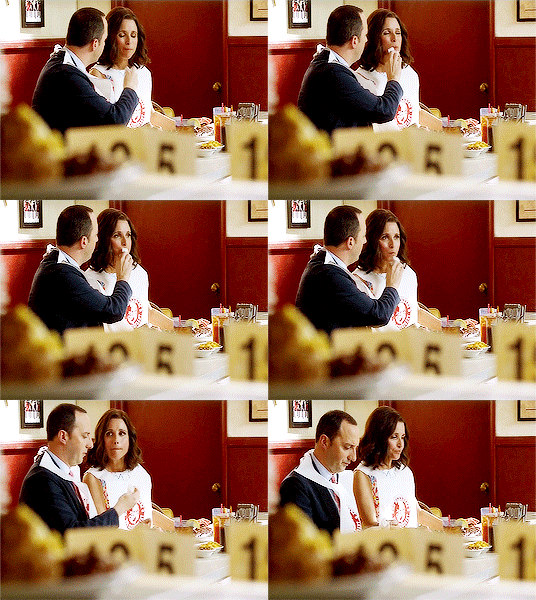
One of the things I liked about Seinfeld was its “no hugs” policy. Veep unofficially adopted this rule, I think. In “Judge,” though, they stray from that and it works. Gary as a character and Tony Hale as an actor were able to bring a sentimentality into a show that is basically an emotional wasteland.

Gary brings his work family to meet his real family. He’s throwing himself a 40th birthday bash at his childhood home. I cannot believe Selina kept her promise of coming to his party. Just the thought of it is ludicrous, but by the end of the episode it makes more sense. Selina’s heart may be black, but there’s a tiny gray area in there for Gary. Seconds after I verbally expressed my shock, Selina addresses it: “Is anybody else as shocked as I am that I’m doing this?”

Gary’s parents are wonderfully played by Jean Smart and Stephen Root. They don’t have a terrible amount of screen time, but they are both able to fill their roles with complexity. There is a lot behind the Southern charm, and so much more than the stereotype. I mean, they are responsible for the person Gary is today. The pair heaped considerable neuroses into him, and the fact that he is able to function (and be adorable) is commendable.

Selina makes the trip and party all about her in record time, thanks to the appearance of Ambassador Jaffar. Seeing him show up in Gary’s boyhood home is as jarring and ridiculous as Selina’s presence, but rather than be skeptical about it, I found it pretty funny. Jaffar is a worldly fellow who exudes coolness. Putting him into this country-fried nightmare somehow made him more charming. Being out of place in this setting becomes an enviable quality, and he manages it without coming off as condescending.

While I’m being charmed by Jaffar, he is falling under the spell of Selina, even when she spirals into a horrible caricature of a down-home country bumpkin. As the night goes on, her impression becomes more and more grotesque, peaking when she steals Gary’s story. That may be the only happy childhood memory Gary has of his father, and Selina doesn’t think twice about selling it for library money.

The hurt Gary feels is to be expected. What is unexpected is for that hurt to register on his face so earnestly. Usually Gary’s face is a wealth of comedic reactions. For him to show pure emotional anguish is significant, and juxtaposed with Selina’s best Jeff Foxworthy imitation makes witnessing this unfamiliar emotion gut wrenchingly sad, but with that impervious Veep apathy to soften the blow.

Similarly, when Gary blows up at his father, raw feelings are deep-fried in comedy. It’s edited in such a way where Selina’s remarks are the punchlines to Gary’s outbursts. Tony Hale does a remarkable job of balancing emotion and humor, never once letting it slip into the maudlin or become slap-sticky. Julia Louis-Dreyfus backs him up, punctuating his performance with perfectly executed quips. Stephen Root is the epitome of “acting is reacting.” Judge’s subtle responses to Gary range from mock shock to sheer rage which keeps the emotional element that the show has introduced afloat.

This plot has shaken up the status quo of the Selina/Gary relationship, and it would be a mistake to have it develop further than this episode. The resolution is dealt with in the same manner as the issue that started it: sentiment tempered with humor. We all know Selina will never apologize or admit fault, and Gary knows it, too. Selina gives him the opportunity to forgive her without her having to be sorry. He accepts this arrangement, and all is right with the world.

Meanwhile, Amy and Mike pair up to fix one of his stupid blunders. Amy’s truck stop rant is a thing of beauty. Anna Chlumsky sells it. She presents this clunky mouthful of words as a rhapsodic diatribe, all while making it look like the most natural thing in the world. Mike is oblivious to her ramblings, lumbering along in a marsh of ineptitude of his own making. It’s a good combination.

Dan’s redundant news show storyline and Jonah’s congressional success collide in a sub-plot that ends badly for both of them. Unfortunately, Dan needs Jonah to keep his career intact. Jonah knows how to exploit that need. He forces Dan to hang out with him like they used when they were “best friends,” and then screws him over by doing the interview with Jane McCabe instead. But, Jonah has truckloads of karma coming his way, and his coveted interview gets overshadowed by his very own group, The Jeffersons, who are reclaiming the name, The Libertonians.

Also, Jonah fired Ben, so Ben is the one that comes out on top in all of this.

Stray Observations:
  • Gary’s mom called Marjorie, “Mr. Marjorie.”
  • “McLintock Morsels” sounds so gross. Mike, no. 
  • Do not give Jonah long-handled tools to swing anymore. 
  • “The diary is all you’re good for. The diary should’ve lost you.”
  • “We’re in Gary’s house, and this whole place is like a vortex of sexual confusion.”
  • “You’re a freshman congressman who still uses his mom’s Netflix password.”
  • “You had Green Acres in Qatar?” “Oh yes, but they censored all the scenes with Arnold Ziffel.”
  • “I skinned it, and made a fur vest and matching boots for my G.I. Joe doll. Bam! Sucka!”
  • Toby Huss, the actor that plays Quartie, also played The Wiz on Seinfeld. (Nobody beats him.)
  • Marjorie’s disappointment in the vegetarian options is hilarious. 
  • “There’s so much I want to say to you, Mama.” “Well, we just won’t say it.” Jean Smart’s Imogene isn’t just the comedic relief to the cruelty of Stephen Root’s Judge. The loving, but complicated relationship between Gary and his mom is apparent in the short amount of time we’ve seen them together.

7 Reasons Why Orin is the Best Parks and Rec Character [Guest Poster: Rebecca]

BAk1Bgg.gif

I know I’m way late on the Parks and Recreation train, but I’ve finally gotten around to watching and finishing what I consider one of the greatest, funniest, most feminist and diverse network television shows. One of the few shows that made me actually laugh out loud, Parks and Rec was a roller coaster of emotion as we watched the Pawnee Parks Department evolve and change throughout the years.

In a tear-jerker of a final episode, we were shown the fates of all of our favorite characters: Leslie and Ben take on Washington, April and Andy settle down and have a family, Jerry/Garry/Larry/Terry/Barry gets his dream job, Craig finds his happy ending, Donna and Tom go on to great success, etc.; however, I noticed a very important person was missing.

Orin.

April’s friend Orin, a brooding and mysterious enigma of a person, randomly appears when he’s least expected, which is what makes his character is so incredible. I always found Orin’s scenes to be the highlights of the episodes in which he popped up, so I feel that the producers cheated Orin by not fleshing out his future.

Objectively speaking, Orin is the best. He’s relatable, he’s honest, and he’s hilarious without trying to be. But Orin is also so much more than that: he’s inspirational and a revolutionary, someone who strives to expose injustices and subvert oppressive social norms.

Here are 7 reasons why Orin is the minor character none of us deserved:

1. He rejects authority. 


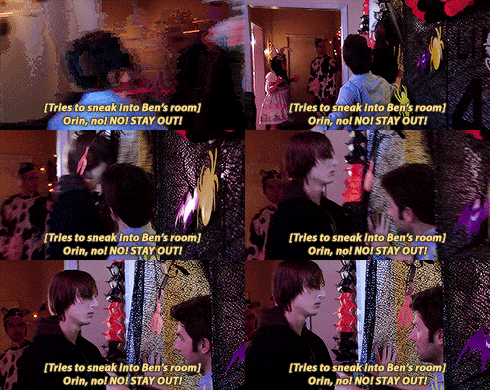
Orin proves that oppressive restrictions are meant to be challenged and broken. Whether it be violently removing Native Americans from their homes or rigging the socioeconomic system to force people of color into “ghetto” neighborhoods, the American government has always told certain groups of people what spaces they can and can’t inhabit. In this scene, Orin defiantly takes a stand against these rules and challenges authority by attempting to claim his own territory.

2. He forces us to confront our own mortality.


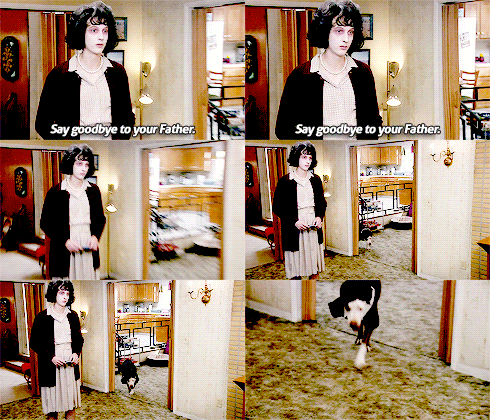
Death is scary. It’s permanent, painful, and worst of all, inevitable; we all will die someday. That can be difficult for many people to come to terms with, but Orin inspires us to incorporate death into everyday conversations to familiarize ourselves with the concept. By stripping away death’s mystique and the power of uncertainty it holds over us, we eliminate the fear, allowing us to live freely and uninhibited.

3. He disrupts and subverts our idea of “art.”


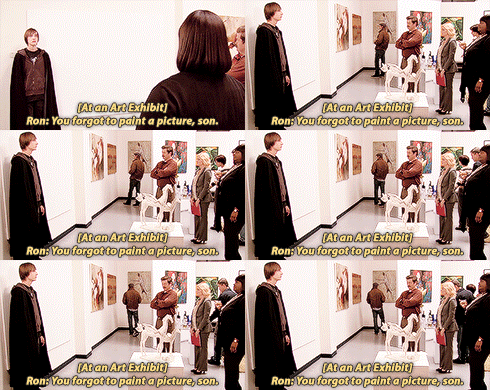
Unless art is mainstream and digestible by the masses, it often goes unappreciated. How often have you heard someone say “I could have done that!” when describing a minimalist art piece? We are so accustomed to thinking of art as Van Gogh or Picasso that we forget that art is limitless. There are infinite types of art that hold infinite meanings to both the artist and the viewer. Orin’s art exhibit reminds us that there is more than one type of art, and that different types of art appeal to different groups of people.

4. He revealed the hypocrisy that infiltrates the American job search process.


Entry level positions require 3-5 years of experience. Companies post openings to online job boards when they already have a candidate in mind. Some places won’t accept any applicants without a STEM degree, regardless of the position. The job searching process is infuriatingly frustrating and full of hypocrisies and favoritism. Orin helped expose this when he was instantly dismissed as an applicant for the animal control director position. Furthermore, he challenged the job search process by refusing to comply with the strict guidelines dictated by the traditional resume.

5. He reminded us introverts that it’s still possible to have a functioning social life.


It’s clear that Orin is an introvert — he often looks uncomfortable in social situations and is not one to make friends with everyone he meets; however, he proves that it’s still possible to make friends and have a social life. He gets invited to all kinds of parties and social events and has a solid friend base. He even overcomes this social anxiety to attend job interviews and create his own public art projects.

6. He rejects traditional gender roles.


From painting his nails to taking on the role of April’s mother, Orin shows viewers that gender norms are outdated and ridiculous. He proves that men can be feminine and that women can be masculine. Additionally, as illustrated in this scene, his relationship with Champion subverts traditional marriage roles; Orin takes on the more paternal and authoritative role, while Champion remains in the kitchen, preparing dinner.

7. He revealed truths that awoke our third eyes.


Power corrupts, and “money is the root of all evil,” but we forget those things in our materialistic, capitalistic society. We become swept up in what our media and government tells us that we unconsciously forget to critique them, the very people who write our narrative. We should always be suspicious of authority, unjust laws, and those who rise in the system in order to maintain oppressive social norms. Orin reminds us to challenge those who hold power and to keep our eyes — and ears — open as we navigate through society.

Orin is a complex and fascinating part of the Parks and Rec universe, one who brings to light many revelations about society and the human condition, but often goes ignored or unappreciated by fans and producers alike.

I, for one, am thankful for the raw honesty and insight that Orin brought to Parks and Rec, and I hope that one day we learn what happened to him in 2017 and beyond.

Monday, June 12, 2017

Kelly’s Pick: Top 5 Female-Fronted Detective Shows [Guest Poster: Kelly Doran]


I spent my formative years watching Mary Kate and Ashley’s Trenchcoat Twins series on videotape and playing Nancy Drew computer games until way past my bedtime. So as you can imagine, nothing warms my heart more than seeing smart and powerful women kicking butts, taking names, and catching murderers. From Harriet the Spy to Miss Marple, there is no genre I love more. I have consumed a lot of girl detective content, so I like to think you can trust my opinions. After extensive, lifelong research, this is my list of the top five best female detective shows.

Image result for nancy drew 1995

5. Nancy Drew (1995)

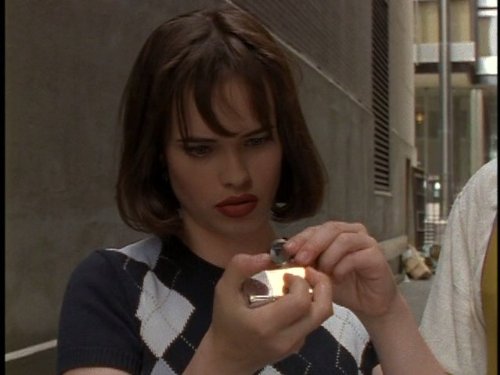
This Canadian TV adaptation of Nancy Drew reimagines the classic girl detective as a college student studying criminology in New York City in the 90s. This one is very much in the style of 90s teen shows, so it’s not heavy on blood and gore. There’s definitely more of a focus on “missing pop stars” types of crimes, and with 21-minute episodes, none of the mysteries are very fleshed out. My favorite part of this adaptation is definitely Nancy’s friendship with Bess and George, who help her with nearly every case. Bess is reimagined as the city’s most popular gossip columnist, and George as an aspiring filmmaker. Not to mention, Nancy sports some pretty great 90s style.

Image result for rizzoli and isles gif

4. Rizzoli and Isles

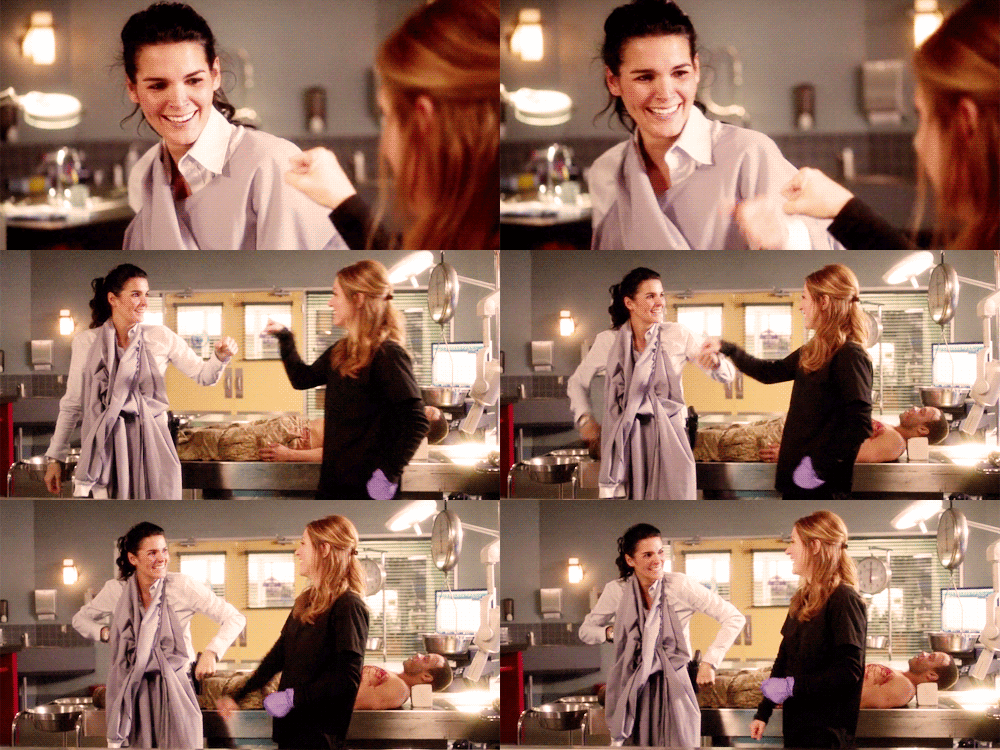
This show has been around since 2010, but somehow I missed it until very recently, when it was recommended to me on Hulu. Rizzoli and Isles centers around Jane Rizzoli, a homicide detective, and Maura Isles, a medical examiner who is also Jane’s best friend. These are true murder mysteries with autopsies and dead bodies, so the squeamish might want to skip it. But in my opinion, the murders aren’t nearly as important to the show as the title characters and their relationship. Jane and Maura are best friends who seriously love each other. So what if Jane can be abrasive and Maura is better with dead people than live ones? They have each other, and it is so heartwarming to me.

Image result for jessica jones detective gif

3. Jessica Jones

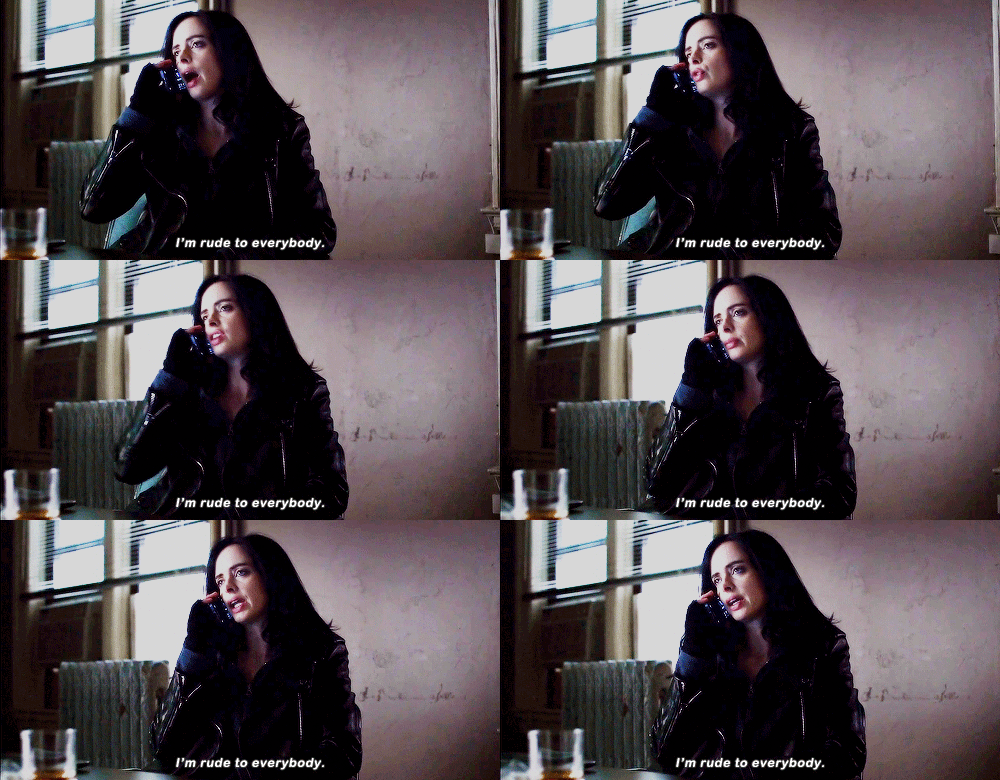
Honestly, is there anyone left who hasn’t seen Jessica Jones? If so, what are you doing? Do you even have Netflix?! Krysten Ritter, one of our greatest TV actresses in my opinion, stars as the title character. Although this takes place in the Marvel universe, it bears little resemblance to Marvel’s big screen superhero action movies. This is dark and gritty noir, dimly lit and unglamorous. Jessica, as a survivor of rape (among other traumas), deals with PTSD in purple-colored flashbacks, and the use of color to note these moments is incredibly powerful. Again, one of my favorite aspects of this show is Jessica’s relationship with her best friend: a relationship that makes her stronger and gives her something to fight for. This show has endless twists and turns and enough suspense to keep you binge-watching way longer than you planned.

Image result for veronica mars gif

2. Veronica Mars

Although I have not given it the number one slot, Veronica Mars is probably my favorite TV show of all time. This is Kristen Bell at peak snark, and Kristen Bell can really do snark. Much like Jessica Jones, this show is unapologetic, classic noir, and it’s not afraid to be dark, or to shun neat, happy endings. Between murder-of-the-week mysteries, the first season sees Veronica on a mission to solve her own rape, her mother’s disappearance, and the murder of her best friend (played by a post-Mean Girls Amanda Seyfried). The show is impeccably paced and has incredible character development.

Veronica Mars never shied away from putting a very real and deeply flawed woman on screen; Veronica makes a lot of bad choices, but I always understand why she’s making them, and I never stop caring about her. There’s also some very cool and diverse mysteries that give Veronica the opportunity to play lots of different roles to get the information she needs. Veronica can morph from a clueless, ditzy blonde sorority girl to a nerdy gamer girl as the case demands, and it’s thrilling to watch. She’s also supported by some great supporting characters, including her best friend Wallace, and on-again-off-again love interest, Logan. This show was cancelled after the third season, and honestly, I will probably never forgive The CW for that. Luckily, there was a movie in 2014 to provide a little closure. If I could recommend any show to anyone, it would be this one. If I could spend the rest of my life watching Veronica Mars and nothing else on permanent repeat, I would do it gladly.

Image result for murder she wrote

1. Murder, She Wrote

Although I love Veronica Mars as much as it is probably possible for one girl to love a TV show, if we’re going to rank lady detective shows, I must reserve the top slot on this list for the original, the classic, the quintessential, Murder, She Wrote. It is the story of a retired English teacher, Jessica Fletcher, who also happens to write bestselling mystery novels and solve crime (no big deal). You guys, we do not deserve Dame Angela Lansbury. My grandmother watched this when I was a kid and yours probably did too. Let me tell you, our grandmothers have impeccable taste because Murder, She Wrote is an unmitigated delight. There is nothing in this world cozier than brewing a cup of tea, wrapping yourself in a duvet, and watching Angela Lansbury as Jessica Fletcher solve murders in chunky cardigans.

(She really does have an incredible selection of cardigans, and I am not the only admirer of her style. There is an entire fashion inspo Instagram dedicated to looks from Murder, She Wrote called @murdershelook. This is 100% not a joke and I recommend that you follow it immediately.)

This is a cozy kind of murder mystery show — the mysteries wrap up neatly, there’s always a happy ending, and Jessica’s always ready to go on and sleuth another day. In a chaotic world, Murder, She Wrote provides some comforting order.

What are your favorite female-fronted detective series? Sound off in the comments below!

Sunday, June 11, 2017

American Gods 1x07 Review: "A Prayer for Mad Sweeney" (Tall Tales and Fallen Kings) [Contributor: Deborah MacArthur]


"A Prayer for Mad Sweeney"
Original Airdate: June 11, 2017

[Warning: The following review contains spoilers.]

“A Prayer for Mad Sweeney” works as an elegant way to further flesh out the American Gods universe. It reinforces how gods or the godlike get to America via the stories and belief of the human beings who travel to America, and the importance of the Old Gods in the lives of their believers. Through some plain wonderful storytelling and great acting work by Emily Browning (who plays the double role of Essie MacGowan and Laura Moon) and Pablo Schreiber (as Mad Sweeney) American Gods somehow manages to enhance its world and characters with an episode that, with any other show, would have probably been dismissed as filler.


COMING TO AMERICA


We get a brief look at the daily lives of Mr. Ibis and Mr. Jacquel as they work in their funeral home. Mr. Jacquel foretells who their future customers will be as Mr. Ibis (kinda adorably, to be honest) talks about the historical pedigree of his home-brewed beer and lectures his partner on working too late. In turn, Mr. Ibis gets some prompting from Mr. Jacquel to write one of his Coming to America stories, which he sits down at his desk to do — after a second’s hesitation, since he had no idea that the story was in him to write until Mr. Jacquel told him it was there.

Mr. Ibis’s story starts in 1721 and stars Essie MacGowan, an Irish girl who drinks up tales of faerie folk and leprechauns and believes them whole-heartedly. When Essie grows older, she gets a job working in the kitchen of a rich family and seems to spend just as much time spreading tales of the fae as she does doing actual work. The end to Essie’s employment and the beginning of her troubles comes when she has a dalliance with the family’s son. He gives her an heirloom necklace then turns her in as a thief when she’s caught with it. Essie gets sentenced to “seven years transportation,” which is just a fancy way of saying that she’s sent on a ship to America to work as an indentured servant for seven years and then, maybe, carve out a new life for herself in the New World.

Essie convinces the captain of the ship she’s on to release her from her servitude and take her to London with him as his wife instead. As soon as Essie’s left alone after the captain goes on another voyage, she fills a bag with as much of his silver as she can manage and begins a new life alone as a shoplifter in London. Essie had been branded a thief when she hadn’t been one, so it seems she’s just living up to the label.

Throughout Essie MacGowan’s complicated life — including getting charged with stealing again, sentenced to hang, and getting pregnant by the prison guard so that the sentence would be demoted to transportation — she almost consistently keeps her faerie folk in mind. She takes the stories with her when she’s sent back to America as a maid and a wet nurse and tells them to the children in her charge, and the child she eventually has as the wife of the man to whom she was indentured. Essie’s belief in the stories of her youth pulls those figures into America, where they must stay — even when people stop believing the charms against faerie wrath or how a bowl of milk on the windowsill or a loaf of bread at harvest might turn one’s luck from ill to good.

When Essie is an old woman in Virginia, after her children have grown and her grandchildren are more frightened by her stories than enthralled by them, a leprechaun steps out of the darkness to thank her for her devotion. We know him as Mad Sweeney, but Essie only knows him as one of the figures of her beloved tales, a reminder of her happy days as a little girl waiting for her father’s ship to return to shore. When Essie’s long, complicated, good-and-bad life comes to an end, it’s Mad Sweeney — the leprechaun she’d dragged from Ireland through heartfelt belief, probably to his detriment, though he would never resent her for it — who takes her hand and leads her into the afterlife.

This story of Essie is what Mr. Wednesday was talking about during “Lemon Scented You” when he told the New Gods that the Old Gods offered more than a way to occupy people’s time. The Old Gods aren’t simply there to use humans as belief batteries, to take and take and take and give nothing in return. They offer meaning, a connection to the past, and comfort born of tradition and deep faith.

ECHOES FROM THE PAST


Back in the present, Mad Sweeney and Laura are travelling in a stolen ice cream truck after Laura sets Salim free to go find his jinn at the House on the Rock in Wisconsin, where all the gods and demi-gods will be meeting for Mr. Wednesday’s plans. Mad Sweeney and Laura still need to get to Kentucky, where Laura can be resurrected and Mad Sweeney can get his coin back and be free of her. The ice cream truck seems like a great fit for Laura, since she can use the freezer and air conditioner combo to keep the meat on her bones long enough to get to where they need to go.

We get scenes of these two on their travels cut between scenes of Essie’s life story, and they’re not just connected because of Mad Sweeney. Beyond the simple fact that they’re played by the same actress, both Essie and Laura share certain specific traits. Both are ambitious women who don’t shy away from the idea of doing immoral things so long as it gets them what they want in life, and both slowly learn to make peace with the hands they’ve been dealt.

Laura is still working on the latter aspect, but the fact that she performed a selfless act in letting Salim leave, and that she clearly began to appreciate his outlook on life and learned to respect his faith, means she’s making progress. She’s still driven, still acerbic, and still difficult to like as a person — but she’s evolving and changing for the better. The way that American Gods frames the characters of Essie and Laura as kindred souls through time not only gives us a way to relate the past to the present, but also hints at what’s to come for Laura’s personal journey.

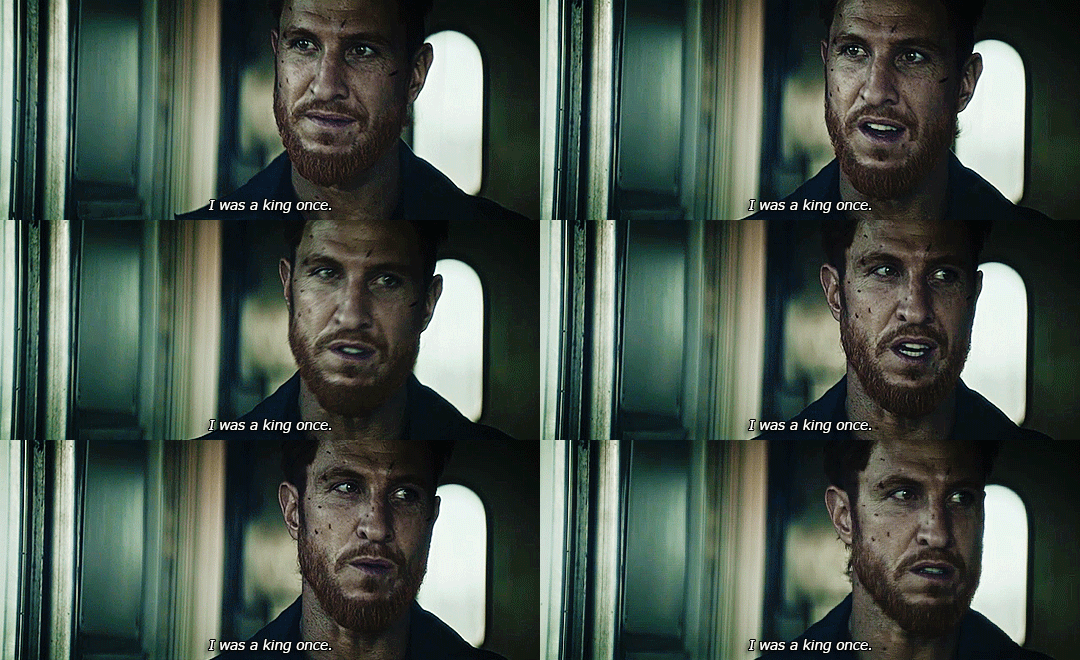
And then there’s the personal journey of Mad Sweeney. We get a vague timeframe for how long Mad Sweeney’s been around and how the ever-changing beliefs of mankind have shaped him, echoing the trajectory Irish mythology’s Tuatha Dé Danann broadly and the story of Buile Shuibhne more specifically. He was a king who left a battle when he saw that he would die, and now he owes a battle to Wednesday for his act of self-preservation. More than that, it seems Sweeney’s debt indentures him to do Wednesday’s bidding — a long fall from his early life not only as a king, but as a being that people like Essie both feared and respected, a creature of fair but mercurial power.

After Sweeney tells Laura his story — I’m not sure if she totally believes her verbal (and sometimes physical) sparring opponent was ever actually a king — they seem to have a flicker of connection. She tells him that dying isn’t so bad and it worked out fine for her, so after hundreds of years, Mad Sweeney might be due to die. Then a rabbit darts out in front of the ice cream truck and Laura swerves to avoid it, flipping the truck and launching herself out the window. Upon impact, the morgue stitches that were holding Laura together rip apart and the golden coin flies out of her body, taking the life it granted with it.

Sweeney wakes up from the crash, sees Laura’s body, and we’re taken to a flashback to the crash where Laura and Robbie died. Mad Sweeney is there, too, ordering a raven to “tell him it’s done,” the implication being that Sweeney killed Laura Moon on Wednesday’s orders. In the present, he’s looking at Laura’s dead body for a second time and he has a choice to make: either pick up his lucky coin, which is finally free from her, and keep walking, or put it back in her and fulfill the promise he made to get her resurrected.

It’s not clear why Sweeney returns the coin to Laura. It could be out of guilt over being the one who originally killed her, or it could be an act of stubborn autonomy — something he could do as Sweeney, a leprechaun who was once a king, and not an act forced upon him by Wednesday’s orders. Maybe Laura really does remind him of the woman hundreds of years ago who had pulled him and his kind from Ireland via well-loved myths. Heck, maybe he’s just secretly nice. Whatever the reasoning, he does return the coin. It magically sinks into her sternum and Laura is undead once more, utterly ignorant of the gift Sweeney had just granted her.

Afterthoughts:
  • I loved how the off-genre music played throughout the Coming to America scenes, along with voiceover and shots of Mr. Ibis’s writing, reminded us that we were seeing the past through Mr. Ibis’s mind. It was easy to think that music was filtering in from Mr. Ibis’s record player as he wrote.
  • All the terrible stuff Sweeney’s said to Salim, and the harshest words Salim can muster for him are “You are an unpleasant creature.” Oh, Salim.
  • When they’re both in prison, Mad Sweeney sarcastically asks Essie what he’d do in the Americas and Essie answers, “Deliver gold to their king.” Hey, remember how Mad Sweeney said his lucky gold coin was meant for the “King of America”?

Summer Lovin’ -- Week 22

Image result for in summer gif

In Florida, you know it's summer when, at a predictable time of 3:30 in the afternoon, it storms every single day. You can usually set your watch by it, scan the sky around 3 p.m. and watch dark clouds rolling in. Summertime means that most of our favorite shows are off the air for a few months, and that leaves room in our schedules to binge-watch Netflix and take vacations.

It also marks the return of one of my favorite things around here: our Summer Lovin' Series! Each week during the summer, we'll talk to you about what we are lovin' that week -- it could be a movie, television series, podcast, summer hit single, or something else. To kick off our 2017 edition of the series, the following lovely staff writers are joining me:

Let's get started!