Ted Lasso, Rom-Coms, and Emotional Vulnerability

Why is it important that a show about men who play soccer did a rom-com homage?

Dickinson Behind-the-Scenes: An Interview With the Artisans

Meet the artists who brought the Apple TV+ series to life!

If You Like This, Watch That

Looking for a new TV series to watch? We recommend them based on your preference for musicals, ensemble shows, mysteries, and more!

Showing posts with label top 7 post. Show all posts

Sunday, December 31, 2017

7 POC TV Characters Who Wowed Me in 2017 [Guest Poster: Ashvini]

Image result for winston cece gif

This year brought forth some amazing television shows — both returning and new — that carried with them a nuance for telling the stories of POC in the mainstream like I’ve never seen before. I mostly consume comedies, but the heavy dramas and teen-targeted soaps contained beautiful writing for various wonderfully crafted characters who were so much more than just tropes and scapegoats. Instead, they were characters in their own right who had agency and were vital to the bedrocks of their respective shows.

So, my dear readers, here are seven of these characters that wowed me:
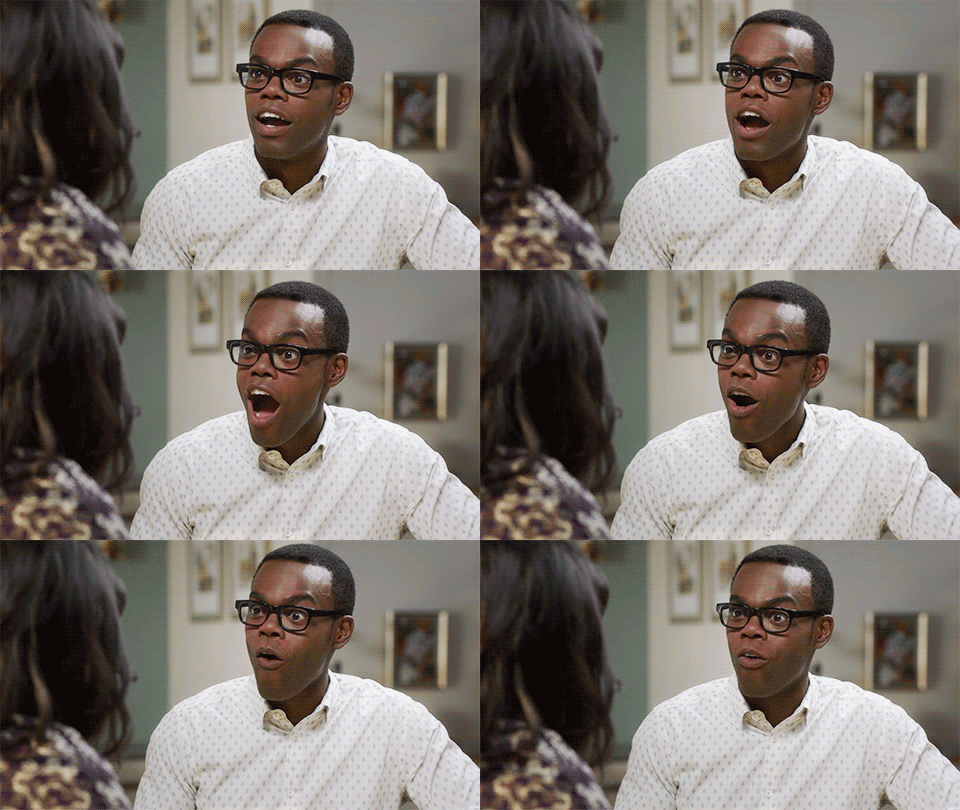

William Jackson Harper as Chidi Anagonye (The Good Place)


I love, love, love The Good Place. I honestly cannot stress this enough. And to me, Chidi Anagonye is one of the bright, shining stars that makes this show as witty and profound as it is. Played by the ever-talented William Jackson Harper, Chidi was a professor of ethics and philosophy and is now bound to the shackles of the bad place due to his extreme indecisiveness that caused the people closest to him a lot of strife. It’s a peculiar position to be in, and Harper plays on that peculiarity very well, working in a self-awareness and quirkiness that’s delightful to watch. I was initially worried that Chidi would become second to Kristen Bell’s Eleanor as the wonderful lead, but they are a duo more than anything else. And on his own, Chidi charms me to no end.
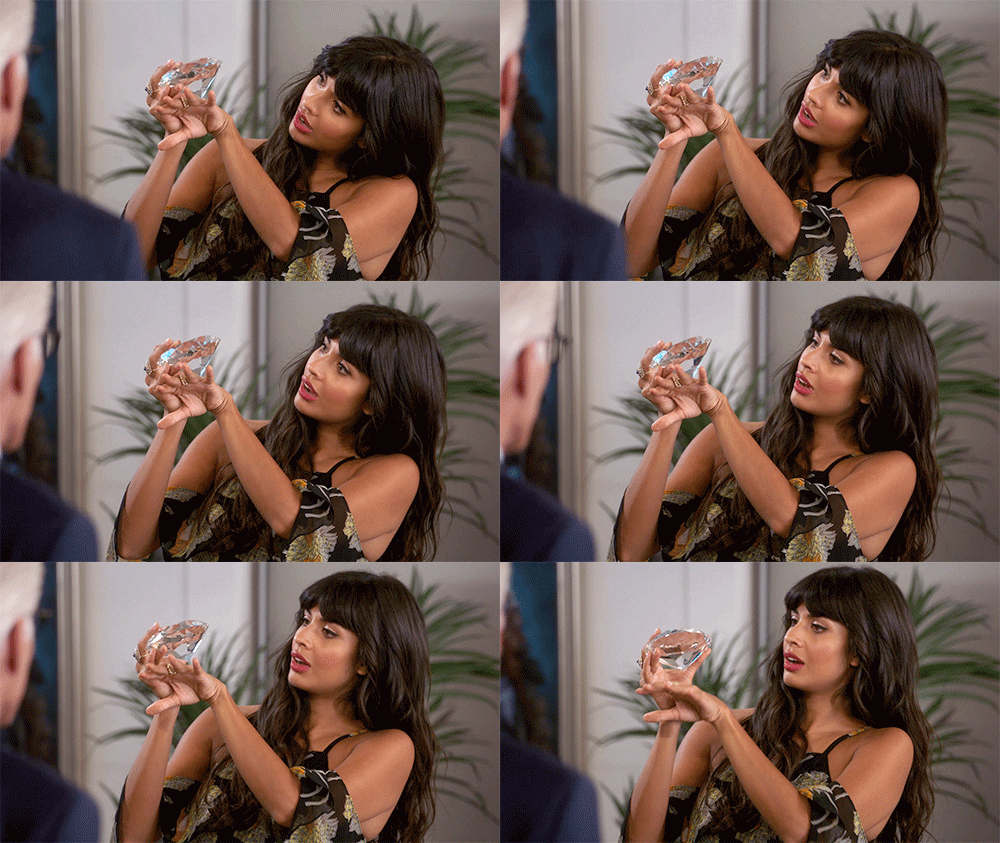

Jameela Jamil as Tahani Al-Jamil (The Good Place)


Tahani is the personification of the stereotypical pompous, pretentious, over-privileged British person. Ultimately she finds herself in the bad place for jealousy of her ultra successful, famous sister. And although Tahani was a successful philanthropist, she did her good deeds in vain. Not quite angelic material, to say the least. However, I think that Tahani is so very interesting and relatable to me — I also have a brilliant older sibling and growing up, at times I felt overshadowed. Thankfully, I’ve grown out of this phase and my older sibling is one of my closest confidants but it’s still a sore subject. Tahani’s desperation to simultaneously be better than people and be good is an entertaining paradox to watch play out, and Jamil’s inherent charisma makes Tahani feel authentic, instead of flat. I hope to see more of her story in season three.
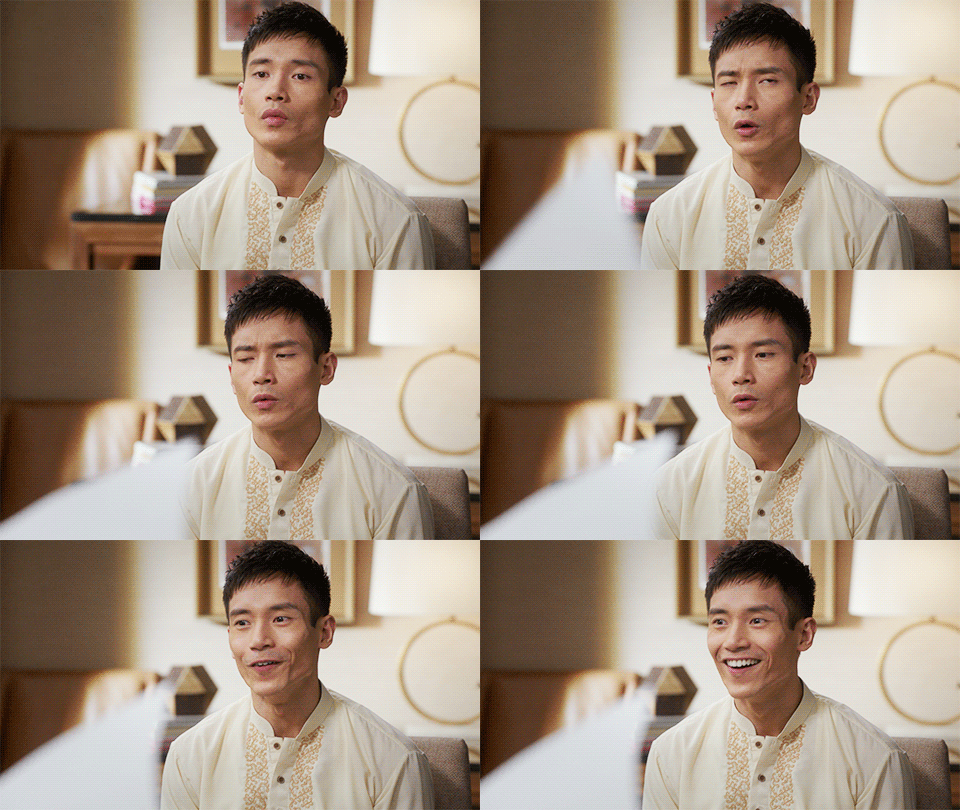

Manny Jacinto as Jason Mendoza (The Good Place)


Jason Mendoza is a stupid, unsuspecting guy sentenced to the bad place along with Chidi, Tahani, and Eleanor. He got his one-way ticket because he tried to rob a pizza place in a portable locker and ended up dying from lack of oxygen. It’s so ridiculous that it’s somehow believable. Now, I love Jason. Despite his idiocy he’s sweet and simple; even though he’s supposed to be an incredibly dim-witted character, Jacinto channels a sincerity that’s infectious and difficult to forget. This makes Jason lovable — despite all of the reasons he shouldn’t be — and it’s fun to watch. Here’s to getting more of Jason and his amateur DJ career fleshed out on screen in 2018.

Image result for magnus bane season 2gif

Harry Shum Jr. as Magnus Bane (Shadowhunters)


Listen, in all honesty, I only watch Shadowhunters because of Magnus Bane. Or actually, for Magnus Bane. Do I fast-forward through all of the parts of the episodes that don’t have Magnus in them? Maybe. Am I missing essential parts of the plot by doing that? Not necessarily. See to me, Shum Jr.’s Magnus Bane is the most compelling part of that show. His origin story as a warlock and as the High Warlock of Brooklyn is uncommonly engaging; his notable glamour and easy allure are weaved into his mannerisms so carefully and so delicately that it’s almost too easy to fall in love with him and the crux of who he is. Which is, a fundamentally good person who bad things have happened to; this makes him not only extremely relatable, but it gets the audience invested in not just in him but who he will become in potential later seasons. Really, he has “protagonist” written all over him. My wish is that the producers and writers let him be one in 2018. He deserves it.
Related image

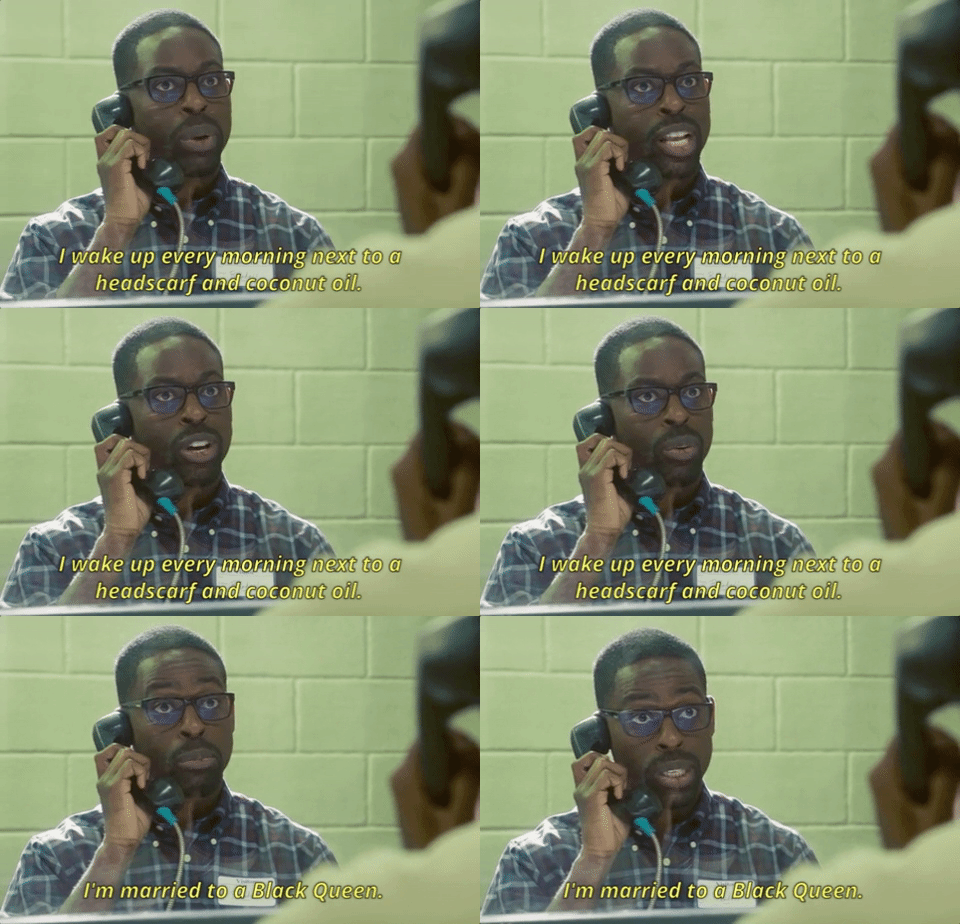
Sterling K. Brown as Randall Pearson (This Is Us)


In 2017, This Is Us became an important show to me. It’s about family and history, two things that I treasure the most in this world. Furthermore, when you tie these two things together what you get are memories; and those have the power to move worlds. This beautiful, highly emotional show recognizes that power and gives each of its characters an integral part to play in the catalog of Pearson family memories — both the ones that have already been created and the ones that are in development. It’s lovely and unique to watch, and only made better by the current season’s centralization of the “Big Three” or the Pearson triplets. Kevin, Kate, and Randall all struggle together and apart and the more we see them do so, the more we understand their natures which is vital to the dynamism of the show.

In particular, I want to single out Randall, played by Sterling K. Brown. What I like about Randall is that he is persistent in everything he does: a quality that’s valued by his friends and family (though it is hard for him to take risks). Despite all of the taxing circumstances that have shaped his life, he is afraid of change that isn’t calculated and to me that’s fascinating. Randall is a character that represents sensitivity at its most gentle, so it’s no wonder that it is so difficult for him to face hardships. But time and time again, he confronts his obstacle and he persists. He gets out of his head and acts, and it’s inspiring to watch.
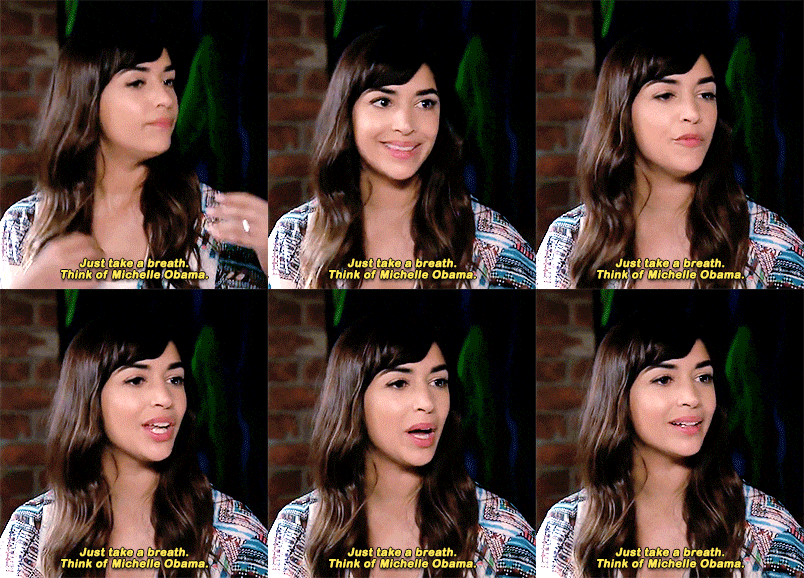
Image result for cece new girl season 6 gif


Hannah Simone as Cece Parekh (New Girl)


I wish that they had fleshed Cece out more in previous seasons but as it is, she remains to be the best friend of the titular “new girl” and the apple of Schmidt’s eye. Yet where another actress may have fallen into trope-dom, Hannah Simone’s unyielding presence proves to bring Cece to the forefront more often than not. And in the last season, the audience got to see that part of the character shine through her plots with Schmidt and their marriage, and her lovely friendships with Winston and Jess. I think Hannah Simone is a force of nature, and I think that that force is hard to contain since it bleeds through so easily on screen and makes Cece a powerhouse when she’s the focus of a story. I’m only praying that Cece is the focus of more than one story in the new and last season, in 2018. *prays really hard*
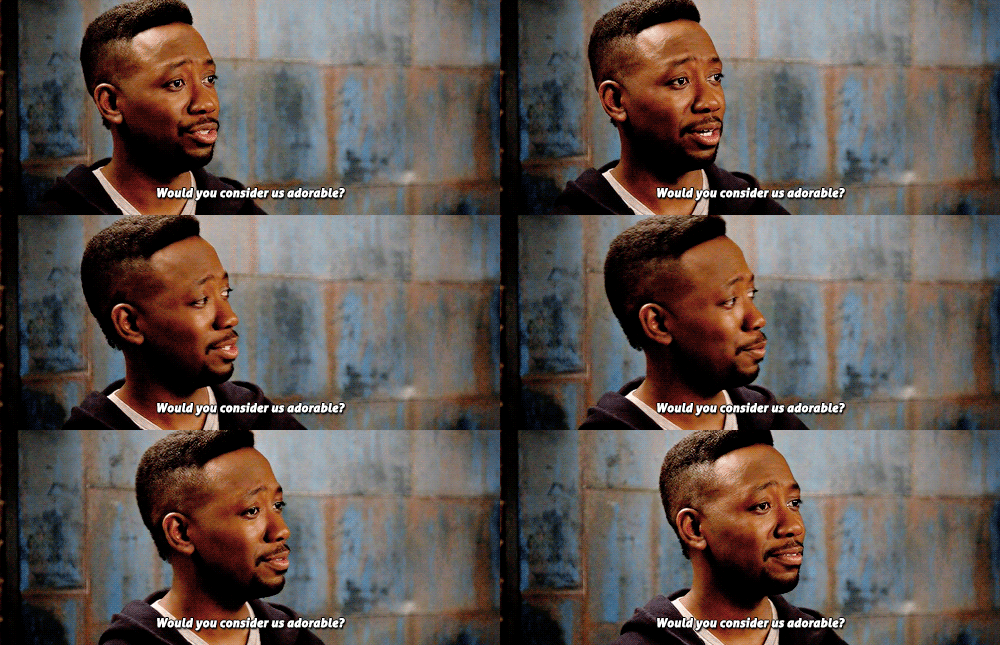
Image result for winston bishop season 6 gif

Lamorne Morris as Winston Bishop (New Girl)


No doubt, Winston is the most consistently hilarious character on New Girl. Much like a modern day mix of Chandler Bing and Joey Tribbiani, Winston Bishop in the past has operated as a scapegoat and distraction but Morris’s cleverness and highly pleasant nature makes Winston a foundation to the show rather than a puppet. In the last season, he’s more than just a punchline — he’s the one handing them out, and seeing that shift was vital to see in a genre that all too often uses Black men as comic relief. I humbly think that after the show ends, Winston will be one of the most remembered characters, with Ferguson, his pranks, and puzzling to be imprinted on the minds of millennials everywhere. That’s a game-changing reality.

Please remember that these are characters from television shows that I consume, so it’s not at all representative of the wide array of POC characters that graced our screens this year. But they are seven examples of the ever-changing landscape of minority representation in western media, and positive ones at that.

So, I’m raising a glass of pink bubbly with the optimism that 2018 will give us more diverse, reflective television characters and stories that will continue to empower people worldwide and improve our perspectives and understandings of humanity.

Onward and upward.

Wednesday, August 9, 2017

7 Books That Changed My Life [Contributor: Melanie]


It’s National Book Lovers Day! I know what you’re thinking — that’s basically every day, right? But, with things being... well, the way they are, it’s more important than ever to bring the focus back into one of the best lines of defense we have against oppression, prejudices, and violence. Books and stories might not have the power to stop bullets and create vaccines, but they can help create and shape the people who will one day have the power do those things. After all, several studies showed that millennials who read Harry Potter as children were less likely to vote for Trump than those who had not. Stories like Harry Potter focus on revealing people for who they are — not what fear or prejudice makes them out to be.

So, to honor the books of youth and to do my part in spreading literacy awareness, I’ve put together a list of the books that changed my life in some bombastic, and some surprising, ways.

Image result for to kill a mockingbird

To Kill a Mockingbird


This is first on my list because it is first on any list in my life (even my grocery list). I’d hazard to say this was easily the most important book I’ve ever picked up. I first read it in 9th grade because 9th Grade Honors English said I had to. But the person who picked up that book for the first time and the person who put it down when she was finished were two different people. What helped a great deal was having a teacher who was so enamored with the book and had read it so many times that she was able to recite passages by heart.

We all know the story: It follows the life-changing summer of a young girl in 1930s rural Alabama. Her lawyer father makes the decision to defend a local black man — Tom Robinson — who is accused of raping a white woman. Tom and Atticus’ harrowing story is told through the eyes of young Scout Finch who has both a childlike innocence to what she sees, and a moving and innate understanding of what compassion and fairness is. This teacher instilled such a love of this story in me that I can still recite the passage she made us memorize for the test: “I wanted you to see what real courage is, instead of getting the idea that courage is a man with a gun in his hand. It’s when you know you’re licked before you begin but you begin anyway and you see it through, no matter what. You rarely win, but sometimes you do.”

It was one of the few times in life that I knew exactly how and when I’d be able to use something I was taught in a high school classroom. It is a sin to kill a mockingbird.

61H1Vt5PpyL.jpg

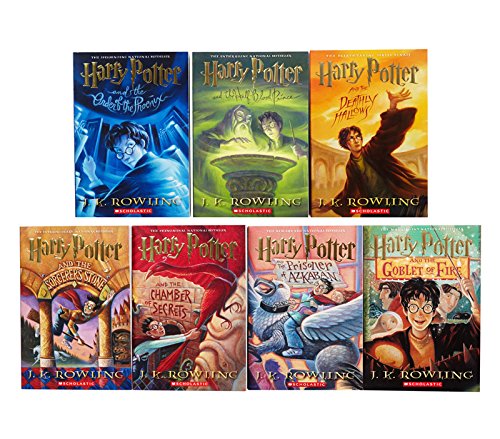
Harry Potter


You knew this one was coming next. Fun fact about why I started reading it in the first place: The year is 1999 and one my mother asked me (likely while I wore some sort of denim overall ensemble) if I liked the Harry Potter books by J.K. Rowling. Me, thinking she was referring to Beatrix Potter (because seven-year old Mel) said “yeah, sure.” I was handed the first three books — the only ones out at the time — and nothing was the same after that. In fact, I still have a smudge on the first page of Sorcerer’s Stone where a bug crawled on it and met an untimely, but textually rich, demise in my backyard tent.

You don’t need another twenty-something telling you how important Harry Potter was for an entire generation or how unique the experience was. We know that. What last year's election from hell revealed was how much those kids reading by flashlight in the backyard learned from seven books that they grew up alongside. It’s a children’s story full of hate, genocide, government propaganda, intolerance, and segregation. By the time Trump appeared with his scapegoating, arrogance, and general contempt for anyone who wasn’t him, we’d seen it all already. Because the truth is that Harry Potter is as much a story about protecting, loving each other, and treating each other as human beings as it is about a boy at a wizarding boarding school.

After all, the only reason Voldemort was not able to murder an infant child was because an act of pure love and sacrifice shielded him. That might not work in our world, but that doesn’t mean we can’t try.

220

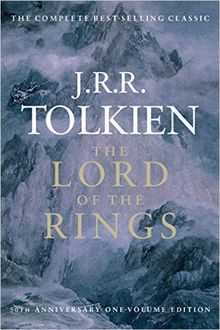
Lord of the Rings


I didn’t start reading these until after I stumbled upon watching the first movie. I distinctly remember hiding behind my couch when the Ring Wraiths came on screen because I was convinced they could see me. Since then, I’ve read as much in Tolkien's universe as possible and learned that the magic box in the living room isn’t actually real. Lord of the Rings has its obvious place in our world: the modern-day staple and bar for high fantasy, the linguistic major’s paradise, and New Zealand’s claim to fame. But there’s much more going on beneath Lord of the Ring’s Dwarf and Elf populated surface.

At its most basic level, Lord of the Rings is about survival, and what groups of beings will do to ensure their survival. We could choose to be like the Elves, who abandon Middle-earth to its doom and exercise their divine privilege of immortality to sail far away to the Undying Lands. We could be like the race of Men, fractured and divided, with some on the frontlines, losing a terrible war while others pretend to not see the struggle of their fellow people. We could be like the Ents who see the damage and hold conferences on what to do, ultimately deciding to stay out of a conflict. We could be like the Hobbits, blissfully unaware of danger until it’s too late.

Or, we could be like the Fellowship: a unified group of every peoples on the planet who have vowed to put aside their differences, embrace their natural gifts, and work together to help keep at bay an evil that never should have happened in the first place (many have made retrospective parallels between the One Ring and atomic weapons). There is, also, Sam’s famous speech from the films about why people choose to keep going: “Because they were holding onto something... that there’s good in this world. And it’s worth fighting for.”

I also may or may not have an Elvish (Qenya) poem tattoo (I do).

o-FRANKENSTEIN-facebook.jpg

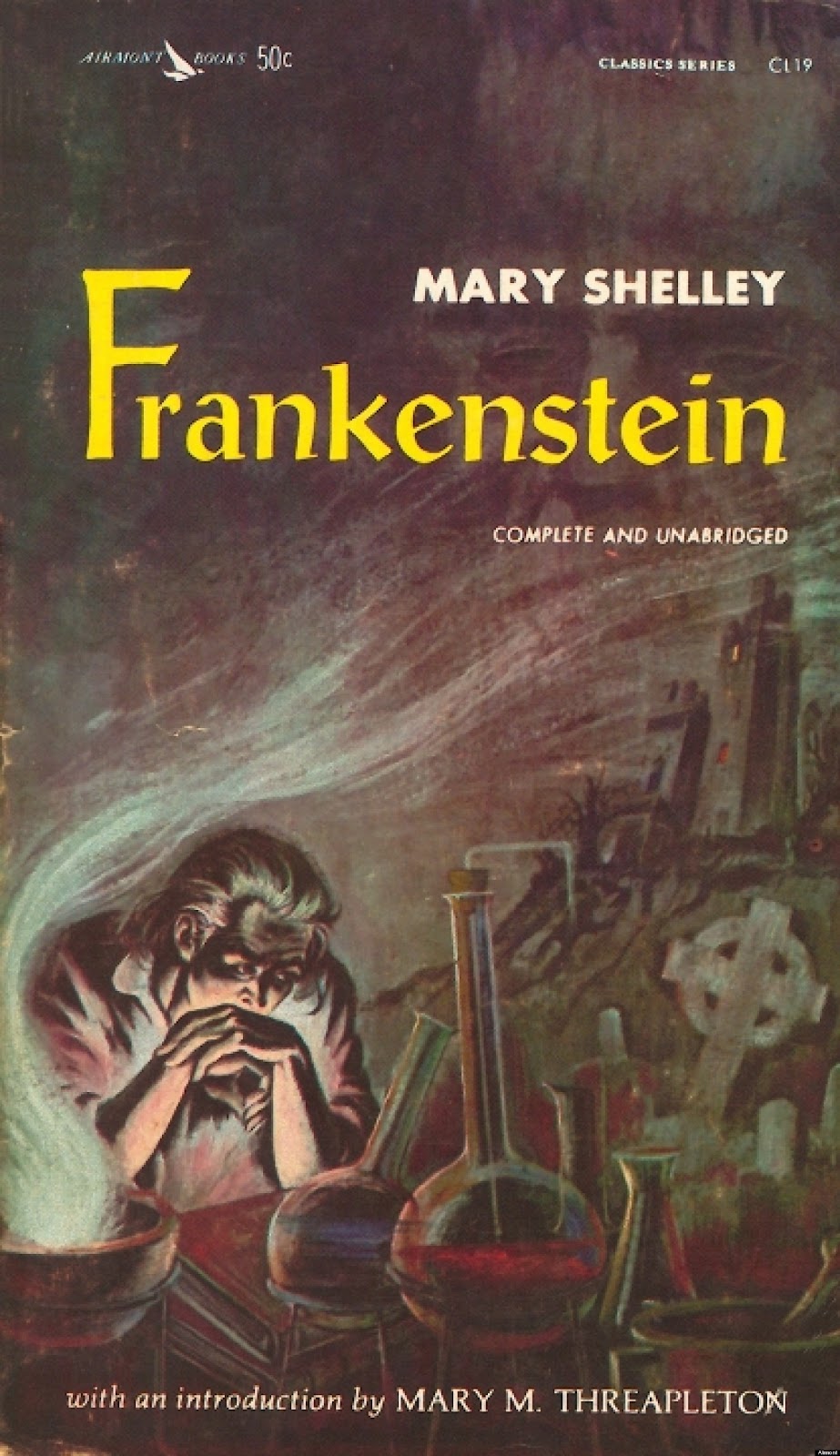
Frankenstein


This is one that has stuck with me for years, and I’ve managed to collect several copies of it over the years. This is another story we all know well: a mad scientist, in his arrogance, creates life from nothing and then abandons it, attempting to pretend it never happened and said life is not having any of it. The Creature is such a unique character in literature, serving as a traditional boogeyman villain while being one of the most sympathetic and sorrowful people out there. He’s rife with existential quotes (“I ought to be thy Adam but, rather, I am the fall angel”) and a childish need for both vengeance against the his creator and love from the closest thing he has to a parent.

It’s a cautionary tale on the dangers of arrogance and irresponsible science, it’s also an introspective story on what makes us human — and all that mortal coil jazz. After all, the Creator is everyone of us: a peoples brought to life by a force of nature we’ll never truly discover or understand, trying to both forgive life for its harshness and rebel against it.

It also doesn’t hurt that science-fiction was invented by a woman (because would a man would ever write about the negative side of arrogance?).

paradise-lost.jpg

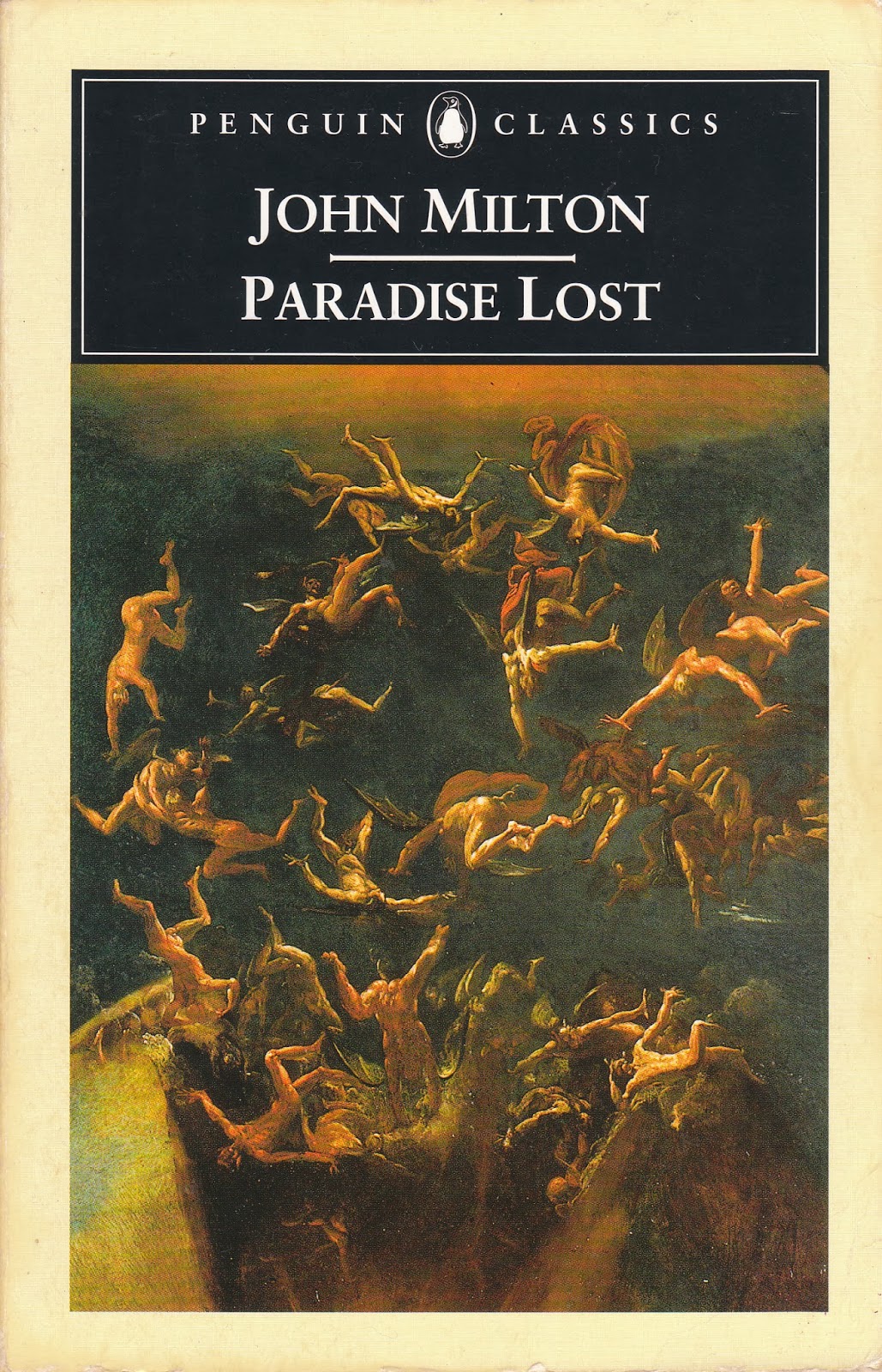
Paradise Lost


Listen, forget what they told you in high school — if you read one epic poem in your life, ditch The Iliad and The Odyssey and spring right for Milton’s tragic hero rendering of Lucifer. I know, I know, this book wouldn’t exist without Homer’s original tales, but I said what I said. Milton’s poem begins with Lucifer, an angel, banished from heaven for his questioning of God and subsequent disobedience. When he crashes to Earth he famously decides it is “better to reign in hell than serve in heaven.” He the devotes his existence to tainting God’s favorite creation — humanity — like a jealous sibling gone very, very wrong.

There’s a lot going on in this poem (it’s, like, 900 pages so that’s not shocking). In Satan, Milton has created a hotly debated “hero” who is a charismatic leader, a questioning follower, a vengeful offspring, and lonely being. In Adam, we have a hapless victim who leaves the story a loser but with a hopeful that he may find for himself  “a paradise within thee.” Like Frankenstein, it’s rife with existential commentary and rebellion against one’s creator. However, it takes a cosmic level to these arguments, opting out of the metaphor and straight for a direct confrontation with God that has been echoed in later work like Philip Pullman’s His Dark Materials trilogy and The CW’s Supernatural.

Image result for the crucible

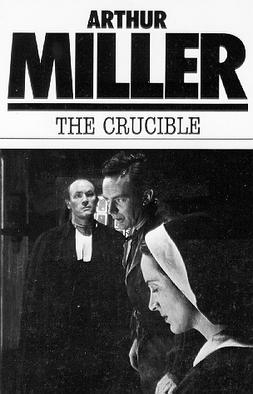
The Crucible


I know, it's not a book, but the majority of us experience this play in the script form so it’s on this list. The Crucible is easily my favorite play and the bane of all high school students forced to read it. Whatever your opinions on Arthur Miller as a person, he wrote a groundbreaking play that got him on some bad lists during the time of the Red Scare in Cold War America. The Crucible follows fictionalized versions of real-life victims of the Salem Witch Trials and examines the interpersonal motivations, social status quo, and motivations that surrounded the executions of 20 people.

The Crucible has been an important work for me because of the ways in which it can be adapted and interpreted. It’s about finding someone to blame, something to point the finger at, and a big target to bring a frightened people together (sound familiar?). It’s a necessary read, especially for those white, lawmaking men out there who seem to think any criticism of them is a “witch hunt.” Read about the real witch hunts, and the devastating miscarriage of justice that seems to still have echoes today.

41Ba82VmcdL._SX327_BO1,204,203,200_.jpg

Letters to a Young Poet


For any creative (or even anyone out there who ever wanted something), this book has been on must-read lists forever. It’s a series of — you guessed it — letters written by Rainer Maria Rilke to Franz Xaver Kappus. Kappus was a future writer who, at the time, was serving at the Austrian Military Academy. The letters are mixture of self-esteem boosts as Rilke convinces the young writer-to-be to not give up on his art, and a commentary on what art should be — what it should be able to do, and what you become capable of when you give into creative freedom.

It has burgeoned such famous, yet deeply personal favorite quotes as: “Perhaps all the dragons in our lives are princesses who are waiting to see us act, just once, with beauty and courage. Perhaps everything that frightens us is, in its deepest essence, something helpless that wants our love.” Poignant stuff for a world ready to turn itself inside out with Islamophobia, homophobia, misogyny, xenophobia, and a plethora of other imbecilic “fears” against our fellow human being.

I’m going to cut this off here because if I don’t, I won’t stop. Which I’m fine with, but you will most certainly stop reading.

The point is, at the end of the day, these are the books that shaped my mind and adulthood. It’s not a perfect list (it’s all quite western) but I’d like to think I turned out pretty okay because of it. So get out there and read the books that will change your life — or, rather, the books that make it.

Thursday, March 17, 2016

Jenn's Pick: 7 Reasons You Should Be Watching Younger


My cable network’s On Demand channel has been discussed a lot recently in my reviews of television shows. That’s because it’s such an asset to me — an avid television watcher who doesn’t have enough hours in the day to watch everything she wants or needs to. So thank you, Bright House Networks, for that one. It was on a day in which I was working remotely that I paused when I saw that Younger was available to watch — the entire first season, in fact. So I watched. And I fell a little bit in love with this zany, fun, and occasionally heartbreaking TV Land comedy.

The show centers on Liza Miller (Sutton Foster) — a forty-year old divorcee who tries to find her ideal job in the world of publishing but is constantly rebuffed because of her age and her (irony) experience. When she’s told by an attractive young tattoo artist that she could pass as being in her twenties, Liza decides to take a chance and lie about her age... which gets her hired at a book publisher called Empirical. What happens next, as you might guess, is the ups and downs as Liza tries to navigate a new, younger life in New York City.

This TV Land sitcom is flying under the radar. Before I watched it, I hadn’t heard much critical buzz, but the bits and pieces I did hear were positive. Add to that the fact that my high school Broadway idol, Sutton Foster, was the lead alongside my adolescent role model, Hilary Duff, and I was sold. So here are seven reasons why I think you should be giving Younger a shot!


7. The show’s episodes are sometimes self-contained, sometimes not  leading to great binge-watching or just picking up an episode and running with it.

Since the show is only a 30-minute comedy (more or less 20 minutes after commercials), there’s not a whole lot of time to unearth large, convoluted plots or launch new ones. And that’s perfectly wonderful. Even so, Younger toes the line between a self-contained comedy and one with an overarching theme. More often, episodes will connect but the narrative at large is not as detailed as the conflicts presented in the individual episodes are. That means that watching episodes of Younger makes time fly by because every minute is packed with either character development or plot. And that’s what’s so impressive — the show manages to wrap up detailed issues within the span of time it might take for your ordered pizza to be delivered to your house.

It’s impressive, really. And what’s nice is that in spite of the fact that most episodes serve as self-contained (in some manner) and characters flit in and out (don’t expect to see everyone in every episode, apart from Liza and Kelsey). I love that, and I love that this show is perfect to binge-watch, but also perfect to slowly make your way through or pick up a random episode and still enjoy.


6. Love is at the center, but not always in the ways you might assume.

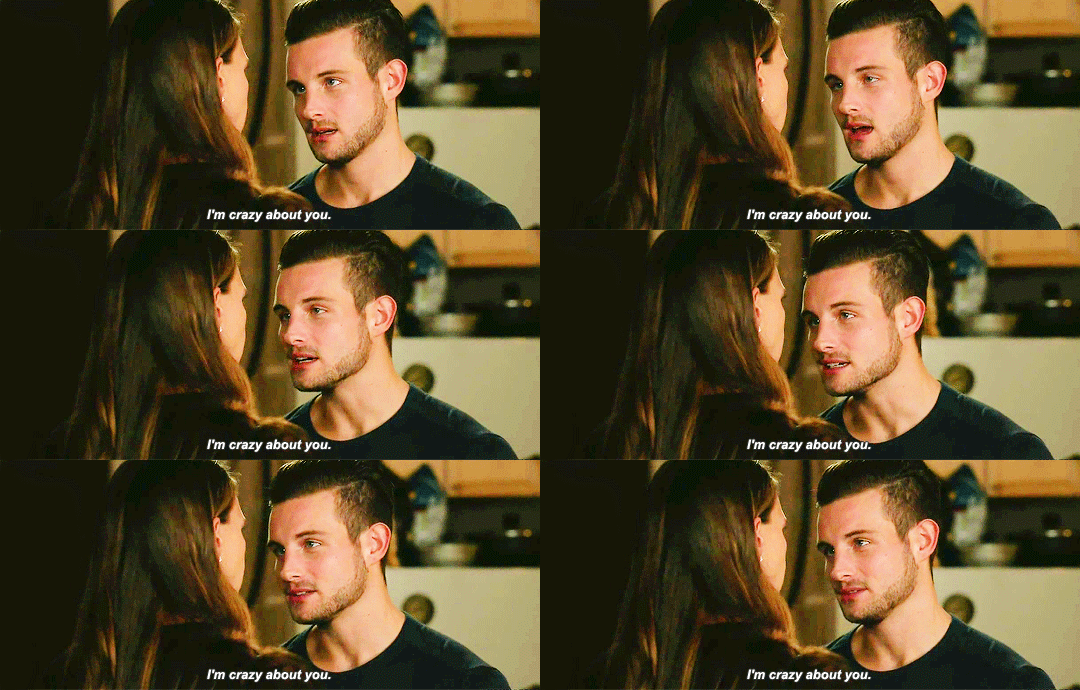
I will admit that to me, the romance between twenty-something Josh (Nico Tortorella) and Liza began pretty strongly and then started to fizzle once the couple became more on-again, off-again than Ross and Rachel. (“WE WERE ON A BREAK.”) And the conflict itself between them kept revolving around Liza’s age, which made for a little bit of a stale cracker romance.

And yet still, love is such an important part of Younger. But what’s refreshing is that it is not the ONLY part of the show worth focusing on. Nor is it the only means by which characters grow or backslide. The focus on love is important — it’s a show about millennials, after all, who are either still looking to have fun or settle down or figure out the status of their relationship. But what gives this show the extra depth and complexity is two-fold: 1) love is never presented as a solution, only a potential added layer of complexity to your life. And I love that. I love that this show is not so idealistic to presume that love is the solution to all of life’s problems. It’s realistic in the way that young people talk about and navigate their relationships — from cohabitation to flings to long-term commitments.

The second thing that Younger does really nicely is that it brings depth into the equation as it pertains to Liza. Remember that Liza is only pretending to be a twenty-something. In reality, she’s 40 and she’s been through everything that Kelsey and a majority of her co-workers and new friends are currently experiencing. That means that Younger has the unique ability to present 40-somethings giving sage wisdom to a younger generation... and have it come from the mouth of a 26-year old. Liza’s advice is not pretentious, nor is it judgmental. It’s realistic and it’s nice to see Younger as the show on television representing this.


5. There are wonderful depictions of female friendships.

Speaking of love, Sex and the City this show is not (quite, but there are shades of the show in this one), but female friendships are definitely at the root of Younger. Relationships themselves are really important on this show and every kind of relationship is explored — romantic ones between lovers and partners, friendships, mother/daughter relationships, etc. But what I really love about Younger is that they could have easily fallen into the archetypal “mean girl” character with Kelsey Peters. She’s young, beautiful, and Liza enters the picture as a bit of the clueless new girl. If that’s not rife with clichéd possibilities, I don’t know what is.

And yet, the show did something totally refreshing and never presented Kelsey or Liza as rivals for attention or praise (or men, thank goodness). What I really love is how instantly supportive Kelsey is, in spite of her drive and ambition. She’s compassionate and a smart thinker, but she’s also a really good friend. She has a big heart and absolutely adores and accepts Liza, doling out advice on Josh and career moves. Even Diana Trout (Miriam Shor) who is Liza’s demanding boss is seen to be compassionate, in a most recent episode even giving Liza advice on how being single is an important time in her life.

And then there is the loving and supportive friendship between Liza and her roommate/best friend Maggie (Debi Mazar). I love that Maggie shoots straight and doesn’t allow Liza to wallow. That’s a great friend. And Liza is endlessly supportive of Maggie and trusts her implicitly. There may be secrets between Liza and the rest of her friends and co-workers, but there are none between her and Maggie. That’s pretty wonderful.


4. The show’s main character is someone you can genuinely root for.

The whole “lying to protect yourself and then your loved ones” is a trope that has been done time and time again on television, including recently with shows like Psych and Suits. And it’s tricky when it comes to morality, because on the one hand, we shouldn’t actively be rooting for characters who lie to everyone about who they are. But on the other, if we don’t, how can we possibly relate to them? For those who watch Younger, it’s easy for us to root for Liza to succeed — she’s a genuinely good person. She lies to get her life back on track because she just suffered through a divorce and is trying hard to create a better life for herself and her college-age daughter.

And Liza is a good person. She cares deeply about others, and fights for the things that she knows she — and others around her — deserve. In the most recent episode (spoiler alert, if you haven’t watched yet), Thad (Dan Amboyer), Kelsey’s fiancé, discovers Liza’s secret. He uses it to hold over her as a way to prevent Liza from telling Kelsey about his infidelity. And in any other show, Liza would have backed down and walked away, succumbing to Thad’s blackmail in order to keep her secret safe. But Liza Miller is a good person and an even better friend, so she tells Thad that she doesn’t care — she will put her secret on the line, knowing all that exposing it risks, if it means that one of her best friends will know the truth about the man she was prepared to marry.

That is the difference between Liza’s secret-keeping and the other shows I mentioned. Liza is willing to risk it all if it means protecting the people she cares about. She will always do that — always go to great lengths to ensure their happiness, even if it means it costs her own. So that’s why we can forgive and accept Liza’s lies. We know, deep down, she doesn’t mean to hurt anyone. Sutton Foster is so brilliant in this role that it’s impossible to not love Liza Miller and feel yourself ache for her and long for her happiness.


3. It’s bold and brash and funny.

There is literally nothing that this show isn’t afraid to tackle, from feminism to morality to really uncomfortable and hilariously gross (and intimate) subjects, to things as mundane as everyday life. And honestly, you won’t find a quicker, zanier comedy than this one on television. It’s weird in all of the right ways, and relatable in all of the best and most important. These characters are unique, while also being the kind of people you might meet on the subway or at the office.

Younger is a fresh take on a workplace comedy, because it doesn’t dwell in the workplace too long and it allows those scenes to have new life (and comedy) breathed into them because of it.


2. The show talks about millennials without patronizing them.

As a millennial, the most annoying thing to open my Internet browser and see is just another article bashing my generation and calling us selfish or else aloof. The thing about millennials is that we are self-focused, sure, but that’s not really a lot different from any other generation. And we aren’t aloof. In fact, we just actively ignore the things we don’t like or trust. So to fixate an entire show around millennials (and then — spoiler alert — have one of its main characters start running her own imprint at Empirical called “Millennial”) is really refreshing to see. More than just fixate on this generation, though, Younger actively celebrates it!

Characters like Kelsey and Lauren (Molly Bernard) are extremely successful at what they do, not relying on men or their parents in order to make or break their careers for them. While initially Lauren seems like an aggressive, abrasive character who is obsessed with social media, you quickly realize that Lauren isn’t obsessed — she’s a professional at what she does. Everything that she executes is flawless, she has more connections than a New York Subway, and she’s powerful. People listen to her, follow her advice, and are inspired by her social media accounts. (Plus, Lauren is really good at analyzing photos and social trends.) Kelsey, too, is wonderful at her job. Creative, sassy, and incredibly smart, Kelsey is also not above asking for help from Liza. She commends her friend’s taste, and is strong enough to take on famous authors and publishers while driving a bottom line home.

Remember: these are characters who are in their mid-twenties.

It’s so refreshing to see millennials revered and respected in Younger, because they are treated like professionals and passionate young people who are good at what they do and want to change the world because of it.

youngertv

1. The cast is fantastic.

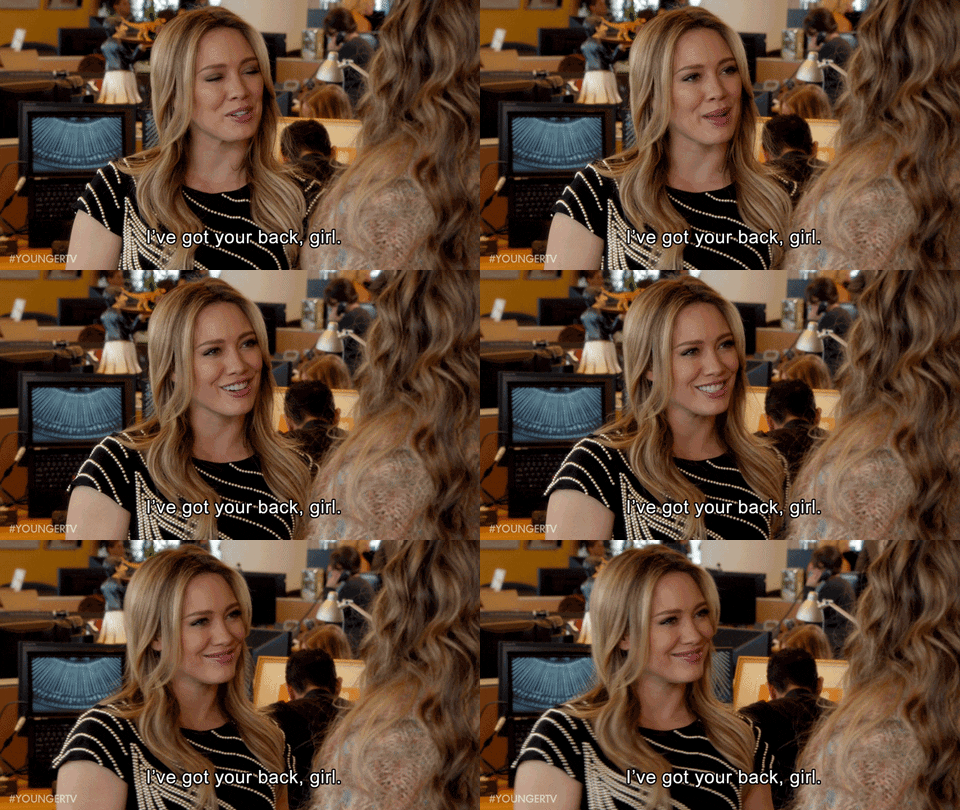
When a television show has no weak link, you know it’s a great one. And Younger is that show. Everyone is exceptional, nuanced, and excels at their own form of comedy. Molly Bernard’s Lauren is vibrant, energetic, a little bit spastic, and incredibly hilarious because of that. She can deliver zingers and quips like no one else. Hilary Duff’s Kelsey is fantastically nuanced, and both she and Sutton Foster make some of the most hilarious facial expressions in the show. Even Charles (played expertly by Peter Hermann) is funny, but more understated. His character — a more stoic one, considering that he is the one in charge of everyone else — is completely and totally endearing, and the kind of character you know is just a good person, both on the surface and also deep down. And that’s pretty incredible, considering the cutthroat world of publishing that he exists in. Hermann also plays the (possible) romantic lead with such gentleness and sincerity that it’s fantastic. And deadpan, sarcastic humor is the heartbeat of characters like Maggie and Diana (Miriam Shor and Debbie Mazar are absolute delights and have the best comedic deliveries.)

This show is filled with wildly talented performers, both comedic and dramatic. There is literally no weak link among them, and they each bring something really special and fresh to Younger.

If you have yet to check out Younger, do so! It airs Wednesday nights at 10|9c on TV Land.

Tuesday, December 29, 2015

7 Questions and Theories We Have After Watching "The Force Awakens" [Contributor: Melanie]


The Force Awakens has completely decimated the box office and blown minds; but now, it is time to look ahead. Production has already begun on Episode VIII, with sequences being filmed in Ireland, principal photography beginning in March, and Daisy Ridley already being asked her thoughts on the script by interviewers. The wait for this one will be far shorter than the typical three-year interval that happened with past films, as the movie is slated for release in March 2017. And like, thank the maker, amirite?

So, after viewing the film a grand total of three times (that’s a lie, it’ll be four after I make one more friend go), and poking around on the Internet, I’ve accumulated my thoughts on where we are going from here. Below you will find several questions that are at the forefront of my mind, and some possible answers we might see next spring.

1. Who are Rey’s parents?

This is easily the first question everyone has walking out of the theatre. The presentation of Rey’s anonymous parentage amounts to what’s known as a Chekov’s Gun — a plot point that is introduced to the audience early and then quietly pushed aside to be “fired” by the end of the story. Maz Kanata had a good point that Rey’s hunt for belonging (note the choice word of belonging over family) must look forward, not backward. This suggests that her found family is more important than the ones who left her behind years ago.

And this question about parentage is going to go one of two ways: either she will be revealed to be the child of the other twin (somehow we all forgot she could be Luke’s daughter as well with all the talk of Leia’s offspring) or her parents could be just as unimportant as they seemed to be by the end. Perhaps they come back into her life, create strife with the family she has formed, and present her with a choice. But, just as Maz used the word “belonging,” she also made a point that the lightsaber calling to her “belonged to Luke and his father before him” so the inheritance of it seems intentional. Also, she looks a lot like Natalie Portman.

Novelization note: I theorized this after seeing the movie, but the novel proves Ren has met Rey before and that she feels he “knew things about her she did not.” This lends credence to the theory that she was possibly one of the children training with Luke, Luke’s own daughter, and/or hidden on Jakku from Ren.


2. What’s next for Finn?

I mean, besides the whole coma thing, I’m curious if he’ll wake up the same. We know the Stormtroopers were conditioned from an early age, so it might be possible that something got reset in his head that he’ll have to fight. Or perhaps even a fancy little triggerable safety switch that resets his “programing.” I’m kind of hung up on this possibility because everyone seemed to take Finn being a Stormtrooper in stride. There’s no need for redemption and his shame has already been absolved thanks to his relationship with Rey. So let’s make this complicated and create some tragic tension as Finn falls back into trooper mode and Rey has to figure out exactly what to do about that.

3. What does Snoke have planned for Kylo Ren?

At the conclusion of Rey and Ren’s duel, Snoke commanded General Hux to retrieve Ren and bring him to Snoke so he could complete his training. It seems as though Snoke was holding Ren back until he managed to kill his father, which Snoke referred to as a “test.” And we know Ren was waffling about what to do, feeling the “pull to the light” just as Anakin felt it towards the dark. I’m curious to see what this new training will be, but one thing is for sure: in their next duel, Rey will lose.


4. Will Rey be tempted by the dark side? 

It is a Skywalker family tradition to have the allure of power dangled in front of you — from Anakin’s slip into Palpatine’s thrall, Luke’s near falter to Vader’s goading, and Vader’s threat to turn Leia if given the chance. They all go through it. It’s like their version of puberty. Ren failed the test, taking up the dark side legacy of Vader with pride. So, it follows that Rey, though still an unconfirmed member of the family tree, will face the same temptations.

Or will she? Apart from the phonetic connotation of her name (ray of light much?), she’s already been tempted once. As their duel nears its conclusion, Ren backs Rey up to a chasm and gives her a choice: “You need a teacher. I could show you the ways of the Force.” And faintly heard is the Sith music cue that denotes moments when temptation is presented. And then Rey rejects his offer, calling on the Force herself and besting him. And it’s important to note this moment was one of Rey’s most emotional — fearful for her life, angry at Ren for the death of Solo and his critical wounding of Finn. Had it been another Skywalker, it might have been a recipe for disaster, but she rejected it. So perhaps her journey has less to do within inner dark and light, and more to do with acceptance, given that last shot seemed to be Rey pleading with Luke to take the burden from her, or help her bear it.

Novelization note: In the official novelization, Rey is in fact tempted to kill Ren by “a voice” in her head. She resists, however.

5. What’s with the map? 

Everyone’s super confused as to what the deal was with that map. Who made it? Why did they make it? Why did everyone only have pieces of it? How did R2 have the rest? My theory on this is Luke made the map himself and purposely scattered it. To what end, who knows. Maybe it was a Holy Grail type situation where only the worthy could complete the quest (in that case, you certainly think highly of yourself, Luke), or perhaps it was an accident and he wanted to help ensure he was never found.

Considering Luke was parked at the first Jedi temple, then it’s entirely possibly the map is actually directions to that (which would make the separate pieces of it a lot more understandable). I doubt we’re going to get an explanation on this, but who knows — it might end up being important.


6. What is the extent of Rey’s powers?

Just like Kylo Ren, we were all quite interested to see what Rey could do with her abilities. Like Anakin’s they were untrained and unnoticed, but powerful, making up for the lack of buffing with some good old fashioned do-it-until-it-works. Ren seems threatened by Rey's powers and abilities, even as the most untrained of novices, so that makes it interesting since last time we had someone shockingly strong with the Force they turned into Darth Vader. One nifty theory on the Internet suggested Rey might have some Jedi Tai-Chi going on, able to “reverse engineer” her opponents' attacks. That would make for some very cool showdowns with Ren, who is nothing but aggression and anger and would be essentially giving Rey ammo the entire time. This is just a theory to help explain her quickly-growing powers. But then again, she’s probably just that powerful.

7. Who is Snoke? 

I personally think it’s entirely possibly Snoke is very much a man-behind-the-curtain type of character. I’d go as far to suggest he’s not even a Force sensitive. We’ve seen, in the past, non-Force sensitives can use lightsabers and have an understanding of the Force, even if they can’t utilize it the way Jedi do.

Han mentions Snoke is using Ren for his power, so it’s possibly Snoke has none of his own. He also seems to be in the business of “collecting” Force sensitives between the hunt for Luke and his demand that Ren bring Rey before him when he learned of her power. Also, is he really that big? Come on.

What are some of the things you've been thinking about that happened in The Force Awakens? Do you have any theories as to what the upcoming installment might hold? Hit up the comments below and let us know!

Saturday, March 15, 2014

7 Reasons You Need to Watch FOX's 'Enlisted'


I’m kind of easily persuadable when it comes to television series. My sister has told me I need to watch Pretty Little Liars. Jaime was the one who got me into both Community and Sherlock. And my Twitter timeline is the reason I started watching Enlisted, Fox’s newest comedy. Because I like Geoff Stults (I’ve enjoyed him since his days on 7th Heaven – yes, and I’m not denying it) and because my friends generally have good taste, I vowed to watch the series. Imagine my utter joy, then, when I discovered that every episode was already available to watch on Hulu, allowing me  to easily catch up with the series.

I fell in love with Enlisted from the pilot episode which honestly very rarely happens, even in my absolute favorite series. Community’s pilot? I didn’t love it. Parks and Recreation? Meh. New Girl? It was good, but not the best. And it is so amazing and rare to find a sitcom that fires on all cylinders from the pilot episode. But as The AV Club noted (and I rarely totally and completely agree with their gradings but I do with their reviews for this show), this is a show that manages – from its very first episode – to find the heart without the intense saccharine and cliché and find the comedy without the overkill. That’s so rare these days and I agree with their assessment of Enlisted having the very best comedy pilot of the 2013-2014 season. The writing on this show is witty and touching and so solid that I have found myself enjoying every single episode that I have had the opportunity to watch. And you all know me: I’m very picky when it comes to my comedies.

So I thought that I would spread the television sitcom love. When you care about a series, you need to tell others about it. I’m about to give you seven very compelling reasons why YOU need to catch up with Enlisted and watch what has quickly become one of my favorite comedy series. Let’s do this!*

*None of the following GIFs belong to me because I can't make GIFs. I'm the worst.