Ted Lasso, Rom-Coms, and Emotional Vulnerability

Why is it important that a show about men who play soccer did a rom-com homage?

Dickinson Behind-the-Scenes: An Interview With the Artisans

Meet the artists who brought the Apple TV+ series to life!

If You Like This, Watch That

Looking for a new TV series to watch? We recommend them based on your preference for musicals, ensemble shows, mysteries, and more!

Showing posts with label Batman v Superman: Dawn of Justice. Show all posts

Thursday, May 5, 2016

8 Reasons Why Captain America: Civil War is Superior to Batman v Superman: Dawn of Justice [Guest Poster: Julia Siegel]


This article does NOT contain spoilers about Captain America: Civil War, so please enjoy!

The moment we have all been waiting for has finally arrived! The first fantastic superhero film of the year hits theaters tonight. The long-awaited Captain America: Civil War (abbreviated from here on out as CACW) is blasting onto the silver screen to start the summer movie season with a massive bang. If you had lost faith in superhero movies after seeing Avengers: Age of Ultron or Batman v Superman: Dawn of Justice (BvS), don’t fret anymore. Marvel and the Russo brothers have found a way to save the genre at the perfect time. CACW is the movie fans have been dreaming of and should be extra excited to see. It’s awesome on every level, and the IMAX Arri Alexa 65 camera brings new stunning action footage to incredible new levels. Below is a list of my top eight reasons (with no spoilers!) why CACW destroys its competition, BvS.

But really, who thought it wouldn’t?

8. There is no true villain.

One of the most stereotypical aspects of the superhero genre is to have a central villain for our good guys to fight and ultimately defeat in the film. The role of the villain is usually the most common way to keep the plot moving and is often the driving force of the story. CACW decides to break the mold by not committing to having a real villain. Sure, there are two minor “villains” that pop-up briefly, but their characters don’t keep the story moving. (Okay, granted, one of these characters does help start an epic fight, but is not a true villain yet.)

In my opinion, the true villains of the film are the Avengers themselves. They are their own worst enemies, as no one can seem to win the mind games they play with themselves. Much like how Tony Stark went through a mental breakdown in Iron Man 3, most of the characters in CACW face a similar problem. With no one being mentally stable, cracks are easily formed and fighting ensues. The groups fight themselves rather than others, so there isn’t the typical one figure that they join together to destroy. They each feel that their opinions on the matters of the plot are correct, which makes them all adversaries to the other side.

This style worked much better than the other Marvel films because the concept didn’t feel forced — it was very natural. It makes sense for this rift to happen eventually, which is why the story works so well. In BvS, Lex Luthor tries to play puppet-master, which leads to some terrible sequences that are an utter disaster. Batman and Superman are forced to comply and act out his wishes, and the audience can most certainly feel that power struggle. The Avengers don’t have to play the role of heroes in CACW, leaving them to act by their own free-will instead of by a control-freak monster’s will.

7. IMAX Arri Alexa 65 Camera = beautiful visuals.

Did anyone feel like they couldn’t see what was happening during the minimal fighting in BvS due to some choppy camera work? Well, thankfully Marvel knows how to make the most out of their action scenes and used a great new technology to capture every tiny detail. CACW directors Anthony and Joe Russo dabbled with the IMAX Arri Alexa 65 camera for a few scenes in Captain America: The Winter Soldier and liked it so much that they elected to use it again for CACW. They made a fantastic choice because the clarity and precision that the picture this camera gets is incredible.

It’s very clear which scenes are shot with the new camera because the action moves so quick that we would not normally be able to catch all the movements clearly. The Alexa camera allows stunning, crystal clear images of surroundings and characters in real time, even when the action is moving at superhuman speeds. The level of detail is a lot to take in and is a little hard to adjust to, but it’s impressive. You will know what I mean about ten minutes into CACW when the first big action sequence occurs. Keep an eye out for the first fight that Black Widow is in, because the camera work is great and doesn’t miss a single, tiny movement she makes. The use of the new camera in CACW makes me excited for the Russo’s Avengers: Infinity War Parts 1 & 2, which will be filmed in their entirety with the Alexa camera.


6. Teamwork!

What good is a group of superheroes if they can’t fight together? CACW introduces us to a few new characters, whom the core group of Avengers hasn’t previously met (more on this later). One might think that this would cause some chaos when they all fight, but all the heroes work very well in conjunction with each other, and the new arrivals fit right in with the rest of the bunch in terms of communication and teamwork. The best part of the groups is their willingness to work together and listen to what everyone is saying in order to get the best results.

The airport sequence, which is teased in the trailer, is our first look at how the two sides work together. There are some great feats of teamwork present, which show how deep the trust runs within the groups. What’s more, no matter what the two sides’ differences are, they all are still aware that they are on the same side on some level. No one is trying to murder the other in cold blood, unlike BvS. In that movie, Batman and Superman fail to realize that they are both trying to be good guys and are fighting for the same cause. Their judgement is clouded by their lack of understanding of one other. Instead of seeing potential allies, they see each other as rivals, and Lex Luthor takes advantage of this weakness and exploits it to get them to do his dirty work of taking each other out.

The whole nonsense of BvS could have been avoided if they took a second to think about what was happening. They can’t even work together at the end to destroy Doomsday. Instead, Batman is a coward and leaves Superman and Wonder Woman by themselves. Great way to start off the Justice League! This is where CACW is superior, as the characters who don’t know each other don’t try to destroy each other immediately. Everyone joins the cause they believe in, but knows that they need to stick together to fight common enemies down the line. They know mass destruction is pointless because they need all the help they can get if random aliens decide to attack again.

5. There is an actual reason to fight.

BvS doesn’t offer us a valid reason for the titular characters to have a five minute fight-to-the-death and then randomly stop to become best friends. That whole idea and execution was the worst part of the film, in my opinion. Thankfully, CACW gives the Avengers real reasons to fight. My point here will be short in order for me to not give away the central reasons for the rift. There are some nice surprises to the plot that give the characters a valid argument to attack one other, and it all makes sense by the end, adding to the next stories to be told. This is not a one-and-done type of disagreement.

The history between the characters gives the new story a lot of validity. The timing is perfect, and the tension between characters has been on the rise. There are legitimate reasons to fight, unlike BvS which gave us a sloppy script that was poorly timed. That story could have worked better if the movie had established history between the characters and their conflict. CACW is also much better in the reason-to-fight department because the action lasts the entire film. It isn’t thrown in for twenty minutes at the end; it is constant, which leads me to...


4. Lots and lots of action.

If you haven’t gotten your superhero action fix in a while, then CACW is what you should crave. It kicks off with Avenger action right away and doesn’t stop until right before the end credits role. If I had to make a rough estimate, I would say CACW is about 85% fight scenes and 15% pure dialogue. This is awesome because the concept of the film is that a rift forms, and everyone fights for their cause. CACW lives up to its name because there is an actual civil war occurring in the group, and it keeps occuring for two hours! BvS doesn’t live up to its name because there is barely any Batman versus Superman. A measly five-minute sequence at the end doesn’t cut it. It’s hard to believe that BvS is a superhero movie when there is barely any fighting involved. Captain America, Iron Man, and crew duke it out the entire film, which most certainly satisfied my action cravings.

The superhero genre should be focusing on the fighting because at the end of the day, that’s what the audience will remember most. You don’t really think about the long monologues that the characters deliver. You talk about the crazy action or the lack of action. There are plenty of great fight scenes to talk about after watching CACW. Tell me your favorite fight moment in the comment section below.

3. Insane choreography and stuntwork.

I feel like the Marvel stunt people try to up the ante with every new release. The stunt coordinators have outdone themselves this time, with awesome moves that we haven’t seen before. All the great scenes in the movie were masterminded by the fight choreographer James Young, who previously was the fight choreographer for Captain America: The Winter Soldier, Guardians of the Galaxy, and Avengers: Age of Ultron. I’d like to give a big round of applause to him for creating some amazing sequences for CACW. Every fight looks incredible and has action that fans have only dreamed of.

CACW’s fights allow us to see our favorite characters go head-to-head briefly, with each trying to exploit the other’s weaknesses. This wouldn’t have been successful without some incredible stunt coordinators and Young. The action only gets better as the film progresses, making these action scenes instant classics. I don’t think I need to say anything about the lack of choreography in BvS; the film spoke for itself.

2. The tone of the film.

In typical Marvel fashion, CACW is very light and comical. The major difference between BvS and CACW is the tone. BvS starts off on the wrong foot by making most of the scenes incredibly dark, in both color and dialogue. CACW takes place in brighter locations, which automatically sets a much more relaxed tone. The history that the characters have also comes into play here, as they casually throw one-liners at each other to keep things playful. The events of CACW never get too serious to the point where it seems uncomfortable. There’s always a hidden joke or comedic relief placed at the right moment.

This film also explores some new relationships and bromances between its characters, leading to more comedy. Marvel has done a fantastic job with Guardians of the Galaxy, Ant-Man, and CACW to keep the tone light and filled with humor. This concept has worked exceptionally well so far and leaves audiences with a good feeling.

The only funny part of BvS is how terrible the whole thing actually is. Some of the comments and sequences are so ridiculous that they are easy to laugh at. There is the bare minimum of comic relief, which didn’t help to ease the mood. When all your characters are sulky, it’s easy to get turned off from watching. CACW keeps it interesting by using each character’s quirks to give the audience a brief break from the action. It’s great when Spider-Man is rattling off one-liners while fighting because you stop thinking about the insanity that’s occurring. The brief mental breaks keep the flow going nicely in CACW. DC needs some serious help in that department if they hope to succeed.


1. Character introduction and set-ups.

The number one reason why CACW beats BvS on every level is the perfect introductions and set-ups for the future. CACW introduces four new players to the Marvel Cinematic Universe in fashion. This is the first big-screen appearance for Black Panther, and the introduction of the new Spider-Man. Each character is given a good amount of screen-time, which helps to set up their solo movies. The new heroes show us their skills without having to give any backstory, which worked well because this wasn’t the time or place for it. Of course we all want to know more about these characters, but their stories will probably be revealed in their individual films.

By giving Black Panther and Spider-Man considerable roles in CACW, the Marvel Cinematic Universe has set up its next wave of films nicely. There’s a brief window into what these solo films might entail, which should help pique some more interest in the characters. They are both really awesome as well and don’t hold back their personalities or powers. On a side note, make sure you stay for the entire credits because in typical Marvel fashion, there are two end credit scenes.

I was a little worried about Spider-Man being rebooted again, but Disney has saved the character from total annihilation. If the new Spider-Man movie is reflective of how he acts in CACW, then it will be really good. The added bonus of Tony Stark being in Spider-Man: Homecoming will also help tie Spider-Man back into the rest of the storylines. Spider-Man is back to being a funny teenager who really doesn’t know what he’s doing. I have big hopes for the character after seeing the new and improved version.

There are two other character introductions that will probably come back to affect later stories. Both Martin Freeman and Daniel Brühl have joined the cast in roles that definitely could impact future films. It’s hard to say who has what contract and if either will appear again, but why bring in big name actors for minor roles? My guess is that both will play a bigger part in Marvel’s Phase 3.

At the end, CACW also sets up the next batch of Avengers films. Marvel has gotten quite good at using their current films to springboard the upcoming ones. The events of CACW will definitely impact the Avengers forever, and the effects that it brings for Avengers: Infinity War Parts 1 & 2 isn’t clear at this time.

BvS ultimately goes wrong in not creating a better set-up for The Justice League Parts 1 & 2. There was a brief window of opportunity to give us a glance at Aquaman, The Flash, and Cyborg. It would have been better for them to have actual cameos rather than a brief sighting on a computer screen. The opportunity to introduce the characters was missed, meaning that next year’s The Justice League: Part 1 will have a lot of explaining to do. It will ultimately be filled with too much backstory, like BvS, which will lead to storytelling failure again.

The only character that was set up well for the future was Wonder Woman because she actually had a role in the film. Her solo film, also out next year, was given some credibility in BvS. Who doesn’t want to see more of Wonder Woman now? And the ending of BvS didn’t really give us much to look forward to, except for the return of Superman. There was a forced line about creating the Justice League, but it didn’t feel like the group would come together naturally. The whole concept that Zack Snyder and crew have forged feels entirely forced, which wasn’t helped by the poor writing and acting. With a lack of set-ups, DC will never be successful.


At the end of the day, CACW is all about the action and staying true to its Marvel roots. Some people may say that they wish there was more story occurring like some of the other Marvel films, but it isn’t exactly necessary for the point that was trying to be made. Marvel should be modeling more films like CACW because they are fun to watch and give a lot of character insight. To watch the heroes go through pure human struggles brings it back down to Earth and makes it feel more authentic and relatable. The Russo brothers did a fantastic job of bringing everyone together without calling the film Avengers 3. It still maintains the heart and soul of the Captain America franchise, which makes Captain America: Civil War a winner.

Monday, April 11, 2016

Should There Be a Superman? Batman v Superman’s One Bright Spot [Contributor: Melanie]


So, for some reason I went to go see Batman v Superman a few weeks ago. It’s one of those cultural things that you don’t actually want to see but feel the need to because you want to be informed. And it’s unfortunate that it was a (super long, 151-minute, dear-Lord-help-me) obligation. Because Superman is actually my favorite superhero, and I was tonally on board with Man of Steel even if the rest of the movie was super underdeveloped and on-the-nose. And while I won’t say the problem lies with the DC Universe — because they have the potential to make good movies out of these arcs — it all boils down to a need for solid direction and writing.

Zack Snyder’s previous directorial endeavors aren’t bad. Sure, Watchmen was weird but Snyder’s take on the world was on track and his remake of Dawn of the Dead did well as far as remakes go. But it’s fascinating that a movie with even less characters to introduce managed to fall right into the hole The Avengers swerved right over in 2012. The balance of storylines was missing, and the result was an incoherent narrative arc. The first 30 minutes rushed to establish plot elements as fast as possible and decided to rely on cultural knowledge to cover the rest. It was riddled with dream sequences, a very strange take on Lex Luthor, and a lack of obvious point. This movie could have survived just being called Dawn of Justice since the entire Batman versus Superman thing was a two hour, semi-coherent cold war that culminated in a two minute fight scene before they started working together.

There was just a lot about this movie that was bad. And you can scour the Internet for reviews that basically list every single flaw. But, because it’s who I am, I strove to locate intelligence amid this incredibly long and emotionally confusing film. And, ultimately, the biggest thing I took from this film was its meta commentary on Superman’s place in culture.

So, as I said, Superman is my favorite superhero. That’s a statement that usually gets mixed reviews from my friends, and the reasons why are part of the conflict of this movie. Superman is a dated concept. He was conceived in 1938 as the first comic book superhero (which explains why everything about him is so painfully obvious). He was born out of a time when an entire generation knew nothing but catastrophic wars. So he was indestructible, imbued with an impossibly elevated moral compass that meant he never killed his enemies if he could help it, and he watched the earth from the skies above. In fact, he wasn’t even from our world, and free of the evils that come with being part of mankind.

I was also a fan of Superman’s story: the last of his kind, forced unwillingly to make Earth his adoptive home, feeling like a freak and outsider for his abilities. It sounds exactly like how you would imagine the first superhero’s story to go. And the humanity behind parts of it resonated. His invulnerability didn’t bother me because it made the element of kryptonite that much more ominous when it came into play. And Man of Steel sought to play up these elements while weaving in more messianic imagery. This Superman is 33, the first child born on Krypton in centuries, sent by his father to Earth to act as a savior and moral leader. The intended parallels are obvious.

And Batman v Superman pushes back on them. The film actively rebels against the very idea of Superman. He’s an antiquated concept, his impeccable moral justice is unobtainable, the world and its politics are far more complicated than in 1938. This is explicitly touched on in a scene between Clark Kent and Perry White where he tells the former to take his ideals “to 1938 when apples cost a quarter.” Batman is now the new thing: he operates with a looser sense of the law, he’s willing to hurt people to do the right thing, he sticks to the shadows and wears a mask. Historically, Batman was the second comic book superhero, created in response to Superman and the contrasts are painfully obvious.

So this movie, whether it was aware of it or not because it was honestly hard to tell, is giving us a rundown of the cultural implications surrounding either superhero and their longstanding rivalry. Day, night. God, man. Luthor’s ridiculously over-the-top dialogue had some points there. Batman is the world pushing back on the idea of heroes like Clark Kent and the idealism he empowers himself with. Can you be all good all the time and still save everyone? (Luthor’s line “If God is all powerful then he cannot be all good, and if he is all good then he cannot be all powerful” was one of the few clever things he said). Can your sense of morality be so squeaky clean that you’re above control of the authorities? Can you be a messianic symbol and still retain your human complexity?

The movie doesn’t answer this. Or maybe it does. In the end, Superman chooses to sacrifice himself not in order to save the city or citizens, but simply because Lois Lane “is (his) world.” He comes to terms with his belief that he doesn’t owe the world anything and realizes the only reason he continues to matter is because of her. So, as in the comics, he gets himself killed by the Kryptonian titan Doomsday. And he, ultimately, dies as a human man protecting the one person who matters most to him. So perhaps the answer then is, no, you cannot be Superman and still truly make a difference. It’s Clark Kent that truly makes the choices in the end.

And that’s a reading on this film I can jibe with because Superman’s duality as Kal-El and Clark makes him unique. His secret identity isn’t just a dangerous tool to be exploited by his enemies; it’s an integral part of what makes up his story and character complexity. And I’m always down for some good old-fashioned existential protagonists.

(This all being said, Wonder Woman saving Batman’s butt was still the best part of this mostly awful movie, but you can watch it for yourself to decide.)

Thursday, April 7, 2016

Should DC Combine Their Cinematic and TV Universes? [Guest Poster: Julia]


As the enormous disappointment of wasting two and a half hours of my time to watch Batman v Superman: Dawn of Justice (from here on out abbreviated as "BvS") wears off, I have been wondering how Warner Brothers and DC could save their infant franchise from total decimation. It was obviously going to be tough to get fans to buy into a new Batman when Christopher Nolan’s masterpiece The Dark Knight trilogy is still fresh in our brains. With fans and critics alike trashing BvS for its poor story, continuity problems, plot holes, shallow characters, and more, can the series stay alive and profitable with a possible downhill spiral looming? The following is my attempt at determining what DC’s course of action should be.

WHY ZACK SNYDER SHOULD NOT HELM THE JUSTICE LEAGUE 


The first thing to examine is how DC got into their current mess with fans. Like most people, I blame director Zack Snyder along with his writer David S. Goyer. This duo brought the latest Superman film, Man of Steel, to the silver screen in 2013. Both Man of Steel and BvS have very similar set-ups and story structure. Both films have long backstories that drag out most of the film, in spite of the fact that BvS is not an origin story. It is safe to say that most people who have seen either film know the backstories of Superman and Batman, both of which do not constantly need to be retold.

Both films also end with long fight sequences, which are unarguably the best parts of either film. But with equally too long running times, it takes forever to get to them. This makes most of each film a bore to watch. With too much thinned-out story rehashing and not enough character development, both films wind up not sitting as well with critics or fans. Snyder’s DC films have also had a bad habit of including too many artsy shots that have no relative meaning to the rest of the film. For instance, was it necessary to show a slow motion, 30-second, close-up of a bullet falling to the ground in BvS? No, no it was not. There are plenty of useless time wasters like this throughout each film, which agonizingly make the films longer.

Interestingly enough, Man of Steel sat much better with critics than BvS. On Rotten Tomatoes, Man of Steel scored a 56%, out of 100%, while BvS currently sits at a 29%.

Some people are also critical of Snyder’s darker approach to the characters. This is not necessarily a bad thing, but there needs to be some way to lighten the mood at points instead of the entire film being gloomy. The lack of any comic relief, besides scenes that are so bad that they’re funny, makes it hard to watch.

With all that considered, Snyder should not be back to direct The Justice League because he could ruin both those films before they are even released. The trailers of BvS revealed way too much of the “plot” and gave away the only decent parts of the film. If they had kept Wonder Woman a secret, for instance, she could have been a surprising bonus to viewers. This lack of thoughtfulness has led a decent amount of fans to want Snyder off the creative team. Recently there was not one, but two separate fan petitions set up on change.org urging Warner Brothers and DC to remove Snyder as the director of The Justice League films. Since those two initial petitions were created, many more pro-firing Snyder petitions have been created plus a few that support him. It says a lot when the fans can’t even stand his work.

All in all, Snyder’s approach has led to many unhappy fans and critics. The bad word of mouth for BvS could cause it to fail in the long run. The bad impressions by Snyder’s first two DC films may turn people away from seeing either The Justice League films because they are bound to be the same format if the same director and writer work together. If The Justice League fails, DC will never accomplish their goal of setting up an expansive cinematic universe.


WHY DC SHOULD KEEP THE TV AND CINEMATIC UNIVERSES SEPARATE 


I could not think of any reasons to keep Snyder as the head of The Justice League, so I am going to skip to debating whether the TV and cinematic universes should be linked, like Marvel, or kept separate. DC has said numerous times over the past few years that they would like to keep both worlds separate to create a “multiverse.” This is an intriguing idea that will keep them unique enough so many may not directly compare them to Marvel, the opposition. But the biggest issue in creating a multiverse is getting fans to accept that all the characters are in separate dimensions, universes, time periods, or however they want to phrase it.

The best example of the multiverse working in DC’s favor currently is the slew of popular DC-based TV shows. The craze for the DC shows started when Arrow debuted on The CW in 2012. The network has since expanded their little DC universe to include spin-off series The Flash (2014) and DC’s Legends of Tomorrow (2016). All three CW shows take place in the same universe, which has led to successful cross-over episodes. Fans have their own little universe they can enjoy three nights a week. CBS recently got into the DC multiverse with the new series Supergirl, which debuted in the fall. And recently, Supergirl welcomed The Flash as a special guest, which confirms that Supergirl is somehow within the realm of The CW universe as well. This could actually save Supergirl because the potential for crossover episodes brings more viewers and higher ratings.

The odd ball in the popular DC shows is FOX’s Gotham. With Gotham presumably taking place decades before The CW universe and the cinematic universe, it does not fit in with the rest of the series. Gotham is its own, standalone universe for now, but most certainly makes the most of it with the numerous characters/villains that it showcases. The world of Batman is expansive, which gives Gotham a lot to work with even though it is a prequel to the Batman stories we all know.


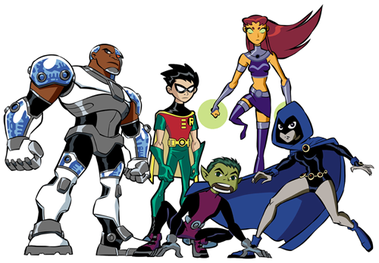
Another differently-timed prequel show is Cartoon Network’s Teen Titans, which ran initially from 2003-2007 and now transformed into Teen Titans Go! (2013-present). Some may simply say this show cannot exist with the others because it is animated. But it really is the timeline that sets Teen Titans and Teen Titans Go! apart from the other shows, like Gotham. With multiple timelines being explored in the TV universes, it makes sense for DC to keep everything separated. It is not possible for all these shows to take place at the same time and also correlate with the films.

DC can also cover all its bases by keeping TV and films in separate universes. It allows different shows or films to cover specific topics or time periods that may not make sense in the long run if everything was combined. DC also started on its expansive multiverse with TV when Smallville premiered in 2001. Trying to go from TV to film is very difficult, which is why Marvel presumably started with films and built TV shows around the films. Also, Batman and Superman are not allowed on TV shows anymore. DC will not explicitly say why this is the case, but without the two major kingpins of the universe on TV, there really is no potential to have one flowing universe.

The biggest reason to keep each universe separate is the different character styles. Some of the shows have darker stories, like Gotham, while others are lighter, like The Flash. With such an array of attitudes and stylistic differences on the shows, they would never exist in one world seamlessly. However, this does not mean that Stephen Amell’s darker turn on Oliver Queen/Green Arrow would not work well with Snyder’s darker spin on his The Justice League characters. So, there is potential for some characters to cross over eventually, but it remains highly unlikely.


WHY DC SHOULD STICK TO ONE UNIVERSE 


There are plenty of reasons as to why DC should stick to one, comprehensive universe like Marvel. First, DC has already dug a deep hole by constantly repeating the Batman and Superman franchises, and they’ll have to climb out it eventually if they want to succeed. Why continually reboot the franchises if events from previous films are thrown away and the stories start anew? Why not just continue with the story instead of starting over? Fans do not need to see the same origin story over and over again. It’s a waste of money for Warner Brothers to make the same film repeatedly. After a while, who wants to see that? If DC had smartly stuck to one, continuous line of action from the beginning, they would be much better off.

The continual confusion of which Batman or Superman is in each film can stump fans. For instance, which Batman will young Bruce Wayne grow up to be in Gotham? It has to make life harder to reinvent the characters every few years. This is actually one of the reasons why composer Hans Zimmer has left the franchise after composing the scores for The Dark Knight Trilogy, Man of Steel, and BvS. He could not use the same themes for Batman in BvS because it’s not the same character, which led him to dislike the new feel of the films and leave the franchise.

Also, DC throwing all their characters into one film just to play catch-up with Marvel — and then creating individual films — will cause even more confusion in the timeline. Will each film be specific as to when it takes place? If not, how are audiences supposed to follow the jumpy storylines? The biggest question is will each solo film take place before or after the events of The Justice League? There are too many questions surrounding DC’s process, which they have gone at all wrong. Even if they don’t want to completely emulate Marvel’s winning formula, they should take a page out of the Marvel handbook and do some solo films first, for the sake of backstory. Otherwise, Justice League Part 1 will inevitably be loaded with backstory and no action. How else do you explain who the characters are and where they came from? The safer approach would be to give the characters their rightful dues first before mashing them all together.

The biggest reason to stick to one universe is to make one big, happy DC family. The popularity of the DC TV shows proves that fans want more of this universe. If you have a bunch of popular shows, isn’t it a no-brainer to include those characters in the films? Apparently, the answer is no.

Let’s take a minute and look at the popularity of the TV shows. In the key demographic of ages 18-49, DC shows do very well. Supergirl averages a 1.72 rating (the percentage of all households with a TV watching the show as it airs) and 7.858 million viewers per episode in its freshman season. Both Supergirl and Gotham air in the same 8 PM timeslot on Monday nights. Gotham, in its second season, is averaging a 1.47 rating and 3.603 million viewers per episode. Gotham’s rating is down 32.78% from last season and the viewership is down 30.5%, which is no surprise since it airs against Supergirl. If one of these shows changed timeslots, both could potentially bring in better numbers.

The CW’s three series are also faring well. Arrow has an average 0.99 rating in its fourth season and 2.617 million viewers in its Wednesday 8 PM timeslot. These numbers are down 1.68% and 5.2% respectively from last season. The Flash boasts the best average rating of 1.4 and 3.603 million viewers in its second season. It has not dropped much either, only 2.76% and 6.18%, respectively. It airs Tuesdays at 8 p.m. DC’s Legends of Tomorrow has the lowest numbers. In its first season, the show averages a 0.94 rating and 2.479 million viewers, airing on Thursday nights at 8 PM.

If the TV shows were combined with the cinematic universe, DC would be able to practice a full-circle approach for their entire franchise, with the shows acting as the backstory and extended origins for most of the characters. That way, it wouldn’t be confusing when they appeared in a film. The combined universe would also allow for the same story to always be told. DC is going to have trouble with introducing a new version of The Flash to the films because both the films and TV show will reportedly have Barry Allen as The Flash. It would make more sense for Grant Gustin, who plays The Flash on TV, to be the film The Flash. Or, alternatively, the new film Flash should be one of the other countless Flashes from the past. This way, DC could keep an open mind and possibly combine both down the road.


Fans could also enjoy the DC universe much more if it was combined because it would all make sense. The shows could supplement the films, like Marvel currently does with Agents of S.H.I.E.L.D. How hard would it have been to have David Mazouz, who plays young Bruce Wayne on Gotham, portray young Bruce Wayne for a few minutes in BvS instead of someone random? This simple idea would have made more people happy by at least acknowledging the existence of the TV universe. Also, it is quite reasonable to assume that by adding popular TV characters into the films, like Stephen Amell’s Green Arrow, the films would subsequently gross more at the box office. The TV fans would, presumably, flock to theaters to see their favorite small screen heroes team up with the big guns. There is no way that this would end badly for DC, so why not give it a try?

DC is clearly looking for ways to solve their fastest growing problem since they’re re-shooting scenes from this summer’s feature Suicide Squad to give it a lighter, more fun feel. DC and Warner Brothers are starting to see the poor impact BvS is having on their universe, so why stop with the Suicide Squad re-shoots? Now is the time to start thinking about integrating TV and film characters together in order to reach the level of success DC is dreaming of. In the infamous words of The Joker, all I have to say about the DC cinematic universe is “Why so serious?”

Overall, DC should really start considering transforming their multiverse into a single universe. The DC cinematic universe is in real trouble if it continues down its current path. With tons of films lined up, Warner Brothers has a lot to gain or lose. Taking the safest route possible appears to be the best choice for now. DC should use its very popular TV shows to its advantage to set up the next stages of its large storylines, continue the crossovers, and then transpose this to the films. Even taking baby steps by changing Ezra Miller’s film version of The Flash into someone other than Barry Allen would be a step in the right direction, then maybe have Stephen Amell make a cameo appearance as Green Arrow in The Justice League to get more fans excited for future films. It will be interesting to see how the multiverse plays out over the next several years, but will DC actually become the film behemoth they want to be?

Monday, March 28, 2016

Batman v Superman: Dawn of Justice Features a Few Bright Spots... But Not Enough [Guest Poster: Jon]


There have never been two comic book characters more iconic than Batman and Superman.

For decades, these two titans have become iconic not only within the comic book industry, but also within all aspects of our world's media, from film to TV alike. Even these heroes' logos have become iconic, and instantly recognizable. Fans have been waiting for these two superheroes to meet up and/or fight in a feature film together for years, but were never given the opportunity.

Until now.

Batman v Superman: Dawn of Justice picks up two years after the events of Man of Steel. The world has recovered from the world engine, but they still question the actions of Superman (Henry Cavill). And Superman himself wonders whether or not he is doing the right thing as a hero. And there are many out there who don’t trust his unchecked power — chief among them, billionaire Bruce Wayne (Ben Affleck) who brutally fights crime as the vigilante Batman. Wayne has seen Superman’s power firsthand, and fears Superman will wipe out humanity if not kept in line. And who, might you ask, intends to keep him in line? Bruce Wayne.

But a bigger problem for both heroes looms in the form of Lex Luthor (Jesse Eisenberg), who has a plan to take them down permanently.

As you can see from the plot above, I am being as vague as humanly possible. This is due, of course, to not wanting to reveal spoilers for the highly-anticipated film, should you choose to see it.

After years of hype, one of the most anticipated superhero films of all time — if not THE most anticipated film — has finally arrived. Not only did this movie have a gigantic task of pitting two titans against each other, but it also faced the issue of establishing well an entire cinematic universe in order to catch up to Marvel's own. Does it succeed?

Yes... and no. While there is a lot in the film to enjoy, the film ultimately does suffer from pacing issues, plot holes the size of the Phantom Zone, and story elements that are fairly inane.

THE GOOD


Let’s begin with the positives, because there are a few. One of those positives is Ben Affleck. For anyone who feared this would turn out just like another Daredevil (or worse, Batman and Robin), those fears can be washed away. Affleck does a fantastic job as both Batman and Bruce Wayne.

Affleck brings a sobering and cynical take on Wayne/Batman. In addition to becoming disillusioned by what he’s seen, Wayne has witnessed the magnitude of what Superman is capable of, and he’s terrified by this. Affleck expertly conveys the desperation and lengths Wayne will go to in order to defend the world. He also handles the physicality of Batman extremely well. This may be one of the most vicious and brutal portrayals of the Dark Knight to date, with an excellent mix of car combat and hand-to-hand combat used.

The two other standouts are Gal Gadot and Jesse Eisenberg. While she only has a short amount of time in the film — and even shorter in costume as her superhero alter ego — Gadot makes a great first impression as Wonder Woman. Not only is she mysterious and elusive, but when she is in costume, she manages to convey the warrior side of her character incredibly well, delivering some of the most cheer-worthy moments of the film.

Eisenberg was the biggest surprise here, as he genuinely came across as creepy and a bit crazed. While Lex Luthor is usually calm and measured, Eisenberg’s performance is the complete opposite, which isn’t necessarily a bad thing. He’s slightly unhinged and a bit eccentric, the result of which is that his villain is more hyper than he is calm. Eisenberg looks to be having a blast in the film, chewing up scenery from start to finish.

THE... WELL, NOT GOOD.


Unfortunately, Henry Cavil takes a backseat in his own movie, as he isn’t really given a lot to do here. While Superman is given some development — as the source of his inner conflict is whether or not he’s doing the right thing — we already got to know this iteration of Superman in Man of Steel, and on a deeper and more intimate level, no less. Therefore we already know this version of the character and what he’s agonizing over, internally.

And as much as there is a bit in this film that I genuinely enjoyed, there’s also quite a lot I did NOT enjoy. For one thing, the pacing is all over the place. Throughout the film, I wasn’t sure whether the plot was supposed to slow down, move at a brisker pace, make me feel a certain emotion, etc. This could be due to the film having to balance so many new plot threads and characters, but the pacing (and, in turn, editing) was all over the place.

In addition, the film has plot holes and problems that are wider than the entire Phantom Zone. For example, Lex’s plan makes zero sense. He first wants to expose Superman as a fraud and turn the public against him... and then suddenly switches courses and wants to kill him. Wouldn’t “exposing” him be simply enough? And some other plot points are also pretty lame, never really making any sense within the context of the film. Examples of this include the reason WHY Superman and Batman even fight in the first place, why Batman and Superman eventually stop fighting, and the end result of the battle against Doomsday.

Finally, speaking of the fight itself, the big showdown between the two heroes does not really occur until two hours into the film. The vast majority of the film is simply a set-up, then, as it serves launch both the Justice League film as well as the DC Extended Universe (its official title). Admittedly, some of the set-up involved is pretty cool and interesting to watch, as it offers some intriguing insight into what the DCEU may contain.

Overall, is Batman v. Superman: Dawn of Justice a bad movie? No. There’s a good amount to like here, with a commanding presence in Affleck and standout performances from Gadot, Eisenberg, and even Jeremy Irons. The film’s final half-hour is also impressive.

However, is this one of the greatest superhero movies ever made? Not even close. The film ultimately suffers from pacing issues, ridiculous moments, and massive plot holes. We can hope that the Wonder Woman film and the Batman film directed by Batfleck himself redirect this franchise onto a quality course for greatness.