Ted Lasso, Rom-Coms, and Emotional Vulnerability

Why is it important that a show about men who play soccer did a rom-com homage?

Dickinson Behind-the-Scenes: An Interview With the Artisans

Meet the artists who brought the Apple TV+ series to life!

If You Like This, Watch That

Looking for a new TV series to watch? We recommend them based on your preference for musicals, ensemble shows, mysteries, and more!

Showing posts with label American Crime Story. Show all posts

Wednesday, April 6, 2016

The People v. O.J. Simpson: American Crime Story 1x10 Review: “The Verdict” (It’s Over) [Contributor: Rae Nudson]


“The Verdict”
Original Airdate: April 5, 2016

Two people are dead, the country has been overtaken by months and months of trial, and all of it was over after just four hours of jury deliberation. Actually, it takes an hour to fill out the forms and probably they took a break for lunch, so deliberations were even less than four hours. As Bob Shapiro said, this jury talked about this case less than anybody in America. Much like Chris, I need a minute to recover after all of this.

The show did an excellent job setting up the verdict to be as tense as it would be if I didn’t know how it was going to go. By showing everyone slowly and painstakingly prepare for court that day, it both drew the viewer into the preparations and prolonged the inevitable.

THE PROSECUTION 


Marcia and Chris have done all the preparing they can, and now it’s time to finally give the last word on the case that has taken over both their lives. (Of course, it will never be the last word; this case will always be looming over them.) Gil Garcetti needlessly tells Marcia that she needs to nail it today -- I think she knows that, Gil -- and then Chris and Marcia head into the lion’s den.

Similar to when Chris and Johnnie had their N-word debate, as Chris and Marcia were both making their closing statements, I found myself following along and agreeing. I did cringe a little when Marcia pulled out a complicated pyramid, full of timelines and images, because I knew that the defense’s statements wouldn’t need any kind of diagram. But then Johnnie started talking, and it was all over. The prosecution had all the evidence, but they were never able to turn that into a crystal clear narrative. No amount of posters can change that.

THE DEFENSE


Johnnie prepares for closing statements by taking out his oft-used legal pad and beginning to jot down catchy turns of phrase to try to make one last big impact with the jury. As he’s working out phrases about O.J.’s gloves, the camera cuts away right as you can see things begin to click. You know what he’s going to say, so we don’t even need to hear him say it. And keeping it back from the viewer until he’s in front of the jury gives it even more power when he finally does say, three times, “If the glove doesn’t fit, you must acquit.”

Ultimately, that phrase and Johnnie’s booming voice is what sticks with the jurors -- not Marcia’s facts and figures. All of Johnnie’s charades and showmanship worked and has left the jury with plenty of reasonable doubt. It seems like turning the courtroom into a circus worked after all.

THE VERDICT


Raise your hand if you couldn’t wait to see how the jurors voted in the first round of voting guilty or not guilty? Even though I knew what their final decision would be, and how quickly it would come, I wanted to see what their first impression was so bad. I shouldn’t have even wondered though: Johnnie was right. In their straw poll to see where everyone stood, it was 10 votes of not guilty to two votes of guilty.

But one of the guilty votes was the juror nicknamed the Demon, and she was known for swinging a jury before. (See how I was hoping again, even though I know the facts? Johnnie’s strategy of making a story more powerful than the truth is even working on me.) The Demon doesn’t argue -- or if she does, it’s not for long. The jury decides that even if they think he did it, the prosecution didn’t prove it. They decide to vote O.J. Simpson not guilty.

I knew it would go this way, but still I can’t believe it. I can’t believe that they didn’t even sleep on it before deciding to acquit someone accused of killing two people. Do you think any of them regret their decision? Wish it went differently, even if they came to the same verdict? I don’t know how they couldn’t. Part of me thinks that the months and months of trials and indignities wore them down and they just wanted to get it over with.

After the jury came to their decision, the next step was telling the world. Right when the people involved with the case expected to get a break from the trial that took over their lives, they were called to come back into court to hear the verdict.

Upon hearing this news, Judge Ito swore loudly on the phone, Johnnie called in bodyguards, and Chris sat quietly steeling himself. Having the verdict come later that same day didn’t give anyone time to cool off or compose themselves -- it just shoved them right back into the hell they thought they had escaped. Tensions are high, and hopes are higher. Both sides think that they have a shot, and when Chris says out loud “What if we win?,” it was heartbreaking, not heartening.

The show has routinely cut back and forth between the prosecution and defense to show them reacting to the same events, and it took this visual trick a step further during the verdict by using a split screen. I wasn’t sure where to look -- every face was celebrating or despondent, relieved or broken, and no one’s reaction made me feel any better about the outcome. It was entirely overwhelming, which is probably how everyone involved with the trial also felt.

THE AFTERMATH


Bobby Kardashian was especially heartbreaking to watch. He looked like was an empty shell all episode, and no wonder after months of moral quandary. He stumbled out of the courtroom, as everyone else was rushing off to make a new deadline, and he immediately became physically ill. His worldview is shattered, his relationship with his best friend is beyond repair, and his family has been torn apart. Bobby’s journey from helpful friend to empty husk epitomizes the toll the trial took on everyone.

Also heartbreaking were the Goldmans, and Marcia and Chris picking up the pieces of their shattered lives. Chris is ready to resign, and he can’t even get through a press conference without breaking down and hugging the Goldmans. “What do we do now?” is the question on everyone’s lips, but there are no easy answers.

O.J. has a party -- that’s how he moves on. (The amount of champagne and confetti after a murder trial where no killer was held to justice made me feel very squeamish.) Johnnie gets noticed by the president, who spoke on racism in America, and to Johnnie, that made the trial worth it. (Do you think he had any regrets, later on?) People flock to the streets to celebrate O.J., and Marcia and Chris turn off the lights and walk away from the courtroom for the last time. (Marcia never prosecuted another trial.)

The verdict has been given, but America is still not over the trial of the century -- it wasn’t that day and it isn’t 20 years later. The consequences are still being dissected and analyzed, and Americans are still dealing with the repercussions. And still, no one has been found guilty of killing Ron and Nicole.

Notes from the case file:
  • Not that I wanted People v. O.J. Simpson to end early, but in my opinion the scene of Chris and Marcia leaving and turning out the lights would have been a pretty perfect closing scene. 
  • “I’d like to help bring you back into the community.” “I’ve never left.” That scene of Johnnie and Chris meeting in the hallway after the trial was so good. 
  • I love the way they cut real news coverage into the show. Oprah! Barbara Walters! 
  • “What if nothing happens?“ “Then call me in a month to say hi.” This exchange between Marcia and Chris was unreal. And then Chris’ face as the elevator closed, oh my goodness.
  • When Marcia cries, I cry.
  • I love “where are they now” montages and was very pleased with the one at the end of this episode. I also am glad they ended with images of Nicole and Ron.
  • It has been a pleasure writing these reviews and watching this show. Now it’s your turn, what did you guys think?

Thursday, March 31, 2016

The People v. O.J. Simpson: American Crime Story 1x09 Review: “Manna From Heaven" (Under Pressure) [Contributor: Rae Nudson]


“Manna From Heaven"
Original Airdate: March 29, 2016

Well, I could use an ice cream cone and a hug after watching that episode. In an emotionally draining and tense hour, The People v. O.J. Simpson showed how the people involved with the trial — and the trial itself — began to break under the pressure.

THE DEFENSE


Johnnie’s investigator finds that there are tapes from an interview with Mark Furhman where he says the N-word, along with tales of police corruption, sexism, and violence. And on top of all that, he insults Judge Ito’s wife.

The defense is thrilled. Johnnie wants to show the court and the public the racism that black people deal with every day, and F. Lee Bailey wants to nail Mark for perjury. (Remember, Bailey was the one who set this up when he asked Mark if he’d ever used the N word and Mark denied it under oath.) But to get the tapes, the team has to go to North Carolina and request that the subpoena be upheld.

Unfortunately, the judge is not impressed with Johnnie’s grandstanding. And, as Bailey puts it, Johnnie may not play as well in a Carolina court. So Bailey steps in, using words as sugary as a sweet iced tea, and the team gets access to the tapes.

These tapes act as a tipping point that shoves this trial from a circus to pandemonium. The focus has shifted entirely from accused murderer O.J. Simpson to accused corrupt cop Mark Furhman. Nicole Simpson and Ron Goldman are hardly mentioned at all.

The Goldman family in the background of so many scenes serves as a literal reminder of the victims becoming lost details, rather than the main focus of this trial. Actually, much of what’s important get placed in the background of the frame during the episode. When Bailey is presenting to the court in North Carolina, the camera shows Johnnie’s face in the background, slightly incredulous while watching Bailey do his own version of grandstanding, which includes talking up the importance of the judges and the fairness of the South — the same court that seemed like it wasn’t giving Johnnie a fair chance because his skin was too dark. Just like what’s happening in the courtroom in L.A., truth and justice gets pushed to the back and a narrative that that furthers an agenda comes to the forefront.

Both the prosecution and the defense mine the tapes for information they can use in the trial, and once again the device of cutting back and forth between the two teams as they grapple with the same event is effective. The depth of violence on the tapes is harrowing to listen to in just the hour-long episode, much less listening to all 13 hours of the tapes as they did in reality. The show repeats the N-word over and over, and focuses on it in writing over and over, and it slowly wore me down each time. It’s brutal, but the repetition worked to make me feel exhausted and defeated, just like the people going through the trial.

Also effective was the way the show handled the protests outside the courtroom. Protesters chanted “no justice, no peace” — certainly a mantra for the way this trial was handled — over and over, just as the N-word is repeated over and over. And as the camera cut from the protestors to the courtroom, the chants of “no peace” echoed and lingered as court proceedings began.

THE PROSECUTION


Marcia has been walking around in a stupor for weeks, all of her bravado gone. With the admittance of the tapes to the trial, she and Chris start to truly lose it. Chris starts yelling at the judge, at Johnnie, at anyone who has been complicit in turning this case into the chaotic mess it is. And in a beautiful move of solidarity, when the judge threatens to hold Chris in contempt if he doesn’t get it together, Marcia joins in the fracas and almost gets herself held in contempt as well.

The frustration Chris is feeling comes out later in an excellent scene in an elevator with Marcia. Slamming his briefcase to the ground, he says that he told Marcia not to include Mark Furhman. “You put me on this trial because you wanted a black face,” he says. “But the truth is you never wanted a black voice.”

He is right to be angry, and he is right in what he says. Marcia didn’t listen to Chris when she should have, and now they are in a position they know they can’t recover from. They’ve lost control of the narrative, and therefore of the trial.

Later, when the two are alone in the office, they apologize. Marcia for not listening to Chris about Mark, and Chris for not listening to Marcia about the gloves. They shake hands, holding on for a little too long, and I start yelling “Kiss! Kiss!” at the TV yet again.

THE WITNESS


After all of this planning, grandstanding, and discussion, Mark Furhman finally takes the stand again. Chris is so frustrated he walks out of the courtroom. Johnnie questions him, but Mark answers every single question by pleading the Fifth Amendment. In a brilliant move, Johnnie then asks if Mark Furhman planted any evidence in the O.J. Simpson case, knowing that no matter how he answers this, Mark will give something away. And, once again, Mark pleads the Fifth.

This is great TV, y’all. It was intense, it investigates so many themes of racism, sexism, truth, fame, justice, all of which America is still grappling with in much of the same ways 20 years later. That it is also based on a true story makes it both better and worse to watch. Watching this reinterpretation of this real-life event has given me a greater understanding of America and has given me more context for issues we face today. (It sounds cheesy, but it’s true!) But knowing the pain and violence is very real makes it stomach churning to consume.

I’ll see you next week for the verdict.

Notes from the case file:
  • I can’t believe we are going to go this entire series without ever seeing Marcia and Chris kiss. This is so unfair.
  • When Judge Ito is saying that women in a male-dominated profession are tougher than most, Marcia’s face is heartbreaking. Emmys for everyone! 
  • In real life, I read that Judge Ito’s sexist behavior toward Marcia was so blatant that people intervened and showed him a tape of how he acted toward her versus how he acted toward men. After he saw the tape, his actions got better. For a few weeks.
  • I cannot overstate how great the acting is on this show. Every week it seems like it gets better and better.
  • Thank goodness Marcia got primary custody of her kids. She badly needed a win.
  • That last scene of Marcia standing in her office made it look like she was standing in a cage. Which, of course, she is.

Saturday, March 26, 2016

The People v. O.J. Simpson: American Crime Story 1x08 Review: "A Jury in Jail" (A Gamble) [Contributor: Rae Nudson]


"A Jury in Jail"
Original Airdate: March 22, 2016

Just as previous episodes focused on showing the complexity of cultural figures like Johnnie Cochran and Marcia Clark, People v. O.J. Simpson has now turned its focus to the jury in another strong episode. Through smart cuts and flashbacks, the episode shows how excited people settling in for a fun hotel stay transform into a stir-crazy group that’s beginning to lose it.

THE JURY


I hadn’t thought much about the jury throughout this show since the show has been focused so much on the teams of lawyers. But being on a sequestered jury for this trial would be an insane experience. I mean, I can’t keep a secret for 24 hours, much less for eight months and/or the rest of my life. In the microcosm of the jury, the show hits on so many of its themes: fame, racism, sexism, power, truth, and lies.

Early on in the episode, O.J. played a low-stakes game of poker (they bet using Skittles) with three of his friends. O.J., of course, bets it all on a bluff — just like he’s trying to bluff the judge and jury.

Marcia and Johnnie, however, play a game of high-stakes poker in the courtroom as they figure out ways to dismiss jurors and get someone new who would potentially vote their way. Both the prosecution and defense systematically investigate each juror to find if there is anything in their past that would make them eligible to be dismissed. Of course, it looks like they are more concerned with drafting a fantasy jury than upholding justice. So many jurors were dismissed that I couldn’t even keep track, and before they knew it, they were left with only four alternates. Judge Ito takes control — so you know it’s serious — but it ends in disaster. With the compassion of a snail (actually, that might not be fair to snails), Ito calls each juror into his office, referring to them only by their numbers, to ask them questions about themselves and the sequester.

One juror claims that the guards are treating the black jurors as second-class citizens, so Ito cycles out the guards for new ones. But this is the tipping point for some of the other jurors, and one woman organizes a protest. With most of the jury, but not all, wearing all black, they refuse to come into the courtroom when summoned.

Even though the people on the jury have the power to decide the verdict, they have almost no power anywhere else. They can’t talk about the case — even to each other — they can’t eat without being watched, they can’t watch TV, or read the whole newspaper, or communicate with their families. Jury members get removed and added with no explanation to the jury, and when they walk to Judge Ito’s office, it’s like they are walking the plank. So they protest in the ways they can: by wearing all black and delaying court proceedings.

Everyone in the courtroom is performing on behalf of the jury — the jury that has to decide the fate of the man on trial. But no one is thinking of the jury as human, only as an entity to be won over. Judge Ito can’t even remember to call jury members by their names, not even if they are crying in his office.

This denial of humanity is also happening when it comes to the murder victims. When the jurors come in wearing all black, F. Lee Bailey responds by saying “Someone better be dead.” But two people are dead — that’s why this trial is happening in the first place. But all of that gets overlooked for the O.J. show.

THE DEFENSE


Bobby Kardashian is having the hardest time reconciling the facts with the image of “Uncle Juice.” After listening to dry, but overwhelming, DNA testimony, O.J.’s friends realize that most of the evidence is pointing to him as a killer. They even stop coming to poker night. The only steadfast presence is Bobby, and that’s only because he knows that leaving the trial now would cause an uproar for himself, his family, and O.J. Bobby’s face is stricken as he begins to connect the dots that maybe the police didn’t plant all the blood after all. And maybe O.J. isn’t as charming as he previously seemed to be.

I really feel for golden retriever Bobby Kardashian, and the scene where he confessed to Kris that he knows he got them into this and he is sorry was heartbreaking. I can’t imagine thinking you know someone for 20 years, and then coming to terms with them doing the unimaginable, all on top of creating a living nightmare for yourself and your family in a trial and in the media. Bobby is one person throughout this entire debacle who holds onto a sense of morality. Even Marcia descends to playing dirty with the jury, even though she thinks she’s doing it for the greater good. Bobby knows that if he leaves now it would look like O.J. is guilty, and he can’t be responsible for convicting his friend. What a horrible spot to be in.

Bob Shapiro and Johnny seem to have made up over his glove idea last week, and the rest of the defense is humming along nicely. Way nicer than the prosecution, in fact.

THE PROSECUTION


I love the cuts between the defense and prosecution reacting to the same events. The defense is singing and pouring champagne after O.J. tries on gloves, while the prosecution is yelling and slamming doors. But the way both teams went after changing the makeup of the jury showed that they weren’t so different after all: both teams were planning and nitpicking to the umpteenth degree to get the jurors that they wanted. Marcia claims that playing dirty is Johnnie’s game, but it seems like, for a while, she gets down in the dirt with him. At least, until they tentatively call a truce, with a coffee and a small nod.

Notes from the case file:
  • Sorry this review is late, y’all, I was on vacation. But I’m back for the last few episodes of season one.
  • Look, I love staying at hotels — that’s part of the reason I wanted to go on vacation in the first place — but staying in a hotel where you can’t leave your room, talk to other guests, watch TV, talk to your family, or use the pool sounds more like staying in a jail cell that is just better furnished.
  • Even the choice of what to watch on the group television was racially divided. “What is a Seinfeld?” 
  • Marcia’s face when F. Lee Bailey said it wasn’t technically rape in 1988, between husband and wife.
  • “Somehow I think if the defendant were white, we’d be having a different conversation right now.” Judge Ito isn’t wrong.
  • “Toughen up Cochran, this is a smokers’ lounge. Daycare is on the first floor.” ZING.
  • “It just gets curiouser and curiouser.” 
  • Did anyone else get 12 Angry Men vibes from this episode?
  • Next week, get ready for the wild ride of racist cop Mark Furhman.

Wednesday, March 16, 2016

The People v. O.J. Simpson: American Crime Story 1x07 Review: “Conspiracy Theories” (Big Mistake) [Contributor: Rae Nudson]


“Conspiracy Theories”
Original Airdate: March 15, 2016

Just when everything looks like it’s going well for the prosecution, it all falls apart. Not only do Marcia and Chris look like they are going to get it on, but they have a rock-solid argument to present in court. Everything’s coming up Marcia! Until it’s not.

THE PROSECUTION


Marcia enters the courtroom with straight hair and a don’t-mess-with-me attitude. She seems like she is back on track and tells boss Gil Garcetti to never mention her hair again, ever. It’s a telling scene when Marcia hides out in between two signs for the men’s restroom and waits for Johnnie Cochran to enter court that day, hoping to see him lambasted by the same press that skewered her last week. Of course, he is left relatively unscathed. Even when she is hiding, Marcia can’t escape men, or sexism.

But she tries to escape anyway and sets up a much-needed break with her dreamboat prosecution partner Chris. When they arrive at Chris’ childhood friend’s birthday party, Marcia is able to let her hair down (metaphorically of course, she is not about to mess up that blow out). When a friend of Chris’ claims he believes the police set up O.J., Chris lets Marcia shine as she uses shot glasses to expertly illustrate just how ludicrous that claim is. The men are impressed, which should be no surprise because Marcia has spent her entire professional life impressing men so that she could do her job. It was so nice to see Chris’ friends accept Marcia and let her have a good night. It says a lot about Chris that he surrounds himself with such kind people, and, man, did Marcia need a good time with nice people.

Chris’ boys build him up and say that if he wants to get with Marcia, the time is right. I agree! Marcia agrees! Chris probably agrees deep down in his heart! But he doesn’t follow through. Instead, Chris walks Marcia to her hotel room door, stands with her in an incredibly sexually charged moment, and then says goodnight and walks away.

Okay, I’ve been thinking a lot about Chris and Marcia. I have been shipping them because I want Marcia to have some happiness in her increasingly stressed-out life, but upon listening to smart people and thinking things over again, I have some caveats. Why is it that when Marcia was at her lowest, when she was vulnerable, when she had pressure coming from every part of her life, Chris felt like it was an okay time to flirt with her? And then why is it that when she was doing better, feeling stronger, and showing off how good she was at her job, he pulled back? Likely, Chris does have some feelings for Marcia but is afraid to get involved with someone — who happens to be his boss — during a trial that has the most media scrutiny in American history. And he’s not wrong. It would be an objectively bad idea that could ruin their careers. But it’s not exactly fair to Marcia, either, to move in on her when she is most vulnerable and then walk away when she is strong. Like I said, no matter where Marcia goes, she can’t escape the effects of sexism.

Not that Chris is doing this on purpose — he seems like a kind person — but he did find it acceptable to dance and schmooze and drink when Marcia was one hair pin away from a breakdown, and maybe that shouldn’t be given a total pass.

Speaking of things that should not be given a pass, how about his performance in the courtroom. The prosecution team found hard evidence that Nicole and O.J. owned gloves exactly like the ones found at the murder scene, and Marcia is convinced that the gloves will give them their conviction. Chris thinks that they should ask O.J. to put on the gloves in court so that the jury can see they fit his hands. Having that visual confirmation in front of the jury would be a homerun, according to Chris, but Marcia smartly refuses to do anything in court when she can’t guarantee the outcome. And making the defendant responsible for one of the displays of evidence that could put him away for murder is not exactly something she can control the outcome for.

The defense came up with this same idea, only they want to do it to prove the gloves don’t fit O.J. At first, Johnnie also says this is a bad idea for the same reason that Marcia does, but because Bob Shapiro tried on the gloves — in the middle of the courtroom using his bare hands, which most certainly should not be allowed — they are confident that the gloves are too small for O.J.’s hands, which are bigger than Shapiro’s. But they know it won’t work if the defense proposes this is in court because Marcia would object, so they get Chris to bring it up.

They play him like a fiddle. They know exactly what to say and exactly how to act to push all of Chris’ buttons. So Chris ignores Marcia’s direct orders and suggests that O.J. try on the gloves.

As we all know, the gloves don’t fit. O.J. hams it up, making faces and huffing and puffing as he tries in vain to pull the gloves on. Shapiro and Johnnie celebrate their move, high fiving under a table as the family of Ron Goldman looks on. Their celebration right in front of the grieving family’s horrified faces provide a contrast that encapsulates so much of what this show it about: the humanity just under the surface of what turns into a show.

Chris messed up. And they won’t be able to fix it. At the end of this harrowing day, Chris sits in his office, alone, without Marcia, and calls the Goldmans to apologize. But it’s too little too late.

THE DEFENSE


Bob Shapiro and Johnnie’s cold war is not going unnoticed by their client. Using various football analogies, O.J. tells Shapiro to get it together or he’s going to get cut from the team. And get it together he does. While I don’t believe Shapiro has O.J.’s best interests at heart, he has been the one to come up with the defense’s best plays when they need it the most. He set up the police conspiracy theory, and it’s his idea to get O.J. to try on the gloves in court. Temporarily, this brings him and Johnnie together despite their differences, but we’ll see if it really lasts.

Johnnie’s past gets outed as tabloids get wind that he had a secret life when he was with his ex. Johnnie thinks he shut it down when he addressed the press, but his wife knows better. Once the toothpaste is out of the tube, you can never get it back in. All of this is addressing one of the series’ larger themes of fame, and how it can build you up and destroy you. Johnnie wanted the fame and the power that comes with it, but fame is always coming for you, like a monster in a horror movie. It’s right there, behind you and breathing down your neck.

Meanwhile, Bobby Kardashian is having a crisis of conscience. It doesn’t make sense to him how blood could be all over O.J.’s bronco, and he doesn’t understand why, if O.J. didn’t do it, no one is looking for the actual killer. There is more information on this case and on the victims than ever before, but still no one can find an answer that doesn’t include O.J.

The show claims that it isn’t taking a stance on if O.J. really did it, but when they lay it all out there, one can’t help but feel a bit like Bobby. If not O.J., then who?

Notes from the case file:
  • I was feeling tense about Bobby opening the garment bag even though I knew there was nothing in it. This show is great at building atmosphere.
  • “Is this an AA meeting or is someone going to buy me a drink?” 
  • Chris and Marcia’s shared looks at the bar destroyed me. 
  • DARDEN YOU BLEW IT BIG TIME.

Wednesday, March 9, 2016

The People v. O.J. Simpson: American Crime Story 1x06 Review: "Marcia, Marcia, Marcia" (Who’s That Lady) [Contributor: Rae Nudson]


"Marcia, Marcia, Marcia"
Original Airdate: March 8, 2016

Wow, do I have a lot of feelings after watching this episode. I have feelings about hair, putting up with jabs at work, the unfairness of going through life as a woman, and about Chris Darden being adorable. (Don’t lie, you do, too.)

LADIES...


Sarah Paulson does an amazing job in this episode that centers on Marcia Clark as she navigates being a woman and doing her job. That’s it. That’s all Marcia is guilty of: being a woman and doing her job. But at every turn Marcia is punished. She is punished for having children, for having been married, for now not being married, for having hair, for going on a vacation with her husband, for having her period, for having a voice and a body and using them. In the same breath her boss tells Marcia the media is sexist and unacceptable, he also tells her — in front of everyone else in her office — to maybe look into getting a consultant for her image. He does it in a way that sounds like it’s being supportive, and in a way he can deny he meant anything about it other than what’s good for Marcia, but Marcia knows, and I know, that he is demeaning her the exact same way that everybody else is.

Because Marcia is human, she feels every jab, every snide comment that can be disguised as something else, every interruption, every backhanded compliment, every harsh look. And even on good days, all of that can wear you down. On bad days, it can break you.

Part of what is so hard about dealing with sexism is wondering if what someone said is really sexist, or if you, an emotional woman, are overreacting. (Note: That is what they want you to think.) This episode did a great job of focusing on the effects of sexist actions without bothering to debate if they were sexist or not. By showing Marcia’s reactions and her pain, and focusing on her lived experience, it showed how sexism can hurt every aspect of someone’s life.

The standout scene was when Marcia got her hair cut. Like so many other women, she decided to get a haircut to make herself feel better and maybe stave off some criticisms about her appearance. (Note: It will never work, they will always find something to criticize.) She felt great about it — you could see it in her walk and in her face. That is, she felt great about it until she walked into court and saw gaping mouths and heard laughter. You could see every expression on Marcia’s face as she cycled through pride, doubt, pain, embarrassment, and then shame. She broke my heart without saying a word. Sarah Paulson was incredible the entire episode, but this moment was just outstanding.

On top of feeling worthless because tabloids made her bad hair day front page news, Marcia is going through a divorce, and her ex-husband is using the press to belittle her. Both of her ex-husbands, actually. One is twisting her childcare decisions to make it look like she is using her children as pawns in a court case, and her other ex is leaking nude photos of her that they took while they were on vacation. Both men — men she married, men she trusted, one of whom is also taking care of her — are using the media and conceptions of what women “should be” to break down Marcia as a person.

Let’s talk about those nude photos. Marcia was married at the time and on vacation, maybe even at a nude beach. As a married woman, presumably sometimes she gets naked with her husband — that fact should not be shocking. But now pictures of her are in the press without her permission at the worst possible time for her professionally. She has no agency in that decision; he saw an opportunity to remind her that she is nothing, and he took it.

This seems especially timely since Kim Kardashian West released her own nude photos this week, which created quite a kerfuffle. Kim had all the agency in that decision. She decided on the photo, had control of any production work on it, and she released it herself. Kim is also a married woman with children. But Kim made a decision herself about her image and her body; Marcia was left out of all the decisionmaking. Both women were still criticized.

There is no winning if you’re a woman, no matter what you do. Marcia felt that at every turn. Luckily, she had one person in her corner — the adorable Chris Darden.

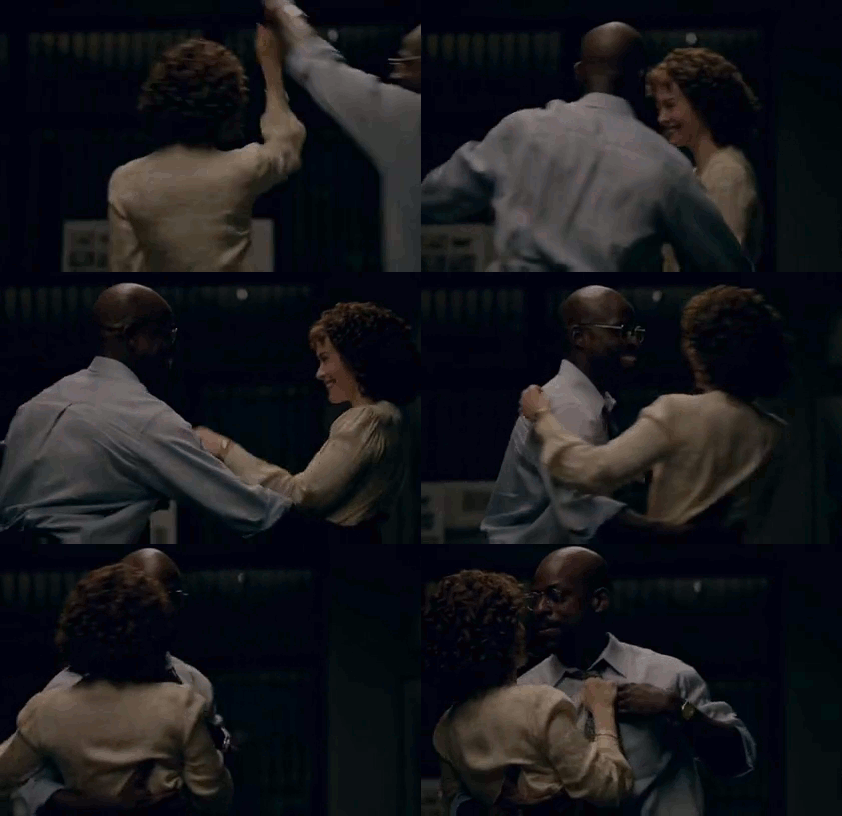
Chris was wonderful to Marcia this week and is definitely feeling her and her haircut. His note to Marcia that her hair was fantastic was so kind, and his insistence they take a dance break was sweet. I’m shipping it, even though a romance on the prosecution team is not exactly appropriate. Screw it, Marcia doesn’t get any points for being appropriate, so she might as well get some. Chris supports Marcia when everyone else around her is tearing her down. No one else in Marcia’s life was there for her when the pressure finally got to her and she cried in the dark in her office. Both Chris and Marcia respect each other and fight for each other. That is invaluable, especially since they can’t get support anywhere else. Their relationship is formed in fire, and it’s touching to see that amid so much turmoil.


... AND GENTLEMEN


Johnnie is still a shark, and this episode showed him be even more cutthroat than before. Based on some Googling, it looks like Johnnie was actually accused of domestic abuse by his ex-wife, but he has denied it. She also accused him of manipulating women with money. The show took these accusations and ran with them in a scene that fits with what we know of Johnnie. I watched in horror as he called his ex-wife and offered her the profits from selling his home so that she would stay quiet to the press.

Johnnie also showed he was a master manipulator when he was laughing and talking with the cop before he took the stand. In casual conversation, Johnnie got the cop to lower his guard and let it slip where he lived, before realizing that Johnnie was just buttering him up to get information. When it came out that this cop lived in the same town as the Rodney King beating, and that the cop kept O.J.’s shoes with him all night before logging them into evidence, doubt about the LAPD began to grow, which is exactly what Johnnie wanted. Johnnie will do anything to win, and his ethics get hard to pin down when it comes to serving his client.

Bob Shapiro is still blustering about. His attitude is almost the opposite of Johnnie — he’s all hot air where Johnnie is cold as ice. I feel like Bob won’t be able to take much more of being ignored and dismissed. He’s used to thinking himself as the big dog, but everyone knows he’s not.

Watching the men do their macho act on the defense team was a great foil to what Marcia was going through as a woman on the prosecution. Each team is affected by expectations for gender roles, and the men get to use those expectations to their advantage. Being a big dog generally helps men, whereas it just gets women labeled too domineering and intense.

Notes from the case file:
  • “I vote babe.”
  • Marcia and Chris dancing gives me heart eyes for days.
  • The performances this week are all unreal. Props to Sarah Paulson, Sterling K. Brown, and Courtney B. Vance.
  • I really love this show! I related to Marcia so much during this episode and can think of so many times where I felt the same way in my workplace. 
  • Don’t forget to read Marcia’s excellent interview in Vulture that highlights what’s true and what’s not about this episode. In that interview, Marcia says that her boss, Gil Garcetti, was actually very kind and supportive about the media skewering her image and that he very quietly helped her get new suits to wear in court. The “very quietly” part is a key difference from the show. 

Wednesday, March 2, 2016

The People v. O.J. Simpson: American Crime Story 1x05 Review: “The Race Card” (Don’t Hate the Player, Hate the Game) [Contributor: Rae Nudson]


“The Race Card”
Original Airdate: March 1, 2016

The opening and closing scenes of this episode are two different powerful images of racism. The opening flashes back to when Johnnie Cochran was an assistant district attorney and was pulled over for the third time in one week. Before the cop knows who he is, he asks Johnnie to get out of the car and handcuffs him in front of white passersby and his two young daughters in the backseat. The cop says he was pulled over for not using a turn signal to switch lanes, but Johnnie knows better. The end of the episode shows problematic witness (which is, uh, quite the understatement) Mark Furhman cleaning the case holding his World War II memorabilia (“WWII memorabilia” is often code for “Nazi stuff,” right?). As he shines the case enclosing a medal with a swastika on it, Mark looks on in reverence, his hands slowly caressing the glass. These are the perfect bookends to an episode that looks at the state using its power to persecute.

At least, that’s the narrative that Johnnie Cochran is going with: that the police and the state are racist institutions and they zeroed in on O.J. as the murderer because he is black. Johnnie knows that it’s not evidence that will win this case – if that were true they wouldn’t have a chance. Instead, a strong narrative will win. And it looks like Johnnie is a master storyteller.

You can see Johnnie’s skills when he schools Chris Darden in a debate over using the N-word in court in a pivotal scene. Darden was up first to address Judge Ito. He claimed that if they put Mark Furhman on the stand, the defense would unnecessarily bring up Furhman’s past use of the N-word to make it look like he is a racist cop. (Spoiler: he is actually a racist cop.) Darden said that because the N-word automatically brings up so many emotions, it can effectively blind people to what else is being said. As he was speaking, I found myself following along. Sure, I thought, that makes sense.

And then Johnnie started speaking. With the cadence of a preacher, Johnnie delivered a sermon. Black people live with offensive words and treatment every day, he said, and to pretend they couldn’t see the truth because someone said a word they hear all too often was outrageous. “Who are any of us to testify as an expert on what words black people can or cannot handle?” he said. “Your honor, across America, believe you me, African Americans are offended at this very moment. And so, for a friend I deeply respect, I would say this is outlandish, unfortunate, and unwarranted.”

This scene is incredible, and both Courtney B. Vance and Sterling K. Brown, who play Johnnie and Chris, respectively, mesmerize as they make their cases. Vance is truly exceptional as Johnnie Cochran and plays him with such depth. Brown’s Chris Darden is more understated but equally powerful. You can clearly see the conflict within him as he tries to navigate going up against his former mentor in court and being the only black man on a team he believes is fighting for the truth.

Both men have points in their N-word debate, but Johnnie is better at making his. And because of this, Johnnie has the support of his church and his community while Chris Darden is ostracized. Their divide highlights what we already know: Nothing about this system is fair. At the same time that Johnnie Cochran defended looking into Mark Furhman’s past, his team tried to get O.J.’s past excluded from the trial. Yes, O.J. has a long history of domestic abuse toward the murder victim, but they claimed that this was a murder trial, not a domestic abuse trial. (Are your eyes starting to bug out of your head, yet? Because mine are.)

Johnnie also had the sense to “redecorate” O.J.’s house before the jury toured the crime scenes. Johnnie brought in his own artwork to replace all the naked pictures of O.J.’s girlfriend with pictures of O.J.’s mother and pictures of someone else’s more respectable-looking family. He also had Nicole’s house cleared out of all her furniture and things to erase any trace of her as a person and mother. Nicole and O.J.’s houses are changed so much, there doesn’t seem to be a point to the jury touring the crime scene at all. Why bother seeing it if it didn’t look anything like it did when the crime occurred? (Because Johnnie is setting up a good story, that’s why.)

The system is definitely broken, but Johnnie has learned to work the system so that he gets what he wants. And Johnnie doesn’t want to be respectful; he wants to win – and he specifically wants to win for black men. Who could blame him, really, for not playing fair? In another powerful scene, Johnnie purposefully mentions witnesses in his opening statement that he knows his team has forgotten to turn over to the prosecution. Rightfully so, the prosecution interrupts his opening statements to let the judge know of this misstep. Prosecutor Bill Hodgman gets so worked up that he has a heart attack right there in the courtroom. (This was definitely embellished for the show, but Bill did have chest pains and stepped down later on for health reasons.)

Chris Darden steps up to replace Bill, but he is not as confident in navigating courtroom politics as Johnnie is. When Chris says over and over again that Mark Furhman is not a good witness for this case, his concerns are brushed aside repeatedly. In the coming weeks, I am sure that Marcia will wish she listened to Chris.

Notes from the case file:
  • How big of a baby is Robert Shapiro? I love that Johnnie’s way of dealing with him is to ignore him and keep working. 
  • Cutting between the defense’s and the prosecution’s meetings was nifty. 
  • It kills me that they ignored Chris Darden’s protests about Mark Furhman. Maybe a black man is actually more qualified to say that someone is racist and that a racist cop would be a problem in the prosecution of a black man? Just an idea. I think Marcia was stuck and was either ordered to include Mark in the defense, or she felt like she had to because he discovered the glove. Either way, it turns out to be a really bad move. Hindsight is everything, I guess.
  • “If you act polite, then you are polite.” That is true! But who among us hasn’t felt like someone saying all the right things was actually full of it?
  • Look, I’m not proud of it, but I would 100% be a person at a fancy dinner party asking for sordid details of a murder trial. 
  • Judge Ito makes everyone uncomfortable with his fondness for publicity. 

Thursday, February 25, 2016

The People v. O.J. Simpson: American Crime Story 1x04 "100% Not Guilty" (Welcome to the Show) [Contributor: Rae Nudson]


“100% Not Guilty”
Original Airdate: February 23, 2016

The party that opens this episode is in O.J.’s memory. He is in jail from now until the trial, so he won’t be at any parties anytime soon. But the extravagance and flashing lights on the dance floor in O.J.’s mind set up the atmosphere for the rest of the episode. As soon as Bob Shapiro talks to the media, as soon as Judge Ito signs on to the case, as soon as jurors enter that courtroom, the entire judicial process turns into a circus. The camera angles turn literally upside down and zoom around the room, potential jurors fill the courtroom like dancers filled the club in O.J.’s memory, and Bob Shapiro and Johnnie Cochran grandstand as if they are celebrities. And, of course, they are.

THE DEFENSE


This episode clearly introduces the frenzied, circus aspect of the trial, and how each performer prepares for their roles. One of the best scenes in a solid episode was Johnnie Cochran building up O.J. to face this trial. It’s just the two of them, and Johnnie tells O.J. that the walls that keep him in prison don’t change who he is and what he means to people. It does a great job of setting up how O.J. was viewed at that time: as a powerful, charismatic black man who was the public face of a huge corporation and a hero on the football field. O.J. was an inspiration to so many people, and those people couldn’t — or won’t — see him as a killer.

That talk apparently gave O.J. his swagger back because he was all smiles and charm when he entered the courtroom and pled “absolutely, 100% not guilty.” (As if you can be just a little bit guilty of committing a crime.)

There was a lot of swagger on O.J.’s dream team, as it turns out. Bob Shapiro was playing alpha male to prove that he wasn’t in over his head with a double homicide, but every move he made just proved that he was, in fact, in over his head. After he held a poorly advised press conference, he left town for Hawaii. On both counts, Johnnie managed to upstage him quite easily. While Bob was standing on the courthouse steps telling reporters that the prosecution was dismissing too many black people from the jury, Johnnie sat down for a shoe shine and had reporters crowding around him without him needing to announce anything, and as soon as Bob left for Hawaii, Johnnie went straight to his office and took all the files on O.J. Bob may think he’s in charge, but Johnnie sits in the head seat at jury selection, and all the lawyers on O.J.’s team turn to Johnnie for decisions. Eventually, in a painfully long and drawn out scene where everyone avoided the topic directly (seriously, why did they drag that out so much?), O.J. finally made Johnnie his lead lawyer. And opening statements are in less than a month.

THE STATE


Whatever the opposite of a shoe shine press conference is, that’s what Marcia dealt with this episode. She met with the father of Ron Goldman in a heart-wrenching scene where he said that Ron became an afterthought to this whole ridiculous proceeding. And he’s not wrong. Often what gets lost in this circus of a trial is that two human beings lost their lives and their killer was never brought to justice. Marcia promised that they would get O.J. for this, but as we know, that’s a promise she can’t keep.

Marcia had a bad day pretty much the entire episode. When preparing for jury selection, an entire room of people called her a bitch and then laughed about it. The jury selection consultant suggested she soften her appearance. (Yeah, definitely wear pastels and smile when you’re trying to convict someone for stabbing two people; you will definitely be taken seriously and it will definitely work.) Every decision Marcia makes is doubly painful to watch because I know that what she thinks is helping her will ultimately hurt her case.

EVERYONE (AND EVERYTHING) ELSE


Judge Ito gets assigned to the case, and his wife has to sign a spousal conflict form. His wife hesitates over Mark Fuhrman’s name, and I am sure that will come into play later. Actually, in a trial that will eventually be about police misconduct, it can’t be ideal that the judge is married to a police officer, either. (It’s all about optics.)

The morally corrupt Faye Resnick makes her move and publishes a book about her and Nicole’s relationship. Connie Britton’s performance is so loopy and endearing, and I would watch an entire hour of Faye lovingly talk about Nicole giving “Brentwood hellos” and loving her breast implants.


Faye’s book is published in record time and adds to the themes of fame and perception versus reality. For as much as this trial is about Nicole, the only things known about her are from other people talking about her. But the truth might not matter much anyway.

I am really impressed with the cinematography on this show. I love the dramatic zooms from slightly underneath people’s faces — like O.J. in the courtroom and Faye when she’s talking about her book. The extreme close-up almost distorts their faces and gives the off-kilter feeling of a horror movie. The dizzying views of the courtroom matched the feeling of interviewing and selecting jurors from over 900 people with a questionnaire that included hundreds of questions. Every angle and every scene is thoughtful and adds to the story.

Notes from the case file:
  • Isn’t it crazy that people described accused murderer O.J. as masculine and charming and described the women associated with this case — the victim and the prosecutor — as “goldigger” and “bitch”? Hmm, maybe not so crazy. 
  • I am seeing a flirty flirt vibe from Marcia and Chris Darden. 
  • “There’s no good time to find out your best friend has been murdered, but particularly not three days into cocaine treatment.”
  • “When did they get a black guy?”
  • “We are going to sell a lot of books — in a very non-exploitive way, of course.”
  • F. Scott Bailey and Johnnie Cochran are so much better at this than Robert Shapiro. They could out-lawyer him with their eyes closed.

Wednesday, February 17, 2016

The People v. O.J. Simpson: American Crime Story Review: 1x03 "The Dream Team" (Image v. Reality) [Contributor: Rae Nudson]

Full size image

“The Dream Team”
Original Airdate: February 16, 2016

Anyone who thinks looks don’t matter is kidding themselves. The more the curtain gets pulled back on the O.J. case, the more it shows that “optics” are the only things that matter. It doesn’t matter that there’s blood evidence if the defense can spin it. It doesn’t matter that a glove was found on the scene if it looks like a racist cop planted it there. What ultimately wins this trial isn’t the facts — it’s how people view them.

While having dinner with his kids and future reality TV superstars, Robert Kardashian gives a speech about how Kardashians value being a good person more than they value fame. (... Is he trying to convince himself, or his kids?) Yes, I think the show is trolling us, but I also think this scene has real power because it dissects what matters most to the people involved in this case, and to the American people as a whole. 

To value fame is to value your image and to know that often image matters more than what’s real. The current Kardashians understand that — they have monetized their image. And, ultimately, image is the crux of the entire O.J. trial. Marcia and her boss were talking about optimal optics of having a trial downtown to get more black people on the jury, even though that will ultimately hurt them because they don’t fully understand the image they are presenting. Time magazine made O.J. look darker than he is because — consciously or not — the magazine believed it would make a more salacious and villainous cover. Truth and justice in this trial is just a mirage, and those who understand that can play the game and maybe win it.

Notice how when Johnnie Cochran joins the case, he doesn’t ask if O.J. is guilty or innocent. He says he needs to look into O.J.’s eyes and believe him. That is an entirely different thing than asking for the truth. He needs O.J. to convince him and present the image of an innocent person, and O.J. complies by displaying more emotion that he’s shown so far and saying how much he loved Nicole. Were his tears real or crocodile? And does that matter to Johnnie, or does he just want plausible deniability?

Much of the power of this scene comes from the brilliant acting of Cuba Gooding Jr. and Courtney B. Vance. Gooding plays it right on the edge, where it’s unclear if he’s telling the truth, or if he is really begging for help because he’s innocent. Maybe sometimes it’s unclear to O.J. himself.

Before watching this episode I had the vague idea that Shapiro would mess things up and then Johnnie Cochran would come in and save the day, but it looks like it was actually Shapiro’s idea to introduce racism to the trial in the first place. He understands how the game is played, and his genius idea is what sets O.J.’s defense in motion for a win. He uses an interview with a journalist to introduce the idea that the LAPD is a racist organization setting up O.J. (Note to journalists and anyone with a large platform: You don’t have to print everything everyone says to you. Know when you are a pawn in someone else’s game.) And the thing is, Shapiro isn’t wrong: LAPD was a racist organization that employed some racist cops. Cops like Mark Furhman, who shouldn’t have been anywhere near a case this big or any case at all. The best lies have a kernel of truth.

Marcia finally wakes up the fact that this case won’t be a homerun and they should put some effort into it. But it might already be too late. Victims are on TV telling their stories and losing credibility, and Nicole’s 911 call has been leaked so early it will likely lose all its power before the trial even starts. She’s lost control of the image already.

Robert Kardashian, big friendly doofus that he is, doesn’t understand the game or the stakes, and he is not up to the challenge. He made it clear at dinner with his kids that he still thinks being a good person will help O.J. in this situation.

It won’t.

Notes from the case file:
  • Johnnie Cochran’s wife Sylvia has great clothes, and I love her.
  • “Yeah I caught it on the news,” F. Lee Bailey says casually about the car chase, as if it weren’t the biggest thing to ever be on TV.
  • How was Mark Furhman even still employed if he was suing the city?
  • “I’m not black, I’m O.J.”
  • “Fame is complicated.” Kato, never change. 
  • I didn’t have much space to talk about this in the review, but it is very likely the entire Kardashian family learned the value American people place on image by watching this trial unfold. And making a business out of their fame is capitalizing on what America told them it wanted. They are pioneers in the publicity business, which is maybe America’s biggest business, and I will not stop until they get the respect they deserve. (Not that they need my help.)

Thursday, February 11, 2016

The People v. O.J. Simpson: American Crime Story 1x02 “The Run of His Life” (Slow-Motion Horror) [Contributor: Rae Nudson]


“The Run of His Life” 
Original Airdate: February 9, 2016 

The episode picks up almost right where it left off last week: with O.J. missing in action after he and A.C. Cowlings took off in a white Bronco. Even though I knew exactly how this car chase was going to end, I still screamed when O.J. put the gun in his mouth. I still sat on the edge of my couch watching a white Bronco slowly make its way down the highway, just as so many people did more than 20 years ago when they watched it in real time.

It’s impressive that American Crime Story can make such a familiar story so tense. The very first frame of the episode indicated how dramatic it was going to be — the screen was black and we heard the voice of Robert Kardashian praying for his friend.

It played out almost like a horror story, with a slow build. At first, no one knows where O.J. is, and the police give a press conference saying he is a fugitive and should be turned in. (It’s sort of amazing they had a press conference, when they had so few answers themselves.) After the hysteria begins, but before the Bronco hit the highway, the camera shows the audience that O.J. and A.C. are driving slowly by Nicole’s grave as a crowd of people gather by her tombstone. It’s as if the car is a ghost that only we can see. This sense of unease continues throughout the episode first as misinformation, and then the actual footage of what’s happening, spreads through the country.

The first of many slow-mo scenes you can’t look away from is when Robert Kardashian enters the house where O.J.’s family is waiting for news. He prepares himself to deliver a bomb that the audience knows isn’t true, but no amount of screaming at the TV screen will change what happens next — sort of like when a person in a horror movie runs upstairs where you know the killer is waiting. Robert tells the Simpson family that they have reason to believe O.J. has committed suicide. I cannot imagine what would persuade a man to tell a room full of people someone they love is dead before there is confirmation, but he thought it was best they heard it from him instead of the news. (You know what isn’t best? Hearing someone is dead when they aren’t.)

Only, because it’s not true, the news wouldn’t have told them. What the news does tell them is that O.J. is alive, and that has started his long drive down the freeways of L.A.

The show expertly shows how this news spread from TV to TV, picking up pace with every mile the Bronco went down the road. Work stops in offices as people crowd around the television, families huddle together to watch their screens, news stations preempt whatever they are airing with live footage of the chase. My favorite scene was a crowded bar cheering on a championship basketball game. First there were yells of confusion as the station kicked it to the car chase, but then the bar quieted down as they, too, became engrossed in what was happening. (I’m guessing the U.S. lost a portion of its GDP that day, for how much work wasn’t happening across the country.)

American Crime Story hasn't been shy about its connection with the Kardashians, and it shows the now-famous women as children whenever it gets a chance. To me, this makes perfect sense. The car chase was a moment when the entire country was tuned in to watch a famous personality live their real life on TV. The Kardashian sisters are so connected to our current reality TV scene, so why not show where they were first exposed to the media on such a large scale? It feels like they've been around forever, but Kim K started learning about her preferred medium long before we started paying attention to her. American Crime Story plays with the idea that it started with this trial, when she saw her dad go on TV and spell out the Kardashian name.

Is it a gimmicky play for ratings to include young Kim any chance the show gets? Maybe. But is it also a commentary on how people’s stories get told in America? Absolutely. Kim is in charge of her image in a way that O.J. never was, and she started learning the game here, when she was a kid watching all this go down.

By the time O.J. finally gets to his house in Brentwood and asks for some orange juice (yes, really, and, yes, this happened in real life), both he and I are emotionally exhausted. But unlike him, I can't wait to experience what happens next.

Notes from the case file:
  • “Who the hell signs a suicide note with a smiley face?” O.J., apparently. 
  • Fun fact: This car chase happened on my seventh birthday. I do not remember watching it. (My mom told me I was at gymnastics.) 
  • When O.J. said in his note that he feels like a battered husband, I gasped so loud I think the neighbors heard it. 
  • Marcia is fed up, and her facial expressions are perfect. When the camera zoomed in quickly on her face, for a second I felt like I was watching her on American Horror Story instead of American Crime Story
  • I loved the scenes of the newsroom preparing a tribute to O.J. I've worked in a few newsrooms, and it's definitely true that they have famous people’s obits saved and ready to go, just in case. 
  • Hit me up in the comments with where you were when the real car chase happened, if you remember it.

Thursday, February 4, 2016

The People v. O.J. Simpson: American Crime Story 1x01 "From the Ashes of Tragedy" (And So It Begins) [Contributor: Rae Nudson]


"From the Ashes of Tragedy"
Original Airdate: February 2, 2016

A man walking his dog in a wealthy neighborhood in L.A. sees blood on the street. He follows the path and finds two people, a man and a woman, covered in blood. As the police swarm in, the camera slowly pans over clues I recognize: the glove, the bloody footprints, and, later, a white Bronco. The characters — who are playing real people discovering a real murder — don’t know what will happen in this murder case, but I do.

Or, at least, I think I do. I was eight years old when O.J. was acquitted, much too young to understand it. Not that any adults following the case at the time completely understood it either. (I’m not doing spoiler alerts, guys, there’s no spoilers in real life, and this case is over 20 years old. Plus the show assumes we know the ending, and it will help discussions if we just lay it all out there.)

The People v. O.J. Simpson: American Crime Story does a great job setting the mood of the country before the trial by opening the show with scenes of the Rodney King riots. Nothing happens in isolation, and much of history is a reaction to what came before, like the swinging of a pendulum.

BEFORE THE TRIAL


Rodney King was a black man beaten by the police in 1992, two years before Nicole Brown Simpson and Ron Goldman were found dead by a neighbor walking his dog. His beating was videotaped by a bystander, and four LAPD officers were charged with use of excessive force. They were all acquitted. After the acquittal, riots began in L.A. and lasted for six days, only ending after the National Guard was called in. Scenes of these riots are what began this episode.

If this sounds familiar to the Ferguson riots in 2014, that’s because it is. We are still swinging on that pendulum.

It is only within this context that the O.J. Simpson trial became what it did: huge and heated. I don’t know what it was like for our international readers, but for the U.S., it was inescapable.

Of course, part of why it got so huge was O.J.’s celebrity. He was beloved by L.A. — and the LAPD — and, like someone in this episode says, people just couldn’t imagine O.J. killing anyone. And who would want to? Most people don’t want to be actively complicit in admiring a murderer and allowing them to commit a crime. This can lead to denial, which just leads to keeping beloved people beloved.

American Crime Story nestles into these contradictions by setting up the characters well right from the get-go, exploring who they are, how they became involved with this case, and how they feel about it. Even though the camera slowly panned over the sordid details — zooming in on spots of blood and making sure to include younger versions of Kim Kardashian and her sisters — the show seems like what it will really be diving into is people’s headspace surrounding this crime, and how the mood of the country influenced the case and vice versa.

THE PEOPLE


Marcia Clark is my favorite. She seems good at her job, often like she’s the smartest person in the room — and often she is the only woman in the room. In fact, if everyone had listened to her, O.J. would have been in custody and the chase in the white Bronco never would have happened. Marcia is the one who points out how the police failed Nicole by not arresting O.J. any of the eight previous times she called the police on him. She also explains how the police failed again when they interviewed O.J. now, after the murder. As the scene cuts between the police interview and Marcia listening to the recording in her office, she interrupts each time the police fail to question O.J. to nail down his timeline of when Nicole was killed. Each hole in the interview will make it easier for O.J. to contradict later and fill in any way he likes.

Her frustration is clear in her voice and her expressions, and Sarah Paulson plays her as if she cares a lot about the victims and getting them justice. After she listens to the fiasco of the interview, she claims confidently that even though O.J. got away with beating Nicole, he will not get away with killing her. It’s moments like these that make it clear the show knows the audience knows what will happen. Marcia will not get justice in this case, and O.J. will get away with what she believes he did. The camera pauses on her for a beat after she says this, and in that moment, the audience can really feel for Marcia and the future we know is coming.

Robert Kardashian seems like a well-meaning friend who got taken in by O.J.’s charms. (Who can blame him, though, when a lot of other people did, too?) They seem to have a real friendship, and Robert wants to be there for O.J. (who he affectionately calls Juice) just as O.J. was there for him during his break-up with Kris Jenner (yes, that Kris Jenner). Robert signs on to help O.J. with the case, and it will be interesting to see him struggle with the facts and his view of his friend. He was already conflicted after O.J. failed the lie detector test, and I imagine it will only get worse.

Johnnie Cochran isn’t yet involved directly in the Simpson case, but he will be soon enough. His introduction paints him as a person defending black men from systemic injustices. He seems brave and warm, and he knows right away that it looks like O.J. has a losing case.

And of course, the key player in all of this is O.J., a man who has a statue of himself in his yard. O.J. is at the center of this story, but I find myself less interested in him than in everyone around him. Part of this is because the show isn’t showing O.J. committing a crime, or admitting to it. The show is more about the reaction to O.J. than the accused murderer himself.

JUST THE FACTS


This series is the perfect way to examine the case and its effect on American culture. It’s not a documentary, it’s a scripted series based on a book that, according to an interview with Marcia Clark, got a lot of things wrong in the first place. It’s a dramatization of real events that were dramatized for the trial itself, which was dramatized in the media. And just as in the case, the facts don’t matter — how people feel about the facts does.

I am by no mean an expert on the O.J. Simpson trial, so I do not know every inconsistency, but one I thought was most interesting is the line when the police notify O.J. of Nicole’s death. In the show, the police officer tells O.J. that Nicole was killed, and when he hangs up, he notes to his partner that O.J. did not ask how Nicole died. In real life, the police officer told O.J. that Nicole was dead, and O.J. said “Who killed her?”

I don’t know why they went a different way in the show, but I suspect it’s because what O.J. said in real life is so unbelievable that if it were scripted it wouldn’t seem realistic. In this case, the line between real and fiction is crossed over and over again.

Notes from the case file:
  • The phone call to Nicole from her children that the answering machine picks up is brutal. She was killed with her children in the house, y’all. 
  • I read a great interview with Marcia Clark on her feelings watching the show, which made me like her even more.
  • The hair and make-up team is on point. Everyone looks fantastically ridiculous, just like the real people did in the '90s. Did you see those eyebrows on Travolta? Did you see the eyebrows on the real Robert Shapiro? 
Tune in text week for the famous car chase. Until then, you can find me on Twitter. What did you think?