

(Photo by Dennis Leupold)
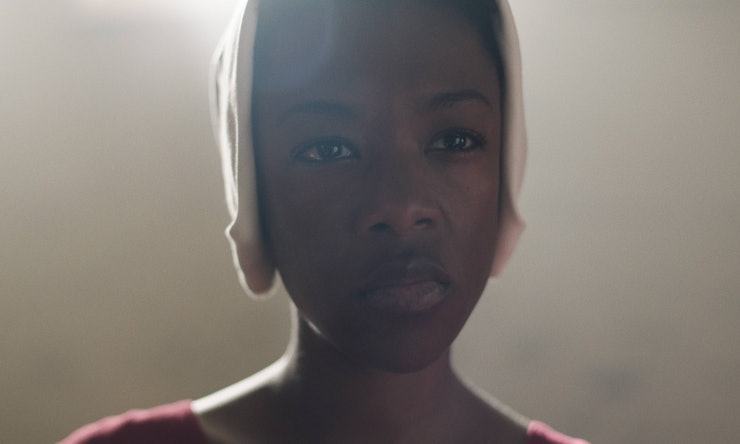
Since its initial publication in 1986, The Handmaid’s Tale by Margaret Atwood has been terrifying readers the same way Orwell’s 1984 did decades before. In a future of America where conservative ideology and religious extremism has given way to a theocracy now called Gilead, men alone control the government and women are forced into roles as barren wives, quiet housekeepers, and fertile handmaids destined to be vessels for children and nothing more. Offred, a handmaid owned by Commander Fred Waterford, is determined to survive her sexual servitude, reunite with her daughter, and find freedom from a life as property.
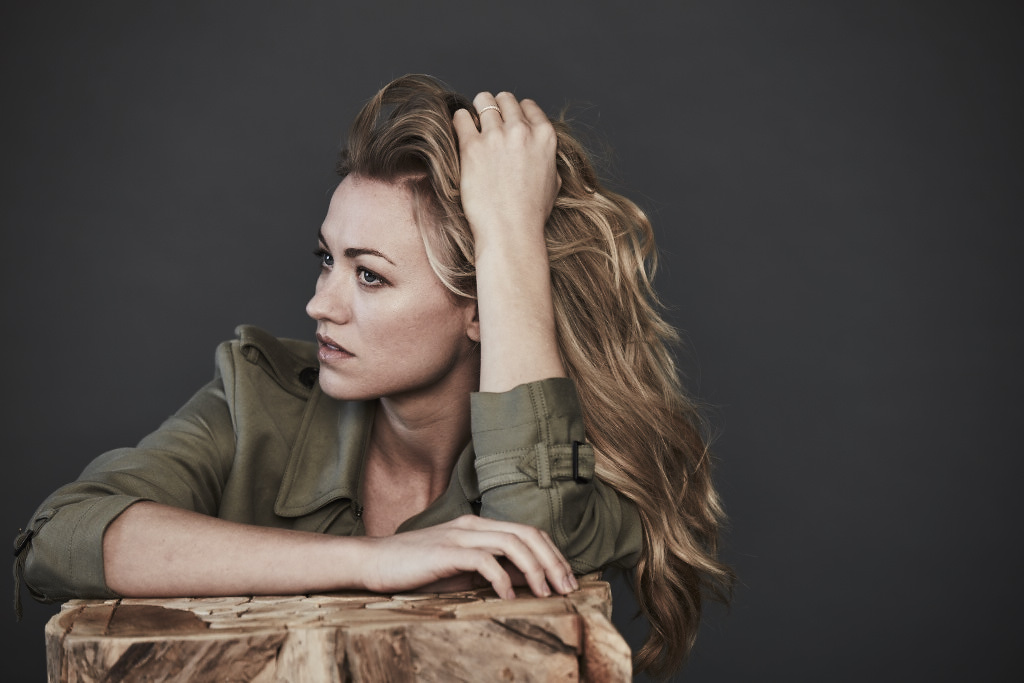
Yvonne Strahovski (Chuck, The Astronaut Wives Club, Killer Elite) plays Serena Joy Waterford, the commander’s strict and intimidating wife in Hulu’s Emmy-award winning adaptation of the novel. Thanks to an expert script and Strahovski's devotion to the depth of the character, Serena Joy is taken from her days in the novel as the evil-stepmother locking Offred away in closets (though she does do that once or twice in the show) to a woman of political intelligence and religious persuasion whose road to hell was paved with good intentions. As Commander Waterford says in the show: “Better doesn’t always mean better for everyone,” and there’s a real empathy in watching Serena Joy get what she wanted and lose everything she took for granted.
I got to chat with Yvonne about what goes into building humanity in a character everyone loves to hate and a small snippet of the darkness waiting in season two.
What is it like bringing to life this character who has such an expansion of depth and presence compared to her novel counterpart?
It was such a wonderful opportunity. I mean, obviously, the character, like you said, is not as fleshed out in the novel. So I had a really wonderful opportunity to humanize this person that hadn’t been humanized before. It was also a challenge too because one of the least relatable characters — not at all relatable in the book — definitely put me to work in trying to figure her out from day one.
For me, Serena has these three different narratives going: that of an enabler of the system, that of someone suffering from the system, and that of someone facing consequences of being on the wrong side of history. Did any one of this faces to her story stand out to you/resonate more with you while bringing her to life?
Yeah, definitely. I really quickly began to see those dualities like you said. She’s basically the architect of her own oppression in a way — in a big way — because she was definitely part of that conversation of how they created Gilead. And at some point, her voice was taken away from her in that conversation in how they were going to proceed with this new society. But she was definitely one of the people originally who focused on that kind of a change. It’s interesting because I do sort of see it as a very pure beginning for her — in the sense that I think there was a purity to the idea that she was for which was women to take back their power in their biological abilities and make babies, basically, and save the world. I think she wanted to inspire women to do that.
But obviously between that seed being planted and where we see everybody going, a lot obviously happened and things went horribly wrong. And now she finds herself in this situation that she wanted but there things about it that don’t suit her. And therein comes that humanity where I think anyone in any of those positions would struggle deeply as we watch them all be oppressed.
In a show filled with women, Serena has such a complicated and antagonistic relationship with her fellow women. Talk about what it’s like for you to play a character like this. What is it like portraying this character in a world that many see as an eerie reflection of Trump’s America?
It was really interesting because I have mixed feelings about it. It’s a fantastic role, but at the same time it was very much art reflecting life which became apparent toward the second half of shooting season one. After the election, that was sort of midway through our shoot. The women’s issues coming up in the headlines, and the Women’s March itself, happened while we were still shooting and bunch of us went to it while we were in Toronto. And we started seeing The Handmaid’s Tale signs start to creep up just even in that. The show hadn’t even come out yet and it really started hitting me how much [it] would be relevant.
It’s so amazing to play a character like [Serena Joy], but it’s so sickening in a way. I’m the person who has to sit with her and try to understand her and justify her actions when I don’t really want to. But I have to, because I’m playing her. It’s an interesting character to humanize because you do get to get a glimpse and understand how it came to be this way for her and perhaps what she could have done differently during that process and how she’s struggling with the reality of the situation now.
So rather than just being the mustache-twirling, creepy villain who was just evil all around, I think there is this side of her that is evil and this side of her that is not evil. So just sort of a very layered, complex, interesting process. Very rewarding to be a part of something so powerful.
If there is anything redemptive in the things Serena does, it’s her desire for motherhood that drives a lot of her actions. Do you see her as someone doing horrible things in the hope of a positive outcome? Or is even her hope for children a selfish action?
I really see her as someone who is in a society where there is no possible outlet for her rage and her emotions that are boiling inside her. She put herself in this kind of society and now doesn’t know how to deal with it. She doesn’t have any intellectual stimuli at all because her books and her writing have been taken away from her. And she doesn’t have a connection to her husband anymore physically because that was taken away from her when she couldn’t bear children anymore. Now there is another woman coming in and taking over that role. And stripping away all the authoritative stuff about Serena — all the political, all the religious, fundamental extremism... everything — you have a woman who is desperate for connection but is unable to connect and is constantly being rejected by her husband, by her handmaid, and by society by way of rejecting her intellect and her brains.
She’s probably rejecting herself because she resents the fact that she cannot be the one to have a baby. So I sort of peel away everything — anything you could label her with — and I see a human being who is desperate. And those rage outbursts come out of that exact thing I’ve just described. There’s nothing else for her. I think in nature people react differently when they’re put to the test, and Serena rages.
When we left Serena Joy, she was watching her best chance for a child be taken away. What can we hope to see for Serena in season two now that we’ve got this blank slate going forward into uncharted territory?
I’m not allowed to reveal anything at all about season two, which I know is a real big bummer. But it will be darker and we don’t really lighten up in that department. Beware: it’s going to be just as painful to watch. And also wildly entertaining.
You can catch up on the first season of The Handmaid’s Tale on Hulu and look for season two, which will be out in 2018!