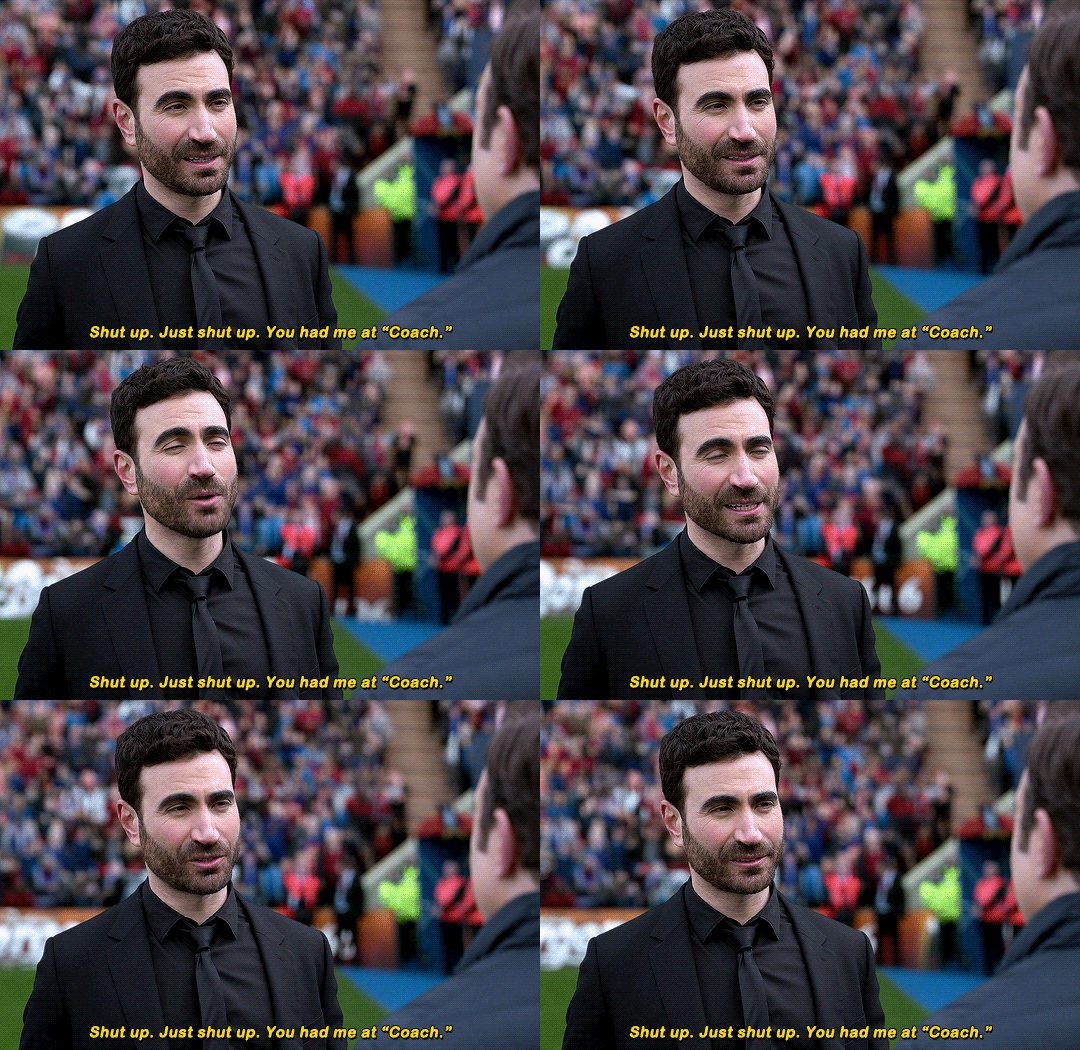
Ted Lasso, Rom-Coms, and Emotional Vulnerability

Why is it important that a show about men who play soccer did a rom-com homage?

Dickinson Behind-the-Scenes: An Interview With the Artisans

Meet the artists who brought the Apple TV+ series to life!

If You Like This, Watch That

Looking for a new TV series to watch? We recommend them based on your preference for musicals, ensemble shows, mysteries, and more!

Showing posts with label horror. Show all posts

Wednesday, October 31, 2018

A Hill House Haunting for Our Time [Contributor: Melanie Moyer]


“Hill House, not sane, stood by itself against its hills, holding darkness within; it had stood for eighty years and might stand for eighty more ... silence lay steadily against the wood and stone of Hill House, and whatever walked there, walked alone." — Shirley Jackson, The Haunting of Hill House (1959)

Shirley Jackson’s most defining work of terror fiction, The Haunting of Hill House, burgeoned a genre for a generation, informed future horror writers such as Stephen King, and was named in 2018 the scariest horror book of all time by a New York Times panel. It’s been adapted to screen twice. It’s parodied in Scary Movie 2. It’s been made into a stage play twice. Many have tried to evoke the unrelenting tension and uncomfortable intimacy of the novel to both success and failure

Mike Flanagan’s 2018 Netflix adaptation takes a gamble that might just rank it on par — or, dare I say, superior — to the faithful 1963 adaptation.

The original novel tells the story of four paranormal researchers investigating the ominous and titular mansion that has locals whispering and staff staying away after dark. Dr. John Montague leads the investigation, with a pair of women — Theodora and Eleanor — as the only two to respond to his ad for assistants. They’re joined by Luke, the heir to the Hill House estate and a noted skeptic of his home’s dark reputation. What results is several nights of unease and unexplained activity culminating in Eleanor’s apparent psychotic break as she becomes more and more obsessed with Hill House — either because of supernatural forces or her own emotional instability.

In Flanagan’s Netflix show, the dynamic between the characters is shifted significantly. Dr. Montague becomes Steven Crain (Michiel Huisman, Paxton Singleton), an author and amateur paranormal investigator who uses his childhood experiences at Hill House as fodder for a bestselling horror novel. Eleanor (Victoria Pedretti, Violet McGraw) and Luke (Oliver Jackson-Cohen, Julian Hilliard) are his twin younger siblings who have been most affected by their childhood trauma and closest to the reaching fingers of the house. Theodora (Kate Siegel, McKenna Grace) is their middle sister — still maintaining the character’s iconic lesbian status with a vengeance — with tactile empathic abilities that make her, ironically, a cynical and standoffish adult. Added to the cast of characters is their eldest sister Shirley (Elizabeth Reiser, Lulu Wilson), who becomes a mortician after an upsetting childhood experience at the house and two parents — their mother, Olivia (Carla Gugino), who falls into the thrall of the house and their father, Hugh (Timothy Hutton), who desperately tries to keep his family safe from the demons in their home.

This makes it possibly the loosest adaptation of the novel to date, but what it lacks in one-for-one transplanting it makes up for in completely on-point tone, scares that are incredibly close to home, and a brilliant blurring of lines between the ghosts of personal trauma and the possibility of something otherworldly. In short: Flanagan gets Hill House in a way that’s so spot-on that it doesn’t matter what time period the characters are in or what their relationship is to each other. We’ve seen that Hill House works as a purist piece. We’ve seen it fail in 1999 when mainstream trends get too involved with a time-honored story.

In Flanagan’s world, Hill House and all its spectres are less a threat than what the spectres represent. The ghost of the house’s past are a waxing group, collecting lost souls as the cabin fever of the place becomes all too real for some. Make no mistake: Hill House is a haunted, evil place. But the blatant supernatural nature of the mansion goes so hand-in-hand with the constant trauma the Crains endure that reality becomes metaphor before our eyes.

The house and its ghosts are the realizations of trauma: Olivia’s protective instincts twisting into a toxic maternity that creates the very future she was trying to avoid. Luke’s ghostly stalker at his back — quite literally — as he comes closer and closer to the temptation of his heroin addiction. Nell is haunted her entire life by the embodiment and future of her own depression. Steven becomes his own version of the house he was trying to suppress as he siphons his family’s tragedy into bestselling stories in an effort to distance himself. The “stomach” of the house offers a seemingly protective womb that quickly becomes a parasitic prison as Hill House refuses to let its inhabitants go — perhaps desperate for comfort or, as the character believe, more fuel for the negative emotions swimming there in a microcosmic purgatory.

It’s a look, at its core, of how a family can fall apart. How communication becomes so important when it’s severed, how trauma can divide a group of loved ones as much as it can bound them, how all we have is each other when the lights go out. It’s the story of a haunted house, in all the ways a house can be haunted.

It might not please the purists, its gamble of a happy ending may not go over well with avid horror fans, but the stories Netflix’s take tells are earned. Flanagan’s adaptation of The Haunting of Hill House is about the terror of a mirror — of looking at yourself, of looking at your past, and your fears for the future. It’s possibly the best piece of haunted house media in the recent decade, maybe even before. It should be counted among the best shows of the year and on par with the 1963 adaptation.

But see for yourself: The Haunting of Hill House is ready for binge-watching on Netflix now.

Wednesday, February 7, 2018

The Exorcist is the Best Horror TV Show You Didn’t Know About [Guest Poster: Jenna Tramonti]


The horror genre has always fascinated me –– there’s so much to unpack about what makes people’s skin crawl, what the darkest sides of humanity can make us do, and what might await us beyond this realm.

Plus, I just love scaring myself.

But good horror TV is hard to find. I’ve been a long-time Supernatural viewer but at this point, I watch out of loyalty. The show hasn’t really gone anywhere; the character development can be likened to a hamster on a spinning wheel, and the same few white guys seem to rotate through the show like recycled paper. American Horror Story was once a contender for me as well; but these days, it tries so much for shock and trending topics that it’s lost sight of the unnerving magnetism it created in its early seasons. Even the new Amazon series Lore, a take on an excellent podcast, is more of a series of half-baked reenactments than a horror anthology.

But last year, FOX picked up a little show called The Exorcist, based on the film of the same name. I’d seen it in my peripheral all through last year; as a fan of the Wachowski’s Netflix masterpiece Sense8, I followed one of the actors –– Alfonso Herrera –– as he promoted his starring role on the new show. I had no idea what I was in for.

My normal pitch to people is: “It’s Supernatural. But better.”

The Premise


Father Tomas (Herrera) is a pastor of St. Anthony’s parish in Chicago. Tomas is the posterchild for perfect priesthood. His grandmother always dreamed for him to become Pope, and honestly, by the looks of this guy, you wouldn’t be surprised if that was in his future. Tomas is content where he is: serving his community and making waves as a young, enthusiastic, and genuinely relatable leader in the Catholic Church.

Until he starts having visions. Very specific, detailed dreams about a man in a black hat battling the darkest of spirits –– and those spirits appear to be getting stronger.

His visions come to life when he meets Father Marcus (Ben Daniels), the subject of his dreams –– a rugged, jaded, excommunicated English priest performing unsanctioned exorcisms all over the globe. Marcus swoops into Tomas’ life with a sketchy past and a whole lot of baggage –– and the ability to pick locks (Marcus’ idea of moving forward in his relationship with Tomas is to let himself into the latter’s apartment. He doesn’t get out much).

The unlikely pair’s paths cross just as evil has come to Chicago in light of the Pope’s upcoming visit. Before long, Tomas finds himself completely immersed in tracking down the demon terrorizing a family in his parish –– and he needs to work with Marcus, a practiced loner, to do it. Cue the beginning of a friendship that changes them both and a journey that tests their faith at every turn.

Why do I love it so much?

It’s genre-bending


Fox’s The Exorcist isn’t just a thrill ride. There are, of course, very scary, visceral moments. Visually, the special effects and makeup –– particularly in the very gruesome exorcism scenes –– offer a lot to fans of the original Exorcist film who would like to see modern technology applied to the classic horror concept. The series even pays homage in subtle ways to classic films like The Shining and, of course, the movie it’s based on.

But it doesn’t pander to its intended audience with too many jump-scares or horror tropes. And the show definitely isn’t an advertisement for any Christian faith (or lack thereof). In fact, as someone who was raised Catholic, I’ve found the pressing of particular views onto characters or the audience to be virtually nonexistent.

Instead, the show builds upon human insecurities and characteristics that the demons in the show prey upon. The foundation of Marcus and Tomas’ beliefs largely floats in the background of the bigger, very human issues. Often depicted under the surface of demonic possessions in this show are non-religious issues –– the strains associated with familial dynamics, the question of finding oneself as a young person in an ever-changing world, and even topics like abuse and exploration of sexuality.


It’s got character


More than anything, this show has heart. The two principal characters develop a very strong bond over the course of two seasons, and we also see them develop individually. If you’ve watched any horror TV lately, you’ll know character development is not something the genre is always quick to deliver (I’m pretty sure Sam and Dean have been passive-aggressively keeping the same secrets from each other for twelve years and counting).

But The Exorcist excels at making us care about Tomas, Marcus, and the people with whom their paths cross. While Marcus comes off as reserved and closed off, the audience gradually comes to know bits and pieces of his past, his fears, and the man he used to be before the job took him over. Tomas, who initially appears to have a very fulfilled life, has insecurities and temptations just like anyone. These character struggles are not separated from the traditional “horror” aspects of the show; in fact, they’re woven into the plots themselves, making for a dynamic combination of drama and horror. Even the characters who are part of Tomas and Marcus’ “case” narratives develop enough over the course of the season that the audience genuinely wants things to work out for them. The show creates investment in its plots and characters right away –– and effectively –– through creative storytelling and realistic character growth.

Plus, the way Tomas and Marcus look at each other could rival the longing gaze of any rom-com couple. I’ll leave it at that.


It’s inclusive


If you’re looking for diversity, The Exorcist has plenty. Though Marcus doesn’t necessarily pin a label on his sexuality, he has a history for falling for both men and women. Compared to shows in the same genre (like Supernatural), such representation in sexual fluidity is practically nonexistent. Plus, particularly in the most recent season, the main characters are largely played by people of color. Herrera, a Mexican actor, portrays a Mexican priest; Kurt Egyiawan plays Father Bennett, an ally of Tomas and Marcus within Church walls; and Korean-American actor John Cho (Star Trek), who felt strongly about playing a Korean character, took on the role of Andy Kim this season. Even the new female character introduced this season is a woman of color (Mouse, played by Zuleikha Robinson). The show does not shy away from authentic representations of POC, and while every show can always improve in this vein, The Exorcist is off to a pretty decent start.

Plus, while we don’t know much about Mouse’s character yet, we know she’s fighting her hardest against the male-dominated Catholic Church and the archaic, patriarchal institutions it upholds. Herself an exorcist, Mouse is initially introduced in the context of Marcus’ past. But it’s clear, if the show continues, that she won’t stay there. While I won’t give away too much, I’ll say that while the show makes it apparent that Marcus couldn’t save her many years ago, it makes very clear that Mouse can save herself –– and Marcus and Tomas, too. There’s much room for character growth and uncovering, and Mouse’s journey has only just started.

The Danger


My roommate and I breezed through season one of The Exorcist so quickly that we were able to watch the second season as it aired, which was perhaps even better than the first. Fox, unfortunately, has kept the show in the “death slot” –– a.k.a. Friday nights –– which hasn’t allowed it a lot of exposure. At the end of last season, Fox kept quiet about renewing the show until the last minute.

There’s a small, dedicated group of us fighting for the show’s life on Twitter and other social outlets. #RenewTheExorcist is a hashtag fighting to make its way to a trending topic, and there are fan accounts across social platforms dedicated to the show and its revival. But why not try to make the group bigger?

To me, a show that’s doing so much for the horror television genre –– and for POC and LGBTQ representation –– shouldn’t sit twiddling its thumbs in a Friday slot. It should be talked about outside of niche fan sites; it should be upheld as an example of a show that’s trying its hardest to push boundaries.

It’s not a show to be missed, and if it’s renewed for a third season, I hope it has the opportunity to gain the recognition it deserves. And there is still time.

A decision hasn’t been announced yet about the show’s future, and it likely won’t be until April or May according to the writers. Check it out on Hulu. Watch the latest season on Fox’s livestream service. Tweet Fox about it, and tweet the creators to tell them how much you love it!

Because trust me, you’ll love it.

(If you don’t, the next salt circle for around your house is on me.)

Monday, May 2, 2016

Slasher Review: A Fun, Fresh Horror Anthology [Contributor: Melanie]


Chiller is the network you turn to when AMC’s October Halloween marathon just doesn’t seem long enough (and you’ve seen enough of Jason X to last a lifetime). Its programing appeals to all sorts of strange and horrifying tastes, from playing various mainstream and B-level horror films to daytime programming of Twilight Zone-esque TV shows from the 90s. They branched out with their own network original films, which have been respectably reviewed, especially considering what they are. But Slasher is Chiller’s first foray into original content, and it was much better than it had any right to be.

Slasher is, if the name didn’t give away, an anthology series. But don’t let Ryan Murphy’s monopoly on horror TV anthologies (which I spent all fall painfully recapping for you all) scare you away, because this show had a lot of intelligence and care. The first season follows Sarah Bennet (Katie McGrath), the prodigal daughter returned to her hometown of Waterbury (in what I can only assume is rural Canada). She moves into her parents’ former house, the site of their grisly murders the night of her birth (because why wouldn’t a white person in a horror series do that?). While she and her husband Dylan (Brandon Jay McLaren) acclimate to the town, a series of copycat killings begins to unfold with someone donning the garb of the man who killed her parents: someone nicknamed "The Executioner." Sarah becomes obsessed with solving the murders and employs the help of Tom Winston (Patrick Garrow), her parents’ imprisoned murderer, to help unravel the mystery of this dangerously zealous killer.

Sounds like fun right? It is. The show isn’t exactly original in concept, but it’s certainly fresh, combining the sins-of-the-parents hanging over our hero’s head as in Scream, the disturbingly parental mentorship of a former killer and unsettlingly invested investigator as in Silence of the Lambs, and the intricate town drama of Twin Peaks. All this rolls together in a wildly entertaining little series that works far more than it doesn’t and leaves you excited for more.

Horror itself is quite possibly the most trope-laden genre you’ll find. And that’s extra concentrated for its subgenre, the slasher. The exploitation of meta-horror as a way to unpack the cultural significance of these running motifs as been done before (did I mention Scream yet? I should do it again) and Murphy’s parody piece borders on a Scary Movie spin-off that didn’t do much to help us appreciate what horror has to offer and why. But writer Aaron Martin manages to disguise an interpersonal drama series as a bloody thriller.

Martin shrugs off the time-honored use of teenagers in favor of 20-somethings and up. And the taboo actions of premarital sex, drugs, and alcohol get a mature level-up with the killer’s complicated modus operandi: enacting fitting punishments for committing one the seven deadly sins (because somebody paid attention during his research paper on Dante’s Divine Comedy). The interlacing relationships between members of the town are well thought out and given more room to breathe than revelations at a drunken teenage party over games of "never-have-I-ever." And there are more scenes of serious dialogue than there is blood spatter.

McGrath plays a more memorable Final Girl than we’ve seen in a while. Ripe with an disquieting curiosity and some believable inner torment, she’s gains a take-no-$&#! attitude reminiscent of Scream 4 Sidney (are we sure I didn’t mention Scream yet?). Patrick Garrow is a surprisingly deep character whose past Scarlet Letter-level offenses as a young priest end in mental tragedy. And The Executioner himself is a break from the silent killer motif, though he does take some heavy nods from Halloween’s The Shape (a.k.a. Michael Myers). And the rest of the cast that surrounds the events are dedicated to the character work and seedy history the narrative portrays.

Films like The Exorcist, The Conjuring, It Follows, The Haunting (the original one), and others proved to their respective generations that horror can be deep, characters can truly want things, and deaths can be about more than just shock value. Slasher isn’t quite at the level of horror greats, but it’s certainly far from the middle when it comes to horror TV with scares that originate in the human psyche, making them all the more terrifying.

You can check out the entire first season of Slasher on iTunes, Amazon, and through On Demand.