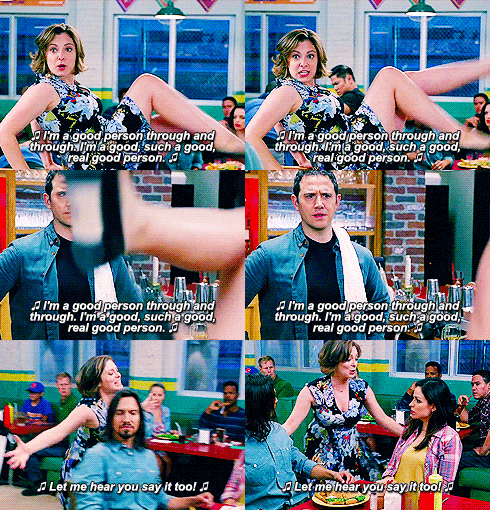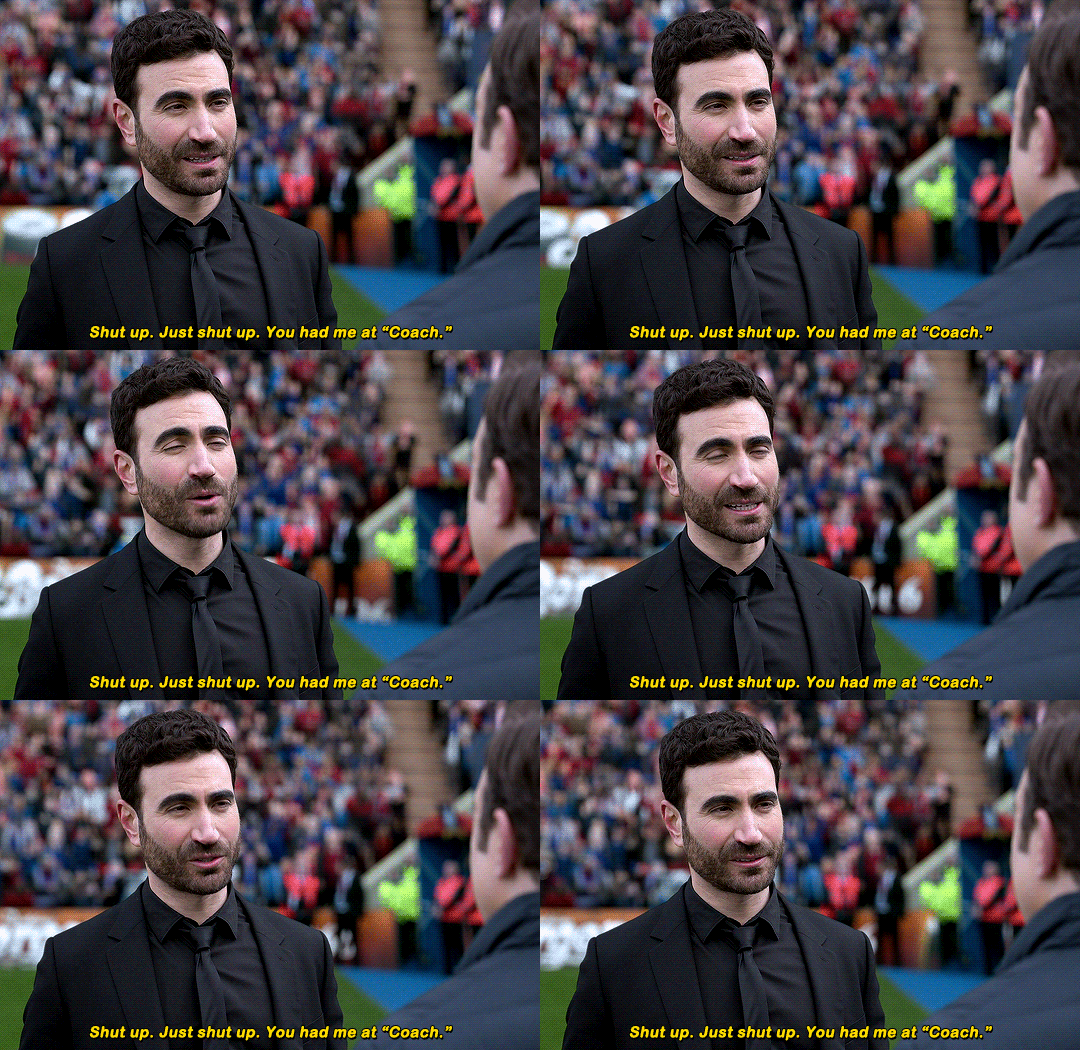
Ted Lasso, Rom-Coms, and Emotional Vulnerability

Why is it important that a show about men who play soccer did a rom-com homage?

Dickinson Behind-the-Scenes: An Interview With the Artisans

Meet the artists who brought the Apple TV+ series to life!

If You Like This, Watch That

Looking for a new TV series to watch? We recommend them based on your preference for musicals, ensemble shows, mysteries, and more!

Friday, April 12, 2019

Blindspot 4x18 Review: "'Ohana" (Whoa Mama) [Contributor: Jen]


"Ohana"
Original Airdate: April 12, 2019

Blindspot likes to follow emotionally fraught and nail-biting episodes with a lighter kind of FBI justice, which is what we get "'Ohana." Genetically modified bees are not typically my thing, but we get Bill Nye the Science Guy out of the deal, so it ain't all bad. There's also a holy freaking Moses shocker, which is why I love this show.

CASE OF THE WEEK


Did we know Patterson's dad is Bill Nye? I feel like this is information I would've retained over the years. Suffice it to say, my reaction was along the lines of this:


(Never miss an opportunity to use a Nick Miller GIF. That's a little life tip from me to you.)

I love that Blindspot didn't pretend Bill Nye was anyone, but Bill Nye. It breaks the fourth wall a bit, but who cares? Geek out activated!

Rich and Patterson bring everyone in to inform them Jane has a deadly poison on her body. Not IN her body, but ON in the form of a tattoo — TTX. The momentary confusion leads to some great physical comedy from Kurt and Reade as they take a big step away from Jane. I roared.

TTX is tetrodotoxin and people are dying all over New York City because the poison somehow ended up in cantaloupe. My dad almost died from food poisoning after eating cantaloupe. It was super scary. True story.

They trace the contaminated melons to a research farm where Patterson's dad, Bill Nye, is currently working at with his research assistant, Ginny. Someone has genetically modified bees with TTX using CRISPR technology. So now there's a whole bunch of bees carrying a deadly poison. The cantaloupe became contaminated after the bees pollinated the melon plants.

At first, the evidence and Patterson's jealousy over Ginny makes her the prime suspect. She wrote a research paper on genetically modified bees and was generally acting shifty in the beginning of the episode, but we know the first suspect is never the real culprit. This ain't our first rodeo.

The real culprit is Nick Pomeroy who stole Ginny's research and tries to sell the bees to a defense contractor who wants to weaponize them. Yes, really this is the plot. Team Blindspot stops the sale and Nick dies a brutal death by bee in the process. It is YUCK.

Unfortunately, this defense contractor isn't easily deterred, so they send another team to hold Bill, Ginny and Patterson hostage in exchange for the bees. Thus commences one of the more ridiculous plot resolutions for Blindspot. Ginny and Patterson release the bees, which kills the goons. They are not harmed because they sprayed benzaldehyde all over themselves, which kept the bees away. Don't make me explain how Ginny gets the genetically modified bees back their hive. I'm all science'd out.

Typically, I enjoy a good Patterson-focused episode, but this was a little too much "light and airy" for my taste.

TEAM BLINDSPOT


Patterson spends most of the episode threatened that Bill is replacing her with Ginny, which of course is nutty. Bill is very proud of Patterson and is simply trying to respect her busy and important job. Patterson does have a tendency to hide behind her computer screen, which also seems to apply to her family. Jane reminds Patterson that family isn't around forever and when they're gone, she'll wish she had spent more time with her parents. It hits me right in the Roman feels.

Bill tells Patterson to bring her boyfriend around sometime for dinner and we both had the same reaction: "What boyfriend?" Bill Nye the Science Guy is referencing Rich. Wait a minute. Did I miss a ship rising? I mean... Rich did say he was Catwoman to her Batman. I never really thought romance with the two of them, mostly because Rich seems pretty in love with Boston. I kind of viewed them as platonic soulmates, but I've been wrong before!

Tasha is going full speed trying to track down Dominic. Claudia, her MI-6 undercover counterpart, reaches out and together they get a lead on Dominic. Tasha wants to loop in her team, but Claudia insists on going it alone despite Zapata's protests. We all know where this is headed. Tasha finds Claudia dead. It's pretty devastating for Tasha because she knows it could've easily been her.

Blindspot is leaning heavily into this whole "Tasha hasn't decided what team she's on" plot, which I find to be a bit tiresome because she's clearly chosen the FBI. She's not vacillating. Zapata asked for her job back, she's crashing at Reade's apartment, she wanted to bring her team in to help her. I'm not sure what else Tasha can do to prove she's playing well with others again.

Perhaps, this is less about what's going on in reality and more that Madeline got in Tasha's head. Regardless, she's exhausted of doing this all on her own and Reade FINALLY is there for her in a real way: "I know you have the team, but you also have me. I promise I'll be a better friend to you."

I think Reade has held on to Tasha holding him hostage and lying about well... everything for far too long, but that's Reade. He holds a grudge. He's not as forgiving as Kurt. But finally the wall cracks and the real olive branch is extended. I've missed this partnership. I've missed their friendship.

You may be disappointed at Reade's use of the word "friend," but we have to walk before we can run friends. Reade and Tasha are best friends and they have to get that solid framework back before launching into a romance.

Besides, Tasha is too freaking exhausted to do anything, but sleep on Reade's couch. But the look on Reade's face as he watches Tasha sleep tells us exactly where this is going.

KURT AND JANE


I love my unproblematic ship. Isn't this so nice, y'all? Jeller is the calm in the storm. The anchor couple who tease each other adorably and drink wine post-mission as a prelude to... well, you know. Jane said: "I used to think of Remi as this boogey woman, but she's a part of me." And Kurt replied: "You really believe that?"

YES WE DO, KURT. GET ON BOARD. I was ready to slap him.

Jane is full-on zen after her therapy session and being buried alive. Different techniques work for different people. Let's not judge. What's important is that Jane can look through the safe house memorabilia from her life as Remi without it crippling her. Dare I even say, Jane enjoys the walk down memory lane? When was the last time Jane actually smiled about her past? She's learning how to take the good with the bad.

The bad includes a goth period and some very emo poetry, which Kurt teases her mercilessly about. We've all had a goth phase, Jane; this is a safe space. Mine was more grunge than goth. I was deeply in love with Kurt Cobain and Gavin Rossdale.

Finally, Kurt gets on board. Not that I really believed he ever wasn't, but it's nice to hear it verbalized. I mean, Remi did try to murder him. Just wanted to be sure he's cool with her. I also love that Kurt can recognize there is happiness in Remi's past too; it wasn't all darkness. Jane needs to hear that and be reminded of it. Nobody's opinion carries more weight for her than Kurt's, which is why I've been harping on him the last couple episodes. But I'm good now.

I want them to always be this happy. I don't actually mind the writers throwing drama at Jeller, just as long as it is external and not internal. No more lies, giving each other up for the greater good, or CHEATING.

There is one item Jane doesn't recognize and it's a card from a local women's shelter. She recognizes the name of one the employees at the shelter — Chelsea Chalgren. They haul her in for questioning and she confesses Shepherd came by years ago looking for a "Jessica." Chelsea gave Shepherd whatever information she had so she could track her down. Jane is rightly ticked off because women's shelters shouldn't be handing out information to perfect strangers. Defeats the point!

They believe this "Jessica" is the Sandstorm informant caught on the street camera outside the drop site. Jessica is wearing the same jacket in the video and Chelsea recognizes it. She wants to make her mistake right, so Chelsea agrees to sit down with a sketch artist.

This episode is ho-hum, but it's worth watching for the BOOM at the end. Rich brings the sketch by and Jane recognizes "Jessica." I had prayed it was not another secret kid. And it's not! The sketch looks exactly like Kurt's MOM. And he is none too pleased about it. Yahoo! Let's dig into more Weller family drama. Hopefully, it's less dark than his monster of a father.

Stray Thoughts:

  • They went a little heavy on the eye makeup with Tasha. She didn't look exhausted. She looked like she had pink eye.
  • Friendship is texting at 4 a.m. asking for bagels. Now I'm craving bagels.
  • READE IS GIVING TASHA KEYS TO HIS PLACE. EVERYBODY STAY CALM.
  • Kurt is a Bill Nye fanboy and Jane thinks it's the cutest. Kurt is a fanboy about a lot of things.
  • Anyone notice that Jeller likes to booze a lot after missions? Respect.
  • PEOPLE NEED TO STOP INTERRUPTING MY JELLER SEX.
  • "You need someone to film it?" Yes we do, Richard.

Monday, April 8, 2019

Ask an Author: The Girl Who Never Read Noam Chomsky’s Jana Casale [Contributor: Megan Mann]


With her debut novel, Jana Casale tells a story that is more identifiable than most literature. Instead of relying on literary tropes to tell a story about a woman as she navigates life, Casale instead looks to the realities a woman goes through. It's a relatable read and it's a book that, unlike Noam Chomsky, you won't just purchase and never read.

So what does Jana Casale think of her book? Keep reading to find out!

Congratulations! Your debut, The Girl Who Never Read Noam Chomsky, is now in paperback! How does it feel?


It feels many different things, but overall I feel incredibly grateful and very humbled by all the amazing things that have happened to my little book. 

What was the catalyst for this story?


I was in class at Emerson College and a student was giving a presentation on Noam Chomsky. The professor asked her, “Have you read any of his work?” and she said, “No, but I’d like to when I have more time.” And I thought, "That’s never going to happen." Nothing against that young woman or course, it just seemed like one of those things in life you hope to do but never get to.

I found myself identifying with a lot of this book (especially when Leda’s mother said, “Dreams first, boys second”). Were you hoping that female readers would identify with Leda in one way or another?


I felt that there was a real gap in literature in terms of representing much of the female experience, and I really wanted to write something that was as vulnerable and honest as possible. I think when you do that you run the risk of alienating people because you’re usually talking about very specific, very personal things. But without being that open and raw about your own experiences, I think you are unable to really give your reader something to fully connect with. It’s thrilling when I hear that women do see themselves and can relate to my character because that was really my hope with this novel. I wanted women to feel a little less lonely when reading it.

Including Rochelle’s rape story may be too much to handle for some readers. But for many women, this situation occurs far more than it should. Was that what made you want to include it?


I really appreciate this question because this chapter to me is such an important one in the novel. I didn’t think it was right to write a book about womanhood and the female experience and to not talk about rape. Rochelle as a character was a way for me to be frank about the violence women face and the way that violence is just part of so many women’s lives. To some degree Leda acts as a mirror to the way society does and turns her back on Rochelle, which is why that final image of Rochelle at the end of the chapter is so important. It’s a complicated chapter, but I feel very proud of it. And even though it’s not essential to Leda’s narrative, I think it is incredibly essential to the narrative of the book thematically.

The difficulties of friendship segued into Leda’s spiral into depression about upending her entire life from Boston to San Francisco for John’s job. This left her entirely without aspects of her identity: friends, family, job, school. This is more common than ever now. Why choose for them to uproot their lives for him instead of her?


Part of what I wanted to do with this novel is talk about the ways in which women get so much self-worth from having men in their lives. In reality Leda is so happy with having John [that] she is willing to make that sacrifice for him and move to California. We see later on that having a great boyfriend in and of itself is not fulfilling enough for her, but the initial decision is based very much around that. And I would suspect the reason they don’t leave is because John does not feel the same sense of accomplishment by having a partner as Leda does and so is likely less motivated to make a big change just for her. To be fair it was also a smart financial decision for them and life, I think, just gets away from you very often when you make a big move like that, so that was part of it as well.

Something that I think is so important for you to bring up in this story is how social media has turned motherhood into a competition. It’s also creates this insidious world of mommy shaming. Do you think mothers reading this will scream “YES! THIS!” when reading your novel? 


I hope so! I find social media to be so depressing in my own life, and I think very often it feeds into the worst of ourselves and our relationships with other people. Women can be so hard on each other, and I hate the way all too often we use each other’s faults and failures to feel better about our own lives. The good thing about social media is that it’s very useful for writing. So many interesting and complicated human interactions happen through it, and because it’s all written, it really lends itself to the medium of prose. We’ve all seen those scenes in television and movies where they try to integrate texting or social media, and it really doesn’t work but it’s absolutely perfect for books.

I think we’ve all had the experience in the dressing room with the bathing suits. (Except for maybe Kendall Jenner.) Instead of creating a story that’s clear-cut, you created a story that’s realistic and messy. It makes it easy for the reader to identify at some point. What made you want to tell a straightforward story that didn’t rely on the themes we generally see in fiction?


The bathing suit scene is the one most frequently brought up to me which isn’t surprising because every woman (probably even Kendall Jenner!) has gone through something similar to that. Hating our bodies is so intrinsic to the female experience, but it’s almost never discussed. Honestly, so few protagonists you read about seem to struggle with many of the experiences women struggle with in their lives, and I think the reason is that many writers write in a way that is more derivative of art than of reality. I really wanted to write something that was not built on women that I’ve read about but built on women that I’ve known, and so I tried to be as messy as possible. And what’s messier than bathing suit shopping?

Okay, so here’s a few fun questions! If this were to become a Netflix series, who would you cast?


Believe it or not I never think about this kind of thing! I think I’d just want Leda to be played by someone with a sense of humor.

What are you working on now?


I’m working on my second novel which is about three different women who are in love with terrible men. It’s tentatively titled, How to Fall Out of Love Madly.

(Megan’s note: I’m here for it. Very excited for this already!)

What’s the best writing advice you received during this process?


To think about your career holistically and to only publish what you really want out in the world. 

What are you reading right now?


I just finished Mary Laura Philpott’s book of essays called I Miss You When I Blink. It’s coming out this spring and it’s amazing. So hilarious. So touching. I highly recommend!

(Megan’s note: This book is, in fact, incredible and I also think everyone should read it.)

And last, because I have to ask, what’s a book you bought and then never read?


Honestly, there are too many to name! I love books, which means I over buy in a big way. But I did read Noam Chomsky!

The Girl Who Never Read Noam Chomsky is available now in paperback! And find Jana on Instagram!

Grey’s Anatomy 15x20 Review: “The Whole Package” (Old Habits Die Hard) [Contributor: Julia Siegel]


“The Whole Package”
Original Airdate: April 4, 2019

It seems that we have at least a three-episode arc of family visits in the back half of season fifteen of Grey’s Anatomy. In the last episode, we learned the devastating truth of Jo’s origins when she met her birth mother for the first time. This week, the Hunt family is examined, and it seems a similar situation will play out in the next episode which will feature a Shepherd family reunion. Plenty of characters have been struggling lately and are unwilling to open their eyes without someone blatantly calling them out. This episode actually doubles as a great catch-up because all of the big storylines are exposed and cross-examined.

SURPRISE VISIT


After last week’s depressing dual plotlines, this was the perfect time for Megan Hunt to show up and lighten the mood of the show. While she is only checking in for one episode, it is always a pleasure to see her feisty spirit come alive and take action. Meredith and Jackson have assembled a team to operate on one of Megan’s patients: a military veteran who suffered several devastating injuries while in battle and needs abdominal wall, penal, and scrotal transplants. The writers couldn’t have come up with a better case to get Abigail Spencer to reprise her recurring role and talk some sense into her character’s very stubborn brother.

Meredith greets Megan when she arrives and accidentally spills the beans about Owen and Teddy’s baby in the process. Owen didn’t know that Megan was coming to visit and had yet to mention anything about his unborn baby, most likely because he didn’t want the ensuing attack from his sister. Let’s just say that Megan is very disappointed to hear that Teddy and Owen are not a couple and gives both of them several earfuls of her opinions. Megan knows that Teddy and Owen have loved each other for long enough that a baby in the mix should have catapulted them into a real relationship. She is beyond angry at Owen for his treatment toward Teddy (i.e. how he went to Germany for a one night stand and didn’t try to win her over), and can’t believe that he gave her his job instead of a marriage proposal.

Megan’s antics are quite entertaining, and she is incredibly spot-on with everything she says. Teddy and Owen have a complicated history which they have been trying to avoid like the plague for too long. Since trying to convince both together and separately that they belong together didn’t work, Megan decides to take a more drastic step at the end of the episode. She catches Owen off-guard with a very accurate mental health profile of him and how he is unwell. Citing the Germany incident, being with his ex-wife, and fostering Leo and Betty as examples, Megan paints a picture of Owen being mentally unstable and in dire need of help. This is something that I haven’t thought of and wasn’t necessarily apparent until Megan says it. Now that she mentions it, it does make a lot of sense.

GETTING BACK ON THE HORSE


Meredith and Jackson recruit Megan, Owen, Catherine, and Schmidt to help out with their extremely difficult surgery. When they present Catherine with the idea of the surgery, she is overjoyed that her son has given her the best gift ever. The light and fluffy demeanor of the episode is quite charming in this moment and provides a good laugh. The surgery is quickly in jeopardy when the team finds out that the patient lied about having a support system in place. Catherine refuses to operate if the patient isn’t going to have the help he needs post-op. Jackson confronts her about her decision to see whether she is more afraid for the patient or of her first time back in the OR since her own surgery.

Owen has a heart-to-heart with the patient and learns that he is really insecure about not currently having his manhood. This is exactly what Owen thought the problem was, so he gives a speech about how letting people in is the best way to deal with the problem. The patient had broken up with his girlfriend after the accident and doesn’t want to let her back into his life. Owen convinces him to give her another chance, and it all magically works out. Since the patient has a support system, Catherine agrees to do the surgery, which goes perfectly.

CREATIVE SOLUTIONS


This episode also marks the end of Alex’s reign as chief of surgery, as Bailey officially takes back her full duties. Alex takes on a new patient, while Bailey is left trying to figure out where all of the business reports are and how to teach some high school students about leadership, which was an unfortunately-timed prior commitment. Helm helps Alex treat a young autistic boy suffering from chest pain and fatigue. The boy doesn’t like to be touched and has trouble communicating, so they have to get creative to do an exam. The parents tell Alex that their son loves architecture, so Alex strikes up a conversation with the kid about a building.

Alex uses architecture metaphors to get the boy to tell him exactly what is wrong. They find that he has a tumor on his thymus gland, but they can’t surgically remove it right away because the patient is anemic. Alex brings Maggie on the case, and they give him a blood transfusion to treat the anemia, but the boy’s body rejects the blood. After several blood tests, the doctors find out that the kid has the rarest blood type in the world: AB with no Rh factor. Since the child’s blood isn’t AB+ or AB-, they need to find blood that is an exact match. However, only a few people in the world have this rare blood type, so finding a donor will not be an easy task. Maggie is surprised to hear Alex tell the patient’s parents that he will do whatever it takes to find a donor and treat their son.

Meanwhile, Jo has spent the past week curled up in bed and not talking to anyone. Alex sends Link to the rescue to see if he can get Jo to talk about what happened with her birth mother. Jo isn’t thrilled to see Link, who tries to take care of her even as she constantly rejects his help. He gets Jo laughing and having a decent time after she downs almost an entire bottle of vodka. She begins to tell him about how whenever a situation gets tough she runs away. She says that it’s in her blood to handle problems by running away and states that her mom still does the same thing. Jo almost tells Link the truth, but quickly shuts down and finds more alcohol to drink. When Alex gets home, Link tells him that he has seen Jo go through some rough times, but nothing like this. Both men are very concerned for Jo and are both silently hoping that she doesn’t revert back to her old pattern of disappearing when things get tough.

SHOWCASING TALENT


The last important story of the episode sees Richard giving DeLuca a solo surgery. DeLuca is worried that it is a test of both his surgical skills and his commitment to Meredith, as he will be trapped in an OR under the watchful eye of Richard. Meredith is also nervous that the surgery will take a hard turn and DeLuca won’t be able to prove himself. It’s odd that Meredith has next to no confidence in her boyfriend, which is a telling sign that their relationship probably won’t work out.

DeLuca decides that Richard is going to be more of a father figure rather than a teacher and wants to impress Meredith’s pseudo dad. Since this is the comedic episode, DeLuca is very wrong in his assumption and continuously says and does the wrong things. It’s fun to watch DeLuca trip over his words and try to find hidden meanings in everything Richard says, especially when he keeps saying way too much about caring for Meredith.

However, when he discovers dead bowel in the patient, DeLuca stay calm, cool, and collected and easily converts his laparoscopic surgery to an open procedure. Richard wants to take over at this point, but DeLuca tells him that he can do it and wants to see it through. DeLuca shows Richard that he knows exactly what he is doing and wants to become a general surgeon. Richard is impressed and even puts in a good word to Meredith about DeLuca’s surgical and personal skills.

Friday, April 5, 2019

You Do, Don't, Wanna Be Crazy: A Farewell to Crazy Ex-Girlfriend [Contributor: Jenn]

Related image

I grew up listening to musicals.

If you met me today, you might not know that, given the fact that once I got to college, I didn’t follow the Broadway musical circuit as much. Today I couldn’t even tell you what musicals are nominated for the Tony Awards. It’s a little sad, actually.

The reason I loved musicals then and still do today is because of their escapism. There’s something so unbelievably satisfying about spending a few hours engulfed in a world where people randomly burst out into song whenever they’re feeling something deeply. In musicals, people get the chance to live in fantastical worlds. There is no limit to what is possible, generally, in a musical.

When Crazy Ex-Girlfriend came onto our screens a few years ago, it sought to be a conversation-starting, groundbreaking musical comedy. It was racy and funny, but also incredibly poignant. And it followed on the heels of other shows, mostly dramas, with its portrayal of a complex anti-hero. As the show ends tonight, I wanted to take some time to reflect on Crazy Ex-Girlfriend’s significance. Looking back, it made such an impact on me that I wrote multiple posts about it (here | here | here).

The little-show-that-could ended on its own terms, and credit goes to Aline Brosh McKenna and Rachel Bloom, as well as the show’s numerous writers, for constructing such an interesting and crucial arc for Rebecca Bunch. The woman we met in the pilot is not the same woman we watch sing in the finale — and for that, I’m eternally grateful.

Image result for rebecca bunch dark gif

SING ME A SONG OF AN ANTI-HEROINE


The rise of the anti-hero in film and television in recent years has been an interesting one. People are quick to point out Walter White from Breaking Bad as a typical example, but essentially an anti-hero is someone who’s the central figure of a story but lacks a lot of the traditional heroic characteristics.

It leaves the audience a little confused — on the one hand, we are conditioned by popular media to root for the main character. But anti-heroes do things that heroes don’t. So are we supposed to root when Rebecca Bunch lies to Josh, breaks into homes, steals, manipulates the emotions of others, and seeks to split Josh up with Valencia? Are we supposed to reward her bad behavior just because she’s the main character in the story we’re watching?

I think Crazy Ex-Girlfriend’s ability to ask that central question without telling the audience how or what to think of Rebecca is important. While so many television shows are heavy-handed with exposition or “subliminal” messages about what to think about a character or situation, a lot of Crazy Ex-Girlfriend’s storytelling has involved allowing the viewer to craft their own thoughts and opinions about Rebecca Bunch and her behavior. We’re given permission to root for her, but also be disappointed by her. We’re allowed the space to dismiss her actions as villainous altogether (“I’m the Villain in My Own Story” is my favorite song from the show for this reason).

Ultimately the show portrayed a character who was incredibly broken and flawed, surrounding her with characters who were broken and flawed (sometimes in less obvious ways), while also not allowing Rebecca’s actions to be without consequence. Did you root for Rebecca to get away with her lies? Or to get caught? Did you want her to find love with Josh? Or Greg? Or Nathaniel?

The importance of an anti-hero is their arc: Rebecca didn’t stay the way she was in season one. And she faced consequences for her actions too by actually owning them.

Image result for crazy ex girlfriend dr akopian gif

A FUNNY AND SOMETIMES DARK LOOK AT MENTAL HEALTH


Rebecca began to truly own her behavior when she identified the root cause of it. For most of her life, Rebecca was misdiagnosed by mental health professionals; she received incorrect or dangerous diagnoses. Mid-way through the third season of the series is a pivotal moment in the show’s trajectory — Rebecca’s attempted suicide. Not only was the moment a tonal shift for the series (I cried when I watched the screener), but also a pivotal character-centric and plot shift as well.

When Rebecca is diagnosed with BPD, she begins to approach life, her recovery, and therapy differently. Armed with a reason for her behavior and a path forward, Rebecca begins to actually take ownership for her issues rather than blame-shift them onto others. As a result, she starts her journey in becoming a healthy, honest individual.

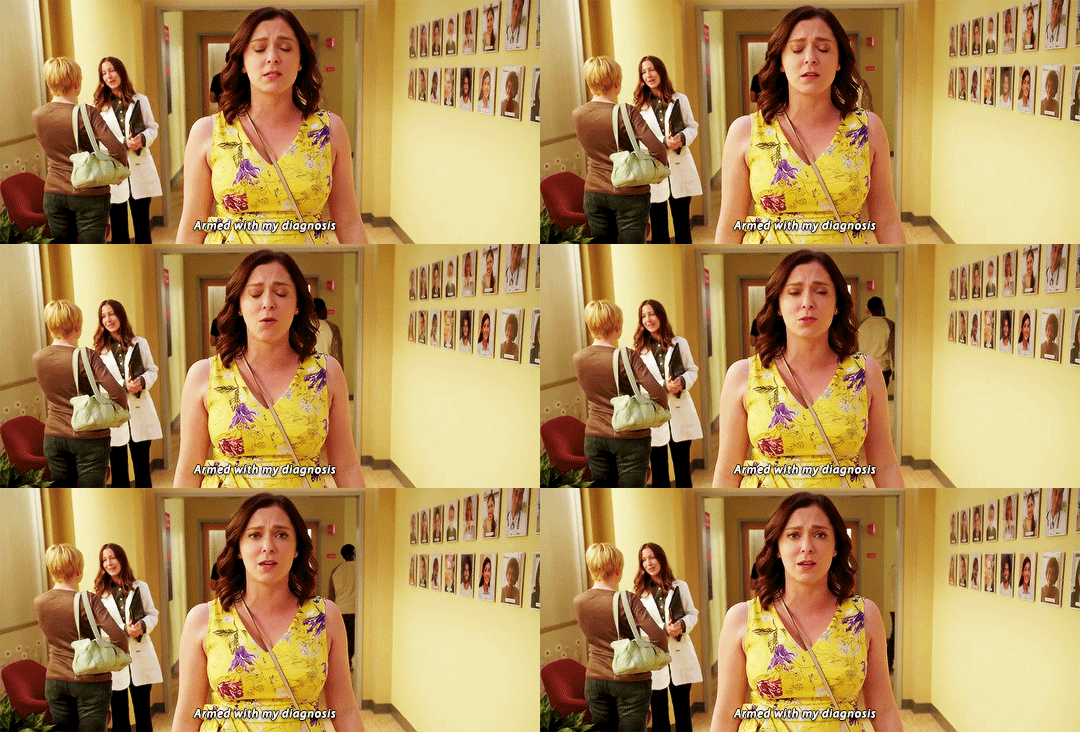
Crazy Ex-Girlfriend’s contribution to a national (or worldwide) discussion on mental health can’t be overstated. The show isn’t the first to tackle the discussion but its musical comedy format allowed it to have an entire La La Land-themed number about how common it is to be on antidepressants. Rebecca sings a song called “My Diagnosis” when she receives her BPD diagnosis. A musical format is the perfect way to approach these discussions in funny, accurate, and engaging ways.

The way the show didn’t oversimplify the issues that come with mental health was of utmost importance. It didn’t minimize struggles or try to present a neat and tidy solution where there is none. Sure, Rebecca begins to improve when she receives her diagnosis and is on the right medication. But it also showed us a musical number where someone’s medicine isn’t working for them and they need to switch. Mental health is an ongoing conversation and a complex issue. Crazy Ex-Girlfriend’s constant dedication to the honoring and elevation of the subject matter is not just admirable — it’s downright invaluable.

I’m incredibly grateful this show allowed us all the chance to explore our own motivations, issues, and watch a woman grow and heal from the wounds that she and others have inflicted.

Image result for heather valencia gif

THE GIRL AND GUY SQUAD


The character development in the series isn’t just limited to Rebecca Bunch though. I’m incredibly grateful that the series conveyed the importance of community. One of my favorite images of the series is Valencia, Heather, and Paula sleeping outside of Rebecca’s door after her suicide attempt just in case she needed them. Crazy Ex-Girlfriend actually managed to flip a tried narrative on its head (two girls rival for the same guy), by allowing Valencia to grow and Rebecca to grow as well — to the point that they’re now more evolved versions of themselves and actually very good friends.

Paula changed so much from the beginning of the series too, and it was important to me (even if earlier on it felt like this part of her life was neglected by the writers) that Paula wasn’t a young single woman. She’s a married mother of two who serves more as Rebecca’s mother than her sister — a dynamic, of course, the show readily explored. But how amazing is it that Paula advanced in her career and became a lawyer? That she wasn’t just brushed aside as “only a mom” by the series, and was allowed the chance to have dreams and goals independent of motherhood.

Image result for paula proctor gif

Furthermore, members of the supporting cast were allowed to be fully-realized characters and grow on their own. Valencia, Heather, Nathaniel, Greg, and (to some extent) Josh all became better versions of themselves by the end of the series. Valencia found love and vulnerability, Heather found her purpose, Nathaniel found his empathy and humanity, Greg found release from his addiction and anger, and Josh found... well, I’m not sure yet. Forgiveness and closure, maybe?

There are people in our lives who shape us into who we’re meant to be, and I feel like Crazy Ex-Girlfriend did a great job at reminding us that healing happens in community — whether sitting on a couch with your girl group, in therapy with others, or by having an honest conversation with your best friend.

Image result for no one else is singing my song gif

GOODBYE, WEST COVINA


So much of Crazy Ex-Girlfriend was... well, crazy. It had intensely catchy, lyrically genius songs. It had nuanced, layered characters who grew and changed and became people we wanted to see succeed. It had production-breaking musical numbers (I’m looking at you, “Love Kernels”). Its fourth-wall-breaking humor cannot be praised hard enough.

Crazy Ex-Girlfriend was meta and wild and wonderful. It celebrated so many things that, as women, we’re told to be quiet or delicate about. It stepped boldly into conversations about difficult subjects without pretending to have all the answers. It opened up a space where we could grapple with our own issues and feel like we belonged — no matter what.

There’s nothing like this show, nor will there likely be anything else like it. As Rachel Bloom hoped, I do believe we left Rebecca Bunch in a better place than when we first found her.

Is there anything better than that?

Blindspot 4x17 Review: "The Night of the Dying Breath" (Where Is My Wife?) [Contributor: Jen]


"The Night of the Dying Breath"
Original Airdate: April 5, 2019

Dominic kidnapped Jane at the end of "The One Where Jane Visits an Old Friend" and I feared he "zipped" her again. The good news is Jane still has her memories. The bad news is she's FREAKING BURIED ALIVE! I am officially stressed out.

In the interest of brevity, I'm going to do away with sections for "The Night of the Dying Breath." It's all one big mangled pile of goodness. Blindspot does well with these kind of high stake plots, which can be handled within an episode. It's the long game where this show struggles.

Poor Jane. She's buried underground, trapped in a wooden coffin with only a flashlight and a cell phone. Dominic has disabled her outgoing calls and it's an encrypted VPN. However, Patterson and Rich trace the call based on the phones which pinged at the same cell tower during the proof of life call. It doesn't give them Jane's location, but it does provide a search radius. This feels like Blindspot science.

Once the team tracks down the cell phone number they are able to call Jane freely. Jane says: "I'm in a box under the ground. I've got a flashlight and a phone. Scramble the jets."

Jane made a funny, guys! This is one of Jaimie Alexander's best episodes in a long time. We run the gamut of emotions with Jane and Jaimie Alexander nails each one. I was either tearing up, freaking out or laughing out loud right along with our heroine. Blindspot has become more of an ensemble over the last few seasons and all the actors are wonderful, but I wish they'd give the ball to their quarterback a little more often.

Dominic kidnapping Jane is Madeline Burke's "get out of jail free" card. She wants a plane and trip to Moscow in exchange for Jane's location. Kurt vacillates between giving Madeline everything she wants to ripping her face off, so it's probably good he's not in charge right now. 

That job falls on Reade who seems to grow calmer as Weller grows more panicked. Kurt wants Reade to ground all air traffic and while I am a big fan of Jane, that feels kind of nuts. And expensive. Can you imagine if they shut down airports every time there's a missing person? Yikes. Of course, if it was my person missing, I'd be screaming at the FAA too.

If you're wondering how Jane figured out she was buried underground, it's because she punched a hole in her coffin and dirt fell through it. I'm pretty confident I could not punch a hole through wood, so this was pretty awesome. At least, until the tiny coffin started filling with dirt. Then it was just scary. 

Things go from bad to worse for Jane. A nasty bug bites her (EWWW BUGS), Rich and Patterson make her eat dirt for clues (EWWW DIRT), and then her cell phone dies. I don't ever want to be buried alive. I really wouldn't do well.

The Jeller in "The Night of the Dying Breath" is top-notch. Kurt and Jane make sure their last words are "I love you" every time they speak on the phone. That's goals. Kurt is very soothing with Jane, promising to find her, while Jane cries because well she's buried alive. What would you do? I'd cry A LOT.  Kurt spends the rest of his time beating his chest like a gorilla, threatening everyone, agreeing to make deals with anyone, and yelling, "Where is my wife?" a lot. It's hot.

Patterson and Rich are desperately trying to locate Jane, but her cell phone goes dead. Why does the cell phone always die when characters are in crisis? It's maddening! 
Patterson: "We can set up an auto dial that will keep trying Jane's phone and connect us the second she gets it back up and running." 
Rich: "You just said her battery died. What do you expect her to do? Lick her finger and plug it into the dirt?" 
Patterson: "She'll think of something. She's Jane!"
Jane does think of something. She hot wires her phone battery to the flashlight battery using only the underwire from her bra. Thus making the only pro argument for underwire bras. Is this something that would actually work? I don't know. I was a Mass Communications major. Whatever. SHE'S IN A HOLE, PEOPLE! WE DON'T CARE ABOUT REAL SCIENCE ANYMORE!

Madeline Burke's attorney Richard Shirley is all Texas twang and summer shorts, which is meant to charm people into believing he's a good guy. How can he not be if he just took his kids to Wizarding World? I'm sure the shtick works well in the courtroom. His opponents probably underestimate him, but Team Blindspot does not make that mistake. 

This really boils down to a head to head between Madeline and Zapata. Madeline Burke is responsible for a lot of heinous criminal activity which includes the murder of her husband. Something her beloved sons don't know about. Zapata threatens to expose her and recharge Madeline's younger son with the DUI she had wiped from his record. It's family versus family. Tasha is ready to do anything to save hers, but can Madeline say the same?

The answer is yes. She discloses the location of Dominic's cabin right, but unfortunately he's gone and they are no closer to finding Jane. Team Blindspot is ready to ride or die. Everyone tells Reade to make the deal with Madeline even if doing so sends them all to jail. Jane, ever our heroine, made Reade promise not to let Madeline go on her account. Kurt also reminds Reade he promised him they'd get Jane back. THE FEELS, Y'ALL.

Reade's promise to Kurt wins out. Sorry Jane! You don't get to selflessly die for the greater good today. Maybe next episode. 

Reade agrees to the plane right around the time Jane gets her phone back up and running. Ah, the convenience of television. I love you. Patterson is able to triangulate her location through the magic of FBI triangulation just as Jane is running out of air. Did we know this would happen? Yes. Does it make it any less thrilling? No.

Kurt Weller, massive oak tree of a man, practically digs Jane out of the ground with his bare hands. All right, he has a shovel. But it's little and no one else helps dig. What the frack? The FBI couldn't have brought more than one shovel?

I don't fully understand what Madeline provided the team once this plane deal was made. Kurt was already at Dominic's cabin and the phone triangulation led the team to her location. It doesn't matter because Reade reneges on the deal once Jane is safe. Madeline and Shirley insisted on being in a conference room with no recording devices. They didn't want any record of Madeline admitting to criminal activity. Since there's no legal record of the deal, Reade and Zapata pretend it never existed. Ha, I love it.

The last time we saw Kurt Weller digging in the ground it was for the body of Taylor Shaw. It was the moment he realized his father was guilty for her murder all along and Jane had been lying to him about her identity. It is one of the most disturbing scenes in the series, so this moment felt very full circle to me. 

Kurt is no longer chasing after the dead. Jane knows who she is. There are no more lies between them. He finds Jane, performs mouth-to-mouth, and breathes life into her again. It was an inherently hopeful moment and a reminder of how far Kurt and Jane have come.

The team celebrates with booze (I fully support this decision) and Tasha tells Reade she wants to rejoin the team. The CIA is done going after her. Keaton is in the clear and can do whatever the heck he wants. This feels like a sloppy and rushed resolution to Tasha's rogue storyline, but if it helps move her romance with Reade along a little faster then I'll ignore it. I'm so over their obstinate refusal to say all the things.

Despite Madeline's arrest, Shirley informs Dominic that Helios is still a go. Eh, whatever. We can worry about that another time. For now, I'm just going to bask in all the Jeller goodness. Excellent episode!

Stray Thoughts:

  • "The last one went to voicemail, and I doubt Jane is screening her calls." It was Rich versus Jane for the best lines. Rich gets the award every episode, so I'm giving this one to Jane. This one was A+ from Rich, however.
  • "It looks like dirt, Patterson." Buried alive Jane is THE BEST. 
  • Since Doe isn't actually Jane's last name I wonder if she's ever considered taking Kurt's? Jane Weller has a nice ring to it. 
  • From my notes: What did Jane tell Reade? IS SHE PREGNANT? No, why would she tell Reade that? That's stupid, Jennifer. Get a grip.
  • Man, Jane is going to need so much therapy after this and she already needed all the therapy.
  • Only Jane Doe would memorize her serial numbers on her phone. 

Wednesday, April 3, 2019

Ask an Author: Field Notes on Love’s Jennifer E. Smith [Contributor: Megan Mann]

Image result for jennifer e smith field notes on love

For the better part of my almost 30 years on this planet, I have been a complete and total hopeless romantic. I simply love love. Sure, I love the saccharine stickiness that comes with it but I love all of the messy, salty bits too. Because that's what love is: a mix of salty and sweet. So it would come as no surprise when I tell you how much I love a good love story.

This is why I love Jennifer E. Smith's work and am always coming back for more. She writes a good love story that draws you in and keeps you there. Not because there's so much drama, but because she's mastered the will they/won't they theme in the best possible way. This is work written by someone who understands love on a level that has created a loyal fanbase always clamoring for more. It's beautiful storytelling that has you wistful and hopeful and starry-eyed with each turn of the page.

Her newest novel, Field Notes on Love, delivers all of this and more. In fact, it's probably now become my favorite of all of her books. (Which is astonishing since I loved The Geography of You and Me so much.)

Hugo is dumped just a week before his cross-country American train ride, and is obviously sad. Not just because Margaret broke up with him, but because this was a chance to do something on his own, and not as a packaged deal with his sextuplet siblings. When Margaret suggests he still go on his trip, Brit's joy is quickly dashed when he realizes everything is in her name and non-refundable. With the help of his siblings, they hatch a plan to find another girl with the same name willing to go on the adventure with him.

This is where Mae comes in. After her friend sends her the ad, the budding filmmaker responds with a video of her Hudson Valley hometown with its stifling (for her) tranquility. By chance, he ends up picking Mae when someone else falls through and the two meet in New York to embark on an adventure that shows them more than just the countryside. It shows them what they want out of life.

The story is stacked with love, but not in an overwhelming way. The scenes involving Hugo and Mae's families and friends are truly heartwarming and you hotly anticipate the next moment they'll share, leading you to believe that something is happening between these two strangers.

Here's what author Jennifer E. Smith had to say about her latest novel.

Congratulations! Field Notes on Love is finally out! How does it feel?


It feels great! I’m really proud of this book, so it’s fun to finally have it out in the world, and I’ve loved getting such enthusiastic responses from readers so far. It’s by far the best part of the job!

The story takes place primarily on a train. Where did the idea of a cross-country train ride as the center of your story come from?


I’ve always loved trains. There’s something so soothing about the rhythm of them and the way the world passes by out the window. I’ve never taken a train all the way across the country, as Hugo and Mae do in the book, but I’ve been on some long rides, and I wanted to explore what would happen when you took two complete strangers and put them together on a journey like that.

There's a certain nostalgia, and even romance, to rail travel. Did that play a part in your decisions? 


Absolutely. I think there’s something inherently romantic about the idea of train travel. Though I will say, after taking one overnight for research, it’s not quite as dreamy as it might seem. Don’t get me wrong — I loved the experience. And the views were incredible. But those sleeper rooms are tiny. As are the bathrooms!

(Megan's note: This is important to mention because after I, too, traveled overnight on a train and had a "sleeper seat," I realized that sleep was a loosely defined idea and maybe I should have done research first on what that meant.)

I also love that you wrote about the view of a single person among a packaged deal like sextuplets. What made you want to explore that?


Honestly, I’ve just always been fascinated by multiples. When I was dreaming up Hugo, I knew he would be looking for an excuse to escape his life for a bit. At first, I thought maybe he’d just come from a big family. But then I realized he’d feel more boxed in if his siblings were the same age — and if there were a lot of them.

Plus, I just figured it would be fun to write, and it really, really was — especially their group texts, which made me laugh. I feel like I could write a whole book just about the sextuplets. I love them all!

One of my favorite parts about your books is chance. In almost all of them, a chance encounter sets two people off on this epic love story. What makes the idea of two strangers happening on each other at the right moment so appealing for you?


I always say that I love to write about moments in time that act as hinges — days where there’s a clear split between a before and an after. Where yesterday your life was one way, and tomorrow it will be totally different. Fate, timing, chance, serendipity — whatever you want to call it, there’s something really fascinating about the idea that the right person could drop into your life at just the right moment. So I find myself returning to that theme again and again.

One of the things that Mae’s Nana says really struck a chord with me. She said that love is love and it doesn’t have to be for life — it could be for a week. I feel like that’s something that’s missing in books, specifically in YA. Love doesn’t have a timeline. It just is what it is. Why was that important for you to include?


Readers sometimes get frustrated because my books usually end in a way that’s hopeful but unresolved. Don’t get me wrong — I’m a sucker for a great happily ever after But life is long, and that doesn’t always happen when you’re 17 or 18. If it does, that’s amazing. But I also like the idea that life can be full of interesting experiences, and that it’s possible to have more than one great love story. Nana certainly did!

I also loved what Hugo said: “The truth is, love isn’t just one word. It’s different things for different people.” This is so important for readers, specifically teenagers and young adults who believe love is supposed to look a certain way. Am I reading too much into that or would you say the same?


No, I agree. I think it’s helpful to remember that love isn’t one size fits all.

But I think my favorite part about the whole book is that this isn’t just about romantic love. It’s all encompassing in our lives. There’s familial, romantic, platonic love and they’re all represented. Did you set out to showcase all aspects of love or was it a happy coincidence?


I always try to showcase different types of love in my books, and often the family stories are just as important to me as the romantic ones. In this book, in particular, there’s so much heart to the other stories: Mae’s dads and her grandmother, and Hugo’s parents and siblings. I wanted those to feel as real and meaningful as what was happening between the two of them on the train. Their story takes place over the course of a week, but those other relationships have existed their whole lives; they’ve formed the bedrock of who these two people are, and that’s no small thing.

With the book so open-ended, what do you think happens with Mae and Hugo?


I have my own ideas, but of course I’d rather leave it to the reader to decide!

Field Notes on Love is not the first book that involves travel. (See: The Geography of You and Me and The Statistical Probability of Love at First Sight.) What makes the transient nature of travel so appealing? Why do so many of your books feature it?


There are so many reasons. On a personal level, travel has always been an important part of my life, and there’s something really fun about getting to revisit the places I love most in the world through the eyes of my characters. More broadly, I think it’s important to break out of your bubble and be a little uncomfortable and experience new things, and it makes me very happy every time I hear from a reader that my books have inspired them to travel too.

And then on a narrative level, there’s something about the forward motion of it all — literally moving the characters from one place to another — that always feels inspiring to me. I realize it’s getting a little ridiculous, how many books I’ve written about travel, but I just really, really love it. So this definitely won’t be the last.

Now to the fun parts! We know that your last release Windfall was optioned for film. (Any information would be so greatly welcomed!) Has there been any talks about Field Notes on Love becoming a film? 


I’m not sure what will happen with Field Notes, but yes, Windfall is still in development, as are several of the others. It’s a long road from the page to the screen, but there are some great people working on them, so we’ll see what happens. Fingers crossed!

Is there anything specific you were listening to while writing the story of Mae and Hugo that inspired you?


You know, I don’t really listen to music while I write. Sometimes I’ll put on the score from a favorite movie, but mostly when I work, I’m just listening to the sound of my beagle snoring beside my desk!

What are you reading right now?


I’ve always got a few books going at once! I’m actually reading Rebecca by Daphne du Maurier for the first time ever, and also The Friend by Sigrid Nunez. I recently finished Bad Blood by John Carreyrou, which was riveting, and Pachinko by Min Jin Lee, which was so impressive. I also loved Becoming by Michelle Obama, of course.

In terms of YA, my most recent favorite was XL by Scott Brown, which just came out this week. It’s funny and moving and smart, and the voice is just so clever and unique. Next up: The Poet X by Elizabeth Acevedo, which I’m so excited to finally read!

I want thank Jennifer for taking the time out to talk to me about her amazing new book. Field Notes on Love by Jennifer E. Smith is available now. You can find Jennifer on Twitter for updates on the movies and her next work!

Tuesday, April 2, 2019

Grey’s Anatomy 15x19 Review: “Silent All These Years” (The Hard Truth) [Contributor: Julia Siegel]


“Silent All These Years”
Original Airdate: March 28, 2019

Learning about a past that you didn’t know existed can be one of the toughest things in life, especially when that past is full of upsetting truths. Jo gets a double dose of hardship in what might be the most difficult subject matter ever tackled by Grey’s Anatomy. Whether you know someone who has been physically or sexually abused, this episode is particularly difficult to watch due to its intense sense of reality. Meredith’s voiceovers at the beginning and the end of the episode ring true: trauma affects everyone differently and can be triggered at any time, and its impact never truly goes away.

JO'S STORY


The episode spends time between present day where Jo helps an abused patient, and a few days prior, when Jo meets her birth mother for the first time. In order to understand the impact of the present-day storyline, you need to know about Jo’s past first. Jo travels alone to find her birth mother and has an awkward first interaction when she knocks on the door of a nice house that she believes belongs to her mother. Jo’s mother answers the door and is very surprised to find out that the woman standing in front of her is the child she gave up at a fire station. Jo is not happy to immediately learn that her mother has two teenage children and a loving husband. She asks her mother to meet her down the road at a diner to talk, but her mother is hesitant and asks Jo to leave.

Jo goes to the diner and waits for a while, to no avail. As she is about to leave, her mother walks in. Upset that she waited for a long time and that her mother doesn’t really want to speak to her, Jo gets defensive with the woman she has traveled a long way to meet. Jo’s mother tries to give as little detail as possible, but eventually caves and tells Jo the whole truth.

Jo’s mother was a college student when she went out on a date with one of her TAs. The TA took her to a remote spot and violently raped her. Nine months later, Jo was born. Her mother tried to hide her pregnancy and never told a soul that she was having a baby. She is the only one that knows she is Jo’s mother. She tells Jo that she pretended that everything was fine for years and thought that once Jo arrived, she could love her baby and start a new life. Even though she loved Jo from the minute she was born, Jo’s mother only saw the man that raped her in the baby’s face and couldn’t live with that pain. She decided to give her baby up to give it a better life than the one she was living.

It is also revealed that Jo’s father died in a motorcycle accident ten years prior. Jo’s mother tells her daughter that even after years of therapy and coming to terms with what happened to her, she still isn’t fully healed from the trauma. It took her a long time to build a successful life and have a family she could love. Jo is visibly shaken from the story and tells her mother about the physical abuse she suffered at the hands of her first husband. She reveals for the first time that she was seven weeks pregnant during one attack and decided to get an abortion because she couldn’t bring a child into such a hostile environment.

It is horrible to hear that both women are survivors of such terrible traumas, but it’s even sadder that their stories don’t really bond them together. Jo eventually softens up to her mother, but her mother decides to walk away rather than suffer anymore.

FINDING YOUR STRENGTH


Back at Grey Sloan Memorial, Jo has been avoiding Alex since she got back from her trip and won’t discuss it with him. She bumps into a woman in the hallway and notices that the woman is frightened and has a large open wound. The woman asks Jo for directions to the ER, and Jo decides to take her down to the ER herself to examine her. Jo gets help from intern Qadri, and the patient quickly becomes attached to the two female doctors. DeLuca pops in on them, and when the patient starts to get uneasy, Jo realizes that there is more to the story than a cut from a random kitchen accident. She sends DeLuca away and asks him to send Teddy.

The patient isn’t happy when Teddy arrives because she doesn’t want the help of any other doctors. Jo convinces her that Teddy is here to help, leading the patient to agree to let Teddy stay. The patient finally allows them to do a full body examination, and the doctors find that the woman has been beaten and most likely sexually assaulted. She is covered in head-to-toe bruises and has noticeable internal bleeding in her abdomen. An ultrasound shows that she has a torn diaphragm, which has caused some of her organs to be pushed into her chest cavity. Teddy asks Qadri to book an operating room, but wants her to delay having nurses prep the patient for surgery since sterilizing the patient would get rid of all physical evidence of the possible attack.

Jo and Teddy urge the patient to tell them what happened to her. The patient doesn’t want to admit that anything happened, but Jo is able to convince her to tell her story by revealing her own past. The patient describes being brutally attacked by a man at a bar, but doesn’t want to report the crime because she feels that neither a jury, nor her husband, would ever believe her story. This heartbreaking moment is the sad truth that abuse survivors face every day, and this scene was not sugar coated to soften the harsh realities of sexual abuse. Jo and Teddy believe their patient and convince her to let them prepare a rape kit in case she ever decides to take action in the future, which is another brutally honest and hard-to-watch scene.

They are eventually able to take their patient to surgery and successfully repair her diaphragm. After she wakes up, the patient decides to call her husband and report the crime to the police with Jo’s help. Jo handles the tough case extremely well given the details and what she learned on the trip that she just got back from. Teddy is especially proud of how Jo helped the patient and was there for her every step of the way. Unfortunately, Jo doesn’t take her own advice about telling your story and getting the help needed to heal. She still won’t talk to Alex by the end of the episode and even tries to avoid him altogether. She is unhealthily bottling up her emotions regarding her unfortunate beginnings, and it’s only a matter of time before the powder keg blows.